Setting Records

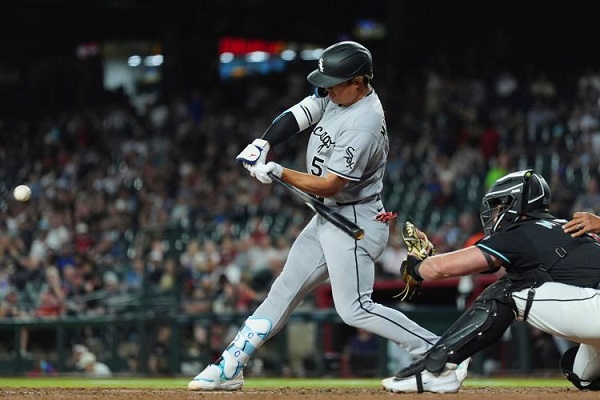
Japanese slugger Munetaka Murakami has been on a tear, tying league and team records with home runs in each of his last five games heading into yesterday’s tilt against the Diamondbacks.  That streak ties the White Sox franchise record, following A.J. Pierzynski, Paul Konerko, Carlos Lee, Frank Thomas (twice!), Ron Kittle, and Greg Luzinski.  He also pulled even with Shohei Ohtani for the longest streak by a Japanese-born player and became just the thirteenth rookie in MLB history to score a five-game homer streak.

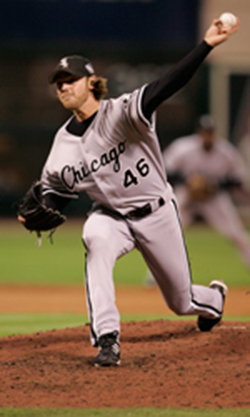
Wednesday’s game was also the fourth straight game that both Murakami and Colson Montgomery have homered, making them the first set of teammates in MLB history to pull off that achievement.

Astros All Time Leaders – Through 2025

astros-primaryTo paraphrase from a famous movie, the one constant through all the years has been baseball.  As we head into 2026, we continue our look at the all-time leaders in both offensive and defensive categories for all 30 teams. Today, we take a deeper dive into the Houston Astros.

The Astros began life in 1962 as the Colt 45’s, joining the National League along with the Mets, and became the Astros three years later.  In 2013, they moved to the American League, becoming just the second team to switch leagues.  I’ve seen 223 players don the Astro uniform in the 52 games I’ve seen them play live, including Game 2 of the 2005 World Series and the final games of the 2021 ALDS.

Home Runs

Name Total
Lance Berkman 7
Carlos Lee 4
Jose Altuve 4

Hits

Name Total
Lance Berkman 30
Morgan Ensberg 19
Jose Altuve 18

Runs

Name Total
Lance Berkman 15
Jose Altuve 15
Craig Biggio 11
Chris Burke 11

RBI

Name Total
Lance Berkman 26
Jose Altuve 13
Morgan Ensberg 12

Doubles

Name Total
Lance Berkman 7
Mike Lamb 6
Hunter Pence 5
Chris Carter 5

Triples Continue reading →

Crossing Sides Of Town

So far in 2025, Brad Keller, Mike Tauchman, Nicky Lopez, and Reese McGuire pushed the total of players I’ve seen take the field in person for both the Cubs and the White Sox to 47.  With the final round of crosstown kicking off tonight at Rate Field, here’s a look at those players, in alphabetical order.

David Aardsma

After posting a decent season with the Cubs in 2006, Aardsma was traded to the White Sox for Neal Cotts.  Aardsma lasted one season with the Sox, where he was unable to duplicate his success from the year before.

Jason Bere

Drafted by the White Sox in the 36th round in 1990, Bere debuted with the big-league club in 1993, finishing 2nd in Rookie of the Year voting.  After an All Star selection in 1994, injuries marred the remainder of his tenure on the South Side, which ended in 1998.  He resurfaced with the Cubs in 2001 and had a decent season, but he went 1-10 in 2002 before being let go.

Emilio Bonifacio

Bonifacio spent back-to-back partial seasons in Chicago, first for the Cubs in 2014 after signing as a free agent, where he played decently enough to be flipped at the trade deadline, along with James Russell, to the Braves for a young catching prospect by the name of Victor Caratini.  He returned to Chicago in 2015, signing with the White Sox, where he he did not do well at all, hitting .167 in 47 games before being released in August.

Welington Castillo

Debuting with the Cubs in 2010, Castillo spent time behind the plate for the Cubs until May of 2015, when, having been replaced in the starting lineup by Miguel Montero, he was flipped to the Mariners.  He returned to Chicago in 2018 after signing with the White Sox as a free agent.  On May 24th of that season, he was suspended 80 games for a violation of the PED policy.  The White Sox then cut bait following the 2019 season, shipping him off to the Rangers.

Neal Cotts

Acquired by the White Sox in the Billy Koch trade, he debuted with the team in 2003.  He was a key contributor in the bullpen during the 2005 championship season and was the only relief pitcher to appear in all 3 rounds of the playoffs that season.  Following the 2006 season, he was traded to the Cubs for David Aardsma, and he spent the next 3 injury filled seasons on the North Side.

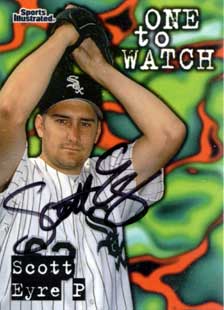
Scott Eyre

Joining the White Sox organization in a 1994 trade with the Rangers, he debuted with the big-league team in 1997.  He split the next 4 seasons between the rotation and the bullpen, not to mention between Chicago and Charlotte, before being moved to the Blue Jays following the 2000 ALDS loss to the Mariners.  He joined the Cubs as a free agent for the 2006 season and enjoyed 2 seasons of relative success, before falling apart in 2008, when he was traded to the Phillies.

Clint Frazier

After missing the second half of 2021 with an injury, Frazier was DFA’d by the Yankees.  He signed a deal with the Cubs that offseason, though he notched just 45 plate appearances before being DFA’s once again.  He chose to finish the year in the Cubs system before becoming a free agent following the season.  After failing to catch on with the Rangers, he signed a minor league deal with the White Sox, eventually hitting .197 in 33 games with the big-league club.

Kosuke Fukudome Continue reading →

Interleague Batting Leaders

First introduced in 1997, games between teams in the American and National leagues started occurring in the regular season.  In 2002, it expanded between the corresponding division in the opposite league to a rotation between all of the divisions.  In 2023, it expanded again with each team playing every other team regardless of league.  With the Cardinals coming to town to battle the White Sox this week, let’s take a look at the offensive leaders for the 199 interleague games I have attended since the start of interleague play in 1997, including the World Series in both 2005 and 2016:

Home Runs

Name Total
Paul Konerko 23
Jermaine Dye 12
Jose Abreu 12
Alexei Ramrez 10
Aramis Ramirez 9
Luis Robert 9
Carlos Lee 9

Hits

Name Total
Paul Konerko 89
Alexei Ramirez 67
Jose Abreu 65
A.J. Pierzynski 49
Derrek Lee 49

Runs

Name Total
Paul Konerko 44
Alexei Ramirez 42
Continue reading →

Your Latest Crosstown Batting Leaders

The battle for the 2024 Crosstown Cup kicks off tonight at Wrigley Field, with the Cubs looking to take retain possession of the cup after winning it back last year.  The White Sox currently hold a slight edge in the overall series, going 74-68 over the past 27 years.  Let’s take a look at the offensive leaders for the now 89 (out of 142) crosstown games I have attended since the start of interleague play in 1997:

Home Runs

Name Total
Paul Konerko 15
Carlos Lee 9
Aramis Ramirez 8
Sammy Sosa 8
Jermaine Dye 7

Hits

Name Total
Paul Konerko 50
Carlos Lee 41
Jose Abreu 36
Sammy Sosa 29
Derrek Lee 28

Runs

Name Total
Paul Konerko 26
Magglio Ordonez 19
Continue reading →

The Heroes Of Opening Day

This week I attended my 21st consecutive (except for the pandemic year of 2020 that had no fans) Opening Day at Comiskey Park II/US Cellular Field/Guaranteed Rate Field, and my 38th overall.  From my first, at old Comiskey Park in 1985, to my first as a Cubs season ticket holder at Wrigley Field in 2002, to road trips to Shea Stadium, in 2003, and Great American Ballpark, in 2004 and 2006, Opening Day remains a spring holiday proclaiming the theoretical beginning of summer.  This seemed like a good time to see who the best performers were on both sides of the ball from those 38 contests.

Home Runs

Name Total
Corey Patterson 3
Paul Konerko 3
Alejandro de Aza 2
Ray Durham 2
Jose Valentin 2
Joe Crede 2
Jim Thome 2

Hits

Name Total
Paul Konerko 15
Jermaine Dye 9
Aramis Ramirez 8
Victor Martinez 8
Mark Grudzielanek 8

Runs

Name Total
Paul Konerko 7
Derrek Lee 7
Alex Gonzalez 6
Joe Crede 6

RBI

Name Total
Paul Konerko 10
Corey Patterson 8
Moises Alou 8

Doubles

Name Total
Michael Barrett 4
Paul Konerko 3
Moises Alou 3
Jose Valentin 3
Victor Marinez 3
Alex Rios 3
Jose Abreu 3
Miguel Olivo 3
Jeromy Burnitz 3
Carlos Lee 3

Triples Continue reading →

Against The Cubs All Time Leaders – Through 2021

chc_logoIn the past, we’ve looked at the all time leaders in both offensive and defensive categories for all 30 teams. This offseason, we will take our first ever look at those leaders against all 30 clubs.  We continue today with the Chicago Cubs.

I’ve seen the Cubs play 430 times at 9 different stadiums in 7 different cities, including 21 post-season appearances from the 2003 run through the 2018 Wild Card loss to the Rockies.

Home Runs

Name Total
Carlos Lee 15
Paul Konerko 15
Adam Dunn 11

Hits

Name Total
Carlos Lee 59
Paul Konerko 50
Jose Abreu 32

Runs

Name Total
Carlos Lee 59
Paul Konerko 50
Jose Abreu 32

RBI

Name Total
Carlos Lee 39
Paul Konerko 33
Adam Dunn 25

Doubles

Name Total
Carlos Lee 12
Paul Konerko 9
Prince Fielder 9

Triples Continue reading →

By The Numbers – 22

In 1929, uniform numbers appeared on the back of baseball jerseys for the first time, thanks to the Indians and the Yankees.  By 1937, numbers finally appeared across all uniforms, both home and away, across both major leagues.  Since that time, 81 distinct numbers have been worn by members of the White Sox, while the Cubs boast 76.

Today, we continue our look at those players, picking our favorite, if not the best, player to wear each uniform number for both Chicago teams with #22.  76 different players have donned #22 while playing in Chicago, 26 for the White Sox and 50 for the Cubs.

Acquired from the Dodgers, along with Ivan DeJesus, in exchange for Rick Monday and Mike Garman, Bill Buckner joined the Cubs, wearing #22, in 1977.  A staph infection in his ankle the previous year caused the Cubs to move the former outfielder to first base, a position he would man for the rest of his career.  Appearing in 122 games, he hit .284 with 11 home runs and 27 doubles.  He improved in 1978, raising his average to .323 and placed 17th in MVP voting.  1979 was another steady year for Buckner.  On May 17th, in the infamous slugfest where the Cubs lost 23-22 to the Phillies, he went 4–for–7 with a grand slam and a career-high seven RBIs.  He finished the year hitting .284 with 14 home runs and 34 doubles, but was also described as “nuts” when manager Herman Franks resigned late in the season.

In 1980, Buckner won a batting title, hitting .324 while striking out only 18 times, earning him a 14th place finish in MVP voting.  In the strike-shortened 1981 season, he was the lone Cub representative for the All Star game and batted .311 while tying Cecil Cooper for the major league lead with 35 doubles.  1982 saw Buckner hit over .300 for the fourth time as a Cub while racking up career highs in hits, with 201, RBIs, with 105, and assists at first base, setting a major league record with 159.

In 1983, Buckner again led the NL with 38 doubles, but saw his batting average drop to .280, his lowest finish as a Cub.  With the acquisition of Gary Matthews in 1984 pushing Leon Durham to first base, Buckner found himself the odd man out.  Appearing mostly as a pinch hitter, Buckner hit a paltry .209 through the end of May, when he was traded to the Red Sox, ending his Cub tenure.

Scott Podsednik was acquired by the White Sox from the Brewers for Carlos Lee on December 13, 2004.  Wearing #22, he moved in to the leadoff spot and, after putting up a .294 average with 44 steals in the first half, he earned his first All Star game nod.  While injuries slowed him in the second half, he was back to full strength when the regular season came to an end and the White Sox embarked on their first post-season appearance in 5 years.  After going the entire regular season without a home run, Podsednik went deep against the Red Sox in Game 1 of the ALDS, helping the White Sox to a 14-2 victory on their way to a 3 game sweep of the defending champions.  Podsednik continued his steady play during the ALCS, hitting .294 with a triple and 3 stolen bases in the 5 game series.  The shining moment of his career came in Game 2 of the World Series, thanks to a walkoff home run against Brad Lidge in the 9th inning, giving the White Sox a 2-0 lead on their way to a sweep and their first world championship in 88 years.  For his efforts, Podsednik finished in 12th place for MVP voting.

As the White Sox looked to repeat in 2006, Podsednik found it difficult to duplicate his efforts from the year before.  His average was down 29 points, to .261, and his stolen base total was off by 19.  Injuries limited Podsednik to 62 games in 2007.  His offensive production continued to be lacking and, after the White Sox fell completely out of contention for the first time in years, the team decided to change their approach and gave Podsednik his release.  He returned to the White Sox organization in 2009, signing a minor league deal.  Injuries to Brian Anderson, Dewayne Wise, and Carlos Quentin gave him plenty of opportunity with the big league club, and he responded by hitting .304, his highest total since 2003.  Following the season, he became a free agent.
Two Sides Of The Same Town

cws-chiFollowing last week’s trade deadline deals, Ryan Tepera and Craig Kimbrel became the 36th and 37th people I’ve seen play in person for both the Cubs and the White Sox.  With the first round of crosstown kicking off this afternoon at Wrigley, here’s a look at those players, in alphabetical order.

David Aardsma

After posting a decent season with the Cubs in 2006, Aardsma was traded to the White Sox for Neal Cotts.  Aardsma lasted one season with the Sox, where he was unable to duplicate his success from the year before.

Jason Bere

Drafted by the White Sox in the 36th round in 1990, Bere debuted with the big league club in 1993, finishing 2nd in Rookie of the Year voting.  After an All Star selection in 1994, injuries marred the remainder of his tenure on the South Side, which ended in 1998.  He resurfaced with the Cubs in 2001 and had a decent season, but he went 1-10 in 2002 before being let go.

Emilio Bonifacio

Bonifacio spent back-to-back partial seasons in Chicago, first for the Cubs in 2014 after signing as a free agent, where he played decently enough to be flipped at the trade deadline, along with James Russell, to the Braves for a young catching prospect by the name of Victor Caratini.  He returned to Chicago in 2015, signing with the White Sox, where he he did not do well at all, hitting .167 in 47 games before being released in August.

Welington Castillo

Debuting with the Cubs in 2010, Castillo spent time behind the plate for the Cubs until May of 2015, when, having been replaced in the starting lineup by Miguel Montero, he was flipped to the Mariners.  He returned to Chicago in 2018 after signing with the White Sox as a free agent.  On May 24th of that season, he was suspended 80 games for a violation of the PED policy.  The White Sox then cut bait following the 2019 season, shipping him off to the Rangers.

Neal Cotts

Acquired by the White Sox in the Billy Koch trade, he debuted with the team in 2003.  He was a key contributor in the bullpen during the 2005 championship season, and was the only relief pitcher to appear in all 3 rounds of the playoffs that season.  Following the 2006 season, he was traded to the Cubs for David Aardsma, and he spent the next 3 injury filled seasons on the North Side.

Scott Eyre

Joining the White Sox organization in a 1994 trade with the Rangers, he debuted with the big league team in 1997.  He split the next 4 seasons between the rotation and the bullpen, not to mention between Chicago and Charlotte, before being moved to the Blue Jays following the 2000 ALDS loss to the Mariners.  He joined the Cubs as a free agent for the 2006 season and enjoyed 2 seasons of relative success, before falling apart in 2008, when he was traded to the Phillies.

Kosuke Fukudome Continue reading →

Astros All Time Leaders – Through 2019

astros-primaryWith baseball shut down because of the corona virus, I thought it would be an interesting time to look at the all time leaders in both offensive and defensive categories for all 30 teams.  We continue today with the Houston Astros.

The Astros began life in 1962 as the Colt 45’s, joining the National League along with the Mets, and became the Astros 3 years later.  In 2013, they moved to the American League, becoming just the second team to switch leagues.  I’ve seen them play 42 times, including game 2 of the 2005 World Series.

Home Runs

Name Total
Lance Berkman 7
Carlos Lee 4
Morgan Ensberg 3
Mike Lamb 3

Hits

Name Total
Lance Berkman 30
Morgan Ensberg 19
Brad Ausmus 17

Runs

Name Total
Lance Berkman 15
Craig Biggio 11
Chris Burke 11

RBI

Name Total
Lance Berkman 26
Morgan Ensberg 12
Mike Lamb 10

Doubles

Name Total
Lance Berkman 7
Mike Lamb 6
Hunter Pence 5
Chris Carter 5

Triples Continue reading →