Yankees All Time Leaders – Through 2025

YankeesTo paraphrase from a famous movie, the one constant through all the years has been baseball.  With the winter meetings starting today, we continue our look at the all-time leaders in both offensive and defensive categories for all 30 teams. Today, we take a deeper dive into the New York Yankees.

The Yankees began life in 1901 as the Baltimore Orioles, moving to New York in time for the 1903 season.  I’ve seen 188 players don a Yankees uniform in the 33 games of theirs that I’ve attended live, first in 1997 and most recently this past August.

Home Runs

Name Total
Joey Gallo 4
Jorge Posada 3
Aaron Judge 3
Marcus Thames 3
Nick Swisher 3
Jacoby Ellsbury 3

Hits

Name Total
Derek Jeter 19
Jorge Posada 15
Aaron Judge 14

Runs

Name Total
Brett Gardner 13
Derek Jeter 10
Aaron Judge 10

RBI

Name Total
Jorge Posada 15
Melky Cabrera 9
Brett Gardner 8
Aaron Judge 8

Doubles

Name Total
Jorge Posada 7
Alfonso Soriano 5
Melky Cabrera 4
Aaron Judge 4

Triples Continue reading →

All Season Batting Leaders – Through 2025

It’s been six years since we last took a look at the offensive stat leaders per season for the all the games I’ve attended since 1984. While there hasn’t been a whole lot of movement for most of the categories in the last six seasons, I figured the time was right to take another look. So, without further ado, here’s the updated list. We start, as always, with everyone’s favorite offensive stat:

Home Runs

Year Name Total
2010 Paul Konerko 17
2004 Moises Alou 15
2004 Corey Patterson 13
2004 Sammy Sosa 13
2003 Moises Alou 12
2008 Carlos Quentin 12

Hits

Year Name Total
2003 Mark Grudzielanek 67
2004 Moises Alou 57
2003 Moises Alou 57
2007 Derrek Lee 57
2006 Orlando Cabrera 56

Runs

Year Name Total
2004 Moises Alou 44
2003 Sammy Sosa 34
2003 Tim Anderson 32
2010 Paul Konerko 31
2003 Moises Alou 30
2008 Jermaine Dye 30
2006 Tadahito Iguchi 30
2008 Nick Swisher 30

RBI

Year Name Total
2021 Jose Abreu 38
2010 Paul Konerko 35
Continue reading →

Crossing Sides Of Town

So far in 2025, Brad Keller, Mike Tauchman, Nicky Lopez, and Reese McGuire pushed the total of players I’ve seen take the field in person for both the Cubs and the White Sox to 47.  With the final round of crosstown kicking off tonight at Rate Field, here’s a look at those players, in alphabetical order.

David Aardsma

After posting a decent season with the Cubs in 2006, Aardsma was traded to the White Sox for Neal Cotts.  Aardsma lasted one season with the Sox, where he was unable to duplicate his success from the year before.

Jason Bere

Drafted by the White Sox in the 36th round in 1990, Bere debuted with the big-league club in 1993, finishing 2nd in Rookie of the Year voting.  After an All Star selection in 1994, injuries marred the remainder of his tenure on the South Side, which ended in 1998.  He resurfaced with the Cubs in 2001 and had a decent season, but he went 1-10 in 2002 before being let go.

Emilio Bonifacio

Bonifacio spent back-to-back partial seasons in Chicago, first for the Cubs in 2014 after signing as a free agent, where he played decently enough to be flipped at the trade deadline, along with James Russell, to the Braves for a young catching prospect by the name of Victor Caratini.  He returned to Chicago in 2015, signing with the White Sox, where he he did not do well at all, hitting .167 in 47 games before being released in August.

Welington Castillo

Debuting with the Cubs in 2010, Castillo spent time behind the plate for the Cubs until May of 2015, when, having been replaced in the starting lineup by Miguel Montero, he was flipped to the Mariners.  He returned to Chicago in 2018 after signing with the White Sox as a free agent.  On May 24th of that season, he was suspended 80 games for a violation of the PED policy.  The White Sox then cut bait following the 2019 season, shipping him off to the Rangers.

Neal Cotts

Acquired by the White Sox in the Billy Koch trade, he debuted with the team in 2003.  He was a key contributor in the bullpen during the 2005 championship season and was the only relief pitcher to appear in all 3 rounds of the playoffs that season.  Following the 2006 season, he was traded to the Cubs for David Aardsma, and he spent the next 3 injury filled seasons on the North Side.

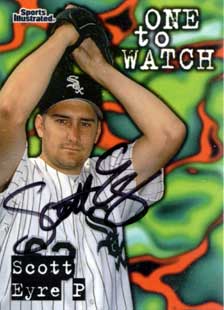
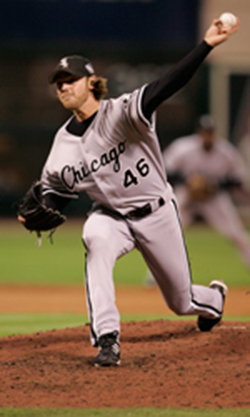
Scott Eyre

Joining the White Sox organization in a 1994 trade with the Rangers, he debuted with the big-league team in 1997.  He split the next 4 seasons between the rotation and the bullpen, not to mention between Chicago and Charlotte, before being moved to the Blue Jays following the 2000 ALDS loss to the Mariners.  He joined the Cubs as a free agent for the 2006 season and enjoyed 2 seasons of relative success, before falling apart in 2008, when he was traded to the Phillies.

Clint Frazier

After missing the second half of 2021 with an injury, Frazier was DFA’d by the Yankees.  He signed a deal with the Cubs that offseason, though he notched just 45 plate appearances before being DFA’s once again.  He chose to finish the year in the Cubs system before becoming a free agent following the season.  After failing to catch on with the Rangers, he signed a minor league deal with the White Sox, eventually hitting .197 in 33 games with the big-league club.

Kosuke Fukudome Continue reading →

By The Numbers – 17

In 1929, uniform numbers appeared on the back of baseball jerseys for the first time, thanks to the Indians and the Yankees.  By 1937, numbers finally appeared across all uniforms, both home and away, across both major leagues.  Since that time, 81 distinct numbers have been worn by members of the White Sox, while the Cubs boast 76.

Today, we continue our look at those players, picking our favorite, if not the best, player to wear each uniform number for both Chicago teams with #17.  79 different players have donned #17 while playing in Chicago, 42 for the White Sox and 37 for the Cubs.

Mark Grace moved to his iconic #17 during his rookie campaign in 1988.  He finished second in Rookie of the Year voting while hitting .296 with 7 home runs and 57 RBIs.  In 1989, he garnered some MVP consideration as the Cubs took home a surprising NL East title.  Grace hit .314 with 13 home runs and 79 RBIs during the regular season, before hitting .647 with a 1.799 OPS during the 5 game NLCS against the Giants.

In 1990, Grace began a decade of excellence, collecting the most hits, 1,754, and doubles, 364, of any player during the decade.  He won 4 Gold Glove awards, was named to 3 All Star teams, earned down-ballot MVP support in 3 different seasons.  Following the 2000 season, he left the Cubs, finishing that portion of his career with 2201 hits, 456 doubles, 148 home runs, 1004 RBIs, and a .308 average.

As the White Sox made their run towards the World Series title in 2005, general manager Kenny Williams attempted to acquire Ken Griffey Jr. from the Reds, but was rebuked when Reds ownership decided to veto the deal.  3 years later, with the White Sox again looking to make a run at a division title, he was finally able to acquire the aging superstar at the trade deadline in exchange for pitcher Nick Masset and second baseman Danny Richar.  At the time of the trade, the White Sox held a tenuous 1.5 game lead over the Twins.  Wearing #17, Griffey, who had spent most of the previous few seasons in right field to lessen the strain on his body, moved back to center field for the White Sox, displacing the disappointing Nick Swisher.  Griffey appeared in 41 games for the White Sox, hitting a decent .260 with only 3 home runs and 18 RBI.  His most important contribution came defensively, during the tie-breaking game 163 between the White Sox and the Twins, when he gunned down Michael Cuddyer, who was trying to score on a fly out to center, preserving the shutout and helping the White Sox win the division and advance the playoffs.  In the ALDS, Griffey appeared in 3 games against the Rays, garnering only 2 hits as the White Sox fell 3 games to 1.  Following the season, the White Sox declined Griffey’s $16 million option for 2009, making him a free agent.

Special bonus shout out to outfielder Carlos May, who played with the White Sox from 1968-1976.  May, who wore #17 for his entire White Sox career, is the only player in baseball history to wear his birthday, May 17th, on his jersey.

Against The Twins All Time Leaders – Through 2021

Minnesota-TwinsIn the past, we’ve looked at the all time leaders in both offensive and defensive categories for all 30 teams.  This offseason, we will take our first ever look at those leaders against all 30 clubs.  We continue things today with the Minnesota Twins.

The Twins originated in 1901 as the Washington Senators, one of the charter members of the American League.  When Minneapolis was given an expansion team to begin play in 1961, owner Calvin Griffith requested to move the Senators to Minnesota, becoming the Twins, and to have the expansion franchise take over the Senators name in Washington.  I’ve seen them play 64 times at 3 different stadiums, including the division-title deciding game 163 in 2008 at US Cellular Field.

Home Runs

Name Total
Joe Crede 8
Alexei Ramirez 7
Paul Konerko 7

Hits

Name Total
Alexei Ramirez 40
Paul Konerko 39
Jose Abreu 29

Runs

Name Total
Alexei Ramirez 19
Paul Konerko 19
Jose Abreu 18

RBI

Name Total
Alexei Ramirez 21
Joe Crede 21
Paul Konerko 20

Doubles

Name Total
Alexei Ramirez 6
A.J. Pierzynski 6
Paul Konerko 5
Adam Eaton 5

Triples Continue reading →

Two Sides Of The Same Town

cws-chiFollowing last week’s trade deadline deals, Ryan Tepera and Craig Kimbrel became the 36th and 37th people I’ve seen play in person for both the Cubs and the White Sox.  With the first round of crosstown kicking off this afternoon at Wrigley, here’s a look at those players, in alphabetical order.

David Aardsma

After posting a decent season with the Cubs in 2006, Aardsma was traded to the White Sox for Neal Cotts.  Aardsma lasted one season with the Sox, where he was unable to duplicate his success from the year before.

Jason Bere

Drafted by the White Sox in the 36th round in 1990, Bere debuted with the big league club in 1993, finishing 2nd in Rookie of the Year voting.  After an All Star selection in 1994, injuries marred the remainder of his tenure on the South Side, which ended in 1998.  He resurfaced with the Cubs in 2001 and had a decent season, but he went 1-10 in 2002 before being let go.

Emilio Bonifacio

Bonifacio spent back-to-back partial seasons in Chicago, first for the Cubs in 2014 after signing as a free agent, where he played decently enough to be flipped at the trade deadline, along with James Russell, to the Braves for a young catching prospect by the name of Victor Caratini.  He returned to Chicago in 2015, signing with the White Sox, where he he did not do well at all, hitting .167 in 47 games before being released in August.

Welington Castillo

Debuting with the Cubs in 2010, Castillo spent time behind the plate for the Cubs until May of 2015, when, having been replaced in the starting lineup by Miguel Montero, he was flipped to the Mariners.  He returned to Chicago in 2018 after signing with the White Sox as a free agent.  On May 24th of that season, he was suspended 80 games for a violation of the PED policy.  The White Sox then cut bait following the 2019 season, shipping him off to the Rangers.

Neal Cotts

Acquired by the White Sox in the Billy Koch trade, he debuted with the team in 2003.  He was a key contributor in the bullpen during the 2005 championship season, and was the only relief pitcher to appear in all 3 rounds of the playoffs that season.  Following the 2006 season, he was traded to the Cubs for David Aardsma, and he spent the next 3 injury filled seasons on the North Side.

Scott Eyre

Joining the White Sox organization in a 1994 trade with the Rangers, he debuted with the big league team in 1997.  He split the next 4 seasons between the rotation and the bullpen, not to mention between Chicago and Charlotte, before being moved to the Blue Jays following the 2000 ALDS loss to the Mariners.  He joined the Cubs as a free agent for the 2006 season and enjoyed 2 seasons of relative success, before falling apart in 2008, when he was traded to the Phillies.

Kosuke Fukudome Continue reading →

An Empty Class

All eyes turned towards the small hamlet of Cooperstown, New York last Tuesday, as the votes were tallied and, for the first time since 2013, the 2021 Hall of Fame class was found to have no members.  Curt Schilling led all vote getters with 71.1% of the vote, 3.9% shy of the 75% required for induction.

Three others tallied greater than 50% of the vote, led by Barry Bonds, who saw a slight increase up to 61.8%.  Roger Clemens was right behind him at 61.6% and, with only one more go around each, it seems unlikely that either will make it via the BBWAA.  Scott Rolen saw a big jump, rising to 52.9% and looks like he’s on track to eventually make it.

Omar Vizquel, who was on the upswing and looked to be on a good trajectory, dropped back down under 50% after allegations of spousal abuse popped up last year.

Mark Buehrle scored the highest amongst the newcomers, with 11%.  Torii Hunter and Tim Hudson are the other two newcomers who live to fight another day, surpassing the 5% cutoff.  Of the local contingent, former White Sox outfielder Andruw Jones jumped up to 33.9% while Manny Ramirez finished with the same 28.2% as last year.  Cub outcast Sammy Sosa garnered 17.0%, while his former teammates Aramis Ramirez and LaTroy Hawkins pulled in 1% and 0.5% respectively.  Former White Sox outfielder Nick Swisher got no votes, which seems about right.

Schilling, in an effort to prove that he is the garbage human being that he shows to the world on social media, released a letter after the vote was announced asking to no longer be considered for the Hall.  “I’ll defer to the veterans committee and men whose opinions actually matter and who are in a position to actually judge a player,” he wrote, denigrating the BBWAA and the entire election process.  Personally, I hope they leave him on the ballot and that nobody votes for him.

While there is no class of 2021, there will still be an election ceremony this summer, as the class of 2020, Derek Jeter, Larry Walker, Ted Simmons, and Marvin Miller, get their day in the sun, corona virus willing, on Sunday, July 25.

2021 Hall Of Fame Ballot – The Newcomers


baseballhof

The BBWAA recently released their ballot for the Hall of Fame class of 2021, with the results of the vote due to be revealed on January 26th.  Assuming the corona virus is under control by then, induction would take place July 25th.  With Derek Jeter and Larry Walker getting elected in last year’s voting, the new ballot contains 14 holdovers along with 11 newcomers, which may potentially continue the logjam caused by the current BBWAA rules which limit the number of votes on one ballot to 10 and the ongoing refusal by some writers to vote for players tainted by PEDs, leaving too many qualified candidates fighting for limited spots.

Yesterday, we looked at the returning candidates.  Today, it’s time to look at the newcomers and who may be thankful come January.

Mark Buehrle

While he is one of only three pitchers, along with Cy Young and Sandy Koufax, to have a no-hitter, a perfect game, and win a World Series title with the same organization, I don’t see any way he will make it.  Hopefully he will get enough votes to remain on the ballot for another year.

A.J. Burnett

I don’t see him getting much in the way of support.

Michael Cuddyer

I wonder what it feels like to be placed on the ballot knowing that you won’t earn even a single vote.

Dan Haren

I can see him getting a vote or two, but not enough to stick around.

LaTroy Hawkins

I mean, he had a nice career and all, but no.

Tim Hudson

My initial reaction was no, but he was the first one to make me look up his numbers.  His predictive numbers are actually very similar to Buehrle’s, so I’m going to have to say no here as well.  It’ll be interesting to see how their vote totals match up considering how close their predictive scores are.

Torii Hunter

Probably the most interesting case out of the newcomers.  I can see him sticking around for the entire 10 year run, but I don’t see him getting in.

Aramis Ramirez

While a local favorite, I don’t see him getting a lot of support.

Nick Swisher

F this dude and anyone who votes for him.

Shane Victorino

No.

Barry Zito

The start of his career looked promising, but those later Giant years were brutal.

Yankees All Time Leaders – Through 2019

YankeesWith baseball shut down because of the corona virus, I thought it would be an interesting time to look back at the all time leaders in both offensive and defensive categories for all 30 teams. We continue today with the New York Yankees.

The Yankees began life in 1901 as the Baltimore Orioles, moving to New York in time for the 1903 season.  I’ve seen them play 26 times, first in 1997 and most recently this past June.

Home Runs

Name Total
Marcus Thames 3
Nick Swisher 3
Jacoby Ellsbury 3

Hits

Name Total
Derek Jeter 18
Jorge Posada 15
Brett Gardner 12

Runs

Name Total
Brett Gardner 11
Derek Jeter 10
5 tied with  6

RBI

Name Total
Jorge Posada 10
Derek Jeter 9
Melky Cabrera 9

Doubles

Name Total
Jorge Posada 7
Melky Cabrera 4
Alfonso Soriano 4

Triples Continue reading →

Fortifying The Staff

After missing out on Zack Wheeler earlier in the offseason, the White Sox looked idly by as the remaining big names vanished off the free agent board: Gerrit Cole, Stephen Strasburg, Madison Bumgarner.  Last week, however, the struck on their plan B, signing Gio Gonzalez to a one year deal on Friday and coming to terms with Dallas Keuchel on a reported 3 year deal on Saturday.

Keuchel, a 31 year old left hander, sat out the first half of last season, signing after the draft (and the expiration of the draft pick compensation attached to him) and helping the Braves to the NL East title.  He won the AL Cy Young Award in 2015, and should help stabilize the White Sox rotation, both on the mound and as a mentor on the bench.

Gonzalez, 34, enters his third stint in the White Sox organization.  Originally signed as the team’s first round draft pick in 2004, he was part of the deal that brought Jim Thome from the Phillies following the 2005 season.  He was reacquired from the Phillies a year later, along with Gavin Floyd for Freddy Garcia.  He was traded again in 2008 as part of the ill-fated Nick Swisher deal with the A’s.  He will now bolster the back end of the White Sox rotation.

These moves give the White Sox plenty of pitching depth as they go into spring training, allowing Michael Kopech and Carlos Rodon to return from injury on their own timetable and keeping the likes of Dylan Covey and Ross Detwiler far from the pitching mound at Guaranteed Rate Field.