Crossing Sides Of Town

So far in 2025, Brad Keller, Mike Tauchman, Nicky Lopez, and Reese McGuire pushed the total of players I’ve seen take the field in person for both the Cubs and the White Sox to 47.  With the final round of crosstown kicking off tonight at Rate Field, here’s a look at those players, in alphabetical order.

David Aardsma

After posting a decent season with the Cubs in 2006, Aardsma was traded to the White Sox for Neal Cotts.  Aardsma lasted one season with the Sox, where he was unable to duplicate his success from the year before.

Jason Bere

Drafted by the White Sox in the 36th round in 1990, Bere debuted with the big-league club in 1993, finishing 2nd in Rookie of the Year voting.  After an All Star selection in 1994, injuries marred the remainder of his tenure on the South Side, which ended in 1998.  He resurfaced with the Cubs in 2001 and had a decent season, but he went 1-10 in 2002 before being let go.

Emilio Bonifacio

Bonifacio spent back-to-back partial seasons in Chicago, first for the Cubs in 2014 after signing as a free agent, where he played decently enough to be flipped at the trade deadline, along with James Russell, to the Braves for a young catching prospect by the name of Victor Caratini.  He returned to Chicago in 2015, signing with the White Sox, where he he did not do well at all, hitting .167 in 47 games before being released in August.

Welington Castillo

Debuting with the Cubs in 2010, Castillo spent time behind the plate for the Cubs until May of 2015, when, having been replaced in the starting lineup by Miguel Montero, he was flipped to the Mariners.  He returned to Chicago in 2018 after signing with the White Sox as a free agent.  On May 24th of that season, he was suspended 80 games for a violation of the PED policy.  The White Sox then cut bait following the 2019 season, shipping him off to the Rangers.

Neal Cotts

Acquired by the White Sox in the Billy Koch trade, he debuted with the team in 2003.  He was a key contributor in the bullpen during the 2005 championship season and was the only relief pitcher to appear in all 3 rounds of the playoffs that season.  Following the 2006 season, he was traded to the Cubs for David Aardsma, and he spent the next 3 injury filled seasons on the North Side.
Scott Eyre

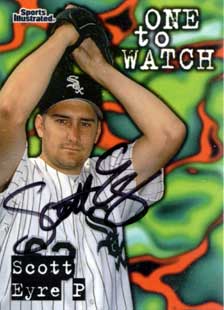
Joining the White Sox organization in a 1994 trade with the Rangers, he debuted with the big-league team in 1997.  He split the next 4 seasons between the rotation and the bullpen, not to mention between Chicago and Charlotte, before being moved to the Blue Jays following the 2000 ALDS loss to the Mariners.  He joined the Cubs as a free agent for the 2006 season and enjoyed 2 seasons of relative success, before falling apart in 2008, when he was traded to the Phillies.

Clint Frazier

After missing the second half of 2021 with an injury, Frazier was DFA’d by the Yankees.  He signed a deal with the Cubs that offseason, though he notched just 45 plate appearances before being DFA’s once again.  He chose to finish the year in the Cubs system before becoming a free agent following the season.  After failing to catch on with the Rangers, he signed a minor league deal with the White Sox, eventually hitting .197 in 33 games with the big-league club.

Kosuke Fukudome Continue reading →

By The Numbers – 1

In 1929, uniform numbers appeared on the back of baseball jerseys for the first time, thanks to the Indians and the Yankees.  By 1937, numbers finally appeared across all uniforms, both home and away, across both major leagues.  Since that time, 81 distinct numbers have been worn by members of the White Sox, while the Cubs boast 76.

Today, we continue our look at those players, picking our favorite, if not the best, player to wear each uniform number for both Chicago teams with #1.  50 different players have donned #1 while playing in Chicago, 30 for the White Sox and 20 for the Cubs.

Lance Johnson, along with Ricky Horton, was acquired by the White Sox from the Cardinals for Jose DeLeon just before spring training in 1988.  Despite earning Most Valuable Player honors in the American Association the year before, Johnson struggled mightily after being given the starting center fielder job, hitting only .185 in 33 games before being sent back to the minor leagues.  Johnson started at Triple A in 1988, before finally returning to the White Sox, and the major leagues, for good.  In 1990, Johnson hit .285 and managed 36 stolen bases, despite leading the league with 22 caught stealings, and hit his first career home run all while patrolling centerfield for the final season at Comiskey Park.

As the team moved across the street in 1991, Johnson continued his steady presence in the lineup, hitting .274 while stealing 26 bases and hitting 13 triples, leading the American League.  Johnson hit .279 in 1992, with another 12 triples, leading the league again, and 41 stolen bases while setting a new career high with 3 home runs.  1993 saw Johnson and the White Sox finally put everything together.  Johnson raised his average to .311, hitting 14 triples and stealing 35 bases while the White Sox won their first divisional title in a decade.  Unfortunately, Johnson struggled in the ALCS against the Blue Jays, hitting only .217 in the 6 game series, though knocking in 6 runs and hitting his only home run of the season.

The strike-shortened 1994 season cut down what could have been a tremendous season for Johnson.  He again hit 14 triples, but in only 106 games, becoming the first player in Major League history to lead the league for four consecutive seasons.  When baseball resumed in 1995, Johnson turned in his finest season in a White Sox uniform.  He hit .306 and set a career high with a .766 OPS.  He led the league in at bats and hits, though he saw his streak of triples crowns end despite hitting a solid 12.  He set a career high with 10 home runs, 3 more than his previous career total.  On September 23, he became the first White Sox hitter to get 6 hits in a game since Floyd Robinson in 1962.  Following the season, he became a free agent and his White Sox career came to an end.

On the north side of town, Doug Glanville wore #1 when he made his major league debut for the Cubs in 1996, posting a .241 average over 49 games.  He became a full time presence for the Cubs in 1997, primarily in left field, hitting .300 and swiping 19 bases.  He switched from #1 to #8 at the end of August when, ironically, the Cubs acquired Lance Johnson from the Mets.

Against The Rangers All Time Leaders – Through 2021

rangersIn the past, we’ve looked at the all time leaders in both offensive and defensive categories for all 30 teams.  This offseason, we will take our first ever look at those leaders against all 30 clubs. We continue today with the Texas Rangers.

The Rangers began life in 1961, joining the American League as the second incarnation of the Washington Senators after the original franchise moved to Minnesota to become the Twins.  Following the 1971 season, the team moved to Arlington, Texas and became the Rangers.  I’ve seen them play 38 times against 5 different foes, across 2 states and 4 different stadiums.

Home Runs

Name Total
Paul Konerko 3
Jose Abreu 3
Jermaine Dye 3

Hits

Name Total
Paul Konerko 20
Jose Abreu 14
A.J. Pierzynski 12
Alexei Ramirez 12

Runs

Name Total
Paul Konerko 8
Jose Abreu 8
Jermaine Dye 8

RBI

Name Total
Paul Konerko 11
Jose Abreu 9
Jermaine Dye 8

Doubles

Name Total
Alex Rios 4
Alexei Ramirez 4
Jose Abreu 3
Scott Podsednik 3
Carlos Quentin 3

Triples Continue reading →

Two Sides Of The Same Town

cws-chiFollowing last week’s trade deadline deals, Ryan Tepera and Craig Kimbrel became the 36th and 37th people I’ve seen play in person for both the Cubs and the White Sox.  With the first round of crosstown kicking off this afternoon at Wrigley, here’s a look at those players, in alphabetical order.

David Aardsma

After posting a decent season with the Cubs in 2006, Aardsma was traded to the White Sox for Neal Cotts.  Aardsma lasted one season with the Sox, where he was unable to duplicate his success from the year before.

Jason Bere

Drafted by the White Sox in the 36th round in 1990, Bere debuted with the big league club in 1993, finishing 2nd in Rookie of the Year voting.  After an All Star selection in 1994, injuries marred the remainder of his tenure on the South Side, which ended in 1998.  He resurfaced with the Cubs in 2001 and had a decent season, but he went 1-10 in 2002 before being let go.

Emilio Bonifacio

Bonifacio spent back-to-back partial seasons in Chicago, first for the Cubs in 2014 after signing as a free agent, where he played decently enough to be flipped at the trade deadline, along with James Russell, to the Braves for a young catching prospect by the name of Victor Caratini.  He returned to Chicago in 2015, signing with the White Sox, where he he did not do well at all, hitting .167 in 47 games before being released in August.

Welington Castillo

Debuting with the Cubs in 2010, Castillo spent time behind the plate for the Cubs until May of 2015, when, having been replaced in the starting lineup by Miguel Montero, he was flipped to the Mariners.  He returned to Chicago in 2018 after signing with the White Sox as a free agent.  On May 24th of that season, he was suspended 80 games for a violation of the PED policy.  The White Sox then cut bait following the 2019 season, shipping him off to the Rangers.

Neal Cotts

Acquired by the White Sox in the Billy Koch trade, he debuted with the team in 2003.  He was a key contributor in the bullpen during the 2005 championship season, and was the only relief pitcher to appear in all 3 rounds of the playoffs that season.  Following the 2006 season, he was traded to the Cubs for David Aardsma, and he spent the next 3 injury filled seasons on the North Side.

Scott Eyre

Joining the White Sox organization in a 1994 trade with the Rangers, he debuted with the big league team in 1997.  He split the next 4 seasons between the rotation and the bullpen, not to mention between Chicago and Charlotte, before being moved to the Blue Jays following the 2000 ALDS loss to the Mariners.  He joined the Cubs as a free agent for the 2006 season and enjoyed 2 seasons of relative success, before falling apart in 2008, when he was traded to the Phillies.

Kosuke Fukudome Continue reading →

#29 – Lance Johnson

Name: Lance Johnson

Rank: 29

Position: CF

Years With White Sox: 1988-1995

Lance Johnson, along with Ricky Horton, was acquired by the White Sox from the Cardinals for Jose DeLeon just before spring training in 1988.  After earning Most Valuable Player honors in the American Association the year before, Johnson was given the starting center fielder job.  Things did not go well, and after hitting only .185 in 33 games, he was sent back to the minor leagues.

Johnson returned to Triple A in 1988, before finally returning to the White Sox, and the major leagues, for good.  In a 50 game stint, his largest to date, Jonson hit .300 with 16 stolen bases and a .360 OBP.

In 1990, Johnson patrolled centerfield for the final season at Comiskey Park.  He hit .285 and managed 36 stolen bases, despite leading the league with 22 caught stealings, easily his career high.  He also hit his first career home run.

1991 saw the White Sox move across the street to their new home, and Johnson continued his steady presence in the lineup.  Hitting .274 while appearing in 159 games, he stole 26 bases and hit 13 triples, leading the American League for the first of four consecutive seasons, the first player in Major League history to accomplish this feat.

Johnson hit .279 in 1992, with another 12 triples and 41 stolen bases.  He also managed to hit the ball out of the ballpark 3 times, setting a new career high.

1993 saw Johnson and the White Sox finally put everything together.  Johnson raised his average to .311, hitting 14 triples and stealing 35 bases while the White Sox won their first divisional title in a decade.  Unfortunately, Johnson struggled in the ALCS against the Blue Jays, hitting only .217 in the 6 game series, though knocking in 6 runs and hitting his only home run of the season.

The strike-shortened 1994 season cut down what could have been a tremendous season for Johnson.  He again hit 14 triples, but in only 106 games.  He tied his career high with 3 home runs and managed 26 stolen bases, while hitting .277.

When baseball resumed in 1995, Johnson turned in his finest season in a White Sox uniform.  He hit .306 and set a career high with a .766 OPS.  He led the league in at bats and hits, though he saw his streak of triples crowns end despite hitting a solid 12.  He set a career high with 10 home runs, 3 more than his previous career total.  On September 23, he became the first White Sox hitter to get 6 hits in a game since Floyd Robinson in 1962.  Following the season, he became a free agent and his White Sox career came to an end.

Johnson’s numbers in a White Sox uniform, both for games I attended and overall, were:

Continue reading →

#64 – Jose DeLeon

deleonName: Jose DeLeon

Rank: 64

Position: P

Years With White Sox: 1986-1987, 1993-1995

Jose DeLeon was acquired by the White Sox on July 23, 1986 from the Pirates for Bobby Bonilla.  As the White Sox rolled towards a 5th place finish and a 90 loss season, DeLeon was a bright spot, going 4-5 in his 13 starts with a 2.96 ERA.

1987 was another disappointing year for the White Sox, but DeLeon was a stalwart of the rotation, going 11-12 with a 4.02 ERA.  The following February, he was traded to the Cardinals for Ricky Horton and Lance Johnson.

DeLeon rejoined the White Sox on August 10, 1993, acquired from the Phillies for Bobby Thigpen.   He appeared in 11 games over the final two months of the season, putting up a 1.74 ERA as the White Sox won their first division title in 10 years.  DeLeon did not appear in the ALCS, which the White Sox lost to the Blue Jays in 6 games.

DeLeon returned to the White Sox bullpen for the 1994 season, going 3-2 with a 3.36 ERA in 42 games before the strike ended the year on August 12.  When play resumed the following year, DeLeon had lost his mojo.  He went 5-3 with a 5.19 ERA in 38 games prior to being traded to the Expos on August 28 for Jeff Shaw.

DeLeon’s numbers in a White Sox uniform were:

Continue reading →

Crosstown Competitors

cws-chiLast Saturday, Geovany Soto and Jeff Samardzija became the 25th and 26th people I’ve seen play in person for both the Cubs and the White Sox.  Here’s a look at those players, in alphabetical order.

DavidAardsma2David Aardsma

After posting a decent season with the Cubs in 2006, Aardsma was traded to the White Sox for Neal Cotts.  Aardsma lasted one season with the Sox, where he was unable to duplicate his success from the year before.

Jason Bere

Drafted by the White Sox in the 36th round in 1990, Bere debuted with the big league club in 1993, finishing 2nd in Rookie of the Year voting.  After an All Star selection in 1994, injuries marred the remainder of his tenure on the South Side, which ended in 1998.  He resurfaced with the Cubs in 2001 and had a decent season, but he went 1-10 in 2002 before being let go.

Neal Cotts

Acquired by the White Sox in the Billy Koch trade, he debuted with the team in 2003.  He was a key contributor in the bullpen during the 2005 championship season, and was the only relief pitcher to appear in all 3 rounds of the playoffs that season.  Following the 2006 season, he was traded to the Cubs for David Aardsma, and he spent the next 3 injury filled seasons on the North Side.

scott_eyre_autographScott Eyre

Joining the White Sox organization in a 1994 trade with the Rangers, he debuted with the big league team in 1997.  He split the next 4 seasons between the rotation and the bullpen, not to mention between Chicago and Charlotte, before being moved to the Blue Jays following the 2000 ALDS loss to the Mariners.  He joined the Cubs as a free agent for the 2006 season and enjoyed 2 seasons of relative success, before falling apart in 2008, when he was traded to the Phillies.

Kosuke Fukudome Continue reading →
#181 – Dave Gallagher

140-532FrName: Dave Gallagher

Rank: 181

Position: CF

Years With White Sox: 1988-1990

Dave Gallagher was ready to walk away from baseball when he joined the White Sox as a minor league free agent on December 7, 1987.  Gallagher was given a non-roster invite to spring training in 1988, where he sought out manager Jim Fregosi and laid it all out on the line.  “I told him, ‘You don’t know me from anybody, but I’d really appreciate it if you could take me to every possible game,” Gallagher said.  “I’m towards the end of my run and if I don’t make it, I’m done.’”

Gallagher had a strong spring, and the final roster spot came down to him or Gary Redus.  When the White Sox were unable to trade Redus, he made the team and Gallagher was sent to Triple A Vancouver.  He hit .336 over the first month of the Triple A season while Lance Johnson hit only .190 with the White Sox, so Gallagher was recalled on May 15.  He went 2 for 3 in his first game and hit a game winning home run in the 11th inning the following day.  He finished the season with a .303 average in 101 games, committed no errors in the outfield, and finished 5th in the American League Rookie of the Year voting.

Things got contentious between Gallagher and the White Sox in 1989.  While Gallagher appeared in every game for the south siders, he battled against team management over his contract.  At the end of June, Gallagher announced that he would file a grievance against the White Sox for refusing to negotiate a contract with him.  “We did have a meeting, and when I left I had the feeling that something was going to happen,” said Gallagher.  “Here we are, late June, almost July, and nothing`s been done.”  Gallagher was hitting over .300 at the time, but had a miserable second half, including a clubhouse argument with GM Larry Himes, and ended up with a .266 average for the year.

Given all of that, Gallagher was not expecting to return to the White Sox in 1990, but return he did, albeit to greatly reduced playing time.  The White Sox tried to move him prior to the trade deadline, but were unable to strike a deal.  2 days later, he was claimed on waivers by the Orioles, drawing his White Sox career to an end.

Gallagher’s numbers in a White Sox uniform were:

Continue reading →

#256 – Ricky Horton

51TAName: Ricky Horton

Rank: 256

Position: P

Year With White Sox: 1988

After months of rumors and speculation, the White Sox and Cardinals finally consummated the trade that sent Ricky Horton and Lance Johnson to the south side in exchange for Jose DeLeon on February 9, 1988.  GM Larry Himes planned on plugging Horton in to the starting rotation, saying, “He was a key pitcher for Cardinals with the way they used him. Now he gets the opportunity to take the ball every five days for us.”  Hopes were so high that manager Jim Fregosi tabbed Horton to take the mound on opening day.

After compiling a 3-6 record in his first nine starts, however, Horton was moved back to the bullpen, where things went from bad to worse for the next two months.  “I tried to think of the season as two halves,” Horton said.  “I put the first half out of my mind and tried to start over fresh in the second half.”  Horton turned his season around, becoming the most consistent lefty in the pen for the White Sox until August 31st, when he was shipped to the Dodgers in exchange for pitcher Shawn Hillegas.

Horton’s numbers in a White Sox uniform were:

Continue reading →