Fitbit XI – Week 30

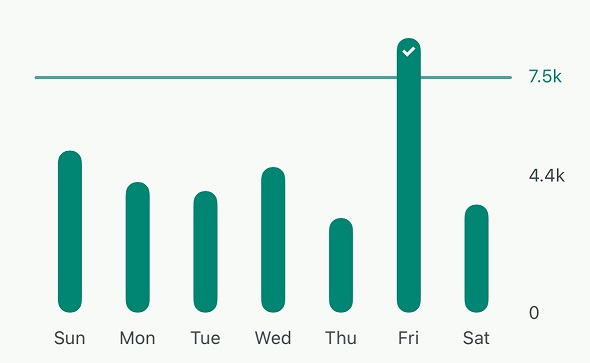
My 30,000-step week streak reaches fourteen weeks, despite looking a little sketchy around mid-week.  Things got off to a nice start on Sunday, scoring 5100 steps as I traveled to Rate Field for an Ozzie Guillen bobblehead.  Things came down on Monday, finishing with 4100 steps.  Another small decrease on Tuesday left me 31 steps shy of 3900.  Wednesday saw a healthy increase, jumping up to 4600 steps.  A big drop-off on Thursday left me with 3000 steps.  A last-minute invite to the Savannah Bananas “baseball game” on Friday pushed me well over my daily goal, ending with 8700 steps.  A quiet Saturday finished up the week with 3400 steps.

Total steps: 32,921

Daily average: 4703

So Long, Skipper

Former White Sox manager Jeff Torborg, who was suffering from Parkinson’s disease, died at the age of 83.  Torborg took over the White Sox following the 1988 season, replacing Jim Fregosi.  It was a tough go for the rebuilding White Sox, who finished with a record of 69–92, giving them a last place finish in the AL West.

Things got significantly better in 1990, when the young White Sox surprised the world, going 94-68 in their final season at Comiskey Park and finishing in second behind the A’s.  The 25-game improvement earned Torborg the Manager of the Year award.  As the White Sox opened the new Comiskey Park II across the street in 1991, they posted another second-place finish.  Following the season, Torborg bolted to the Mets, getting a hefty pay raise.

Torborg ended his tenure on the South Side at fifteen games over .500 and became a mentor to future manager Ozzie Guillen.  His son Dale was a roving strength and conditioning coordinator for the White Sox from 2004-22.

Hey Now, You’re An All Star Starter

In the midst of disappointing seasons on both sides of town, both the White Sox and the Cubs managed to get one player each elected to the starting lineup for the upcoming Midsummer Classic set to be played in Los Angeles.  Tim Anderson will start at shortstop for the American League, beating out Toronto’s Bo Bichette in the final round of voting by nabbing 55% of the tally.  Willson Contreras beat out Atlanta’s Travis d’Arnaud to start at catcher for the National League, garnering 65% of the vote.

Anderson, making his second consecutive appearance, is the first starter from the White Sox since Jose Abreu manned first base to start the 2018 and 2019 games and the first shortstop from the White Sox to start since Luis Aparicio in 1970.  He’s only the sixth White Sox shortstop to make an All-Star team, following Alexei Ramirez, Ozzie Guillen, Aparicio, Chico Carrasquel, and Luke Appling.

Contreras, who started for the NL squad in 2018 and 2019, becomes the second catcher in Cubs history to make three or more All-Star Games, following Hall of Famer Gabby Hartnett.  Contreras may get to share the honor with his younger brother William, who lost out to Bryce Harper in the final round of voting for NL DH, but Harper’s broken thumb may open the door for the younger Contreras to step in as a replacement.

Throwback Thursday – Batting Leaders Of The 1990s

Our Throwback Thursday feature continues, as we point the wayback machine back to the 1990s and put our focus on the offensive leaders of that decade.  As a reminder, I’ve identified 32 games that I attended during this time period, when I would have been ages 15 through 24.

Home Runs

Name Total
Sammy Sosa 7
Robin Ventura 4
Jason Giambi 3
Matt Stairs 2
Mike Cameron 2
Mark Grace 2
Ellis Burks 2
Carlos Garcia 2
Glenallen Hill 2

Hits

Name Total
Robin Ventura 23
Frank Thomas 20
Ray Durham 17
Sammy Sosa 16
Mark Grace 15

Runs

Name Total
Frank Thomas 14
Sammy Sosa 14
Ray Durham 12
Mark Grace 11
Robin Ventura 8
Tim Raines 8

RBI

Name Total
Robin Ventura 18
Sammy Sosa 13
Ozzie Guillen Continue reading →

Throwback Thursday – Batting Leaders Of The 1980s

Our Throwback Thursday feature continues, as we point the wayback machine back to the 1980s and put our focus on the offensive leaders of that decade.  As a reminder, I’ve identified 14 games that I attended during this time period, when I would have been ages 5 through 14.

Home Runs

Name Total
Carlton Fisk 3
Greg Walker 2
Harold Baines 2
Eddie Murray 2
Brian Downing 2
Daryl Boston 2

Hits

Name Total
Carlton Fisk 14
Harold Baines 14
Greg Walker 12
7 tied with  5

Runs

Name Total
Harold Baines 8
Greg Walker 6
Gary Ward 5
Daryl Boston 4
9 tied with 3

RBI

Name Total
Carlton Fisk 11
Greg Walker 8
Harold Baines Continue reading →

By The Numbers – 13

In 1929, uniform numbers appeared on the back of baseball jerseys for the first time, thanks to the Indians and the Yankees.  By 1937, numbers finally appeared across all uniforms, both home and away, across both major leagues.  Since that time, 81 distinct numbers have been worn by members of the White Sox, while the Cubs boast 76.

Today, we continue our look at those players, picking our favorite, if not the best, player to wear each uniform number for both Chicago teams with #13.  25 different players have donned #13 while playing in Chicago, 13 for the White Sox and 12 for the Cubs.

Acquired by the White Sox on December 6, 1984, from the Padres, Ozzie Guillen made his major league debut wearing #13 on Opening Day 1985, leading off against the Brewers and going 1-5 in the 4-2 victory at County Stadium.  Settling in as the everyday shortstop, Guillen finished the year with a .273 average, 21 doubles, and 9 triples.  Those totals were good enough to score Guillen the 1985 AL Rookie of the Year trophy.  Guillen saw a slight drop off in his sophomore season, as his average dropped to .250 and he managed 19 doubles and 4 triples.  1987 was a nice bounce back for Guillen, as he raised his average back up to .279 with a .656 OPS.  For the second straight year, he led the AL, and all of baseball, in Defensive WAR.  Guillen earned his first All Star nod in 1988 and, by season’s end, he once again led all of baseball in Defensive WAR, while seeing his average drop to .261 with 7 triples, the fifth highest total in the AL.

1989 was a tough year for Guillen.  He posted his worst offensive numbers since 1986 and, on the base paths, he fell victim to the hidden ball trick.  Twice. On June 23, against the Brewers, first baseman Greg Brock held the ball after a pickoff attempt and when Guillen took his hand off the base to stand up, Brock tagged him out.  Less than 2 months later, on August 5 against the Tigers, Dave Bergman made the same play.  He finished the year with .253 average and, despite his adventures on pick off attempts, a career high 36 stolen bases.  As the surprising White Sox challenged for the AL West title while saying goodbye to Comiskey Park, Guillen put in one of the finest seasons of his career.  He was named to his second All Star team, going 0-2, finished in 17th place in MVP voting, and earned his first, and only, Gold Glove.  He raised his average back up to .279 and knocked in a career high 58 RBIs.

Expectations were high for the White Sox as they moved across the street to the new Comiskey Park in 1991.  Guillen earned his third, and final, All Star nod, getting a sacrifice in his only plate appearance.  He ended the year with a .273 average and set a career high with 3 home runs.  Guillen’s 1992 season came to an early end when, on April 21 during a loss against the Yankees, a collision with outfielder Tim Raines ended in a severe knee injury.  Guillen recovered in 1993, though he appeared in only 134 games, his lowest total to date.  However, it was his most productive season offensively, posting a .280 batting average, and career highs with 4 home runs and a .666 OPS, as the White Sox won their first division title in a decade.  He hit .273 and scored 4 runs in a losing effort, as the White Sox were defeated in 6 games by the Blue Jays in the ALCS.  1994 looked to be the year that the White Sox finally broke through.  Guillen was up to the challenge, hitting a career high .288 with a .659 OPS.  Unfortunately, the year ended early when players went on strike on August 12 with the White Sox in first place in the newly created AL Central.

The 1995 season got off to a late start and had an abbreviated schedule due to the long work stoppage.  The success of the White Sox, and for Guillen himself, didn’t survive the long layoff.  Guillen saw his average drop to .248, his lowest over a “full” season in his career to this point.  His OPS dropped to its lowest total in a full season since 1989.  1996 saw a slight improvement for Guillen.  He appeared in 150 games, his highest total since his knee injury in 1992.  He raised his average back to .263 and tied his career high with 4 home runs.  However, 1997 was easily the worst season of Guillen’s White Sox career.  He had the lowest average of his career, coming in at .245, though he did once again tie his career high with 4 home runs.  Following the season, Guillen became a free agent and his playing career with the White Sox came to an end.

Guillen returned to the White Sox organization for the 2004 season as manager.  In 2005, he led the team to their first American League pennant since 1959 and their first World Series title in 88 years.  Ongoing personal difficulties with General Manager Kenny Williams led to his leaving with 2 games left in the 2011 season as the third winningest manager in franchise history.

On the north side of town, Neifi Pérez donned #13 over parts of three seasons with the Cubs.  He signed a minor league deal after being released by the Giants in 2004.  After only ten games in Triple A, Pérez joined the big-league club and became a spark plug in the lineup, going 6 for 6 in his first 6 at-bats and providing a needed backup to the ailing Nomar Garciaparra.  Dusty Baker named Pérez the starting shortstop in 2005 to replace Garciaparra, mainly on the strength of his defensive skills.  For the 2006 season Pérez lost the starting job at shortstop to Ronny Cedeño.  As his batting average sagged to .254 and his on-base percentage, never high, had fallen to .266, the Cubs traded him to the Tigers.
Against The A’s All Time Leaders – Through 2021

oakland-athleticsIn the past, we’ve looked at the all time leaders in both offensive and defensive categories for all 30 teams. This offseason, we will take our first ever look at those leaders against all 30 clubs.  We continue today with the Oakland Athletics.

The A’s began life in Philadelphia in 1901, as one of the 8 charter franchises of the American League, before moving to Kansas City in 1955 and, finally, to Oakland in 1968.  I’ve seen them play at least 30 times, including twice in their home stadium.

Home Runs

Name Total
Jose Abreu 3
Mike Cameron 2
25 tied with  1

Hits

Name Total
Tim Anderson 12
Jose Abreu 10
Juan Pierre 8

Runs

Name Total
Jose Abreu 6
Tim Anderson 5
A.J. Pierzynski 5

RBI

Name Total
Jose Abreu 6
Tim Anderson 6
A.J. Pierzynski 4
Tony Clark 4
Melky Cabrera 4
Mike Cameron 4
Brent Lillibridge 4
Adam Dunn 4

Doubles

Name Total
Jose Abreu 3
Dayan Viciedo 3
Tim Anderson 2
Tony Clark 2
Paul Konerko 2
Todd Frazier 2
Carlos Quentin 2

Triples Continue reading →

Against The Mariners All Time Leaders – Through 2021

marinersIn the past, we’ve looked at the all time leaders in both offensive and defensive categories for all 30 teams. This offseason, we will take our first ever look at those leaders against all 30 clubs.  We continue today with the Seattle Mariners.

The Mariners began life in 1977, joining the American League along with the Toronto Blue Jays. I’ve seen them play 39 times, including the final night game at the original Comiskey Park, the first 2 games of their sweep of the White Sox in the 2000 ALDS, and the first series back with 100% capacity last June.

Home Runs

Name Total
Paul Konerko 10
Alex Rios 4
Avisail Garcia 3
Jose Abreu 3
Dayan Viciedo 3

Hits

Name Total
Paul Konerko 17
Alexei Ramirez 17
Tim Anderson 15

Runs

Name Total
Paul Konerko 14
Tim Anderson 10
Alex Rios 9

RBI

Name Total
Paul Konerko 17
Alex Rios 9
Alexei Ramirez 8

Doubles

Name Total
Alexei Ramirez 5
A.J. Pierzynski 5
Melky Cabrera 3

Triples Continue reading →

By The Numbers – 28

In 1929, uniform numbers appeared on the back of baseball jerseys for the first time, thanks to the Indians and the Yankees.  By 1937, numbers finally appeared across all uniforms, both home and away, across both major leagues.  Since that time, 81 distinct numbers have been worn by members of the White Sox, while the Cubs boast 76.

Today, we continue our look at those players, picking our favorite, if not the best, player to wear each uniform number for both Chicago teams with #28.  86 different players have donned #28 while playing in Chicago, 46 for the White Sox and 40 for the Cubs.

Acquired by the Cubs prior to the 1989 season, Mitch Williams, wearing #28, quickly became a beloved cult figure on the north side.  He made an immediate impression, giving up 3 hits to load the bases in the ninth inning on Opening Day before striking out the next three batters, starting with future Hall of Famer Mike Schmidt, to close out a one-run victory.  That kickstarted an amazing season for Williams, and the Cubs, as they made a surprise run towards an NL East title.  On April 28th, Williams became the only pitcher in major league history to earn a save without throwing a pitch, entering the game with two outs and picking off runner Carmelo Martinez to end the game.  Williams made the All Star team for the only time in his career and hit his lone career home run, en route to a 4-4 record with 36 saves.  He appeared in two games of the NLCS against the Giants, giving up the game-winning hit to Will Clark in Game 5.

1990 was not quite as good for Williams.  His record dropped to 1-8 while his ERA rose to 3.93.  He earned only 16 saves, a drop of 20 from the previous season, as a knee injury bothered him throughout the year.  The next spring, with the Cubs having acquired Dave Smith to replace him as closer, Williams was traded to the Phillies just prior to Opening Day.

On the other side of town, Joey Cora switched to #28 after the 1991 season, his first with the White Sox.  Cora spent the 1992 season on the bench following the acquisition of Steve Sax, starting only 21 games at second base.  With Sax faltering, Cora became the everyday second baseman in 1993.  He set a career high with 153 games played and hit .268 with a career high 20 stolen bases as the White Sox won their final AL West crown.  Cora struggled in the ALCS, hitting an anemic .136 as the White Sox fell in 6 games to the Blue Jays.

Cora continued to improve in 1994, raising his average again to .276 and had 2 home runs and 30 RBIs when the season came to a premature end due to the player’s strike.  When baseball resumed in 1995, Cora became a free agent and his White Sox playing career came to an end.  He rejoined the organization and once again wore #28 as third base coach for the 2004 season, when Ozzie Guillen was hired as manager.  He moved to became the bench coach after the 2006 season, where he would remain until the end of the 2011 season, when he was fired with 2 games left in the season as part of Guillen’s exit from the team.

Against The Angels All Time Leaders – Through 2021

laangelsIn the past, we’ve looked at the all time leaders in both offensive and defensive categories for all 30 teams.  This offseason, we will take our first ever look at those leaders against all 30 clubs. We continue today with the Los Angeles Angels.

The Angels began life in 1961, joining the American League along with the second incarnation of the Washington Senators.  They’ve changed their location designation multiple times, starting in Los Angeles, changing to California in 1966, moving to Anaheim in 1997 and, awkwardly incorporating both Los Angeles and Anaheim starting in 2005, and finally returning to just Los Angeles in 2016.  I’ve seen them play 38 times, including games 1 and 2 of the 2005 ALCS against the White Sox and Jim Thome’s 500th career home run in 2008.

Home Runs

Name Total
Carlos Quentin 6
Paul Konerko 6
Jim Thome 4

Hits

Name Total
Paul Konerko 22
A.J. Pierzynski 17
Alexei Ramirez 17

Runs

Name Total
Paul Konerko 14
Alexei Ramirez 8
Carlos Quentin 8

RBI

Name Total
A.J. Pierzynski 10
Paul Konerko 9
Alexei Ramirez 8
Carlos Quentin 8
Juan Uribe 8

Doubles

Name Total
Paul Konerko 4
Juan Uribe 4
Joe Crede 3
Scott Podsednik 3
Javier Baez 3

Triples Continue reading →