Throwback Thursday – Batting Leaders Of The 1990s

Our Throwback Thursday feature continues, as we point the wayback machine back to the 1990s and put our focus on the offensive leaders of that decade.  As a reminder, I’ve identified 32 games that I attended during this time period, when I would have been ages 15 through 24.

Home Runs

Name Total
Sammy Sosa 7
Robin Ventura 4
Jason Giambi 3
Matt Stairs 2
Mike Cameron 2
Mark Grace 2
Ellis Burks 2
Carlos Garcia 2
Glenallen Hill 2

Hits

Name Total
Robin Ventura 23
Frank Thomas 20
Ray Durham 17
Sammy Sosa 16
Mark Grace 15

Runs

Name Total
Frank Thomas 14
Sammy Sosa 14
Ray Durham 12
Mark Grace 11
Robin Ventura 8
Tim Raines 8

RBI

Name Total
Robin Ventura 18
Sammy Sosa 13
Ozzie Guillen Continue reading →

By The Numbers – 13

In 1929, uniform numbers appeared on the back of baseball jerseys for the first time, thanks to the Indians and the Yankees.  By 1937, numbers finally appeared across all uniforms, both home and away, across both major leagues.  Since that time, 81 distinct numbers have been worn by members of the White Sox, while the Cubs boast 76.

Today, we continue our look at those players, picking our favorite, if not the best, player to wear each uniform number for both Chicago teams with #13.  25 different players have donned #13 while playing in Chicago, 13 for the White Sox and 12 for the Cubs.

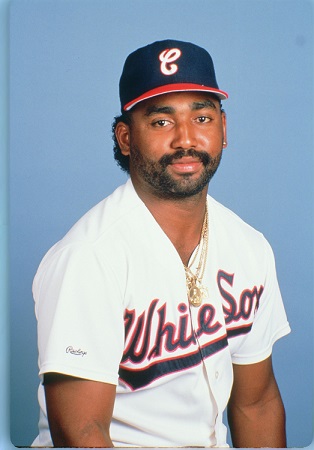
Acquired by the White Sox on December 6, 1984, from the Padres, Ozzie Guillen made his major league debut wearing #13 on Opening Day 1985, leading off against the Brewers and going 1-5 in the 4-2 victory at County Stadium.  Settling in as the everyday shortstop, Guillen finished the year with a .273 average, 21 doubles, and 9 triples.  Those totals were good enough to score Guillen the 1985 AL Rookie of the Year trophy.  Guillen saw a slight drop off in his sophomore season, as his average dropped to .250 and he managed 19 doubles and 4 triples.  1987 was a nice bounce back for Guillen, as he raised his average back up to .279 with a .656 OPS.  For the second straight year, he led the AL, and all of baseball, in Defensive WAR.  Guillen earned his first All Star nod in 1988 and, by season’s end, he once again led all of baseball in Defensive WAR, while seeing his average drop to .261 with 7 triples, the fifth highest total in the AL.

1989 was a tough year for Guillen.  He posted his worst offensive numbers since 1986 and, on the base paths, he fell victim to the hidden ball trick.  Twice. On June 23, against the Brewers, first baseman Greg Brock held the ball after a pickoff attempt and when Guillen took his hand off the base to stand up, Brock tagged him out.  Less than 2 months later, on August 5 against the Tigers, Dave Bergman made the same play.  He finished the year with .253 average and, despite his adventures on pick off attempts, a career high 36 stolen bases.  As the surprising White Sox challenged for the AL West title while saying goodbye to Comiskey Park, Guillen put in one of the finest seasons of his career.  He was named to his second All Star team, going 0-2, finished in 17th place in MVP voting, and earned his first, and only, Gold Glove.  He raised his average back up to .279 and knocked in a career high 58 RBIs.

Expectations were high for the White Sox as they moved across the street to the new Comiskey Park in 1991.  Guillen earned his third, and final, All Star nod, getting a sacrifice in his only plate appearance.  He ended the year with a .273 average and set a career high with 3 home runs.  Guillen’s 1992 season came to an early end when, on April 21 during a loss against the Yankees, a collision with outfielder Tim Raines ended in a severe knee injury.  Guillen recovered in 1993, though he appeared in only 134 games, his lowest total to date.  However, it was his most productive season offensively, posting a .280 batting average, and career highs with 4 home runs and a .666 OPS, as the White Sox won their first division title in a decade.  He hit .273 and scored 4 runs in a losing effort, as the White Sox were defeated in 6 games by the Blue Jays in the ALCS.  1994 looked to be the year that the White Sox finally broke through.  Guillen was up to the challenge, hitting a career high .288 with a .659 OPS.  Unfortunately, the year ended early when players went on strike on August 12 with the White Sox in first place in the newly created AL Central.

The 1995 season got off to a late start and had an abbreviated schedule due to the long work stoppage.  The success of the White Sox, and for Guillen himself, didn’t survive the long layoff.  Guillen saw his average drop to .248, his lowest over a “full” season in his career to this point.  His OPS dropped to its lowest total in a full season since 1989.  1996 saw a slight improvement for Guillen.  He appeared in 150 games, his highest total since his knee injury in 1992.  He raised his average back to .263 and tied his career high with 4 home runs.  However, 1997 was easily the worst season of Guillen’s White Sox career.  He had the lowest average of his career, coming in at .245, though he did once again tie his career high with 4 home runs.  Following the season, Guillen became a free agent and his playing career with the White Sox came to an end.

Guillen returned to the White Sox organization for the 2004 season as manager.  In 2005, he led the team to their first American League pennant since 1959 and their first World Series title in 88 years.  Ongoing personal difficulties with General Manager Kenny Williams led to his leaving with 2 games left in the 2011 season as the third winningest manager in franchise history.

On the north side of town, Neifi Pérez donned #13 over parts of three seasons with the Cubs.  He signed a minor league deal after being released by the Giants in 2004.  After only ten games in Triple A, Pérez joined the big-league club and became a spark plug in the lineup, going 6 for 6 in his first 6 at-bats and providing a needed backup to the ailing Nomar Garciaparra.  Dusty Baker named Pérez the starting shortstop in 2005 to replace Garciaparra, mainly on the strength of his defensive skills.  For the 2006 season Pérez lost the starting job at shortstop to Ronny Cedeño.  As his batting average sagged to .254 and his on-base percentage, never high, had fallen to .266, the Cubs traded him to the Tigers.

#10 – Ozzie Guillen

Name: Ozzie Guillen

Rank: 10

Position: SS

Years With White Sox: 1985-1997

Acquired by the White Sox, along with Tim Lollar, Bill Long, and Luis Salazar, on December 6, 1984 from the Padres for Kevin Kristan, Todd Simmons, and LaMarr Hoyt, Ozzie Guillen made his major league debut on Opening Day 1985, leading off against the Brewers and going 1-5 in the 4-2 victory at County Stadium.  Settling in as the everyday shortstop, Guillen finished the year with a .273 average, 21 doubles, and 9 triples.  Those totals were good enough to score Guillen the 1985 AL Rookie of the Year trophy.

Guillen saw a slight drop off in his sophomore season.  His average dropped to .250 and he managed 19 doubles and 4 triples.  Defensively, he led the American League in Defensive WAR.

1987 was a nice bounce back for Guillen.  He raised his average back up to .279 with a .656 OPS.  For the second straight year, he led the AL, and all of baseball, in Defensive WAR.

Guillen earned his first All Star nod in 1988, though he didn’t get in to the game.  By the end of the season, he once again led all of baseball in Defensive WAR, while seeing his average drop to .261 with 7 triples, the fifth highest total in the AL.

1989 was a tough year for Guillen.  He posted his worst offensive numbers since 1986 and, on the base paths, he fell victim to the hidden ball trick.  Twice. On June 23, against the Brewers, first baseman Greg Brock held the ball after a pickoff attempt and when Guillen took his hand off the base to stand up, Brock tagged him out.  Less than 2 months later, on August 5 against the Tigers, Dave Bergman made the same play.  He finished the year with .253 average and, despite his adventures on pick off attempts, a career high 36 stolen bases.

As the surprising White Sox challenged for the AL West title while saying goodbye to Comiskey Park, Guillen put in one of the finest seasons of his career.  He was named to his second All Star team, going 0-2, finished in 17th place in MVP voting, and earned his first, and only, Gold Glove.  He raised his average back up to .279 and knocked in a career high 58 RBIs.

Expectations were high for the White Sox as they moved across the street to the new Comiskey Park in 1991.  Guillen earned his third, and final, All Star nod, getting a sacrifice in his only plate appearance.  He ended the year with a .273 average and set a career high with 3 home runs.

Guillen’s 1992 season came to an early end when, on April 21 during a loss against the Yankees, a collision with outfielder Tim Raines ended in a severe knee injury.  Appearing in only 20 games, he hit a career low .200 in only 40 at bats.

Guillen recovered in 1993, though he appeared in only 134 games, his lowest total to date.  However, it was his most productive season offensively, posting a .280 batting average, and career highs with 4 home runs and a .666 OPS, as the White Sox won their first division title in a decade.  He hit .273 and scored 4 runs in a losing effort, as the White Sox were defeated in 6 games by the Blue Jays in the ALCS.

1994 looked to be the year that the White Sox finally broke through.  Guillen was up to the challenge, hitting a career high .288 with a .659 OPS.  Unfortunately, the year ended early when players went on strike on August 12 with the White Sox in first place in the newly created AL Central.

The 1995 season got off to a late start and had an abbreviated schedule due to the long work stoppage.  The success of the White Sox, and for Guillen himself, didn’t survive the long layoff.  Guillen saw his average drop to .248, his lowest over a “full” season in his career to this point.  His OPS dropped to its lowest total, excepting 1992, since 1989.

1996 saw a slight improvement for Guillen.  He appeared in 150 games, his highest total since his knee injury in 1992.  He raised his average back to .263 and tied his career high with 4 home runs.

1997 was easily the worst season of Guillen’s White Sox career.  He had the lowest average of his career, coming in at .245, though he did once again tie his career high with 4 home runs.  Following the season, Guillen became a free agent and his playing career with the White Sox came to an end.

Guillen returned to the White Sox organization for the 2004 season as manager.  In 2005, he led the team to their first American League pennant since 1959 and their first World Series title in 88 years.  Ongoing personal difficulties with General Manager Kenny Williams led to his leaving with 2 games left in the 2011 season as the third winningest manager in franchise history.

Guillen’s numbers in a White Sox uniform, both for games I attended and overall, were:

Continue reading →

2018 Hall Of Fame Ballot – The Newcomers

baseballhof

The BBWAA released their ballot for the Hall of Fame class of 2018 on Monday.  The results of the vote are due to be revealed on January 24th, with induction taking place next July.  After Jeff Bagwell, Tim Raines, and Ivan Rodriguez were elected in last year’s voting, the new ballot contains 14 holdovers along with 19 newcomers, which may continue the logjam caused by the current BBWAA rules which limit the number of votes on one ballot to 10 and the ongoing refusal by some writers to vote for players tainted by PEDs, leaving too many qualified candidates fighting for limited spots.  Once again, the BBWAA and the Hall may find themselves with a mess on their hands.  And that doesn’t even take in to account Joe Morgan’s letter.

Yesterday, we looked at the returning candidates.  Today, it’s time to look at the newcomers and who may be thankful come January.

Chris Carpenter

He put together some monster seasons, but lost nearly 4 1/2 seasons due to injury, leaving his numbers well short of enshrinement.

Johnny Damon

Probably would not get anywhere near enough support, but he spent many years in a Red Sox or Yankees uniform, so who knows.

Livan Hernandez

The Cuban ex-pat may get a vote or two, but it should be one and done for him.

Orlando Hudson

I can’t imagine a world where Orlando Hudson, who finished out his career with the White Sox in 2012, earns a Hall of Fame vote.

Aubrey Huff

Not that he was going to garner any support anyway, but his recent social media posts, falling for the worst of the right wing conspiracies, certainly aren’t helping.

Jason Isringhausen

This has been a weak batch of newly eligible players. no?

Andruw Jones

Now here is an interesting conundrum.  If we stick to his first 11 seasons, it seemed like he was destined for the Hall.  His last 7 seasons, though, were so bad that it makes it hard to consider him.  This would be a tough choice.

Chipper Jones

Ah, there we go.  A sure-fire, first ballot selection for the long time Brave.

Carlos Lee

The former White Sox outfielder may get a little support, but not enough to keep him on the ballot for a second go-around.

Brad Lidge

Lidge was on the mound when the Phillies won the World Series in 2008, but that won’t erase the memories of the huge home runs he gave up in the 2005 post-season, to Albert Pujols and Scott Podsednik.

Hideki Matsui
Continue reading →

2018 Hall Of Fame Ballot – The Holdovers

baseballhofThe BBWAA released their ballot for the Hall of Fame class of 2018 yesterday. The results of the vote are due to be revealed on January 24th, with induction taking place next July. After Jeff Bagwell, Tim Raines, and Ivan Rodriguez were elected in last year’s voting, the new ballot contains 14 holdovers along with 19 newcomers, which may continue the logjam caused by the current BBWAA rules which limit the number of votes on one ballot to 10 and the ongoing refusal by some writers to vote for players tainted by PEDs, leaving too many qualified candidates fighting for limited spots.

Let’s take a look at the returning candidates today before moving on to the newcomers.

Barry Bonds
Years on ballot: 5
2017 Percentage: 53.8

The all time home run champion saw his vote percentage rise for the third straight time last year, so the PED bias holding him back may be subsiding.  Having hit the halfway point in his election cycle, whether he has enough time to get up to 75% remains to be seen.

Roger Clemens
Years on ballot: 5
2017 Percentage: 54.1

Roger Clemens, he of the 354 career victories and 7 Cy Young awards, also found himself with a third consecutive rise after his fifth run through the voting process.  For some odd reason, perhaps by having played for more teams, Clemens continues to get marginally more support than his fellow PED poster child Barry Bonds.

Vladimir Guerrero
Years on ballot: 1
2017 Percentage: 71.7

The former Expo and Angel should have no issue getting in this year, considering he was only 15 votes short last year.

Trevor Hoffman
Years on ballot: 2
2017 Percentage: 74.0

One of only 2 pitchers with over 600 saves, Hoffman missed election last year buy a mere 5 votes.  I would expect him to break through this year.

Jeff Kent
Years on ballot: 4
2017 Percentage: 16.7

The 2000 NL MVP managed a slight increase in vote percentage last year, but has a long way to go and not a whole lot of time left, so the future does not look good for him.

Edgar Martinez
Years on ballot: 8
2017 Percentage: 58.6

The longtime DH for the Mariners saw another big jump last year, but has only 2 elections left and may not have enough time to build up to the necessary 75%.  His long career as a DH in the Pacific Northwest may be holding him back.

Fred McGriff
Years on ballot: 8
2017 Percentage: 21.7 Continue reading →

Hall Of Fame Batting Leaders

baseballhof

Today, former White Sox outfielder Tim Raines joins long time Astros first baseman Jeff Bagwell and well travelled catcher Ivan Rodriguez in taking their place in Cooperstown.  With 3 new hitters joining the list of Hall of Famers I’ve seen play live, let’s check back in with the new leaders on the offensive side of the ball amongst Hall of Famers for all of the games I’ve attended between 1984 and 2017.

Home Runs

Name Total
Frank Thomas 15
Ivan Rodriguez 4
Carlton Fisk 2
Craig Biggio 2
Mike Piazza 2
Ken Griffey Jr 2
Eddie Murray 2

Hits

Name Total
Frank Thomas 54
Ken Griffey Jr 32
Ivan Rodriguez 16
Continue reading →

#28 – Tim Raines

Name: Tim Raines

Rank: 28

Position: LF

Years With White Sox: 1991-1995

Acquired in December of 1990 from the Expos, along with Jeff Carter and a player to be named later, for Ivan Calderon and Barry Jones, Tim Raines took over left field, and the lead off spot, as the White Sox moved in to the new Comiskey Park.  At the age of 31, Raines appeared in 155 games, his highest total since 1984, while hitting .268 with 51 stolen bases.

In 1992, Raines had another strong season, putting up a .294 average with 7 home runs, 54 RBIs, and 45 stolen bases.

Limited to 115 games in 1993 due to a torn thumb ligament, Raines had the best season of his post-Expos career, hitting .306 and posting a .401 OBP, adding 16 home runs and 21 stolen bases.  During the ALCS against the Blue Jays, Raines hit .444 with an OPS of 1.038 as the White Sox dropped the series in 6 games.

Raines saw his production drop off a bit in 1994, his average dropping to .266 but with 10 home runs when the season ended early due to the player’s strike.  When baseball returned in 1995, so did Raines.  He bounced back with a .285 average and a .796 OPS, his second highest total as a member of the White Sox.  Following the season, Raines was traded to the Yankees for an unheralded player to be named later.

Raines rejoined the White Sox organization in November of 2004 when he was named the first base coach, a position he would hold for the championship season in 2005.  For 2006, he was moved to bench coach and, after the season, his services were not retained.

Raines’s numbers in a White Sox uniform, both for games I attended and overall, were:

Continue reading →

#42 – Ivan Calderon

Name: Ivan Calderon

Rank: 42

Position: RF/LF

Years With White Sox: 1986-1990, 1993

Acquired from the Mariners as the player to be named later from an earlier trade for Scott Bradley, Ivan Calderon joined the White Sox on July 1, 1986.  After spending some time in Triple A Buffalo, Calderon was called up to the big leagues, appearing in 13 games and hitting .303.

Taking over as the every day right fielder in 1987, Calderon put up impressive offensive numbers.  He hit .293 with a career high 28 home runs and .888 OPS.  He made one of the defensive plays of the year on July 27 at Tiger Stadium.  Playing left field, he jumped on top of the mini scoreboard at the bottom of the fence to rob Alan Trammel of a home run.

An injured shoulder cut short Calderon’s season in 1988, as he was placed on the disabled list on August 1 and missed the remainder of the year.  Appearing in only 73 games, he managed to hit only 14 home runs while his average dropped to .212.

A healthy Calderon returned in 1989, but the shoulder injury seemed to have sapped him of much of his power.  He appeared in 157 games and totaled 622 at bats, but managed to only hit 14 home runs, equaling his total from the injury shortened season the year before and falling well below his career high in 1987.  1990 was more of the same, with the third straight season of 14 home runs, but he did manage a career high 44 doubles.

Following the season, he was traded, along with Barry Jones, to the Expos for future Hall of Famer Tim Raines, Jeff Carter, and a player to be named later.  He returned to the White Sox on August 31, 1993 as a free agent.  He appeared in only 9 games over the final month of the season, hitting an anemic .115 no home runs and 3 RBIs.  He was left off the playoff roster and, after the season came to an end, he decided to retire at the age of 31.

Sadly, 10 years later, on December 27, 2003, he was murdered in a bar in his native Puerto Rico.

Calderon’s numbers in a White Sox uniform, both for games I attended and overall, were:

Continue reading →

2017 Hall Of Fame Election Thoughts

All eyes turned towards Cooperstown yesterday as the votes were tallied and three new members were announced as the Hall of Fame class of 2017: Jeff Bagwell, Tim Raines, and Ivan Rodriguez.  Bagwell, in his seventh year of eligibility, garnered 86.2% of the vote.  Raines, in his last year on the ballot, scored 86% of the vote.  Rodriguez, a surprise based on publicly released ballots, surpassed the necessary 75% by 4 votes in his first year of eligibility.

Six others tallied greater than 50% of the vote, led by Trevor Hoffman, who fell a mere 5 votes shy of election, and Vladimir Guerrero, who was 15 votes short.  Following Edgar Martinez, who raised his total to 58.6%, were Roger Clemens and Barry Bonds, who both surpassed 50% for the first time and saw enough increased support to lead one to believe the will eventually be voted in.  Mike Mussina was the final player to finish above 50%, coming in at 51.8%.

Lee Smith garnered 34.2% of the vote in his final time on the ballot.  Jorge Posada and Magglio Ordonez led the 16 first timers who failed to get 5% and will now fall off the ballot.

As for the newest Hall of Famers, I’ve seen Rodriguez play 19 times, mostly during his stint with the Tigers towards the end of his career. I only saw Bagwell play 13 times over the course of his career, followed by 9 career games for Raines.

Jeff Bagwell’s numbers in games I’ve attended were:

Continue reading →

2017 Hall Of Fame Ballot – The Holdovers

baseballhofThe BBWAA released their ballot for the Hall of Fame class of 2017 on Monday. The results of the vote are due to be revealed on January 18th, with induction taking place next July. After Ken Griffey Jr. and Mike Piazza were elected in last year’s voting, the new ballot contains 15 holdovers along with 19 newcomers, which may continue the logjam caused by the current BBWAA rules which limit the number of votes on one ballot to 10 and the ongoing refusal by some writers to vote for players tainted by PEDs, leaving too many qualified candidates fighting for limited spots.

Let’s take a look at the returning candidates today before moving on to the newcomers.

Jeff Bagwell
Years on ballot: 6
2015 Percentage: 71.6

Bagwell was less than 4% away from induction last year and seems guaranteed to get elected this time around.

Barry Bonds
Years on ballot: 4
2015 Percentage: 44.3

The all time home run champion saw his vote percentage rise for the second straight time last year, so the PED bias holding him back may be subsiding.  Whether he has enough time to get up to 75% remains to be seen.

Roger Clemens
Years on ballot: 4
2015 Percentage: 45.2

Roger Clemens, he of the 354 career victories and 7 Cy Young awards, also found himself with a second consecutive rise after his fourth run through the voting process.  For some odd reason, perhaps by having played for more teams, Clemens continues to get marginally more support than his fellow PED poster child Barry Bonds.

Trevor Hoffman
Years on ballot: 1
2015 Percentage: 67.3

One of only 2 pitchers with over 600 saves, Hoffman came close to election on his first time on the ballot.  I would expect his to break through either this year or next.

Jeff Kent
Years on ballot: 3
2015 Percentage: 14.0

The 2000 NL MVP earned the exact same percentage of the vote as he did the previous year, meaning the future does not look good for him.

Edgar Martinez
Years on ballot: 7
2015 Percentage: 43.4

The longtime DH for the Mariners saw a big jump last year, but may not have enough time left on the ballot to build up to the necessary 75%.  His long career as a DH in the Pacific Northwest may be holding him back.

Fred McGriff
Years on ballot: 7
2015 Percentage: 20.9 Continue reading →