Tomorrow, the Hall of Fame class of 2025 will be inducted in Cooperstown and CC Sabathia and Billy Wagner will boost the number of Hall of Fame pitchers I’ve seen live to twelve. To celebrate this momentous occasion, we will take another look at the pitching leaders amongst Hall of Famers in games I have attended between 1984 and 2024.
Welcome to the first installment of what should become a recurring feature, taking a look back at some occurrence in the world, mostly sports, and trying to ascertain what the outcome would have been if just one thing, a decision or an outcome, went a different way. We start in October 2003, with game six of the NLCS where one particular play, debated for years, may have turned the tide.
On October 14, 2003, the Cubs were five outs away from winning their first National League pennant since 1945. Mark Prior was on the mound for the Cubs and had retired eight straight batters into the eighth inning when Juan Pierre doubled, bringing Luis Castillo to the plate. On the eighth pitch of the at bat, Castillo hit a high foul ball down the left field line, heading towards the stands. Moises Alou tracked the ball and reached, when the ball was touched by a fan. A visibly upset Alou, along with Prior and Cub manager Dusty Baker, pleaded for a call of fan interference, but the umpires ruled that the ball had left the field of play. Castillo returned to the plate and, on the next pitch, walked on a wild pitch, allowing Pierre to advance to third.
Ivan Rodriguez then hit an 0-2 pitch for a single, knocking in Pierre and making the score 3-1. When the next batter, Miguel Cabrera, hit a shard ground ball to shortstop Alex Gonzalez, it looked like the rally was over, but, instead of turning the ready-made double play, Gonzalez booted the ball, loading the bases. Derrek Lee then drilled the next pitch for a double, knocking in Castillo and Rodriguez and tying the score 3-3. At this point, Baker emerged from the Cub dugout to remove Prior, but the damage had been done. The Marlins scored five more times, winning the game 8-3 and forcing a Game 7.
The following night, the Marlins completed the unlikely comeback, beating the Cubs 9-6 and going on the face the Yankees in the World Series. They would wind up winning that as well, defeating the Yankees in six games to take home their second title.
But what if Alou had made that catch? How would the rest of history play out? Let’s take a trip through the multiverse to see what the outcome would have been.
OK, so Alou makes the catch for the second out of the inning. Let us assume Rodriguez still singles, scoring the speedy Pierre from second to make it a 3-1 game. Let us also assume Cabrera hits the same grounder to Alex Gonzalez, but, without the pressure of trying to make up for the missed out, he fields it cleanly, retiring Cabrera and ending the inning. Continue reading →
The BBWAA recently released their ballot for the Hall of Fame class of 2020. The results of the vote are due to be revealed on January 21st, with induction taking place July 26th. After Mariano Rivera, Mike Mussina, Edgar Martinez, and Roy Halladay were elected in last year’s voting, the new ballot contains 14 holdovers along with 18 newcomers, which may potentially continue the logjam caused by the current BBWAA rules which limit the number of votes on one ballot to 10 and the ongoing refusal by some writers to vote for players tainted by PEDs, leaving too many qualified candidates fighting for limited spots.
Yesterday, we looked at the returning candidates. Today, it’s time to look at the newcomers and who may be thankful come January.
Bobby Abreu
I’ll be honest, I can see him getting some modest support, but I never considered him a Hall of Fame player during his career.
Josh Beckett
I’m sure he’ll get some support, but I don’t see it translating into an eventual election.
Heath Bell
I wonder what it feels like to be placed on the ballot knowing that you won’t earn even a single vote.
Eric Chavez
Again, I’m sure he’ll see a little support, but he’s not going to make it.
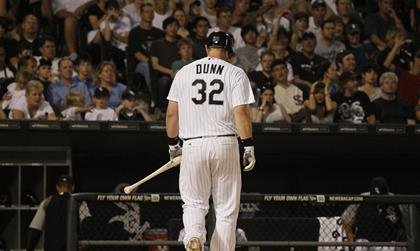
Adam Dunn
There aren’t enough home runs in the world to make up for the rest of his game.
Chone Figgins
Come on, now. This is getting a little ridiculous.
Rafael Furcal
A career to be proud of, but not one that ends with election to the Hall.
Jason Giambi
The 2000 AL MVP should stick around on the ballot, but the PED stigma will likely keep him on the outside looking in.
Raul Ibanez
The former slugger may get a little support, but not enough to keep him on the ballot for a second go-around.
Derek Jeter
The only question here is whether he will join his former teammate, Mariano Rivera, in getting 100% of the vote.
Paul Konerko
Personal feelings aside, he will likely see enough support to hang on the ballot, but not enough to actually make it.
The BBWAA recently released their ballot for the Hall of Fame class of 2020. The results of the vote are due to be revealed on January 21st, with induction taking place July 26th. After Mariano Rivera, Mike Mussina, Edgar Martinez, and Roy Halladay were elected in last year’s voting, the new ballot contains 14 holdovers along with 18 newcomers, which may potentially continue the logjam caused by the current BBWAA rules which limit the number of votes on one ballot to 10 and the ongoing refusal by some writers to vote for players tainted by PEDs, leaving too many qualified candidates fighting for limited spots.
Let’s take a look at the returning candidates today before moving on to the newcomers.
Barry Bonds Years on ballot: 7 2019 Percentage: 59.1
The all time home run champion saw his vote percentage rise for the fifth straight time last year, so the PED bias holding him back may be slightly subsiding. But, with only 3 more shots with the writers, it remains to be seen if he has enough time to get up to 75%.
Roger Clemens Years on ballot: 7 2019 Percentage: 59.5
Roger Clemens, he of the 354 career victories and 7 Cy Young awards, also found himself with a fourth consecutive rise after his seventh run through the voting process. For some odd reason, perhaps by having played for more teams, Clemens continues to get marginally more support than his fellow PED poster child Barry Bonds.
Todd Helton Years on ballot: 1 2019 Percentage: 16.5
A fine first showing for Helton, but it looks like he’s going to suffer from the same Colorado bias as Larry Walker.
Andruw Jones Years on ballot: 2 2019 Percentage: 7.5
If voters were to stick to his first 11 seasons, Jones looks like a shoe-in for the Hall. His last 7 seasons, though, were so bad that it makes it hard to consider him. Based on his initial vote total, those final seasons seem to be holding sway.
Jeff Kent Years on ballot: 6 2019 Percentage: 18.1
Today, former White Sox designated hitter Harold Baines joins long time Yankees closer Mariano Rivera, Orioles and Yankees ace Mike Mussina, Mariners star Edgar Martinez, Blue Jays and Phillies ace Roy Halladay, and well-traveled closer Lee Smith in taking their place in Cooperstown. With a single new hitter joining the list of Hall of Famers I’ve seen play live, let’s check back in with the new leaders on the offensive side of the ball amongst Hall of Famers for all of the games I’ve attended between 1984 and 2019.
This Sunday, the Hall of Fame class of 2019 will be inducted in Cooperstown and Mariano Rivera, Roy Halladay, Lee Smith, and Mike Mussina will boost the number of Hall of Fame pitchers I’ve seen live to 10. To celebrate this momentous occasion, we will take another look at the pitching leaders amongst Hall of Famers in games I have attended between 1984 and 2019.
All eyes turned towards the small hamlet of Cooperstown yesterday, as the votes were tallied and four new members were announced as the Hall of Fame class of 2019: Mariano Rivera, Roy Halladay, Edgar Martinez, and Mike Mussina. Rivera, in his first year of eligibility, becomes the first player ever to be elected with 100% of the vote. Halladay, who passed away in 2017, earned 85.4% in his first year on the ballot. Martinez, in his tenth and final year of eligibility, also found himself on 85.4% of the ballots. Mussina snared 76.7% of the vote in his sixth year on the ballot, just 7 votes more than the minimum needed for enshrinement.
Four others tallied greater than 50% of the vote, led by Curt Schilling, who jumped up to 60.9%. Roger Clemens and Barry Bonds saw modest increases, which makes their eventual induction unlikely with only three more elections for each. Larry Walker, heading in to his final shot on the ballot, saw a huge increase, going from 34.1% to 54.6%. Fred McGriff scored 39.8% of the vote in his final go around.
Michael Young, Lance Berkman, and Miguel Tejada led the list of 16 players who failed to get 5% and will drop off the ballot, including local stars Freddy Garcia, Jon Garland, Ted Lilly, and Juan Pierre.
As for the newest Hall of Famers, I’ve seen Rivera pitch 9 times, followed by 6 career games for Martinez, 3 for Mussina, and 2 for Halladay. These 4, along with Harold Baines and Lee Smith, who were previously elected by the Today’s Game Era Committee, will enter the Hall of Fame on Sunday, July 21.
Mariano Rivera’s numbers in games I’ve attended were: Continue reading →
The BBWAA released their ballot for the Hall of Fame class of 2019 yesterday. The results of the vote are due to be revealed on January 22nd, with induction taking place next July. After Chipper Jones, Jim Thome, Vladimir Guerrero, and Trevor Hoffman were elected in last year’s voting, the new ballot contains 15 holdovers along with 20 newcomers, which may continue the logjam caused by the current BBWAA rules which limit the number of votes on one ballot to 10 and the ongoing refusal by some writers to vote for players tainted by PEDs, leaving too many qualified candidates fighting for limited spots.
Let’s take a look at the returning candidates today before moving on to the newcomers.
Barry Bonds Years on ballot: 6 2018 Percentage: 56.4
The all time home run champion saw his vote percentage rise for the fourth straight time last year, so the PED bias holding him back may be subsiding. With only 4 more shots with the writers, it remains to be seen if he has enough time to get up to 75%.
Roger Clemens Years on ballot: 6 2018 Percentage: 57.3
Roger Clemens, he of the 354 career victories and 7 Cy Young awards, also found himself with a fourth consecutive rise after his sixth run through the voting process. For some odd reason, perhaps by having played for more teams, Clemens continues to get marginally more support than his fellow PED poster child Barry Bonds.
Andruw Jones Years on ballot: 1 2018 Percentage: 7.3
If voters were to stick to his first 11 seasons, Jones looks like a shoe-in for the Hall. His last 7 seasons, though, were so bad that it makes it hard to consider him. Based on his initial vote total, those final seasons seem to be holding sway.
Jeff Kent Years on ballot: 5 2018 Percentage: 14.5
The 2000 NL MVP saw his vote percentage go in the wrong direction last year. He still has a long way to go and not a whole lot of time left, so the future does not look good for him.
Edgar Martinez Years on ballot: 9 2018 Percentage: 70.4
The longtime DH for the Mariners saw another big jump last year, but has 1 last shot to make up that remaining 5%.
Fred McGriff Years on ballot: 9 2018 Percentage: 23.2 Continue reading →
All eyes turned towards Cooperstown yesterday, as the votes were tallied and four new members were announced as the Hall of Fame class of 2018: Chipper Jones, Vladimir Guerrero, Jim Thome, and Trevor Hoffman. Jones, in his first year of eligibility, garnered 97.2% of the vote, the 11th highest percentage of all time. Guerrero rose to 92.9% in just his second year on the ballot. Thome, also in his first year of eligibility, found himself on 89.8%of the ballots. Hoffman snared 79.9% of the vote in his third year on the ballot.
Five others tallied greater than 50% of the vote, led by Edgar Martinez, who fell just short at 70.4%. If history is any indication, he will be inducted next year, his final on the ballot. Mike Mussina saw a large increase, moving up over 10 percentage points to 63.5%. Roger Clemens and Barry Bonds remain in the mid 50s, while Curt Schilling just squeaks in at 51.2%.
Jamie Moyer and Johan Santana led the list of 14 players who failed to get 5% and will drop off the ballot, which includes local stars Kerry Wood, Carlos Lee, and Carlos Zambrano.
As for the newest Hall of Famers, I’ve seen Thome play 139 times, the most of any Hall of Famer. I only saw Guerrero play 22 times over the course of his career, followed by 12 career games for Jones, and a mere 4 appearances from Hoffman.
Chipper Jones’s numbers in games I’ve attended were:
The BBWAA released their ballot for the Hall of Fame class of 2018 yesterday. The results of the vote are due to be revealed on January 24th, with induction taking place next July. After Jeff Bagwell, Tim Raines, and Ivan Rodriguez were elected in last year’s voting, the new ballot contains 14 holdovers along with 19 newcomers, which may continue the logjam caused by the current BBWAA rules which limit the number of votes on one ballot to 10 and the ongoing refusal by some writers to vote for players tainted by PEDs, leaving too many qualified candidates fighting for limited spots.
Let’s take a look at the returning candidates today before moving on to the newcomers.
Barry Bonds Years on ballot: 5 2017 Percentage: 53.8
The all time home run champion saw his vote percentage rise for the third straight time last year, so the PED bias holding him back may be subsiding. Having hit the halfway point in his election cycle, whether he has enough time to get up to 75% remains to be seen.
Roger Clemens Years on ballot: 5 2017 Percentage: 54.1
Roger Clemens, he of the 354 career victories and 7 Cy Young awards, also found himself with a third consecutive rise after his fifth run through the voting process. For some odd reason, perhaps by having played for more teams, Clemens continues to get marginally more support than his fellow PED poster child Barry Bonds.
Vladimir Guerrero Years on ballot: 1 2017 Percentage: 71.7
The former Expo and Angel should have no issue getting in this year, considering he was only 15 votes short last year.
Trevor Hoffman Years on ballot: 2 2017 Percentage: 74.0
One of only 2 pitchers with over 600 saves, Hoffman missed election last year buy a mere 5 votes. I would expect him to break through this year.
Jeff Kent Years on ballot: 4 2017 Percentage: 16.7
The 2000 NL MVP managed a slight increase in vote percentage last year, but has a long way to go and not a whole lot of time left, so the future does not look good for him.
Edgar Martinez Years on ballot: 8 2017 Percentage: 58.6
The longtime DH for the Mariners saw another big jump last year, but has only 2 elections left and may not have enough time to build up to the necessary 75%. His long career as a DH in the Pacific Northwest may be holding him back.
Fred McGriff Years on ballot: 8 2017 Percentage: 21.7 Continue reading →
 Tomorrow, the Hall of Fame class of 2025 will be inducted in Cooperstown and CC Sabathia and Billy Wagner will boost the number of Hall of Fame pitchers I’ve seen live to twelve. To celebrate this momentous occasion, we will take another look at the pitching leaders amongst Hall of Famers in games I have attended between 1984 and 2024.