By The Numbers – 25

In 1929, uniform numbers appeared on the back of baseball jerseys for the first time, thanks to the Indians and the Yankees.  By 1937, numbers finally appeared across all uniforms, both home and away, across both major leagues.  Since that time, 81 distinct numbers have been worn by members of the White Sox, while the Cubs boast 76.

Today, we continue our look at those players, picking our favorite, if not the best, player to wear each uniform number for both Chicago teams with #25.  87 different players have donned #25 while playing in Chicago, 51 for the White Sox and 36 for the Cubs.

Acquired by the Cubs following the 2003 season for Hee Seop Choi, Derrek Lee, wearing #25, quickly became a mainstay of the Cubs lineup.  He hit .278 with 32 home runs and 98 RBIs in his first year on the north side.  2005 was a career year for Lee, and that was just in the first half.  He led the majors with a .376 average and 72 RBIs while tying for the lead with 27 home runs.  For the full season, he hit 46 home runs and a .335 average, the highest for a Cub since Bill Madlock in 1976 and he notched the first batting title for a Cub since Bill Buckner in 1980.  When it was all said and done, he had won the Gold Glove and Silver Slugger awards and finished third in MVP voting.

A broken wrist limited Lee to 50 games in 2006, but he rebounded in 2007 to hit .317 with 22 home runs as the Cubs won their first NL Central title since 2003.  Lee went 4 for 12 as the Cubs were swept in 3 games by the Diamondbacks.  Another strong season in 2008, with a .291 average, 20 home runs, and 90 RBIs helped push the Cubs back to the post-season.  Lee did all he could, hitting .545 in the NLDS against the Dodgers, but the Cubs were once again swept.  Lee overcame a slow start in 2009 thanks to a 21 game hitting streak and finished with a .306 batting average, 35 home runs and 111 RBIs, which earned him enough votes to finish ninth in MVP voting.

2010 was a strange year for Lee and the Cubs.  On June 9th, he hit his 300th career home run.  Later that month, however, he would get in to a fight in the dugout with Carlos Zambrano, which led to a suspension for Zambrano.  In the last year of his contract and with the team going nowhere fast, Lee was traded to the Braves on August 18th, ending his Cub tenure.

Looking to reload after winning their first World Series championship in 88 years, the White Sox acquired Jim Thome from the Phillies for Aaron Rowand, Gio Gonzalez, and Daniel Haigwood.  Thome, wearing his familiar #25, made an immediate impact, setting a major league record by scoring in each of Chicago’s first 17 games and setting the team record with 10 home runs in April.  By season’s end, Thome had put up a .288 average with 42 home runs, 102 RBIs, and an OPS of 1.014.  One of the few bright spots for the 2007 White Sox came in mid-September, when Thome, on his bobblehead day, launched his 500th career home run, the first player to do so on a walk-off.  For the year, Thome hit .275, with 35 home runs and 96 RBIs.  2008 was a bit of a down year for Thome, as his average and OPS both fell, but he still managed 34 home runs and 90 RBIs.  The most important of each came in the 163rd game of the year, as he hit a solo home run to give the White Sox a 1-0 victory over the Twins and the Central Division title.  With the White Sox going nowhere in 2009, Thome was traded to the Dodgers on August 31 for a warm body.


The Hall Calls For Minnie

57 years after he last stepped off the field as a regular player, and 6+ years since his death, Minnie Minoso has been elected to the Hall of Fame by the veteran’s committee.  He joins fellow Cuban Tony Oliva, former White Sox pitcher Jim Kaat, Gil Hodges, Buck O’Neil, and Bud Fowler in gaining entrance to Cooperstown tonight as part of the Golden Days and Early Baseball Era Committee.

Minoso, born in Cuba, came to the United States in 1945 to play in the Negro Leagues.  He joined the Indians organization in September of 1948, after his contract was purchased by Bill Veeck, and he made his major league debut the following year, appearing in 9 September games for the Tribe.  After returning to the minor leagues in 1950, Minoso returned to the Indians for 8 games in 1951 before being traded to the White Sox.

He became the city of Chicago’s first black player on May 1, 1951, getting 2 hits and driving in 2 runs in his White Sox debut.  Minoso spent the next 7 years with the White Sox, earning 4 All Star nods, 1 Gold Glove, and 3 top 10 MVP finishes.  Following the 1957 season, Minoso was traded back to the Indians, bringing Al Smith and Early Wynn, key players for the 1959 pennant winners, to the south side.

After the 1959 season, new owner Bill Veeck brought Minoso back to the White Sox.  While the Sox failed to repeat as AL champions, it was through no fault of Minoso’s, as the left fielder again made the All Star team and finished 4th in MVP voting.  After a sub-standard (for him) season in 1961, Minoso was traded to the Cardinals.  Minoso returned to the White Sox for the third time in 1964.  He appeared in only 30 games, batting .226, and was released in mid-July.  At 38 years old, this appeared to be the end of the line for Minoso.  Bill Veeck, however, had other ideas.

Having reacquired the White Sox in 1975, Veeck brought Minoso, now 50 years old (at least), back in 1976 to allow him to become a four decade player.  Minoso appeared in 3 games, and managed to get a hit in 8 at bats.  The stunt was repeated 4 years later, with Minoso going 0-2 in 2 games and becoming the first player to appear in games during 5 decades.

His number 9 was retired by the White Sox in 1983.  In his later years, he became an official team ambassador for the White Sox and appeared at events and games.  He passed away on March 1, 2015.

By The Numbers – 44

In 1929, uniform numbers appeared on the back of baseball jerseys for the first time, thanks to the Indians and the Yankees.  By 1937, numbers finally appeared across all uniforms, both home and away, across both major leagues.  Since that time, 81 distinct numbers have been worn by members of the White Sox, while the Cubs boast 76.

Today, we continue our look at those players, picking our favorite, if not the best, player to wear each uniform number for both Chicago teams with #44.  57 different players have donned #44 while playing in Chicago, 39 for the White Sox and a mere 18 for the Cubs.

Anthony Rizzo was acquired by the Cubs on January 6, 2012, the first piece of the rebuilding puzzle that Theo Epstein and Jed Hoyer brought to Chicago after their hiring.  He started the 2012 season in Triple A, but eventually earned the promotion and took over first base,  In 2014, he earned his first All Star nod and his first MVP votes.  In 2015, as the Cubs made a surprising run to the NLCS, Rizzo led the league in games and plate appearances and placed fourth in MVP voting.

In 2016, Rizzo replicated his fourth place MVP finish while also picking up a Gold Glove and a Silver Slugger award as he helped lead the Cubs to their first World Series title in 108 years.  On Opening Night in 2017, he walked the Commissioner’s Trophy on to the field (following a long rain delay).  He finished that year with more MVP attention as the Cubs made their third straight NLCS, losing to the Dodgers.  Rizzo added 3 additional Gold Gloves to his collection from 2018 – 2020.  The shine rubbed off of Rizzo a little in June of 2021, as he announced, on the day Chicago opened back up from COVID restrictions, that he had decided not to get vaccinated, leaving the Cubs as one of 8 teams still under restrictions for failing to reach the 85% plateau.  He was then, of course, traded to the Yankees and, just this morning, was placed on the IL with COVID.

On the other side of town, Dan Pasqua donned #44 after being acquired from the Yankees for Richard Dotson following the 1997 season.  His first season with the White Sox ended with a career high 20 home runs despite a disappointing .227 average, but a broken wrist suffered during the first week of the 1989 season limited him to just 73 games and 11 home runs.  Pasqua lost his regular slot in the lineup in 1990, as manager Jeff Torborg decided to start Sammy Sosa every day.  He appeared in 112 games, but had only 325 at bats despite a .274 average.

1991 saw Pasqua appear in a career high 134 games, with a .259 average and 18 home runs, his highest total since 1988.  A hamstring injury reduced Pasqua’s playing time again in 1992 and, with George Bell and Bo Jackson splitting time at DH in 1993, Pasqua again was the odd man out.  Pasqua’s 1994 season was cut short by arthroscopic knee surgery in May, which limited him to just 11 appearances and only 23 at bats, and he decided to retire after the season.

Trade Winds Are A Brewin’

With a little more than 24 hours remaining before the trade deadline, the White Sox finally made a move, acquiring second baseman César Hernández from Cleveland for Double A pitcher Konnor Pilkington.  Hernández, who won a Gold Glove and led the AL in doubles last year, has hit a career high 18 home runs while hitting .231 with 47 RBIs and a .738 OPS.  The White Sox have been looking for a second baseman since Nick Madrigal went down with a torn right hamstring in early June.
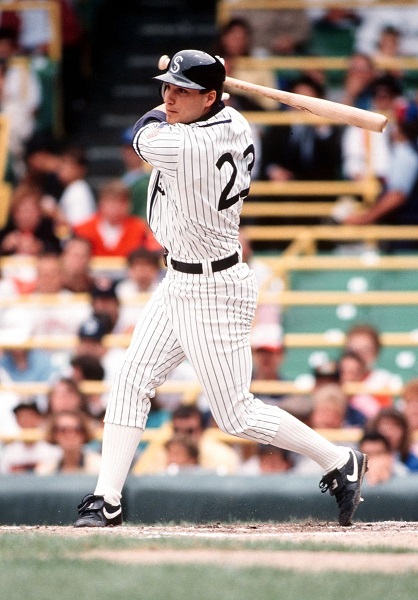
Pilkington, the third round pick of the White Sox in the 2018 draft, is 4-4 with a 3.48 ERA in 14 starts this year for Birmingham.  He was rated as the 17th best prospect in the White Sox system by Baseball America at the start of the 2020 season.  To make room for Hernández on the 40-man roster, the White Sox released right-handed pitcher Tyler Johnson.

Meanwhile, on the north side of town, Anthony Rizzo and Kris Bryant are not in the lineup for today’s tilt between the Cubs and the Reds.  One or both of them are expected to be moved prior to tomorrow’s deadline.

Adios Yolmer

Mere weeks after becoming the first White Sox Gold Glove winner in 21 years, Yolmer Sanchez was placed on outright waivers Monday night, effectively ending his tenure with the only franchise he has ever known.  The move was somewhat unorthodox, as the team was expected to non-tender the infielder prior to next Monday’s arbitration deadline, where Sanchez was expected to nab a salary north of $6 million.

Aside from his increasing salary and anemic offense, Sanchez looked to be losing his spot in the White Sox starting lineup sometime in 2020 when Nick Madrigal, the team’s first round draft pick in 2018, is promoted to the big leagues.  There is still an outside chance that Sanchez could resign at a lower salary, but there’s bound to be other suitors and, with Leury Garcia and Danny Mendick on the roster, losing Sanchez should not stop the White Sox from becoming a contender in 2020.

Sanchez’s numbers in a White Sox uniform, both for games I attended and overall, were:

Continue reading →

#4 – Robin Ventura

Name: Robin Ventura

Rank: 4

Position: 3B

Years With White Sox: 1989-1998

Robin Ventura joined the White Sox organization as the 10th overall pick in the 1988 draft.  He made his major league debut the following September, going 1-4 with an RBI in a 11-1 victory over the Orioles at Memorial Stadium.  He appeared in 16 games down the stretch, hitting only .178 while driving in 7 runs in 45 at bats.

A good spring in 1990 led to Ventura breaking camp with the White Sox.  He struggled, both on the field and at the plate, suffering through a horrendous 0-for-41 slump while committing 25 errors over the course of the season.  However, he did lead AL rookies with 150 games played and his 123 hits were the most by a White Sox rookie since Ozzie Guillen in 1985.  He finished the year with a .249 average, 5 home runs, and 54 RBIs.  He placed 7th in Rookie of the Year voting and was named to the Topps All Star Rookie team.

Ventura and the White Sox moved in to the new Comiskey Park in 1991, hoping to improve on the previous year’s growth.  He improved his fielding enough to earn his first Gold Glove award and led the league in putouts.  At the plate, he set a White Sox team record for RBIs by a third baseman, finishing with an even 100.  He upped his average to .284 and hit 23 home runs.  His work was enough to garner enough MVP votes to finish in 20th place.

1992 was another good year for Ventura.  He earned his first All Star nod, going 2-2 in the AL’s victory at Jack Murphy Stadium.  He finished the year with a .282 average, 16 home runs, and 93 RBIs.  He also snagged his second consecutive Gold Glove award.

Ventura continued his successful ways in 1993.  He collected his 500th hit in May and, on August 4, he entered the public consciousness with an event that would come to define his entire career.  While batting against the Rangers, Ventura was hit by a pitch thrown by Nolan Ryan and charged the mound.  Ryan, 20 years Ventura’s senior, placed him in a headlock and punched him several times, starting a bench-clearing brawl that was voted the best baseball brawl of all time by SportCenter.  Ventura saw his average drop to .262, but his OPS set a new career high.  His 94 RBIs made him the first AL third baseman with three consecutive 90-RBI seasons since Graig Nettles in the mid 70s.  During the ALCS against the Blue Jays, Ventura hit .200, with just 1 home run and 5 RBIs across the six game series.  After the season, he was awarded his third consecutive Gold Glove award.

The strike in 1994 saw Ventura’s streak of 90 RBI seasons and Gold Gloves come to an end.  When baseball stopped in August, Ventura was hitting .282 with 18 home runs and 78 RBIs, while posting a new career high with an .832 OPS.

When play resumed in late April 1995, Ventura struggled out of the gate, committing ten errors in the first ten games.  As the White Sox started to tear down the team that had finished the previous two seasons on top of their division, trade rumors started to follow Ventura, though nothing came to fruition.  On September 4, he became the eighth player in history to hit two grand slams in one game, and the first since Frank Robinson in 1970.  He finished the year setting career highs with a .295 average, an .882 OPS, and 26 home runs while driving in 93 runs.

Ventura had the best year of his career to date in 1996.  He set White Sox team records in career home runs by a third baseman, with 142, and grand slams, with 9.  He set new career highs with 34 home runs, 105 RBIs, 2 triples, an OPS of .888, and a .974 fielding percentage at the hot corner.  He hit .287, while earning his fourth Gold Glove award.

1997 turned into a dismal year for Ventura and the White Sox.  During a spring training game at Ed Smith Stadium, Ventura caught his foot in the mud while sliding into home plate and suffered a broken and dislocated right ankle.  Expected to miss the entire season, he returned on July 24, collecting the game-winning hit that night, and homered in his first at-bat the next night.  With the White Sox only 3.5 games behind the Indians in the standings, a healthy Ventura might have put them over the top.  A week later, the team threw in the towel in what eventually became to be known as the White Flag Trade, sending Wilson Alvarez, Roberto Hernandez, and Danny Darwin to the Giants for prospects.  “We didn’t realize Aug. 1 was the end of the season,” said an upset Ventura.  He finished the year appearing in 54 games, hitting .262 with 6 home runs and 26 RBIs.

As Ventura entered the last year of his contract in 1998, the White Sox made little attempt to sign him to an extension, with owner Jerry Reinsdorf claiming his skills were “deteriorating” after his injury the year before.  With more trade rumors following him throughout the season, he finished the year with a .263 average, 21 home runs, and 91 RBIs while earning his fifth Gold Glove award.  Following the season, he became a free agent, ending his White Sox playing career.

On October 6, 2011, Ventura returned to the White Sox as their 39th manager.  He resigned following the 2016 season, finishing with a career record of 375-435 for a winning percentage of .463.

For his career, Ventura ranks 6th in White Sox history with 39.4 WAR, 8th with 28.8 OWAR, 8th with 12.9 DWAR, 6th with 171 home runs, 8th with 741 RBIs, and 5th with 668 walks.

Ventura’s numbers in a White Sox uniform, both for games I attended and overall, were:

Continue reading →

#10 – Ozzie Guillen

Name: Ozzie Guillen

Rank: 10

Position: SS

Years With White Sox: 1985-1997

Acquired by the White Sox, along with Tim Lollar, Bill Long, and Luis Salazar, on December 6, 1984 from the Padres for Kevin Kristan, Todd Simmons, and LaMarr Hoyt, Ozzie Guillen made his major league debut on Opening Day 1985, leading off against the Brewers and going 1-5 in the 4-2 victory at County Stadium.  Settling in as the everyday shortstop, Guillen finished the year with a .273 average, 21 doubles, and 9 triples.  Those totals were good enough to score Guillen the 1985 AL Rookie of the Year trophy.

Guillen saw a slight drop off in his sophomore season.  His average dropped to .250 and he managed 19 doubles and 4 triples.  Defensively, he led the American League in Defensive WAR.

1987 was a nice bounce back for Guillen.  He raised his average back up to .279 with a .656 OPS.  For the second straight year, he led the AL, and all of baseball, in Defensive WAR.

Guillen earned his first All Star nod in 1988, though he didn’t get in to the game.  By the end of the season, he once again led all of baseball in Defensive WAR, while seeing his average drop to .261 with 7 triples, the fifth highest total in the AL.

1989 was a tough year for Guillen.  He posted his worst offensive numbers since 1986 and, on the base paths, he fell victim to the hidden ball trick.  Twice. On June 23, against the Brewers, first baseman Greg Brock held the ball after a pickoff attempt and when Guillen took his hand off the base to stand up, Brock tagged him out.  Less than 2 months later, on August 5 against the Tigers, Dave Bergman made the same play.  He finished the year with .253 average and, despite his adventures on pick off attempts, a career high 36 stolen bases.

As the surprising White Sox challenged for the AL West title while saying goodbye to Comiskey Park, Guillen put in one of the finest seasons of his career.  He was named to his second All Star team, going 0-2, finished in 17th place in MVP voting, and earned his first, and only, Gold Glove.  He raised his average back up to .279 and knocked in a career high 58 RBIs.

Expectations were high for the White Sox as they moved across the street to the new Comiskey Park in 1991.  Guillen earned his third, and final, All Star nod, getting a sacrifice in his only plate appearance.  He ended the year with a .273 average and set a career high with 3 home runs.

Guillen’s 1992 season came to an early end when, on April 21 during a loss against the Yankees, a collision with outfielder Tim Raines ended in a severe knee injury.  Appearing in only 20 games, he hit a career low .200 in only 40 at bats.

Guillen recovered in 1993, though he appeared in only 134 games, his lowest total to date.  However, it was his most productive season offensively, posting a .280 batting average, and career highs with 4 home runs and a .666 OPS, as the White Sox won their first division title in a decade.  He hit .273 and scored 4 runs in a losing effort, as the White Sox were defeated in 6 games by the Blue Jays in the ALCS.

1994 looked to be the year that the White Sox finally broke through.  Guillen was up to the challenge, hitting a career high .288 with a .659 OPS.  Unfortunately, the year ended early when players went on strike on August 12 with the White Sox in first place in the newly created AL Central.

The 1995 season got off to a late start and had an abbreviated schedule due to the long work stoppage.  The success of the White Sox, and for Guillen himself, didn’t survive the long layoff.  Guillen saw his average drop to .248, his lowest over a “full” season in his career to this point.  His OPS dropped to its lowest total, excepting 1992, since 1989.

1996 saw a slight improvement for Guillen.  He appeared in 150 games, his highest total since his knee injury in 1992.  He raised his average back to .263 and tied his career high with 4 home runs.

1997 was easily the worst season of Guillen’s White Sox career.  He had the lowest average of his career, coming in at .245, though he did once again tie his career high with 4 home runs.  Following the season, Guillen became a free agent and his playing career with the White Sox came to an end.

Guillen returned to the White Sox organization for the 2004 season as manager.  In 2005, he led the team to their first American League pennant since 1959 and their first World Series title in 88 years.  Ongoing personal difficulties with General Manager Kenny Williams led to his leaving with 2 games left in the 2011 season as the third winningest manager in franchise history.

Guillen’s numbers in a White Sox uniform, both for games I attended and overall, were:

Continue reading →

2018 Hall Of Fame Ballot – The Newcomers

baseballhof

The BBWAA released their ballot for the Hall of Fame class of 2018 on Monday.  The results of the vote are due to be revealed on January 24th, with induction taking place next July.  After Jeff Bagwell, Tim Raines, and Ivan Rodriguez were elected in last year’s voting, the new ballot contains 14 holdovers along with 19 newcomers, which may continue the logjam caused by the current BBWAA rules which limit the number of votes on one ballot to 10 and the ongoing refusal by some writers to vote for players tainted by PEDs, leaving too many qualified candidates fighting for limited spots.  Once again, the BBWAA and the Hall may find themselves with a mess on their hands.  And that doesn’t even take in to account Joe Morgan’s letter.

Yesterday, we looked at the returning candidates.  Today, it’s time to look at the newcomers and who may be thankful come January.

Chris Carpenter

He put together some monster seasons, but lost nearly 4 1/2 seasons due to injury, leaving his numbers well short of enshrinement.

Johnny Damon

Probably would not get anywhere near enough support, but he spent many years in a Red Sox or Yankees uniform, so who knows.

Livan Hernandez

The Cuban ex-pat may get a vote or two, but it should be one and done for him.

Orlando Hudson

I can’t imagine a world where Orlando Hudson, who finished out his career with the White Sox in 2012, earns a Hall of Fame vote.

Aubrey Huff

Not that he was going to garner any support anyway, but his recent social media posts, falling for the worst of the right wing conspiracies, certainly aren’t helping.

Jason Isringhausen

This has been a weak batch of newly eligible players. no?

Andruw Jones

Now here is an interesting conundrum.  If we stick to his first 11 seasons, it seemed like he was destined for the Hall.  His last 7 seasons, though, were so bad that it makes it hard to consider him.  This would be a tough choice.

Chipper Jones

Ah, there we go.  A sure-fire, first ballot selection for the long time Brave.

Carlos Lee

The former White Sox outfielder may get a little support, but not enough to keep him on the ballot for a second go-around.

Brad Lidge

Lidge was on the mound when the Phillies won the World Series in 2008, but that won’t erase the memories of the huge home runs he gave up in the 2005 post-season, to Albert Pujols and Scott Podsednik.

Hideki Matsui
Continue reading →

#77 – Mike Squires

squiresName: Mike Squires

Rank: 77

Position: 1B

Years With White Sox: 1975, 1977-1985

Mike Squires joined the White Sox organization as their 18th round draft pick in 1973.  He made his major league debut on September 1, 1975, going 2-3 in the White Sox loss to the Royals at Comiskey Park.  He appeared in 19 additional games down the stretch, hitting .231 in 74 plate appearances.

After spending all of 1976 back in Triple A, Squires returned to the South Side for 3 games in 1977, going hitless in 3 at bats.  He was up in the big leagues to stay in 1978, appearing in 46 games and hitting .280 in 150 at bats.

1979 saw Squires getting his most extensive playing time to date, appearing in 122 games and hitting a modest .264, including his first major league home run.  1980 was more of the same for Squires, hitting a career-high .283 in 131 games.  He also became the first left-handed catcher in the major leagues since 1961 when he replaced Bruce Kimm in the 9th inning of an 11-1 loss to the Brewers on May 4.

During the strike-shortened season of 1981, Squires hit .265 in 92 games, failing to homer for the first time since 1978 and earning the Gold Glove award for first basemen.  1982 was more of the same for Squires, as he put up a .267 average in only 195 at bats, his lowest total since 1978.  As the White Sox ran away with the division title in 1983, Squires set a career high in games played with 143, but garnered only 153 at bats, hitting a meek .222.  He became the first left handed third baseman in at least 50 years when he replaced Vance Law in the 8th inning of a 10-2 loss to the Royals.  He went 0-4 in the ALCS against the Orioles, appearing in all 4 games.

1984 was the beginning of the end for Squires, as his average slipped to a career low .183 in only 82 at bats.  He was released during spring training in 1985, before being re-signed in September, appearing in 2 games without a plate appearance.  Following the season, his career came to an end.

Squires’ numbers in a White Sox uniform were:

Continue reading →

Franchise Four – Chicago Cubs

Major League Baseball is asking its fans to vote for the four most impactful players who best represent the history of each franchise.  The winners will be announced in July at the All Star Game in Cincinnati.  Today, I will give my Franchise Four picks for the Chicago Cubs.

F4Cubs

EBErnie Banks, who was elected to the Hall of Fame in 1977, played his entire 19 year career with the Cubs, earning back-to-back MVP honors in 1958 and 1959.  When he retired following the 1971 season, he ranked 9th all-time in home runs, with 512.

RSRyne Sandberg joined the Cubs in 1982 and quickly became a fixture in the middle of the Cub infield, where he remained until 1997.  The 10-time all star, who earned MVP honors in 1984, was elected to the Hall of Fame in 2005.

TFBMordecai “Three Finger” Brown, who earned his nickname due to farming incident in his youth, spent 10 of his 14 seasons with the Cubs, leading them to World Series titles in 1907 and 1908.  He was elected to the Hall of Fame in 1949.

RoSRon Santo spent 14 of his 15 big league seasons with the Cubs, earning 9 All Star game appearances and 5 Gold Gloves.  He followed his playing career with a long broadcasting stint with the team.  He was posthumously elected to the Hall of Fame in 2012.

GHGabby Hartnett spent the first 19 years of his career with the Cubs, appearing in 6 All Star games and earning the MVP award in 1935.  Perhaps best remembered for the “Homer in the Gloamin'” in 1938, Hartnett was considered the best National League catcher until the emergence of Johnny Bench.  He was elected to the Hall of Fame in 1955. Continue reading →