By The Numbers – 23

In 1929, uniform numbers appeared on the back of baseball jerseys for the first time, thanks to the Indians and the Yankees.  By 1937, numbers finally appeared across all uniforms, both home and away, across both major leagues.  Since that time, 81 distinct numbers have been worn by members of the White Sox, while the Cubs boast 76.

Today, we continue our look at those players, picking our favorite, if not the best, player to wear each uniform number for both Chicago teams with #23, one of the most famous and successful numbers in city history across all sports.  67 different players have donned #23 while playing in Chicago, 35 for the White Sox and 31 for the Cubs, including a familiar face for both sides of town.
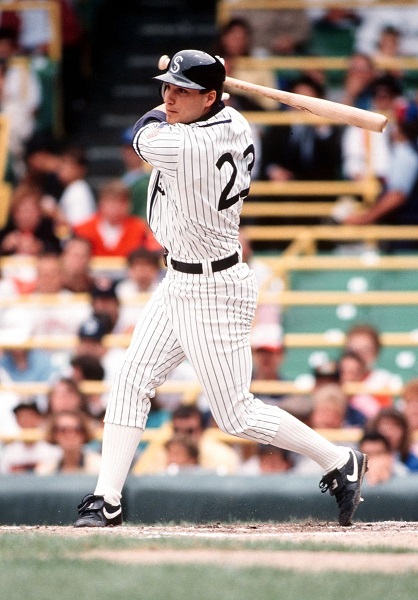
Robin Ventura made his major league debut donning #23 in September of 1989, appearing in 16 games down the stretch, hitting only .178 while driving in 7 runs in 45 at bats.  A good spring in 1990 led to Ventura breaking camp with the White Sox, but he struggled both on the field and at the plate, suffering through a horrendous 0-for-41 slump while committing 25 errors over the course of the season.  He finished the year with a .249 average, 5 home runs, and 54 RBIs and placed 7th in Rookie of the Year voting and was named to the Topps All Star Rookie team.

Ventura and the White Sox moved in to the new Comiskey Park in 1991, hoping to improve on the previous year’s growth.  He improved his fielding enough to earn his first Gold Glove award and, at the plate, he set a White Sox team record for RBIs by a third baseman, finishing with an even 100.  He upped his average to .284 and hit 23 home runs.  His work was enough to garner enough MVP votes to finish in 20th place.  1992 was another good year for Ventura.  He earned his first All Star nod, going 2-2 in the AL’s victory at Jack Murphy Stadium.  He finished the year with a .282 average, 16 home runs, and 93 RBIs.  He also snagged his second consecutive Gold Glove award.  Ventura continued his successful ways in 1993, collecting his 500th hit in May and, on August 4, entering the public consciousness with an event that would come to define his entire career.  While batting against the Rangers, Ventura was hit by a pitch thrown by Nolan Ryan and charged the mound.  Ryan, 20 years Ventura’s senior, placed him in a headlock and punched him several times, starting a bench-clearing brawl that was voted the best baseball brawl of all time by SportsCenter.  After the season, he was awarded his third consecutive Gold Glove award.

The strike in 1994 saw Ventura’s streak of 90 RBI seasons and Gold Gloves come to an end.  When baseball stopped in August, Ventura was hitting .282 with 18 home runs and 78 RBIs, while posting a new career high with an .832 OPS.  When play resumed in late April 1995, Ventura struggled out of the gate, committing ten errors in the first ten games.  As the White Sox started to tear down the team that had finished the previous two seasons on top of their division, trade rumors started to follow Ventura, though nothing came to fruition.  On September 4, he became the eighth player in history to hit two grand slams in one game, and the first since Frank Robinson in 1970.  He finished the year setting career highs with a .295 average, an .882 OPS, and 26 home runs while driving in 93 runs.  Ventura had the best year of his career to date in 1996, setting White Sox team records in career home runs by a third baseman, with 142, and grand slams, with 9.  He set new career highs with 34 home runs, 105 RBIs, 2 triples, an OPS of .888, and a .974 fielding percentage at the hot corner.  He hit .287, while earning his fourth Gold Glove award.

1997 turned into a dismal year for both Ventura and the White Sox.  During a spring training game, Ventura caught his foot in the mud while sliding into home plate and suffered a broken and dislocated right ankle.  Expected to miss the entire season, he returned on July 24, collecting the game-winning hit that night, and homered in his first at-bat the next night.  With the White Sox only 3.5 games behind the Indians in the standings, a healthy Ventura might have put them over the top.  A week later, the team threw in the towel in what eventually became to be known as the White Flag Trade, sending 3 pitchers to the Giants for prospects.  “We didn’t realize Aug. 1 was the end of the season,” said an upset Ventura.  He finished the year appearing in 54 games, hitting .262 with 6 home runs and 26 RBIs.  Entering the last year of his contract in 1998, the White Sox made little attempt to sign Ventura to an extension, with owner Jerry Reinsdorf claiming his skills were “deteriorating” after his injury the year before.  With more trade rumors following him throughout the season, he finished the year with a .263 average, 21 home runs, and 91 RBIs while earning his fifth Gold Glove award.  Following the season, he became a free agent, ending his White Sox playing career.

Continue reading →

Selling Your Soul

Word leaked on Thursday that both Major League Baseball and the Major League Baseball Players Association have given their exclusive licenses for trading cards to Fanatics, who will form a new company, of which both MLB and the union will have an equity stake, to produce the cards.  Topps, who have been producing MLB trading cards for 70 years and has had the exclusive license since 2009, is left on the outside looking in when their current deal expires in 2025.

In my younger days, I had quite the baseball card collection.  Well, technically I still do, but I haven’t added to it (or even looked at it) in decades.  I thought about picking the hobby back up last year during the pandemic, but found that so much had changed that I didn’t even know where to begin.  When I was collecting, there were many different companies to choose from, including Fleer, Donruss, Upper Deck, and Score, but Topps was always the card.  It had that legacy and legitimacy that those others just didn’t.  The world will be a sadder one after this deal goes through.

#4 – Robin Ventura

Name: Robin Ventura

Rank: 4

Position: 3B

Years With White Sox: 1989-1998

Robin Ventura joined the White Sox organization as the 10th overall pick in the 1988 draft.  He made his major league debut the following September, going 1-4 with an RBI in a 11-1 victory over the Orioles at Memorial Stadium.  He appeared in 16 games down the stretch, hitting only .178 while driving in 7 runs in 45 at bats.

A good spring in 1990 led to Ventura breaking camp with the White Sox.  He struggled, both on the field and at the plate, suffering through a horrendous 0-for-41 slump while committing 25 errors over the course of the season.  However, he did lead AL rookies with 150 games played and his 123 hits were the most by a White Sox rookie since Ozzie Guillen in 1985.  He finished the year with a .249 average, 5 home runs, and 54 RBIs.  He placed 7th in Rookie of the Year voting and was named to the Topps All Star Rookie team.

Ventura and the White Sox moved in to the new Comiskey Park in 1991, hoping to improve on the previous year’s growth.  He improved his fielding enough to earn his first Gold Glove award and led the league in putouts.  At the plate, he set a White Sox team record for RBIs by a third baseman, finishing with an even 100.  He upped his average to .284 and hit 23 home runs.  His work was enough to garner enough MVP votes to finish in 20th place.

1992 was another good year for Ventura.  He earned his first All Star nod, going 2-2 in the AL’s victory at Jack Murphy Stadium.  He finished the year with a .282 average, 16 home runs, and 93 RBIs.  He also snagged his second consecutive Gold Glove award.

Ventura continued his successful ways in 1993.  He collected his 500th hit in May and, on August 4, he entered the public consciousness with an event that would come to define his entire career.  While batting against the Rangers, Ventura was hit by a pitch thrown by Nolan Ryan and charged the mound.  Ryan, 20 years Ventura’s senior, placed him in a headlock and punched him several times, starting a bench-clearing brawl that was voted the best baseball brawl of all time by SportCenter.  Ventura saw his average drop to .262, but his OPS set a new career high.  His 94 RBIs made him the first AL third baseman with three consecutive 90-RBI seasons since Graig Nettles in the mid 70s.  During the ALCS against the Blue Jays, Ventura hit .200, with just 1 home run and 5 RBIs across the six game series.  After the season, he was awarded his third consecutive Gold Glove award.

The strike in 1994 saw Ventura’s streak of 90 RBI seasons and Gold Gloves come to an end.  When baseball stopped in August, Ventura was hitting .282 with 18 home runs and 78 RBIs, while posting a new career high with an .832 OPS.

When play resumed in late April 1995, Ventura struggled out of the gate, committing ten errors in the first ten games.  As the White Sox started to tear down the team that had finished the previous two seasons on top of their division, trade rumors started to follow Ventura, though nothing came to fruition.  On September 4, he became the eighth player in history to hit two grand slams in one game, and the first since Frank Robinson in 1970.  He finished the year setting career highs with a .295 average, an .882 OPS, and 26 home runs while driving in 93 runs.

Ventura had the best year of his career to date in 1996.  He set White Sox team records in career home runs by a third baseman, with 142, and grand slams, with 9.  He set new career highs with 34 home runs, 105 RBIs, 2 triples, an OPS of .888, and a .974 fielding percentage at the hot corner.  He hit .287, while earning his fourth Gold Glove award.

1997 turned into a dismal year for Ventura and the White Sox.  During a spring training game at Ed Smith Stadium, Ventura caught his foot in the mud while sliding into home plate and suffered a broken and dislocated right ankle.  Expected to miss the entire season, he returned on July 24, collecting the game-winning hit that night, and homered in his first at-bat the next night.  With the White Sox only 3.5 games behind the Indians in the standings, a healthy Ventura might have put them over the top.  A week later, the team threw in the towel in what eventually became to be known as the White Flag Trade, sending Wilson Alvarez, Roberto Hernandez, and Danny Darwin to the Giants for prospects.  “We didn’t realize Aug. 1 was the end of the season,” said an upset Ventura.  He finished the year appearing in 54 games, hitting .262 with 6 home runs and 26 RBIs.

As Ventura entered the last year of his contract in 1998, the White Sox made little attempt to sign him to an extension, with owner Jerry Reinsdorf claiming his skills were “deteriorating” after his injury the year before.  With more trade rumors following him throughout the season, he finished the year with a .263 average, 21 home runs, and 91 RBIs while earning his fifth Gold Glove award.  Following the season, he became a free agent, ending his White Sox playing career.

On October 6, 2011, Ventura returned to the White Sox as their 39th manager.  He resigned following the 2016 season, finishing with a career record of 375-435 for a winning percentage of .463.

For his career, Ventura ranks 6th in White Sox history with 39.4 WAR, 8th with 28.8 OWAR, 8th with 12.9 DWAR, 6th with 171 home runs, 8th with 741 RBIs, and 5th with 668 walks.

Ventura’s numbers in a White Sox uniform, both for games I attended and overall, were:

Continue reading →

2014 Tickets – Northside Edition

Once again, the Cubs manage to far surpass their play on the field with their superb season ticket packaging.  This year, the team has upgraded from a cardboard box to a large tin featuring an old drawing of Wrigley Field.

2014CubBoxInside the tin was a cornucopia of treasures.  Once again, the team tried to save a few shekels on credit card fees by bribing encouraging people to pay by check.  This year’s enticement was a coffee table book celebrating the 100th anniversary of Wrigley Field. Continue reading →

A Party 100 Years In The Making

1922-Chicago-Cubs-UniformThe Cubs, headed up by Theo Epstein and Crane Kenney, put on a dog and pony show for their season ticket holders over the weekend, where Epstein gave updates on the on-field product and Kenney gave updates on the plans to rehab Wrigley Field.  I had planned on attending the session on Saturday at noon, but found myself unable to make it downtown.  However, it doesn’t seem as though I necessarily missed much that hasn’t been reported online elsewhere.

The big news coming out of the presentations was the plans for next season surrounding the 100th anniversary of Wrigley Field.  A commemorative patch will be on the sleeve of the home jersey and the side of the cap.  There will also be a new road alternate jersey, based on those worn during the 1920s.  They gray jerseys will have “CUBS” across the front, in the same font as the 1922 jersey.  The lettering will be blue with a thin white outline, and the player’s number will be on the lower left in red with white outline.  Blue piping will run down both sides of the buttons and around the collar, while blue and white piping will be near the cuff of each sleeve.

There will be 10 straight weekend homestands dedicated to the 10 decades at the ballpark, beginning with the 1910s.  On Fridays of those homestands, the team will give a unique bobblehead honoring an individual or event from that decade.  On Sunday, the Cubs and the opposing team will wear uniforms from that celebrated decade.  Concession stands also will present decade-themed food.

While the 10 bobblehead giveaways could be awesome, the lack of night games on Fridays means that I will not have tickets to any of those games.  Depending on who (or what) it is, it may be worthwhile to make an extra trip for one or two of them.  The throwback games on Sundays could also be a good time.  The Washington Nationals are coming to town smack dab in the middle of the season, meaning they would have to be included as one of the 10 consecutive homestands.  Assuming the throwback uniforms they will wear are those of the Expos and not of the Senators, that game gets bumped up on the list of those I need to attend.

The season tickets for next year will move away from the Topps baseball card motif they’ve had the past two years and will have historic scorecards from the stadium’s history, not just for the Cubs, but for the Bears and Blackhawks as well.  If the last two years are any indication, they will be impressive.

2013 Tickets – Northside Edition

Say what you will about the Cubs play on the field in recent years, but their season ticket packaging has been superb for the last few years, and their winning streak continues this year.  First is the box itself, which contains all of the goodies.

Cubs-boxA nice old-timey feel that doesn’t give away the awesomeness inside.  First, just like last year, the team tried to save a few shekels on credit card fees by bribing encouraging people to pay by check.  This year’s enticement was an autographed baseball by first baseman Anthony Rizzo.

Continue reading →

#332 – Carlos Martinez

carlosmartinezName: Carlos Martinez

Rank: 332

Position: 1B/3B

Years With White Sox: 1988-1990

Carlos Martinez was sent to the White Sox in 1986, along with Ron Hassey, by the Yankees in exchange for Ron Kittle, Joel Skinner, and Wayne Tolleson.  He made his major league debut on September 2, 1988 against the Indians.  Martinez spent most of 1989 with the big league club, setting his career highs in average, at-bats, hits, runs, and doubles.  He was also named to the Topps All-Star Rookie Team.

In 1990, Martinez took over as the White Sox primary first baseman until August 2nd, when a rookie named Frank Thomas was brought up.  With first base settled for the next decade or so, and pending legal issues in his homeland of Venezuela, Martinez was granted free agency in February of 1991, ending his White Sox career.

Unfortunately, Martinez passed away in 2006 at the age of 40 in his native Venezuela following a long illness.

Martinez’s numbers in a White Sox uniform, both for games I attended and overall, were:

Continue reading →