Ballpark Tour: Reds

Spring training is in full swing and opening day is coming up in a little less than 3 weeks, as we continue our tour of all of the baseball stadiums I’ve been to over the years.  Now tied for my most visited city, outside of Chicago for baseball contains the homes of the Cincinnati Reds.  Between the two stadiums that have been located on the riverfront of the Ohio River, I’ve seen 8 games.  So, without further ado, let’s take a deeper look at my history with Cinergy Field and Great American Ball Park.

Stadium Name: Riverfront Stadium/Cinergy Field

Years in Service: 1970 – 2002

Visits: 1

Riverfront Stadium, Cincinnati’s version of the cookie cutter stadium that popped up in the late 60s and early 70s, opened on June 30, 1970 as the Reds hosted the Atlanta Braves.  In 1996, the stadium was renamed Cinergy Field thanks to a sponsorship deal with the local energy company.  Prior to the 2001 season, after the Bengals moved to their new home down the street, the stadium was reconfigured for baseball-only use, and portions of the outfield stands were removed to make room for the construction of the Reds’ new home, the future Great American Ball Park.  The 2002 season was the final one for the stadium, with the final game played on September 22 and the stadium was imploded on December 29.

In 2000, Ken Griffey Jr. joined the Cincinnati Reds, which put two of the most feared sluggers in the game in the NL Central.  When Sammy Sosa and the Chicago Cubs were scheduled to make an opening week visit to Cincinnati in 2000 to face Griffey for the first time, the idea of a road trip was hatched.  Friday, April 7, 2000 started with Krispy Kreme donuts at the house before heading towards Cincinnati.  Along the way, there was a brief stop at Purdue. because why not, and the trifecta of a KFC/Taco Bell/Pizza Hut seemed like a good place to stop for lunch.  We arrived in Cincinnati well before the stadium opened, so some time was spent walking around the bustling metropolis that was, and continues to be, Cincinnati.

Our tickets were in the upper deck and, to be honest, I have little to no recollection of the game itself.  My one and only memory of the game is losing my balance and tumbling down 5-10 rows, landing on a group of fans below.  Certainly not my proudest moment.  I do recall some of the drive home after the game, which included listening to the White Sox/A’s game where Jose Valentin committed a number of errors for the eventual AL Central champs.

Stadium Name: Great American Ball Park

Years in Service: 2003 – Present

Visits: 7

After 32 1/2 seasons at Riverfront Stadium, the Reds moved next door to the newly built Great American Ball Park for the 2003 season, opening against the Pittsburgh Pirates.  Bronze statues of former stars Joe Nuxhall, Ernie Lombardi, Ted Kluszewski, and Frank Robinson are located in front of the main entrance.

Less than a month into the stadium’s existence, I made my first trip to the GABP with my friend Scott, who had moved to the Cincinnati area, to see the Reds take on the Padres.  The next season, the Cubs opened their season in Cincinnati against the Reds, so another trip was in order, where Vice President Dick Cheney threw out the first pitch.  In August of 2005, I attended the Reds game against the Diamondbacks, kicking off a string of 3 stadiums in 3 states in 9 days.  In 2006, the Cubs once again opened their season on the road against the Reds and again it constituted a road trip down to see, where this time President George W Bush threw out the first pitch.  I made a return trip that summer for interleague play to see the White Sox battle the Reds.  In 2007, when the Cubs were looking the clinch the division, I made the trip down, but missed it by one day.  The next year, I made my final, to date, trip down to Cincinnati and saw the Rockies defeat the Reds.

Of all the newer stadiums that have opened over the past 20 years, Great American Ball Park does not often illicit the praise that the others get.  However, I like it.  It’s a fine place to see a game and has plenty of the modern amenities that are required here in the 21st century.  I wouldn’t hesitate to return, despite the fact that it has been over 16 years since I’ve been there.
By The Numbers – 23

In 1929, uniform numbers appeared on the back of baseball jerseys for the first time, thanks to the Indians and the Yankees.  By 1937, numbers finally appeared across all uniforms, both home and away, across both major leagues.  Since that time, 81 distinct numbers have been worn by members of the White Sox, while the Cubs boast 76.

Today, we continue our look at those players, picking our favorite, if not the best, player to wear each uniform number for both Chicago teams with #23, one of the most famous and successful numbers in city history across all sports.  67 different players have donned #23 while playing in Chicago, 35 for the White Sox and 31 for the Cubs, including a familiar face for both sides of town.

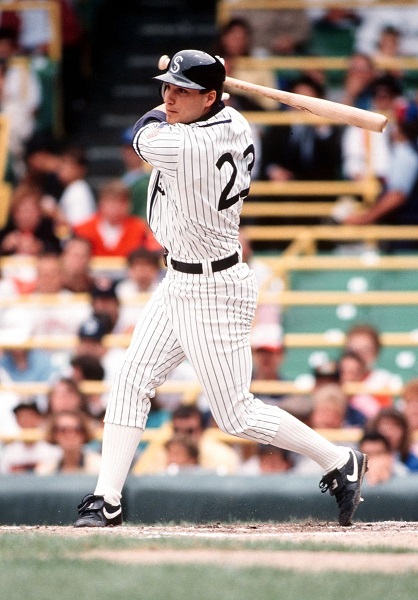
Robin Ventura made his major league debut donning #23 in September of 1989, appearing in 16 games down the stretch, hitting only .178 while driving in 7 runs in 45 at bats.  A good spring in 1990 led to Ventura breaking camp with the White Sox, but he struggled both on the field and at the plate, suffering through a horrendous 0-for-41 slump while committing 25 errors over the course of the season.  He finished the year with a .249 average, 5 home runs, and 54 RBIs and placed 7th in Rookie of the Year voting and was named to the Topps All Star Rookie team.

Ventura and the White Sox moved in to the new Comiskey Park in 1991, hoping to improve on the previous year’s growth.  He improved his fielding enough to earn his first Gold Glove award and, at the plate, he set a White Sox team record for RBIs by a third baseman, finishing with an even 100.  He upped his average to .284 and hit 23 home runs.  His work was enough to garner enough MVP votes to finish in 20th place.  1992 was another good year for Ventura.  He earned his first All Star nod, going 2-2 in the AL’s victory at Jack Murphy Stadium.  He finished the year with a .282 average, 16 home runs, and 93 RBIs.  He also snagged his second consecutive Gold Glove award.  Ventura continued his successful ways in 1993, collecting his 500th hit in May and, on August 4, entering the public consciousness with an event that would come to define his entire career.  While batting against the Rangers, Ventura was hit by a pitch thrown by Nolan Ryan and charged the mound.  Ryan, 20 years Ventura’s senior, placed him in a headlock and punched him several times, starting a bench-clearing brawl that was voted the best baseball brawl of all time by SportsCenter.  After the season, he was awarded his third consecutive Gold Glove award.

The strike in 1994 saw Ventura’s streak of 90 RBI seasons and Gold Gloves come to an end.  When baseball stopped in August, Ventura was hitting .282 with 18 home runs and 78 RBIs, while posting a new career high with an .832 OPS.  When play resumed in late April 1995, Ventura struggled out of the gate, committing ten errors in the first ten games.  As the White Sox started to tear down the team that had finished the previous two seasons on top of their division, trade rumors started to follow Ventura, though nothing came to fruition.  On September 4, he became the eighth player in history to hit two grand slams in one game, and the first since Frank Robinson in 1970.  He finished the year setting career highs with a .295 average, an .882 OPS, and 26 home runs while driving in 93 runs.  Ventura had the best year of his career to date in 1996, setting White Sox team records in career home runs by a third baseman, with 142, and grand slams, with 9.  He set new career highs with 34 home runs, 105 RBIs, 2 triples, an OPS of .888, and a .974 fielding percentage at the hot corner.  He hit .287, while earning his fourth Gold Glove award.

1997 turned into a dismal year for both Ventura and the White Sox.  During a spring training game, Ventura caught his foot in the mud while sliding into home plate and suffered a broken and dislocated right ankle.  Expected to miss the entire season, he returned on July 24, collecting the game-winning hit that night, and homered in his first at-bat the next night.  With the White Sox only 3.5 games behind the Indians in the standings, a healthy Ventura might have put them over the top.  A week later, the team threw in the towel in what eventually became to be known as the White Flag Trade, sending 3 pitchers to the Giants for prospects.  “We didn’t realize Aug. 1 was the end of the season,” said an upset Ventura.  He finished the year appearing in 54 games, hitting .262 with 6 home runs and 26 RBIs.  Entering the last year of his contract in 1998, the White Sox made little attempt to sign Ventura to an extension, with owner Jerry Reinsdorf claiming his skills were “deteriorating” after his injury the year before.  With more trade rumors following him throughout the season, he finished the year with a .263 average, 21 home runs, and 91 RBIs while earning his fifth Gold Glove award.  Following the season, he became a free agent, ending his White Sox playing career.

Continue reading →

Ballpark Tour: Reds

Spring training is in full swing and opening day is coming up in a little less than 3 weeks, as we continue our tour of all of the baseball stadiums I’ve been to over the years.  My most visited city, outside of Chicago, for baseball contains the homes of the Cincinnati Reds.  Between the two stadiums that have been located on the riverfront of the Ohio River, I’ve seen 8 games.  So, without further ado, let’s take a deeper look at my history with Cinergy Field and Great American Ball Park.

Stadium Name: Riverfront Stadium/Cinergy Field

Years in Service: 1970 – 2002

Visits: 1

Riverfront Stadium, Cincinnati’s version of the cookie cutter stadium that popped up in the late 60s and early 70s, opened on June 30, 1970 as the Reds hosted the Atlanta Braves.  In 1996, the stadium was renamed Cinergy Field thanks to a sponsorship deal with the local energy company.  Prior to the 2001 season, after the Bengals moved to their new home down the street, the stadium was reconfigured for baseball-only use, and portions of the outfield stands were removed to make room for the construction of the Reds’ new home, the future Great American Ball Park.  The 2002 season was the final one for the stadium, with the final game played on September 22 and the stadium was imploded on December 29.

In 2000, Ken Griffey Jr. joined the Cincinnati Reds, which put two of the most feared sluggers in the game in the NL Central.  When Sammy Sosa and the Chicago Cubs were scheduled to make an opening week visit to Cincinnati in 2000 to face Griffey for the first time, the idea a roadtrip was hatched.  Friday, April 7, 2000 started with Krispy Kreme donuts at the house before heading towards Cincinnati.  Along the way, there was a brief stop at Purdue. because why not, and the trifecta of a KFC/Taco Bell/Pizza Hut seemed like a good place to stop for lunch.  We arrived in Cincinnati well before the stadium opened, so some time was spent walking around the bustling metropolis that was, and continues to be, Cincinnati.

Our tickets were in the upper deck and, to be honest, I have little to no recollection of the game itself.  My one and only memory of the game is losing my balance and tumbling down 5-10 rows, landing on a group of fans below.  Certainly not my proudest moment.  I do recall some of the drive home after the game, which included listening to the White Sox/A’s game where Jose Valentin committed a number of errors for the eventual AL Central champs.

Stadium Name: Great American Ball Park

Years in Service: 2003 – Present

Visits: 7

After 32 1/2 seasons at Riverfront Stadium, the Reds moved next door to the newly built Great American Ball Park for the 2003 season, opening against the Pittsburgh Pirates.  Bronze statues of former stars Joe Nuxhall, Ernie Lombardi, Ted Kluszewski, and Frank Robinson are located in front of the main entrance.

Less than a month into the stadium’s existence, I made my first trip to the GABP with my friend Scott, who had moved to the Cincinnati area, to see the Reds take on the Padres.  The next season, the Cubs opened their season in Cincinnati against the Reds, so another trip was in order, where Vice President Dick Cheney threw out the first pitch..  In August of 2005, I attended the Reds game against the Diamondbacks, kicking off a string of 3 stadiums in 3 states in 9 days.  In 2006, the Cubs once again opened their season on the road against the Reds and again it constituted a road trip down to see, where this time President George W Bush threw out the first pitch.  I made a return trip that summer for interleague play to see the White Sox battle the Reds.  In 2007, when the Cubs were looking the clinch the division, I made the trip down, but missed it by one day.  The next year, I made my final, to date, trip down to Cincinnati and saw the Rockies defeat the Reds.

Of all the newer stadiums that have opened over the past 20 years, Great American Ball Park does not often illicit the praise that the others get.  However, I like it.  It’s a fine place to see a game and has plenty of the modern amenities that are required here in the 21st century.  I wouldn’t hesitate to return, despite the fact that it has been over 11 years since I’ve been there.

#4 – Robin Ventura

Name: Robin Ventura

Rank: 4

Position: 3B

Years With White Sox: 1989-1998

Robin Ventura joined the White Sox organization as the 10th overall pick in the 1988 draft.  He made his major league debut the following September, going 1-4 with an RBI in a 11-1 victory over the Orioles at Memorial Stadium.  He appeared in 16 games down the stretch, hitting only .178 while driving in 7 runs in 45 at bats.

A good spring in 1990 led to Ventura breaking camp with the White Sox.  He struggled, both on the field and at the plate, suffering through a horrendous 0-for-41 slump while committing 25 errors over the course of the season.  However, he did lead AL rookies with 150 games played and his 123 hits were the most by a White Sox rookie since Ozzie Guillen in 1985.  He finished the year with a .249 average, 5 home runs, and 54 RBIs.  He placed 7th in Rookie of the Year voting and was named to the Topps All Star Rookie team.

Ventura and the White Sox moved in to the new Comiskey Park in 1991, hoping to improve on the previous year’s growth.  He improved his fielding enough to earn his first Gold Glove award and led the league in putouts.  At the plate, he set a White Sox team record for RBIs by a third baseman, finishing with an even 100.  He upped his average to .284 and hit 23 home runs.  His work was enough to garner enough MVP votes to finish in 20th place.

1992 was another good year for Ventura.  He earned his first All Star nod, going 2-2 in the AL’s victory at Jack Murphy Stadium.  He finished the year with a .282 average, 16 home runs, and 93 RBIs.  He also snagged his second consecutive Gold Glove award.

Ventura continued his successful ways in 1993.  He collected his 500th hit in May and, on August 4, he entered the public consciousness with an event that would come to define his entire career.  While batting against the Rangers, Ventura was hit by a pitch thrown by Nolan Ryan and charged the mound.  Ryan, 20 years Ventura’s senior, placed him in a headlock and punched him several times, starting a bench-clearing brawl that was voted the best baseball brawl of all time by SportCenter.  Ventura saw his average drop to .262, but his OPS set a new career high.  His 94 RBIs made him the first AL third baseman with three consecutive 90-RBI seasons since Graig Nettles in the mid 70s.  During the ALCS against the Blue Jays, Ventura hit .200, with just 1 home run and 5 RBIs across the six game series.  After the season, he was awarded his third consecutive Gold Glove award.

The strike in 1994 saw Ventura’s streak of 90 RBI seasons and Gold Gloves come to an end.  When baseball stopped in August, Ventura was hitting .282 with 18 home runs and 78 RBIs, while posting a new career high with an .832 OPS.

When play resumed in late April 1995, Ventura struggled out of the gate, committing ten errors in the first ten games.  As the White Sox started to tear down the team that had finished the previous two seasons on top of their division, trade rumors started to follow Ventura, though nothing came to fruition.  On September 4, he became the eighth player in history to hit two grand slams in one game, and the first since Frank Robinson in 1970.  He finished the year setting career highs with a .295 average, an .882 OPS, and 26 home runs while driving in 93 runs.

Ventura had the best year of his career to date in 1996.  He set White Sox team records in career home runs by a third baseman, with 142, and grand slams, with 9.  He set new career highs with 34 home runs, 105 RBIs, 2 triples, an OPS of .888, and a .974 fielding percentage at the hot corner.  He hit .287, while earning his fourth Gold Glove award.

1997 turned into a dismal year for Ventura and the White Sox.  During a spring training game at Ed Smith Stadium, Ventura caught his foot in the mud while sliding into home plate and suffered a broken and dislocated right ankle.  Expected to miss the entire season, he returned on July 24, collecting the game-winning hit that night, and homered in his first at-bat the next night.  With the White Sox only 3.5 games behind the Indians in the standings, a healthy Ventura might have put them over the top.  A week later, the team threw in the towel in what eventually became to be known as the White Flag Trade, sending Wilson Alvarez, Roberto Hernandez, and Danny Darwin to the Giants for prospects.  “We didn’t realize Aug. 1 was the end of the season,” said an upset Ventura.  He finished the year appearing in 54 games, hitting .262 with 6 home runs and 26 RBIs.

As Ventura entered the last year of his contract in 1998, the White Sox made little attempt to sign him to an extension, with owner Jerry Reinsdorf claiming his skills were “deteriorating” after his injury the year before.  With more trade rumors following him throughout the season, he finished the year with a .263 average, 21 home runs, and 91 RBIs while earning his fifth Gold Glove award.  Following the season, he became a free agent, ending his White Sox playing career.

On October 6, 2011, Ventura returned to the White Sox as their 39th manager.  He resigned following the 2016 season, finishing with a career record of 375-435 for a winning percentage of .463.

For his career, Ventura ranks 6th in White Sox history with 39.4 WAR, 8th with 28.8 OWAR, 8th with 12.9 DWAR, 6th with 171 home runs, 8th with 741 RBIs, and 5th with 668 walks.

Ventura’s numbers in a White Sox uniform, both for games I attended and overall, were:

Continue reading →

Franchise Four – NL Central

Major League Baseball is asking its fans to vote for the four most impactful players who best represent the history of each franchise.  The winners will be announced in July at the All Star Game in Cincinnati.  Today, I will give my Franchise Four picks for the National League Central, minus the Cubs.

F4Reds5 Hall of Famers should make this an easy choice, but the permanent exclusion of the all-time hit king adds a slight wrinkle to the proceedings for the Reds.  Let’s say that Johnny Bench and Frank Robinson hold down two of the spots.  That leaves Joe Morgan, Tony Perez, Barry Larkin, and Pete Rose for the final two slots.  I’m going to go with the exiled Rose and Morgan.

F4Brewers

For a franchise that dates back to 1969, the Brewers, once you get past Robin Yount and Paul Molitor, don’t have much to choose from.  Ryan Braun, despite his association with PEDs, get my third slot.  I guess I’d give the final position to Rollie Fingers.

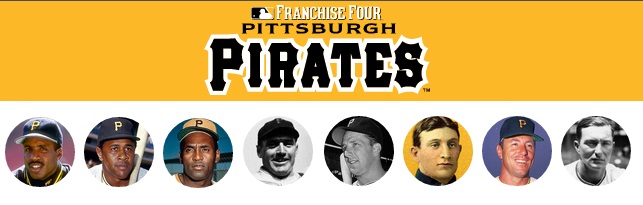
F4Pirates Continue reading →

Franchise Four – AL East

Major League Baseball is asking its fans to vote for the four most impactful players who best represent the history of each franchise.  The winners will be announced in July at the All Star Game in Cincinnati.  Today, I will give my Franchise Four picks for the American League East.

F4OriolesAt first glance, my picks for the Orioles were easy.  Upon further review, though, I find myself with 5 players for only 4 slots.  Cal Ripken Jr., Frank Robinson, and Jim Palmer take my first 3 slots.  The last one comes down to Brooks Robinson and Eddie Murray.  While Murray was by far the better offensive weapon, Robinson was quite possibly the best defensive third baseman of all time.  I’m going to stick with my initial gut feeling and go with Robinson.

F4RedSoxPlenty of Hall of Famers to choose from for the Red Sox, as 6 of the 8 have been elected to Cooperstown.  The first two slots have to go to Cy Young and Ted Williams, both of whom would be in the conversation for a league wide contest.  The final two slots would have to go to Carl Yastrzemski and newly elected Hall of Famer Pedro Martinez.  Conspicuous by his absence is Roger Clemens.

F4Yankees

Continue reading →

Ballpark Tour: Great American Ball Park

GABP

Stadium Name: Great American Ball Park

Location: Cincinnati

Home Team: Reds

Years in Service: 2003 – Present

Visits: 7

After 32 1/2 seasons at Riverfront Stadium, the Reds moved next door to the newly built Great American Ball Park for the 2003 season, opening against the Pittsburgh Pirates.  Bronze statues of former stars Joe Nuxhall, Ernie Lombardi, Ted Kluszewski, and Frank Robinson are located in front of the main entrance.

Less than a month into the stadium’s existence, I made my first trip to the GABP with my friend Scott, who had moved to the Cincinnati area, to see the Reds take on the Padres.  The next season, the Cubs opened their season in Cincinnati against the Reds, so another trip was in order, where Vice President Dick Cheney threw out the first pitch..  In August of 2005, I attended the Reds game against the Diamondbacks, kicking off a string of 3 stadiums in 3 states in 9 days.  In 2006, the Cubs once again opened their season on the road against the Reds and again it constituted a road trip down to see, where this time President George W Bush threw out the first pitch.  I made a return trip that summer for interleague play to see the White Sox battle the Reds.  In 2007, when the Cubs were looking the clinch the division, I made the trip down, but missed it by one day.  The next year, I made my final, to date, trip down to Cincinnati and saw the Rockies defeat the Reds.

Of all the newer stadiums that have opened over the past 20 years, Great American Ball Park does not often illicit the praise that the others get.  However, I like it.  It’s a fine place to see a game and has plenty of the modern amenities that are required here in the 21st century.  I wouldn’t hesitate to return, despite the fact that it has been 5 years since I’ve been there.