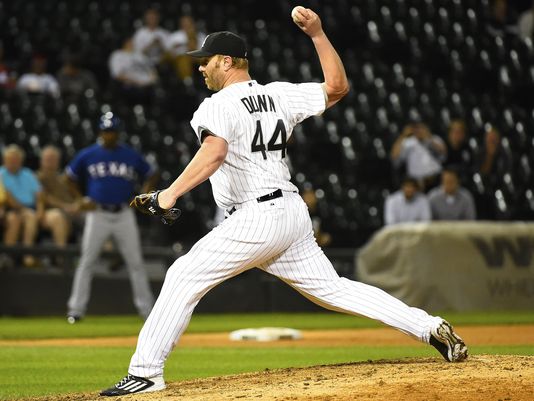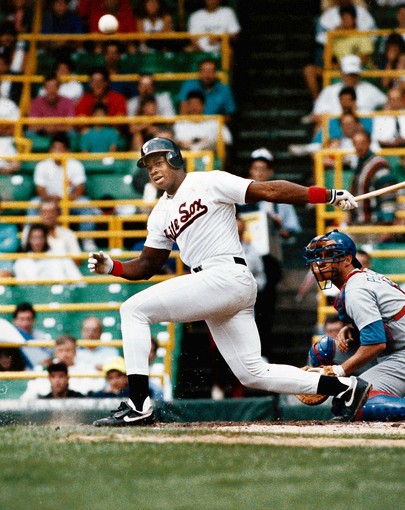
Name: Frank Thomas
Rank: 5
Position: 1B/DH
Years With White Sox: 1990-2005
Frank Thomas was selected by the White Sox with the seventh pick in the first round of the 1989 draft. A little more than 1 year later, he made his major league debut on August 2, 1990 against the Brewers at County Stadium, going hitless in 4 at bats with an RBI as the White Sox won 4-3. The next night, he tripled off of Mark Knudson for his first major league hit. On August 28, he hit the first home run of his career, off Gary Wayne, in a 12-6 loss against the Twins at the Metrodome. He finished the year with a .330 average, with 7 home runs and 31 RBIs.
In 1991, as the White Sox moved into the new Comiskey Park, Thomas became one of the most feared hitters in the American League. On April 22, he hit the first White Sox home run in the new stadium, in an 8-7 victory over the Orioles. When the season ended, Thomas finished with a .318 average, 32 home runs, and 109 RBIs. He lead the league in walks, OBP, OPS, and OPS+. He won his first Silver Slugger award and finished 3rd in MVP voting.
Thomas continued his mastery in 1992. He ended the year hitting .323, with 24 home runs and 115 RBIs. He led the league in doubles, walks, OBP, and OPS. Those numbers were good enough for him to place 8th in MVP voting.
In 1993, Thomas helped the White Sox win their first division title since 1983. He made his first All Star game appearance, getting a hit in his only at bat. On August 31, he clubbed his 100th career home run against the Yankees at Yankee Stadium. He finished the year batting .317 and set a club-record with 41 homers. He added 128 RBI, 106 runs scored, and 112 walks, to join Babe Ruth, Lou Gehrig, Jimmie Foxx and Ted Williams as the only players in baseball history to eclipse .300 with more than 20 homers and more than 100 RBI, runs, and walks in three straight seasons. In the ALCS against the Blue Jays, Thomas hit .353 in the 6 game series. Thanks to his historic season, Thomas collected his second Silver Slugger award and all 28 first place votes for a unanimous AL MVP award, the first by a White Sox player since Dick Allen in 1972.
1994 was on track to be even better, before the strike ended the season in August. Thomas was elected to start the All Star game and got 2 hits in his 2 at bats. In only 113 games, Thomas had 38 home runs, 101 RBIs, 106 runs scored, and 109 walks. He led the league in runs scored, walks, OBP, slugging percentage, OPS, and OPS+. For the second year in a row, he took home the Silver Slugger and MVP awards, becoming just the second first baseman to earn consecutive MVP awards.
When baseball returned in 1995, Thomas picked up where he had left off. He started his second straight All Star Game for the American League, hitting a home run off John Smiley. At the end of the season, Thomas had hit .308 with 40 home runs and 111 RBIs while leading the league in games played, walks, sacrifice flies, and intentional walks. He dropped to 8th place in MVP voting as the White Sox found themselves out of contention for the first time in his career.
The White Sox bounced back in 1996 and Thomas continued to be an offensive force. He mashed his 200th career home run on June 9, going deep at Camden Yards against the Orioles. He was named to his fourth straight All Star team, though he didn’t make it into the game. He set a career high with a .349 average, while again hitting 40 home runs with 134 RBIs. For the second straight year, he led the league in intentional walks and finished 8th in MVP voting.
1997 was another strong year for Thomas. He was named to his fifth, and final, All Star team. He led the league with a .347 average, a .456 OBP, a 1.067 OPS, and an OPS+ of 181, while hitting 35 home runs and knocking in 125. He finished 3rd in MVP voting, his 7th top 10 finish in his 7 full seasons.
Off the field issues started to show an effect on Thomas’ production in 1998, his first as a full time designated hitter. Marital problems messed with his head, leading him to think the umpires were screwing him, opposing pitchers were taking advantage of him, and the media were ganging up on him. “I was miserable, and I made everyone around me miserable,” Thomas said early in the 1999 season. “It was an extremely humbling season.” He hit .265, 65 points lower than his career average entering the season, and finished with only 29 home runs, his lowest total in six years. He started referring to himself as Five O’clock Frank, a batting-practice terror who at game time sank under the weight of self-pity and tired excuses.
Thomas, and the White Sox, hoped that he would bounce back in 1999. “I think he had a lot on his mind, personal things that were weighing on him,” hitting coach Von Joshua said early in the season. “He didn’t talk about it, but you could just see it in his eyes. He’s a lot more settled this year.” Unfortunately, things didn’t go well, though he did hit his 300th career home run on August 7 against the A’s. While his average did rebound, back up to .305, he hit only 15 home runs and drove in just 77 while setting a career low with a .471 slugging percentage. Bone spurs on his ankle limited him to just 135 games.
2000 got off to an explosive start, and not the good kind. Thomas and manager Jerry Manuel went toe to toe in spring training over Thomas’ ability to participate in drills, following his surgery the previous September. Once the regular season began, though, it looked like the old Thomas was back. As the surprising White Sox ran off and won their first division title since 1993, Thomas, missing only 3 games all year, hit .328 and set career highs with 43 home runs and 143 RBIs. Unfortunately, Thomas, like the rest of his teammates, struggled in the post-season, going hitless in the ALDS as the Mariners completed a 3 game sweep. He won his fourth, and final, Silver Slugger award and finished 2nd in MVP voting, behind a juiced Jason Giambi.
2001 was a tough year for Thomas, both personally and professionally. On April 27, he hurt his triceps diving for a ball while playing first base. After spending 5 days back in Georgia due to the death of his father, Thomas returned to Chicago for tests, which revealed a muscle tear that would require surgery and end his season. “This is the worst week of my life”, he said during a press conference. “First I lose my father, then come back and find out I’m lost for the season.” In only 20 games, Thomas hit .221 with 4 home runs and 10 RBIs.
Thomas returned in 2002, but was obviously no longer the same player he was before the injury. He struggled in the first half, before picking things up in the final month of the season, hitting .359 with 6 home runs in September. He finished the season with a .252 average, 25 home runs and 92 RBIs.
2003 was a better year for Thomas, though still below his career norms. On June 26th, he became the 36th player in history to reach the 400 career home run mark with a 5th inning shot against the Devil Rays at US Cellular Field. At the end of the year, he had posted a .267 average with 42 home runs and 105 RBIs.
Injuries robbed Thomas of most of 2004. He was placed on the disabled list on July 7th, with a .271 average, 18 home runs and 49 RBIs. He underwent surgery in early October to remove debris from the ankle, perform a bone graft, and insert two screws.
Thomas began the 2005 season on the disabled list as he recovered from his ankle surgery. He was activated on May 30, with the White Sox in first place in the AL Central. On July 18, he clubbed his 448th and final home run with the White Sox against the Tigers at US Cellular Field. He hit .219 with 12 home runs and 26 RBIs in 34 games before breaking his foot on July 21, causing him to miss the rest of the season and the post-season. Thomas threw out the first pitch prior to game one of the ALDS against the Red Sox.
Thomas is the White Sox all time leader in home runs, runs scored, doubles, RBIs, walks, on-base percentage, slugging percentage, and OPS. He is the only player in major league history to have seven consecutive seasons (1991-1997) with a .300 average and at least 100 walks, 100 runs, 100 runs batted in, and 20 home runs. His number 35 was retired by the White Sox on August 29, 2010 and he was part of the 2014 Hall of Fame class, elected on the first ballot with 83.7% of the vote.
Thomas’s numbers in a White Sox uniform, both for games I attended and overall, were: Continue reading →
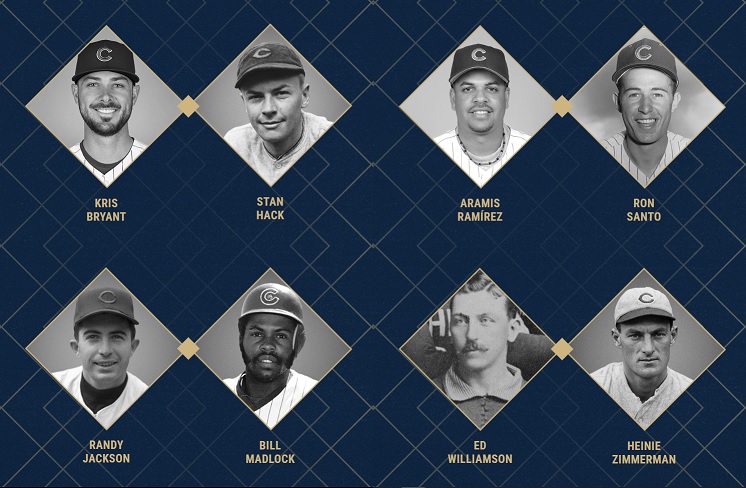 Kris Bryant was selected by the Cubs as the second-overall pick in the 2013 draft. An injury to Mike Olt early in the 2015 season got Bryant called up to the big leagues and he did not waste time making his presence felt. Hitting .275 with 26 HRs and 99 RBIs, Bryant won the Rookie of the Year award while leading the surprising Cubs to the NL Wild Card and an appearance in the NLCS. Things were even better the following year, as Bryant won the NL MVP and the Cubs ended their 108-year title drought by defeating Cleveland in the World Series. Unfortunately, neither Bryant nor the Cubs could replicate the highs of that year. He was traded to the Giants at the trade deadline in 2021, finishing his time on the north side as a four-time All-Star and winner of the 2016 NL Hank Aaron Award.