In 1929, uniform numbers appeared on the back of baseball jerseys for the first time, thanks to the Indians and the Yankees. By 1937, numbers finally appeared across all uniforms, both home and away, across both major leagues. Since that time, 81 distinct numbers have been worn by members of the White Sox, while the Cubs boast 76.
Today, we continue our look at those players, picking our favorite, if not the best, player to wear each uniform number for both Chicago teams with #18. 78 different players have donned #18 while playing in Chicago, 41 for the White Sox and 37 for the Cubs.
 Bill Madlock essentially replaced two of the Cubs biggest stars of the 1960s when he joined the team for his rookie season in 1974. Acquired for future Hall of Famer Ferguson Jenkins, Madlock took the spot of Hall of Famer Ron Santo at the hot corner. If he felt any pressure, he didn’t show it, hitting .313 with 9 home runs, good enough for a third place finish in Rookie of the Year voting. In 1975, he broke out in a big way, earning his first All Star nod on his way to a batting title. In 1976, Madlock repeated as batting champion, hitting .339 and beating out Ken Griffey Sr. on the final day of the season. With the dawn of free agency on the horizon, Madlock asked the Cubs for a multi-year contract with a salary of $200,000, more than double what he had earned in 1976. Team owner Phillip K. Wrigley had other ideas, announcing that Madlock would be traded “to anyone foolish enough to want him.” In February of 1977, that so-called foolish team turned out to be the Giants, who sent Bobby Murcer and Steve Ontiveros, among others, to the Cubs. In July of 2016, this would be ranked as one of the five worst trades in Cub history.
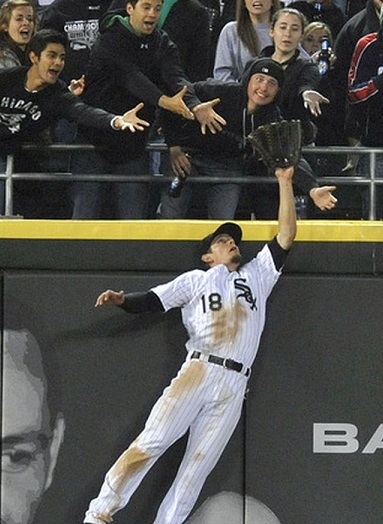
Acquired by the White Sox, along with Tyler Flowers and 2 minor leaguers, from the Braves in exchange for Javier Vazquez and Boone Logan, Brent Lillibridge donned #18 while hitting an anemic .158 in 95 at bats spread across 46 games for the 2009 White Sox. Lillibridge stuck with the big league team in 2010, improving his average to .224 in only 64 games. 2011 was his best season, setting career highs in home runs, RBIs, batting average, and OPS. On April 11, he hit the 10,000th home run in White Sox history off Dallas Braden and the A’s. Lillibridge struggled again in 2012, with his average dropping down to .175 before the June 24th trade that sent him, along with Zach Stewart, to the Red Sox for Kevin Youkilis.
 Acquired by the Cubs following the 2003 season for Hee Seop Choi, Derrek Lee, wearing #25, quickly became a mainstay of the Cubs lineup. He hit .278 with 32 home runs and 98 RBIs in his first year on the north side. 2005 was a career year for Lee, and that was just in the first half. He led the majors with a .376 average and 72 RBIs while tying for the lead with 27 home runs. For the full season, he hit 46 home runs and a .335 average, the highest for a Cub since Bill Madlock in 1976 and he notched the first batting title for a Cub since Bill Buckner in 1980. When it was all said and done, he had won the Gold Glove and Silver Slugger awards and finished third in MVP voting.