A Changing Landscape

The national and streaming television landscape for Major League Baseball will be changing for 2026 as the league prepares to overhaul its approach starting in 2029.  This past February, ESPN opted out of the final three years of its deal with the league that would have paid MLB $550 million per year.  Those rights will be split up three ways for the next three seasons, with chunks going to ESPN, Netflix, and NBC/Peacock.  Between the three, MLB is expected to get $750 million per year in total over the next three seasons.

ESPN will receive a national 30-game package throughout the season available exclusively on ESPN’s television networks and streaming app.  They will also continue to carry the Little League Classic and will stream over 150 out-of-market games, one per day, via the ESPN app.  In addition, they will take over control of the out-of-market streaming capabilities available today through MLB.tv.  Details on how that will work were not made available at this time.

Netflix will get exclusive rights to the standalone Opening Day game in prime time, the Home Run Derby and the Field of Dreams game.  No word yet on if they will produce these events in house and, if so, who the broadcasters may be.

NBC and its streaming app Peacock will become the new home of Sunday Night Baseball and the Wild Card round of the postseason.  The network will also take over the Sunday Leadoff game, a package that premiered on Peacock but has aired on Roku for the past two seasons.

The rest of the national agreements, with FOX, TBS, and Apple TV, will continue as is through 2028.  At that point, all of MLB’s television rights will be coming up together at the same time.  Commissioner Rob Manfred would like the league to control the local rights for all teams by that point, hoping a singular package will generate the most revenue.  Teams that have ownership stakes in their own local RSNs, like the Dodgers, Yankees, Mets, and Cubs, may not be aligned with this approach.

2025 Predictions Revisited

Six months ago, I made my annual predictions as to who would win what in the 2025 MLB season.  With the Division Series round in full swing, it is time to revisit those predictions and see what, if anything, I got right.

American League

East: Red Sox

While the Red Sox returned to the postseason as a wild card, the Blue Jays managed to take home their first division title since 2015.

Central: Guardians

The Tigers held first place for most of the season, but a late September surge by the Guardians gave them the crown.

West: Mariners

Hey, that’s two right now.  After years of falling short, the Mariners finally held off the Astros to take home their first division title since 2001.

Wild Cards: Rays, Twins, Orioles

Not a single correct guess here.  The Twins and Orioles bottomed out, while the Rays hung around the race for most of the season, but couldn’t make a run.  Instead, the Yankees, Red Sox, and Tigers topped the wild card standings.

AL Champion: Guardians

Well, their hot run couldn’t last forever.  Since the Guardians are out, the field looks to be wide open.  What a story it would be for the Mariners to make their first World Series appearance.

Cy Young: Garrett Crochet

While Tiger starter Tarik Skubal looks to be the front-runner, Crochet has a chance to get some support here.

MVP: Julio Rodriguez

It’s going to come down to Rodriguez’s teammate Cal Raleigh or Aaron Judge, who had another monster season.

National League

Continue reading →

All Time Playoff Team Records

We’ve made it through 162 games and, for the first time since 2020, the Cubs are in the post-season as the top-seeded Wild Card in the National League.  In a rematch of the 1984 NLCS, they start a best of three series against the Padres at Wrigley Field today.  The winner of that series will advance to the NLDS and face the Brewers starting Saturday.

It’s time to take an updated look at the team records for the now 33 playoff contests I have attended. These contests come from the 2018 Wild Card game, the ALDS in 2000, 2005, 2008, and 2021, the NLDS in 2003, 2007, 2008, 2015, 2016, and 2017, the NLCS in 2003, 2015, 2016, and 2017, the ALCS in 2005, and, of course, the 2005 and 2016 World Series.

Post-Season Team Records

Team Name Won Loss Winning Pctg
Florida Marlins 3 0 1.000
Seattle Mariners 2 0 1.000
New York Mets 2 0 1.000
Colorado Rockies 1 0 1.000
Arizona Diamondbacks 1 0 1.000
Chicago White Sox 6 5 0.545
Los Angeles Dodgers 3 3 0.500
Atlanta Braves 1 1 0.500
Cleveland Indians 1 1 0.500
Los Angeles Angels 1 1 0.500
Washington Nationals 1 1 0.500
Tampa Bay Rays 1 1 0.500
Chicago Cubs 9 13 0.409
Houston Astros 1 2 0.333
San Francisco Giants 0 2 0.000
St. Louis Cardinals 0 1 0.000
Boston Red Sox 0 2 0.000

Hanging Up His Platinum Glove

Former Cub Anthony Rizzo announced his retirement this morning after a fourteen-year career.  A three-time All Star, Rizzo spent ten seasons with the Cubs, ranking sixth in franchise history with 242 home runs.  He was also a four-time Gold Glove winner, winning Platinum Glove honors in 2016 as the league’s best defender.  In 2017, Rizzo was bestowed with the prestigious Roberto Clemente Award.

Rizzo, originally drafted by the Red Sox when Theo Epstein and Jed Hoyer were in their front office, was the duo’s first big acquisition when they reunited in Chicago, acquiring him from the Padres.  Beginning the 2012 season in Triple A, he was recalled at the end of June and quickly became a mainstay of the lineup and a crowd favorite.  As the Cubs were rebuilding around him, he signed a long-term contract extension in 2013.  He cemented his position in Cubs lore by catching the final out of the 2016 World Series, ending the longest championship drought in American professional sports.  However, as the Cubs struggled to repeat the team success of that season, Rizzo also struggled in later years, contributing to an offense that has severely regressed since 2016 and was one of the Cubs who refused to get the COVID vaccine, keeping the team below the 85% threshold for the 2021 season.  At the trade deadline, he was traded to the Yankees.

After re-signing with the Yankees after the 2021 season, Rizzo spent three injury-marred seasons in New York, culminating in last fall’s World Series loss to the Dodgers.  A free agent following the season, he went unsigned and sat out the 2025 season prior to today’s announcement.  He will officially retire as a Cub and join the organization as a team ambassador.

Looking Ahead To 2026

Eschewing their traditional day after the All-Star Game release, Major League Baseball released their tentative 2026 schedule on a random Tuesday at the end of August.  For the fourth year in a row, MLB is keeping with a balanced schedule, playing 52 games against division opponents, 64 games against non-division opponents in the same league, and 46 interleague games, with series against every team in the opposite league.  With a young and improving White Sox team already looking ahead to next year and the Cubs trying to lock down a Wild Card spot, the 2026 season looks like it could be an interesting one for the city of Chicago.  So, for one day, at least, let’s turn our attention to next summer for both teams.

The White Sox open their season on March 26, the earliest North American start in league history, under the dome in Milwaukee against the Brewers, followed by a trip to South Beach to face the Marlins.  They open up their home schedule against the Blue Jays on April 2.

Aside from the Brewers and Marlins, the interleague schedule sees the White Sox going on the road to face the Phillies, Cardinals, Diamondbacks, and Padres, while the Pirates, Reds, Dodgers, Braves, Mets, Rockies, and Nationals make their way to Rate Field.  The rivalry with their north side foes continues with a three-game weekend series at home Wrigley Field in mid-May followed by a weekday series at Wrigley Field in mid-August.

The White Sox wrap up the 2026 season in September with series against the Twins, Guardians, and Tigers, should it matter.  The season ends at home with a three-game series against the Rockies.

On the north side, the Cubs kick off their season at home against the Nationals and the Angels before heading out on the road in early April.  Aside from the Angels, the Cubs will host the Twins, A’s, Yankees, Blue Jays, and Tigers, while travelling to visit the Mariners, Orioles, Guardians, Red Sox, and Royals.

Twelve of their 24 games in September are against their NL Central rivals, with six coming against the Brewers, which could make a difference should the Cubs find themselves in contention once again.  They end the year with a three-game road trip to Boston to face the Red Sox.

iTunes Top 200: #1

Music.  It is a powerful thing that brings people together, creates memories, and evokes emotions.  It is the universal language that speaks to the soul.  It forms the soundtrack of our lives.

It has now been five years since we last counted down the Top 200 songs in my iTunes library, featuring he songs I have listened to the most since 2007.  It is time to do so again, seeing which older songs still resonate and if any newer ones have joined the fray.  So, without further ado, here are my most listened to songs, based on number of plays as of January 1, 2025.

We conclude this week with the chart-topping song with the most plays since my stats began in late 2007.

#1: Captain Stubby and the Buccaneers – Let’s Go-Go-Go White Sox
iTunes stats: 224 plays, most recently on 9/29/2019
Previous ranking: #1

On June 18, 2005, the White Sox were hosting the Dodgers in inter-league play, the first time the two teams had faced each other in Chicago since the 1959 World Series.  The Saturday night tilt celebrated the occasion, with the Go-Go White Sox celebrated prior to the game and both teams wearing 1959 throwbacks.  During the game, the stadium crew dusted off a fight song that hadn’t been heard in nearly 50 years, creating a video montage with the words as part of the night’s festivities.  Down 3-1 in the bottom of the 9th, the White Sox rallied for 4 runs, capped off by A.J. Pierzynski’s two run shot to end the game, and a new tradition at US Cellular Field was born.

The song was written by former White Sox minor leaguer Al Trace and his friend Walter “Li’l Wally” Jagiello during the 1959 season as the White Sox battled for their first pennant since throwing the World Series in 1919.  They brought the song to Tom Fouts, leader of Captain Stubby and the Buccaneers, a popular local band best known for performing on WLS Prairie Farmer Radio and writing and performing advertising jingles.  The song and the team were both a success, as the White Sox did indeed win the pennant, but lost the World Series to the Dodgers in 6 games.

Following that June night, the song became a rallying point for the remainder of the 2005 season.  It received national exposure, as FOX included clips of it in their coverage of the team’s trek through the post-season.  WGN utilized it during their coverage of the World Series victory parade, over clips of highlights of both the 1959 and 2005 teams.  While not as ubiquitous today, the song does still show up occasionally at the ballpark, when the White Sox go on a big rally.

I managed to download an MP3 of the tune at some point, and it has had a place on every White Sox victory playlist I’ve created ever since.

Crossing Sides Of Town

So far in 2025, Brad Keller, Mike Tauchman, Nicky Lopez, and Reese McGuire pushed the total of players I’ve seen take the field in person for both the Cubs and the White Sox to 47.  With the final round of crosstown kicking off tonight at Rate Field, here’s a look at those players, in alphabetical order.

David Aardsma

After posting a decent season with the Cubs in 2006, Aardsma was traded to the White Sox for Neal Cotts.  Aardsma lasted one season with the Sox, where he was unable to duplicate his success from the year before.

Jason Bere

Drafted by the White Sox in the 36th round in 1990, Bere debuted with the big-league club in 1993, finishing 2nd in Rookie of the Year voting.  After an All Star selection in 1994, injuries marred the remainder of his tenure on the South Side, which ended in 1998.  He resurfaced with the Cubs in 2001 and had a decent season, but he went 1-10 in 2002 before being let go.

Emilio Bonifacio

Bonifacio spent back-to-back partial seasons in Chicago, first for the Cubs in 2014 after signing as a free agent, where he played decently enough to be flipped at the trade deadline, along with James Russell, to the Braves for a young catching prospect by the name of Victor Caratini.  He returned to Chicago in 2015, signing with the White Sox, where he he did not do well at all, hitting .167 in 47 games before being released in August.

Welington Castillo

Debuting with the Cubs in 2010, Castillo spent time behind the plate for the Cubs until May of 2015, when, having been replaced in the starting lineup by Miguel Montero, he was flipped to the Mariners.  He returned to Chicago in 2018 after signing with the White Sox as a free agent.  On May 24th of that season, he was suspended 80 games for a violation of the PED policy.  The White Sox then cut bait following the 2019 season, shipping him off to the Rangers.

Neal Cotts

Acquired by the White Sox in the Billy Koch trade, he debuted with the team in 2003.  He was a key contributor in the bullpen during the 2005 championship season and was the only relief pitcher to appear in all 3 rounds of the playoffs that season.  Following the 2006 season, he was traded to the Cubs for David Aardsma, and he spent the next 3 injury filled seasons on the North Side.

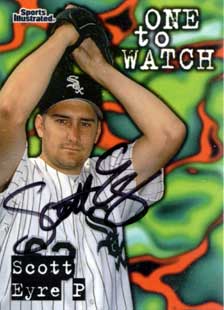
Scott Eyre

Joining the White Sox organization in a 1994 trade with the Rangers, he debuted with the big-league team in 1997.  He split the next 4 seasons between the rotation and the bullpen, not to mention between Chicago and Charlotte, before being moved to the Blue Jays following the 2000 ALDS loss to the Mariners.  He joined the Cubs as a free agent for the 2006 season and enjoyed 2 seasons of relative success, before falling apart in 2008, when he was traded to the Phillies.

Clint Frazier

After missing the second half of 2021 with an injury, Frazier was DFA’d by the Yankees.  He signed a deal with the Cubs that offseason, though he notched just 45 plate appearances before being DFA’s once again.  He chose to finish the year in the Cubs system before becoming a free agent following the season.  After failing to catch on with the Rangers, he signed a minor league deal with the White Sox, eventually hitting .197 in 33 games with the big-league club.

Kosuke Fukudome Continue reading →

And Print It!

Former Cubs manager Lee Elia, who became an infamous part of baseball history following an epic rant in 1983, passed away Tuesday just shy of his 88th birthday.  Born in Philadelphia, Elia spent all of his short major league career in Chicago, in 1966 with the White Sox and in 1968 with the Cubs.  Following the end of his playing career, Elia was a coach for the Phillies in 1980 and 1981 under manager Dallas Green.  When Green was hired by the Tribune Company to be their new executive vice president and general manager for the recently acquired Cubs, he hired Elia to be the team’s new manager.

With an influx of former Phillies on the roster, the Cubs finished 73-89 in 1982, their first season under Elia.  1983 didn’t start much better and, after a tough 4-3 loss to the Dodgers dropped them to a 5-14 record on April 29th, Keith Moreland and Larry Bowa were verbally assaulted by a fan.  In his cramped office, with a small number of reporters peppering him with questions, Elia went off.  in his tirade, Elia had plenty to say about the denizens who took in day baseball every day.

What … what the fuck am I supposed to do? Go out there and let my fuckin’ players get destroyed every day, and be quiet about it? For the fuckin’ nickel/dime people that show up? The motherfuckers don’t even work! That’s why they’re out at the fuckin’ game! They ought to get a fuckin’ job and find out what it’s like to go out and earn a fuckin’ living. Eighty-five percent of the fuckin’ world is working. The other fifteen come out here.

Surprisingly, Elia survived the ordeal, but not the season.  He was fired on August 22nd after saying he had never heard of a Braves rookie, Gerald Perry, who had just gone 4-for-9 with a home run and six RBI in a three-game sweep.  Elia returned to the Phillies organization, managing in the minor leagues and rejoining the big-league club’s coaching staff.  In 1987, he was named manager of the Phillies, going 51-50 after taking over the club.  He was retained for 1988, but a 65–96 record and a last place finish in the NL East led to his dismissal.

Regardless of his success, or lack thereof, on the diamond, he will always be a baseball immortal thanks to his off-the-cuff remarks on a late April afternoon in the bowels of Wrigley Field.

It Has Indeed Been A While

As we hit the halfway point of the 2025 season, I’ve seen fourteen teams already this year, just under half of the league.  Stretching back to the start of 2024, that number jumps to 25, which leaves a quarter of the teams I’ve not seen in quite some time.

Of the remaining five, the Nationals hold the top stop, as it has been over four years now since I have seen them live and in person.  The Twins are the biggest surprise, since going two plus seasons without seeing a division rival is pretty rare. I do have the opportunity to add each of these five teams to this season’s slate in the second half.  Anyway, here’s a look at each team and the last time I saw them play.

Most Recent Game By Team

Team Date
Washington Nationals 5/19/2021
New York Yankees 5/15/2022
Minnesota Twins 10/5/2022
Philadelphia Phillies 6/29/2023
San Francisco Giants 9/5/2023
Cincinnati Reds 4/13/2024
Tampa Bay Rays 4/28/2024
Cleveland Guardians 5/12/2024
Atlanta Braves 5/21/2024
Baltimore Orioles 5/25/2024
Toronto Blue Jays 5/28/2024
Los Angeles Dodgers 6/24/2024
Pittsburgh Pirates 7/14/2024
Detroit Tigers 8/25/2024
New York Mets 8/31/2024
Oakland Athletics 9/15/2024
Los Angeles Angels 3/27/2025
San Diego Padres 4/5/2025
Boston Red Sox 4/13/2025
Milwaukee Brewers 5/1/2025
Houston Astros 5/3/2025
Miami Marlins 5/10/2025
Seattle Mariners 5/20/2025
Texas Rangers 5/24/2025
Colorado Rockies 5/26/2025
Chicago Cubs 5/26/2025
Kansas City Royals 6/8/2025
St. Louis Cardinals 6/19/2025
Chicago White Sox 6/24/2025
Arizona Diamondbacks 6/24/2025

Ballpark Tour: White Sox

With Opening Day in the books, it is time to wrap up our tour of all of the baseball stadiums I’ve been to over the years with the ones I’ve been to the most: the homes of the Chicago White Sox.  Between the two stadiums that have been located at the corners of 35th and Shields, I’ve seen at least 668 games, all but one of which have involved the White Sox.  So, without further ado, let’s take a deeper look at my history with Comiskey Park and the facility currently known as Rate Field.
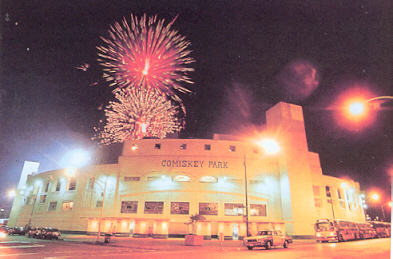
Stadium Name: Comiskey Park

Years in Service: 1910 – 1990

Visits: 13 (that I’m aware of)

Comiskey Park, the so-called Baseball Palace of the World, was the home of the White Sox from 1910 through the 1990 season.  Built on a former city dump at the corner of 35th Street and Shields Avenue, the stadium opened on July 1, 1910, as the White Sox lost to the St. Louis Browns 2-0.  The final game for the old ballyard occurred on September 30, 1990, a 2-1 victory over the Mariners.

Comiskey Park was the host for four World Series, including three in a row from 1917-1919.  The White Sox won the World Series in 1917 against the New York Giants.  The Cubs, looking for a larger seating capacity, moved their home games in the 1918 series against the Red Sox to Comiskey Park.  The 1919 World Series, of course, was the Black Sox scandal, where the White Sox threw the series against the Reds.  The White Sox returned to the World Series 40 years later in 1959 but fell to the Dodgers.  The final post-season games to be played in Comiskey Park were games 3 and 4 of the 1983 ALCS, which the White Sox lost to the Baltimore Orioles.

Comiskey Park was also the host to three All-Star games.  The first All-Star game, in 1933, was held in conjunction with Century of Progress Exposition being held on Chicago’s lakefront.  The event returned to Chicago’s south side in 1950 and the final All-Star game at Comiskey Park was in 1983, the 50th anniversary of the first game.  Comiskey Park was also the frequent home of the Negro League East-West All-Star Game from 1933 to 1960.

Looking back, I’ve now been able to piece together evidence of 13 games that I attended at Comiskey Park, either from pictures, stadium giveaways, or specific memories.  I know there are more, but I have not been able to pinpoint exact games as of yet.  The most memorable game I can remember would be the final night game, on September 29, 1990, where, after the game, the lights were symbolically turned off for the final time.

Stadium Name: Comiskey Park II/US Cellular Field/Guaranteed Rate Field/Rate Field

Years in Service: 1991 – Present

Visits: 655

On the evening of June 30, 1988, with the clock literally stopped, the Illinois legislature passed a bill that provided the financing for a new stadium for the White Sox, stopping them from moving to St. Petersburg, Florida.  Two and a half years later, on April 18, 1991, Comiskey Park II opened, the first new major facility built in Chicago since the erection of the Chicago Stadium in 1929.  Sadly, the White Sox were embarrassed by the Tigers, losing 16-0 in the opening of their new park.

Unfortunately for the White Sox, the new Comiskey Park was the last stadium to be built prior to the wave of retro ballparks that started with the opening of Camden Yards the following year.  Because of this, there have been numerous renovations to the park, starting in 2001 with the addition of nearly 2000 seats and the relocation of the bullpens.  More extensive renovations began in 2003 in preparation for that season’s All-Star Game and using the money generated from selling the naming rights to US Cellular, and continued through 2007, when the replacement of the blue seats with green seats was completed.  Less extensive renovations have occurred since, replacing the different video boards and creating premium seating areas.

The post-season came to the new Comiskey Park for the first time in 1993, as the White Sox battled the Blue Jays in the ALCS.  The stadium hosted its first World Series games in 2005, the first to be played in the city of Chicago since 1959, as the White Sox went on to sweep the Houston Astros and win their first World Series since 1917.

I attended my first game at the new Comiskey Park on April 20, 1991, the second game in the stadium’s history.  Since then, I’ve been to 654 other games at the stadium, the majority coming from 2005 on, when I became a season ticket holder.  I went to both games of the 2000 ALDS, which the White Sox lost to the Mariners, both games of the 2005 ALDS, which the White Sox won against the Red Sox, both games of the 2005 ALCS, which the White Sox split against the Angels, and game 2 of the 2005 World Series.  I attended game 163 of the 2008 season to break the tie between the White Sox and the Twins. and then the two ALDS games against the Rays, the first time I saw the White Sox actually end a post-season series, either in victory or defeat.

Notable regular season games I’ve seen at what is now known as Guaranteed Rate Field include the September 18, 2001 game against the Yankees as baseball returned following the attacks of 9/11, the April 16, 2005 game where Mark Buehrle defeated the Mariners in 1 hour and 39 minutes, the April 2, 2006 season opener against the Indians when the World Series championship banner was raised, the April 4, 2006 game where the players received their World Series rings, and the September 16, 2007 game where Jim Thome hit his 500th career home run against the Angels.  Not to mention a streak of 24 consecutive home openers.