iTunes Top 200: #1

Music.  It is a powerful thing that brings people together, creates memories, and evokes emotions.  It is the universal language that speaks to the soul.  It forms the soundtrack of our lives.

It has now been five years since we last counted down the Top 200 songs in my iTunes library, featuring he songs I have listened to the most since 2007.  It is time to do so again, seeing which older songs still resonate and if any newer ones have joined the fray.  So, without further ado, here are my most listened to songs, based on number of plays as of January 1, 2025.

We conclude this week with the chart-topping song with the most plays since my stats began in late 2007.

#1: Captain Stubby and the Buccaneers – Let’s Go-Go-Go White Sox
iTunes stats: 224 plays, most recently on 9/29/2019
Previous ranking: #1

On June 18, 2005, the White Sox were hosting the Dodgers in inter-league play, the first time the two teams had faced each other in Chicago since the 1959 World Series.  The Saturday night tilt celebrated the occasion, with the Go-Go White Sox celebrated prior to the game and both teams wearing 1959 throwbacks.  During the game, the stadium crew dusted off a fight song that hadn’t been heard in nearly 50 years, creating a video montage with the words as part of the night’s festivities.  Down 3-1 in the bottom of the 9th, the White Sox rallied for 4 runs, capped off by A.J. Pierzynski’s two run shot to end the game, and a new tradition at US Cellular Field was born.

The song was written by former White Sox minor leaguer Al Trace and his friend Walter “Li’l Wally” Jagiello during the 1959 season as the White Sox battled for their first pennant since throwing the World Series in 1919.  They brought the song to Tom Fouts, leader of Captain Stubby and the Buccaneers, a popular local band best known for performing on WLS Prairie Farmer Radio and writing and performing advertising jingles.  The song and the team were both a success, as the White Sox did indeed win the pennant, but lost the World Series to the Dodgers in 6 games.

Following that June night, the song became a rallying point for the remainder of the 2005 season.  It received national exposure, as FOX included clips of it in their coverage of the team’s trek through the post-season.  WGN utilized it during their coverage of the World Series victory parade, over clips of highlights of both the 1959 and 2005 teams.  While not as ubiquitous today, the song does still show up occasionally at the ballpark, when the White Sox go on a big rally.

I managed to download an MP3 of the tune at some point, and it has had a place on every White Sox victory playlist I’ve created ever since.

Ballpark Tour: White Sox

With Opening Day in the books, it is time to wrap up our tour of all of the baseball stadiums I’ve been to over the years with the ones I’ve been to the most: the homes of the Chicago White Sox.  Between the two stadiums that have been located at the corners of 35th and Shields, I’ve seen at least 668 games, all but one of which have involved the White Sox.  So, without further ado, let’s take a deeper look at my history with Comiskey Park and the facility currently known as Rate Field.

Stadium Name: Comiskey Park

Years in Service: 1910 – 1990

Visits: 13 (that I’m aware of)

Comiskey Park, the so-called Baseball Palace of the World, was the home of the White Sox from 1910 through the 1990 season.  Built on a former city dump at the corner of 35th Street and Shields Avenue, the stadium opened on July 1, 1910, as the White Sox lost to the St. Louis Browns 2-0.  The final game for the old ballyard occurred on September 30, 1990, a 2-1 victory over the Mariners.

Comiskey Park was the host for four World Series, including three in a row from 1917-1919.  The White Sox won the World Series in 1917 against the New York Giants.  The Cubs, looking for a larger seating capacity, moved their home games in the 1918 series against the Red Sox to Comiskey Park.  The 1919 World Series, of course, was the Black Sox scandal, where the White Sox threw the series against the Reds.  The White Sox returned to the World Series 40 years later in 1959 but fell to the Dodgers.  The final post-season games to be played in Comiskey Park were games 3 and 4 of the 1983 ALCS, which the White Sox lost to the Baltimore Orioles.

Comiskey Park was also the host to three All-Star games.  The first All-Star game, in 1933, was held in conjunction with Century of Progress Exposition being held on Chicago’s lakefront.  The event returned to Chicago’s south side in 1950 and the final All-Star game at Comiskey Park was in 1983, the 50th anniversary of the first game.  Comiskey Park was also the frequent home of the Negro League East-West All-Star Game from 1933 to 1960.

Looking back, I’ve now been able to piece together evidence of 13 games that I attended at Comiskey Park, either from pictures, stadium giveaways, or specific memories.  I know there are more, but I have not been able to pinpoint exact games as of yet.  The most memorable game I can remember would be the final night game, on September 29, 1990, where, after the game, the lights were symbolically turned off for the final time.

Stadium Name: Comiskey Park II/US Cellular Field/Guaranteed Rate Field/Rate Field

Years in Service: 1991 – Present

Visits: 655

On the evening of June 30, 1988, with the clock literally stopped, the Illinois legislature passed a bill that provided the financing for a new stadium for the White Sox, stopping them from moving to St. Petersburg, Florida.  Two and a half years later, on April 18, 1991, Comiskey Park II opened, the first new major facility built in Chicago since the erection of the Chicago Stadium in 1929.  Sadly, the White Sox were embarrassed by the Tigers, losing 16-0 in the opening of their new park.

Unfortunately for the White Sox, the new Comiskey Park was the last stadium to be built prior to the wave of retro ballparks that started with the opening of Camden Yards the following year.  Because of this, there have been numerous renovations to the park, starting in 2001 with the addition of nearly 2000 seats and the relocation of the bullpens.  More extensive renovations began in 2003 in preparation for that season’s All-Star Game and using the money generated from selling the naming rights to US Cellular, and continued through 2007, when the replacement of the blue seats with green seats was completed.  Less extensive renovations have occurred since, replacing the different video boards and creating premium seating areas.

The post-season came to the new Comiskey Park for the first time in 1993, as the White Sox battled the Blue Jays in the ALCS.  The stadium hosted its first World Series games in 2005, the first to be played in the city of Chicago since 1959, as the White Sox went on to sweep the Houston Astros and win their first World Series since 1917.

I attended my first game at the new Comiskey Park on April 20, 1991, the second game in the stadium’s history.  Since then, I’ve been to 654 other games at the stadium, the majority coming from 2005 on, when I became a season ticket holder.  I went to both games of the 2000 ALDS, which the White Sox lost to the Mariners, both games of the 2005 ALDS, which the White Sox won against the Red Sox, both games of the 2005 ALCS, which the White Sox split against the Angels, and game 2 of the 2005 World Series.  I attended game 163 of the 2008 season to break the tie between the White Sox and the Twins. and then the two ALDS games against the Rays, the first time I saw the White Sox actually end a post-season series, either in victory or defeat.

Notable regular season games I’ve seen at what is now known as Guaranteed Rate Field include the September 18, 2001 game against the Yankees as baseball returned following the attacks of 9/11, the April 16, 2005 game where Mark Buehrle defeated the Mariners in 1 hour and 39 minutes, the April 2, 2006 season opener against the Indians when the World Series championship banner was raised, the April 4, 2006 game where the players received their World Series rings, and the September 16, 2007 game where Jim Thome hit his 500th career home run against the Angels.  Not to mention a streak of 24 consecutive home openers.

If You Build It Twice, Will They Still Come?

Following last week’s inaugural Field of Dreams game in Dyersville, Iowa, where the White Sox defeated the Yankees in thrilling fashion, word leaked that a second go-around would be slotted for the 2022 season, with the Cubs and the Reds on tap.  Neither team has a direct tie to the movie, but both have tangential ties to either the movie or the area: the Reds were the opponents of the 1919 White Sox that were the focus of the film in the thrown World Series and the Cubs have located their Triple A franchise in Iowa since 1981.

Can the second installment reach the heights of the first?  It’s hard to imagine.  While the novelty of playing in a cornfield in Iowa will remain, the grandeur of having Kevin Costner lead the teams out of the cornfields in to the stadium may come of as hokey if it is done a second time.  Given the success of the first game, a second was all but assured, but sometimes it is ok for a thing to just exist and be a hit.

Ballpark Tour: White Sox

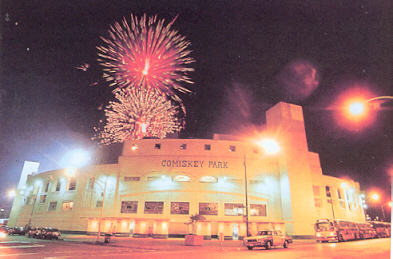
Opening day was supposed to be less than a week away, so it is time to wrap up our tour of all of the baseball stadiums I’ve been to over the years with the one I’ve been to the most: the homes of the Chicago White Sox.  Between the two stadiums that have been located at the corners of 35th and Shields, I’ve seen at least 542 games, all but one of which have involved the White Sox.  So, without further ado, let’s take a deeper look at my history with Comiskey Park and Guaranteed Rate Field.
Stadium Name: Comiskey Park

Years in Service: 1910 – 1990

Visits: 12 (that I’m aware of)

Comiskey Park, the so-called Baseball Palace of the World, was the home of the White Sox from 1910 through the 1990 season.  Built on a former city dump at the corner of 35th Street and Shields Avenue, the stadium opened on July 1, 1910, as the White Sox lost to the St. Louis Browns 2-0.  The final game for the old ballyard occurred on September 30, 1990, a 2-1 victory over the Mariners.

Comiskey Park was the host for 4 World Series, including 3 in a row from 1917-1919.  The White Sox won the World Series in 1917 against the New York Giants.  The Cubs, looking for a larger seating capacity, moved their home games in the 1918 series against the Red Sox to Comiskey Park.  The 1919 World Series, of course, was the Black Sox scandal, where the White Sox threw the series against the Reds.  The White Sox returned to the World Series 40 years later in 1959, but fell to the Dodgers.  The final post-season games to be played in Comiskey Park were games 3 and 4 of the 1983 ALCS, which the White Sox lost to the Baltimore Orioles.

Comiskey Park was also the host to 3 All-Star games.  The first All-Star game, in 1933, was held in conjunction with Century of Progress Exposition being held on Chicago’s lakefront.  The event returned to Chicago’s south side in 1950 and the final All-Star game at Comiskey Park was in 1983, the 50th anniversary of the first game.  Comiskey Park was also the frequent home of the Negro League East-West All-Star Game from 1933 to 1960.

Looking back, I’ve been able to piece together evidence of 12 games that I attended at Comiskey Park, either from pictures, stadium giveaways, or specific memories.  I know there are more, but I have not been able to pinpoint exact games as of yet.  The most memorable game I can remember would be the final night game, on September 29, 1990, where, after the game, the lights were symbolically turned off for the final time.

Stadium Name: Comiskey Park II/US Cellular Field/Guaranteed Rate Field

Years in Service: 1991 – Present

Visits: 530

On the evening of June 30, 1988, with the clock literally stopped, the Illinois legislature passed a bill that provided the financing for a new stadium for the White Sox, stopping them from moving to St. Petersburg, Florida.  2 and a half years later, on April 18, 1991, Comiskey Park II opened, the first new major facility built in Chicago since the erection of the Chicago Stadium in 1929.  Sadly, the White Sox were embarrassed by the Tigers, losing 16-0 in the opening of their new park.

Unfortunately for the White Sox, the new Comiskey Park was the last stadium to be built prior to the wave of retro ballparks that started with the opening of Camden Yards the following year.  Because of this, there have been numerous renovations to the park, starting in 2001 with the addition of nearly 2000 seats and the relocation of the bullpens.  More extensive renovations began in 2003 in preparation for that season’s All Star Game and using the money generated from selling the naming rights to US Cellular, and continued through 2007, when the replacement of the blue seats with green seats was completed.  Less extensive renovations have occurred since, replacing the different video boards and creating premium seating areas.

The post-season came to the new Comiskey Park for the first time in 1993, as the White Sox battled the Blue Jays in the ALCS.  The stadium hosted its first World Series games in 2005, the first to be played in the city of Chicago since 1959, as the White Sox went on to sweep the Houston Astros and win their first World Series since 1917.

I attended my first game at the new Comiskey Park on April 20, 1991, the second game in the stadium’s history.  Since then, I’ve been to 529 other games at the stadium, the majority coming from 2005 on, when I became a season ticket holder.  I went to both games of the 2000 ALDS, which the White Sox lost to the Mariners, both games of the 2005 ALDS, which the White Sox won against the Red Sox, both games of the 2005 ALCS, which the White Sox split against the Angels, and game 2 of the 2005 World Series.  I attended game 163 of the 2008 season to break the tie between the White Sox and the Twins. and then the two ALDS games against the Rays, the first time I saw the White Sox actually end a post-season series, either in victory or defeat.

Notable regular season games I’ve seen at what is now known as Guaranteed Rate Field include the September 18, 2001 game against the Yankees as baseball returned following the attacks of 9/11, the April 16, 2005 game where Mark Buehrle defeated the Mariners in 1 hour and 39 minutes, the April 2, 2006 season opener against the Indians when the World Series championship banner was raised, the April 4, 2006 game where the players received their World Series rings, and the September 16, 2007 game where Jim Thome hit his 500th career home run against the Angels.  Not to mention a streak of 19 consecutive home openers.

Ballpark Tour: Comiskey Park

comiskeyout2

Stadium Name: Comiskey Park

Location: Chicago

Home Team: White Sox

Years in Service: 1910 – 1990

Visits: 12 (that I’m aware of)

Comiskey Park, the so-called Baseball Palace of the World, was the home of the White Sox from 1910 through the 1990 season.  Built on a former city dump at the corner of 35th Street and Shields Avenue, the stadium opened as White Sox Park on July 1, 1910, as the White Sox lost to the St. Louis Browns 2-0.  In 1913, owner Charles Comiskey renamed the stadium after himself, and Comiskey Park was born.  From 1962 until 1975, the White Sox Park name was officially re-establshed, as new ownership groups tried to separate themselves from the Comiskey name.  However, Bill Veeck, in his second tour of duty as owner of the White Sox, put the Comiskey Park name back on the stadium in 1976, where it remained until 1990.  The final game for the old ballyard occurred on September 30, 1990, a 2-1 victory over the Mariners.

Comiskey Park was the host for 4 World Series contests, including 3 in a row from 1917-1919.  The White Sox won the World Series in 1917 against the New York Giants.  The Cubs, looking for a larger seating capacity, moved their home games in the 1918 series against the Red Sox to Comiskey Park.  The 1919 World Series, of course, was the Black Sox scandal, where the White Sox threw the series against the Reds.  The White Sox returned to the World Series 40 years later in 1959, but fell to the Dodgers.  The final post-season games to be played in Comiskey Park were games 3 and 4 of the 1983 ALCS, which the White Sox lost to the Baltimore Orioles.

Comiskey Park was also the host to 3 All-Star games.  The first All-Star game ever, in 1933, was held in conjunction with Century of Progress Exposition being held on Chicago’s lakefront.  The event returned to Chicago’s south side in 1950.  The final All-Star game at Comiskey Park was in 1983, the 50th anniversary of the first game.  Comiskey Park was also the frequent home of the Negro League East-West All-Star Game from 1933 to 1960.

In addition to White Sox baseball, Comiskey Park was also the home to the Chicago American Giants of the Negro Leagues, the Chicago Cardinals of the NFL, and the Chicago Sting of the NASL.  Comiskey Park also hosted numerous boxing matches, including the 1937 heavyweight title match where Joe Louis defeated then champion James J. Braddock.  The Beatles played two concerts at Comiskey Park in August of 1965.  Other musical acts to perform there include Aerosmith, AC/DC, The Eagles, The Police, Simon & Garfunkel, and The Jacksons, who performed 3 shows during their Victory tour in October of 1984.

Looking back, I’ve been able to piece together evidence of 12 games that I attended at Comiskey Park.  I know there are more, but I have not been able to pinpoint exact games yet.  The most memorable game I can remember would be the final night game, on September 29, 1990, where, after the game, the lights were symbolically turned off for the final time.

Book 20 (of 52) – Eight Men Out

Eight Men Out: The Black Sox and the 1919 World Series – Eliot Asinof

In the summer of 1919, the Chicago White Sox were the toast of the American League, winning the pennant by 3.5 games and becoming the easy favorite to win the World Series, their second in 3 years.  However, a few things stood in the way of the crowning of a budding dynasty: a conspiracy of two-timing, low level gamblers, a tight-fisted owner who would spare no expense for reporters and friends but would cheat his team out of bonuses, and the players who were fed up with being paid like paupers despite their success.  The end result was the first World Series victory for the Reds, a black eye for baseball, and the decimation of the White Sox organization, who would not win another World Series until the following century.

Eight Men Out is author Eliot Asinof’s tale of the whole scandal, from the agreement to throw the Series, the fallout throughout the following season, the prosecution of the 8 co-conspirators, and how they lived out their life, banned from the game they loved and the not able to use the only skill that they had.  Released in 1963, Asinof’s account had always been accepted as the one true source on how the scandal went down.  Recent research has shown that this may not be the case, with Asinof himself admitting that certain characters, and their actions, had been made up in order to protect his movie rights and independent research showing that stories of Charles Comiskey’s alledged stinginess may be apocraphyl.  That said, Asinof does provide a gripping tale of how the fix was put in place and how the players ended up being the big losers, cheated of their promised payday, facing trial over the whole ordeal and banned for life from baseball.

I first read (or started to read) this book in junior high, around the time of the movie’s release.  I picked the book up within the last few years and finally got around to it, following the (non-scandalous) collapse of yet another White Sox team.  The stain of this scandal rocked the White Sox for years, leaving them out of the post-season for 40 years and putting an awful 88 years between championships when they finally broke through and won the 2005 World Series.  There are still some scars that likely can be attributed to the Black Sox scandal.  To this day, the White Sox remain the only pre-expansion team to not make the post-season in consecutive years.  The 1920 squad was within striking distance of first place and had a good shot at a return trip to the World Series had their star players not been suspended prior to the last series of the season.  90 plus years later, they are still looking for that back-to-back trip to the playoffs.