Crossing Sides Of Town

So far in 2025, Brad Keller, Mike Tauchman, Nicky Lopez, and Reese McGuire pushed the total of players I’ve seen take the field in person for both the Cubs and the White Sox to 47.  With the final round of crosstown kicking off tonight at Rate Field, here’s a look at those players, in alphabetical order.

David Aardsma

After posting a decent season with the Cubs in 2006, Aardsma was traded to the White Sox for Neal Cotts.  Aardsma lasted one season with the Sox, where he was unable to duplicate his success from the year before.

Jason Bere

Drafted by the White Sox in the 36th round in 1990, Bere debuted with the big-league club in 1993, finishing 2nd in Rookie of the Year voting.  After an All Star selection in 1994, injuries marred the remainder of his tenure on the South Side, which ended in 1998.  He resurfaced with the Cubs in 2001 and had a decent season, but he went 1-10 in 2002 before being let go.

Emilio Bonifacio

Bonifacio spent back-to-back partial seasons in Chicago, first for the Cubs in 2014 after signing as a free agent, where he played decently enough to be flipped at the trade deadline, along with James Russell, to the Braves for a young catching prospect by the name of Victor Caratini.  He returned to Chicago in 2015, signing with the White Sox, where he he did not do well at all, hitting .167 in 47 games before being released in August.

Welington Castillo

Debuting with the Cubs in 2010, Castillo spent time behind the plate for the Cubs until May of 2015, when, having been replaced in the starting lineup by Miguel Montero, he was flipped to the Mariners.  He returned to Chicago in 2018 after signing with the White Sox as a free agent.  On May 24th of that season, he was suspended 80 games for a violation of the PED policy.  The White Sox then cut bait following the 2019 season, shipping him off to the Rangers.

Neal Cotts

Acquired by the White Sox in the Billy Koch trade, he debuted with the team in 2003.  He was a key contributor in the bullpen during the 2005 championship season and was the only relief pitcher to appear in all 3 rounds of the playoffs that season.  Following the 2006 season, he was traded to the Cubs for David Aardsma, and he spent the next 3 injury filled seasons on the North Side.
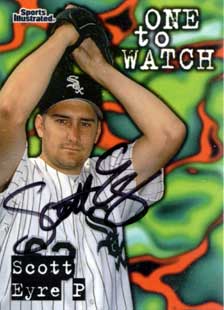
Scott Eyre

Joining the White Sox organization in a 1994 trade with the Rangers, he debuted with the big-league team in 1997.  He split the next 4 seasons between the rotation and the bullpen, not to mention between Chicago and Charlotte, before being moved to the Blue Jays following the 2000 ALDS loss to the Mariners.  He joined the Cubs as a free agent for the 2006 season and enjoyed 2 seasons of relative success, before falling apart in 2008, when he was traded to the Phillies.

Clint Frazier

After missing the second half of 2021 with an injury, Frazier was DFA’d by the Yankees.  He signed a deal with the Cubs that offseason, though he notched just 45 plate appearances before being DFA’s once again.  He chose to finish the year in the Cubs system before becoming a free agent following the season.  After failing to catch on with the Rangers, he signed a minor league deal with the White Sox, eventually hitting .197 in 33 games with the big-league club.

Kosuke Fukudome Continue reading →

Fitbit XI – Week 25

A great week which extended my 30,000-step week streak to nine while scoring my highest total in nearly a year.  The week got off to a strong start on Sunday, scoring 4500 steps.  A day off of work with a nighttime trip to Rate Field on Monday saw a nice increase, crossing my daily step goal with 8600 steps.  Another vacation day and another tilt between the Blue Jays and the White Sox on Tuesday left me just shy of my daily step goal with 7200 steps.  The end of my time off saw a big drop on Wednesday but still left me with 5300 steps.  Thursday saw me going back to work, leading to just 4300 steps.  The unveiling of Mark Buehrle’s statue on Friday put me back up to 6900 steps.  Another game, celebrating the 20th anniversary of the 2005 World Series champions, got me to 5300 steps on Saturday to wrap up the week.

Total steps: 42,281

Daily average: 6040.1

2025 All Star Break Standings

We reach the traditional (if not numerical) midpoint of the 2025 baseball season as the Midsummer Classic lands in Atlanta for the third time.  As the stars of the baseball world gather at Truist Park for tonight’s showdown, it’s time to take a look at the team records for the 23 games, featuring 57% of the teams in the league, that I attended in the first half of the baseball season.

2025 Team Records

Team Name Won Loss Winning Pctg
Chicago Cubs 3 0 1.000
St. Louis Cardinals 2 0 1.000
Toronto Blue Jays 2 0 1.000
Houston Astros 1 0 1.000
Arizona Diamondbacks 1 0 1.000
Cleveland Guardians 2 1 0.667
Miami Marlins 1 1 0.500
Boston Red Sox 1 1 0.500
Kansas City Royals 1 1 0.500
Chicago White Sox 9 12 0.429
Milwaukee Brewers 0 1 0.000
San Diego Padres 0 1 0.000
Colorado Rockies 0 1 0.000
San Francisco Giants 0 1 0.000
Seattle Mariners 0 1 0.000
Texas Rangers 0 1 0.000
Los Angeles Angels 0 1 0.000

It Has Indeed Been A While

As we hit the halfway point of the 2025 season, I’ve seen fourteen teams already this year, just under half of the league.  Stretching back to the start of 2024, that number jumps to 25, which leaves a quarter of the teams I’ve not seen in quite some time.

Of the remaining five, the Nationals hold the top stop, as it has been over four years now since I have seen them live and in person.  The Twins are the biggest surprise, since going two plus seasons without seeing a division rival is pretty rare. I do have the opportunity to add each of these five teams to this season’s slate in the second half.  Anyway, here’s a look at each team and the last time I saw them play.

Most Recent Game By Team

Team Date
Washington Nationals 5/19/2021
New York Yankees 5/15/2022
Minnesota Twins 10/5/2022
Philadelphia Phillies 6/29/2023
San Francisco Giants 9/5/2023
Cincinnati Reds 4/13/2024
Tampa Bay Rays 4/28/2024
Cleveland Guardians 5/12/2024
Atlanta Braves 5/21/2024
Baltimore Orioles 5/25/2024
Toronto Blue Jays 5/28/2024
Los Angeles Dodgers 6/24/2024
Pittsburgh Pirates 7/14/2024
Detroit Tigers 8/25/2024
New York Mets 8/31/2024
Oakland Athletics 9/15/2024
Los Angeles Angels 3/27/2025
San Diego Padres 4/5/2025
Boston Red Sox 4/13/2025
Milwaukee Brewers 5/1/2025
Houston Astros 5/3/2025
Miami Marlins 5/10/2025
Seattle Mariners 5/20/2025
Texas Rangers 5/24/2025
Colorado Rockies 5/26/2025
Chicago Cubs 5/26/2025
Kansas City Royals 6/8/2025
St. Louis Cardinals 6/19/2025
Chicago White Sox 6/24/2025
Arizona Diamondbacks 6/24/2025

Ballpark Tour: White Sox

With Opening Day in the books, it is time to wrap up our tour of all of the baseball stadiums I’ve been to over the years with the ones I’ve been to the most: the homes of the Chicago White Sox.  Between the two stadiums that have been located at the corners of 35th and Shields, I’ve seen at least 668 games, all but one of which have involved the White Sox.  So, without further ado, let’s take a deeper look at my history with Comiskey Park and the facility currently known as Rate Field.

Stadium Name: Comiskey Park

Years in Service: 1910 – 1990

Visits: 13 (that I’m aware of)

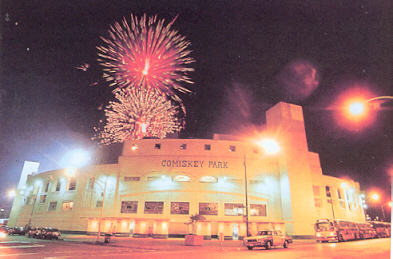
Comiskey Park, the so-called Baseball Palace of the World, was the home of the White Sox from 1910 through the 1990 season.  Built on a former city dump at the corner of 35th Street and Shields Avenue, the stadium opened on July 1, 1910, as the White Sox lost to the St. Louis Browns 2-0.  The final game for the old ballyard occurred on September 30, 1990, a 2-1 victory over the Mariners.

Comiskey Park was the host for four World Series, including three in a row from 1917-1919.  The White Sox won the World Series in 1917 against the New York Giants.  The Cubs, looking for a larger seating capacity, moved their home games in the 1918 series against the Red Sox to Comiskey Park.  The 1919 World Series, of course, was the Black Sox scandal, where the White Sox threw the series against the Reds.  The White Sox returned to the World Series 40 years later in 1959 but fell to the Dodgers.  The final post-season games to be played in Comiskey Park were games 3 and 4 of the 1983 ALCS, which the White Sox lost to the Baltimore Orioles.

Comiskey Park was also the host to three All-Star games.  The first All-Star game, in 1933, was held in conjunction with Century of Progress Exposition being held on Chicago’s lakefront.  The event returned to Chicago’s south side in 1950 and the final All-Star game at Comiskey Park was in 1983, the 50th anniversary of the first game.  Comiskey Park was also the frequent home of the Negro League East-West All-Star Game from 1933 to 1960.

Looking back, I’ve now been able to piece together evidence of 13 games that I attended at Comiskey Park, either from pictures, stadium giveaways, or specific memories.  I know there are more, but I have not been able to pinpoint exact games as of yet.  The most memorable game I can remember would be the final night game, on September 29, 1990, where, after the game, the lights were symbolically turned off for the final time.

Stadium Name: Comiskey Park II/US Cellular Field/Guaranteed Rate Field/Rate Field

Years in Service: 1991 – Present

Visits: 655

On the evening of June 30, 1988, with the clock literally stopped, the Illinois legislature passed a bill that provided the financing for a new stadium for the White Sox, stopping them from moving to St. Petersburg, Florida.  Two and a half years later, on April 18, 1991, Comiskey Park II opened, the first new major facility built in Chicago since the erection of the Chicago Stadium in 1929.  Sadly, the White Sox were embarrassed by the Tigers, losing 16-0 in the opening of their new park.

Unfortunately for the White Sox, the new Comiskey Park was the last stadium to be built prior to the wave of retro ballparks that started with the opening of Camden Yards the following year.  Because of this, there have been numerous renovations to the park, starting in 2001 with the addition of nearly 2000 seats and the relocation of the bullpens.  More extensive renovations began in 2003 in preparation for that season’s All-Star Game and using the money generated from selling the naming rights to US Cellular, and continued through 2007, when the replacement of the blue seats with green seats was completed.  Less extensive renovations have occurred since, replacing the different video boards and creating premium seating areas.

The post-season came to the new Comiskey Park for the first time in 1993, as the White Sox battled the Blue Jays in the ALCS.  The stadium hosted its first World Series games in 2005, the first to be played in the city of Chicago since 1959, as the White Sox went on to sweep the Houston Astros and win their first World Series since 1917.

I attended my first game at the new Comiskey Park on April 20, 1991, the second game in the stadium’s history.  Since then, I’ve been to 654 other games at the stadium, the majority coming from 2005 on, when I became a season ticket holder.  I went to both games of the 2000 ALDS, which the White Sox lost to the Mariners, both games of the 2005 ALDS, which the White Sox won against the Red Sox, both games of the 2005 ALCS, which the White Sox split against the Angels, and game 2 of the 2005 World Series.  I attended game 163 of the 2008 season to break the tie between the White Sox and the Twins. and then the two ALDS games against the Rays, the first time I saw the White Sox actually end a post-season series, either in victory or defeat.

Notable regular season games I’ve seen at what is now known as Guaranteed Rate Field include the September 18, 2001 game against the Yankees as baseball returned following the attacks of 9/11, the April 16, 2005 game where Mark Buehrle defeated the Mariners in 1 hour and 39 minutes, the April 2, 2006 season opener against the Indians when the World Series championship banner was raised, the April 4, 2006 game where the players received their World Series rings, and the September 16, 2007 game where Jim Thome hit his 500th career home run against the Angels.  Not to mention a streak of 24 consecutive home openers.

All Time Team Records

After a long winter, the North American portion of the 2025 baseball season is set to get underway tomorrow.  To celebrate, it is time once again to look at the all-time team records for games that I have identified as having attended dating back to 1984.  Last year, I posted my lowest total since 2001, a decrease of 16 games from the year before, and managed to see 20 out of the 30 teams, so there should be some nice changes.

The White Sox are coming off the most losses in modern major league history and may be hard-pressed to avoid breaking that record again this year.  On the other side of town, the Cubs made some big moves to get back into playoff contention.  The 2025 season may look completely different on each side of town.

All-Time Team Records

Team Name Won Loss Winning Pctg
California Angels 2 0 1.000
Arizona Diamondbacks 16 4 0.800
Cleveland Guardians 4 2 0.667
Florida Marlins 15 8 0.652
New York Yankees 19 12 0.613
Toronto Blue Jays 18 12 0.600
Philadelphia Phillies 13 9 0.591
Colorado Rockies 11 8 0.579
Boston Red Sox 21 16 0.568
Los Angeles Angels 20 16 0.556
Washington Nationals 7 6 0.538
Detroit Tigers 35 30 0.538
Cleveland Indians 31 27 0.534
Chicago Cubs 238 215 0.525
Houston Astros 26 25 0.510
Chicago White Sox 372 360 0.508
Continue reading →

Another Name Change

Eight years into a thirteen-year deal, Guaranteed Rate Field will now be known as Rate Field.  While the new name rolls off the tongue a little easier than the previous moniker, it is still a bit of a clunker.  Guaranteed Rate rebranded as simply Rate this past July, so the new name aligns with the corporate master.

In the time the park was known as Guaranteed Rate, I saw 203 games, including post-season play in 2021 and the worst team in modern MLB history in 2024.

All-Time Team Records

Team Name Won Loss Winning Pctg
Milwaukee Brewers 3 1 0.750
Cleveland Guardians 4 2 0.667
San Diego Padres 2 1 0.667
Arizona Diamondbacks 2 1 0.667
Chicago Cubs 7 4 0.636
Seattle Mariners 7 4 0.636
Toronto Blue Jays 5 3 0.625
Boston Red Sox 6 4 0.600
Cleveland Indians 7 5 0.583
New York Yankees 4 3 0.571
Detroit Tigers 13 10 0.565
Houston Astros 6 5 0.545
Cincinnati Reds 1 1 0.500
Los Angeles Angels 3 3 0.500
St. Louis Cardinals 2 2 0.500
Texas Rangers 3 3 0.500
Oakland Athletics 6 7 0.462
Chicago White Sox 93 110 0.458
Minnesota Twins 7 9 0.438
Kansas City Royals 8 12 0.400
Baltimore Orioles 3 5 0.375
San Francisco Giants 1 2 0.333
Tampa Bay Rays 2 5 0.286

The Hall Calls

Sunday night, the results of the Classic Baseball Era Veteran’s Committee vote was revealed, adding two players to the Hall of Fame class of 2025: Dick Allen and Dave Parker.  Parker was named on fourteen ballots from the 16-person committee, while Allen nabbed thirteen votes, the one more than the minimum needed for election.

Allen spent three of his fifteen big league seasons with the White Sox, earning the MVP award in 1972.  He was the Rookie of the Year in 1964 with the Phillies and also spent time with the Cardinals, Dodgers, and A’s.  He hit 20 or more home runs in nine consecutive seasons and finished his career with 351 homers, 1,119 RBI and a .292 career batting average.  Unfortunately, Allen passed away in December of 2020.

Parker, 73, was a seven-time All-Star in his 19-year career, hitting 339 home runs and posting a lifetime .290 batting average.  He won back-to-back batting titles with the Pirates in 1977 and 1978, winning the NL MVP award in ’78.  He earned All-Star MVP honors in 1979 while leading the Pirates to their last World Series championship.  After leaving the Pirates, he bounced around to the Reds, A’s, Brewers, Angels and Blue Jays, winning a second title with the A’s in 1989.

Ballpark Tour: Blue Jays

With the offseason underway, we continue our tour of all of the different baseball stadiums I’ve been to over the years. This week, we look at the Toronto Blue Jays, the lone team currently existing outside of the United States. So, without further ado, let’s take a deeper look at my one game history with Rogers Centre.

Stadium Name: Skydome/Rogers Centre

Years in Service: 1989 – Present

Visits: 1

Following the Grey Cup game in 1982 at Exhibition Stadium, dubbed the Rain Bowl due to a torrential rainstorm, tens of thousands of people attended a rally at Toronto’s city hall chanting “We want a dome”.  After years of studies, they got their wish on June 3, 1989 when Skydome opened as the new home of the Blue Jays, featuring the first functional retractable roof in North America.

While the stadium quickly became an albatross for the province of Ontario, due to cost overruns and a recession, the Blue Jays became a force to be reckoned with.  The Jays won the AL East crown in 1989 and 1991, losing to the eventual World Series champions both years.  In 1992, they again won their division and became the first Canadian team to capture a World Series title.  They repeated as champions in 1993, becoming the first team to win back-to-back Series since the Yankees in 1977 and 1978.

Since then, things have been relatively quiet for the Blue Jays.  In 2005, the stadium was renamed Rogers Centre, after the new owners of both the stadium and the team.

I attended my first (and, so far, only) game at the Rogers Centre in September of 2015 when I was visiting Toronto with my friend Hayley.  In addition to adding a new stadium to my resume, former White Sox ace Mark Buehrle was scheduled to start, so I was really looking forward to the game.  Sadly, Buehrle was bumped a few days due to a sore shoulder, so I ended up having to see David Price take on the Orioles.  He handled them with ease, picking up his 100th career victory.  I didn’t have the best seats in the house, sitting out in left field, but was in the shade, which was in short supply during a hot afternoon with the roof open.  I certainly hope to return one day.

2024 Final Standings

A hugely disappointing season came to an end this weekend, once again leaving both Chicago teams home for October.  The Cubs planned on being a playoff contender this year after poaching manager Craig Counsell from the Brewers but failed to put it all together.  The White Sox, on the other hand, put together an absolutely horrific performance, setting the modern MLB record for most losses in a season and notching the sixth time in franchise history that they’ve lost 100 or more games.  Because of this, I ended up attending just 27 games, my lowest total since becoming a season ticket holder in 2002.  All told, I managed to see 20 of the 30 teams.

2024 Team Records

Team Name Won Loss Winning Pctg
Detroit Tigers 4 0 1.000
Baltimore Orioles 1 0 1.000
Cincinnati Reds 1 0 1.000
Cleveland Guardians 1 0 1.000
Houston Astros 1 0 1.000
Toronto Blue Jays 1 0 1.000
Los Angeles Dodgers 1 0 1.000
New York Mets 1 0 1.000
Pittsburgh Pirates 1 0 1.000
San Diego Padres 1 0 1.000
Seattle Mariners 1 0 1.000
Boston Red Sox 2 1 0.667
Chicago Cubs 3 2 0.600
Oakland Athletics 1 1 0.500
Kansas City Royals 1 1 0.500
Chicago White Sox 6 18 0.250
Los Angeles Angels 0 1 0.000
Atlanta Braves 0 1 0.000
Colorado Rockies 0 1 0.000
Tampa Bay Rays 0 1 0.000