2021 Final Pitching Leaders

Yesterday, we looked at the leaders in the 58 games I attended this year on the offensive side of the ball.  With both League Championship Series in full swing today, it’s time to wrap up our look back at the 2021 season with the pitching leaders, starting with everyone’s favorite pitching statistic:

Wins

Name Total
Lance Lynn 4
Michael Kopech 3
Dylan Cease 3
Dallas Keuchel 3
Reynaldo Lopez 3
Lucas Giolito 3

Losses

Name Total
Carlos Rodon 4
Lance Lynn 3
Lucas Giolito 3
Dylan Cease 2
Reynaldo Lopez 2
Liam Hendriks 2
Jorge Alcala 2
Adbert Alzolay 2

ERA (> 6 IP)

Name Total
Ryan Burr 1.08
Matt Foster 1.23
Alec Mills 1.35
Lance McCullers 1.63
Mike Minor 1.63

Strikeouts

Name Total
Lance Lynn 76
Dylan Cease 75
Carlos Rodon 56
Continue reading →

By The Numbers – 36

In 1929, uniform numbers appeared on the back of baseball jerseys for the first time, thanks to the Indians and the Yankees.  By 1937, numbers finally appeared across all uniforms, both home and away, across both major leagues.  Since that time, 81 distinct numbers have been worn by members of the White Sox, while the Cubs boast 76.

Today, we continue our look at those players, picking our favorite, if not the best, player to wear each uniform number for both Chicago teams with #36.  83 different players have donned #36 while playing in Chicago, 54 for the White Sox and 29 for the Cubs.

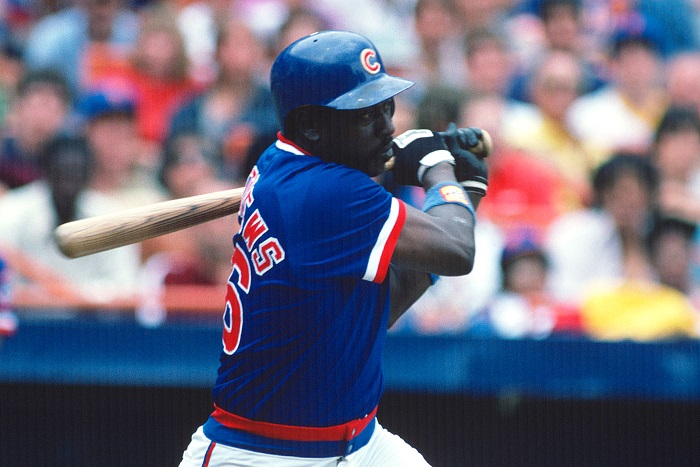
Acquired by the Cubs, along with Bob Dernier and Porfi Altamirano, from the Phillies for Bill Campbell and Mike Diaz near the end of spring training in 1984, Gary “Sarge” Matthews, wearing #36, became a spark plug that helped lead the Cubs to their first ever division title.  Leading the league in walks and OBP, Matthews set a career high with 101 runs scored and finished 5th in MVP voting, behind teammates Ryne Sandberg and Rick Sutcliffe.  He saw a big drop-off in 1985, appearing in only 97 games and hitting a career low .235.  He bounced back a bit in 1986, appearing in 123 games and hitting 21 home runs, his highest total since 1979.  Reduced to a bench player in 1987, Matthews had 42 ABs in 44 games when he was traded to the Mariners on July 11 for a minor league player to be named later.

On the south side of town, Jerry Koosman donned #36 when he joined the White Sox on August 30, 1981 after coming to the White Sox via trade from the Twins.  Koosman appeared in 8 games down the stretch, starting 3, as the White Sox finished 6th in the second half of the crazy strike season.  He returned in 1982, working mostly out of the bullpen but still starting 19 games as the White Sox squandered a quick start to finish in 3rd place.  The veteran lefty spent most of the 1983 season in the starting rotation, but saw his ERA inflate to a career high 4.77.  However, after a shaky start, the White Sox caught fire and Koosman was the starting pitcher on September 17, when the White Sox clinched their first division title.  Koosman made one relief appearance during the ALCS against the Orioles, throwing 1/3 of a disastrous inning in the Game 3 blowout, giving up 1 hit, 2 walks, and 3 runs (2 earned).  He re-upped with the White Sox following the season, but was sent to the Phillies the following spring to complete the trade for Ron Reed.

By The Numbers – 38

In 1929, uniform numbers appeared on the back of baseball jerseys for the first time, thanks to the Indians and the Yankees.  By 1937, numbers finally appeared across all uniforms, both home and away, across both major leagues.  Since that time, 81 distinct numbers have been worn by members of the White Sox, while the Cubs boast 76.

Today, we continue our look at those players, picking our favorite, if not the best, player to wear each uniform number for both Chicago teams with #38.  89 different players have donned #38 while playing in Chicago, 45 for the White Sox and 44 for the Cubs.

From the time he made his debut in 2001 through the January 2012 trade that ended his Cubs career, Carlos Zambrano took the field with #38 on his back.  When he was on his game, which he was for much of his early career on the Northside, he was one of the best in the game, helping the Cubs to division titles in 2003, 2007, and 2008.  Towards the end, though, he was known more for the troubles he has caused, whether it was fighting with Michael Barrett, Derrek Lee, or a Gatorade machine before finally walking out on the team after a horrid start against the Braves in the August of 2011, where he was ejected, claimed he was retiring, and then was suspended for the remainder of the season.  In January, he was traded to the Marlins.

On the south side of town, Pablo Ozuna donned #38 during his 3+ years with the White Sox.  Signing as a free agent in January of 2005, Ozuna saw the most playing time of his career to that point, including scoring the winning run in Game 2 of the ALCS, pinch running for A.J. Pierzynski after the infamous dropped third strike call in the 9th inning, and kicking off he 8 game winning streak to close out the franchise’s first World Series title in 88 years.

Ozuna returned to the White Sox in 2006 and, on May 3, he hit his first career home run.  A broken leg suffered in late May of 2007 limited Ozuna to 27 games.  He returned from the injury in 2008 and was performing well, hitting .281 in 32 games, but was designated for assignment after a roster crunch in July.

By The Numbers – 39

In 1929, uniform numbers appeared on the back of baseball jerseys for the first time, thanks to the Indians and the Yankees.  By 1937, numbers finally appeared across all uniforms, both home and away, across both major leagues.  Since that time, 81 distinct numbers have been worn by members of the White Sox, while the Cubs boast 76.

Today, we continue our look at those players, picking our favorite, if not the best, player to wear each uniform number for both Chicago teams with #39.  77 different players have donned #39 while playing in Chicago, 31 for the White Sox and 46 for the Cubs.

First acquired in 1989, Roberto Hernandez, donning #39, made his major league debut on September 2, 1991, getting the start and going 7 innings for the victory in the White Sox win over the Royals.  He appeared in 9 games in the final month of the season, making the only 3 starts of his career, and finished the year with a 7.80 ERA.  In 1992, Hernandez split the year between Triple A and Chicago, eventually supplanting Bobby Thigpen as the team’s primary closer.  He finished the year with 12 saves and a sparkling 1.65 ERA.  Hernandez had another great year in 1993, saving 38 games in 70 appearances with a 2.29 ERA as the White Sox won their final AL West title.  During the ALCS against the Blue Jays, Hernandez threw 4 scoreless innings in 4 appearances, earning 1 save.

In the strike-shortened 1994 season, Hernandez struggled.  His ERA jumped to 4.91 and he saved only 14 games before the season ended on August 12, despite leading the league in games finished.  When baseball returned in 1995, Hernandez bounced back somewhat, once again leading the league in games finished and lowering his ERA by nearly a full run to 3.92.  1996 was a true return to form for Hernandez.  He led the league in games finished for the third straight year and lowered his ERA by 2 full runs to 1.91.  He earned his first All Star selection and, with 38 saves, finished 6th in Cy Young Award voting.  Hernandez was well on his way to another strong season in 1997, with 27 saves and a 2.44 ERA, when he was included in the infamous White Flag trade on July 31, joining Wilson Alzarez and Danny Darwin in going to the Giants for the collection of Brian Manning, Lorenzo Barcelo, Mike Caruso, Keith Foulke, Bob Howry, and Ken Vining.

On the other side of town, Andrew Chafin wore #39 for the 11 months he was a member of the Cubs.  Acquired on August 31, the trade deadline of the shortened 2020 season, Chafin pitched in 4 games over the final month, posting a 3.00 ERA and retired the only batter he faced in the Wild Card series against the Marlins.  In February, Chafin re-upped with the Cubs and became sort of a cult hero.  On June 24, he was part of a combined no-hitter against the Dodgers.  In 43 appearances for the Cubs in 2021, Chafin recorded a 2.06 ERA with 37 strikeouts in 39.1 innings of work before being traded to the A’s on July 27th.

Return To The Playoffs!

On Tuesday, with the White Sox magic number sitting at 17, the team sent out post-season invoices to their season ticket holders for the first time since 2012.  For the low, low price of $1640, I will receive 2 tickets to a potential Wild Card game (which, if that is needed, something is wrong with this world), 3 potential Division Series games, 1 Championship Series game, and 1 World Series game, along with parking for all games.  My seats are actually better than my normal seats, one section over in the same row and seats better aligned to my needs.

I assume only electronic tickets will be issued.  I would hope commemorative tickets will be sent out should a good run occur late in to October.

By The Numbers – 40

In 1929, uniform numbers appeared on the back of baseball jerseys for the first time, thanks to the Indians and the Yankees.  By 1937, numbers finally appeared across all uniforms, both home and away, across both major leagues.  Since that time, 81 distinct numbers have been worn by members of the White Sox, while the Cubs boast 76.

Today, we continue our look at those players, picking our favorite, if not the best, player to wear each uniform number for both Chicago teams with #40.  55 different players have donned #40 while playing in Chicago, 25 for the White Sox and 30 for the Cubs.

Acquired in mid-June, along with George Frazier and Ron Hassey, from the Indians in exchange for Mel Hall, Joe Carter, Don Schulze, and Darryl Banks, Rick Sutcliffe, wearing #40, quickly became the ace of the Cubs staff, going 16-1 with a 2.69 ERA in leading the Cubs to their first division title and his first Cy Young Award.  He then homered in and won Game 1 of the NLCS, the first post-season game at Wrigley Field since the 1945 World Series, before dropping the deciding Game 5 in San Diego.  A free agent after the season, Sutcliffe signed a long term deal with the Cubs.

A hamstring injury limited him to 20 starts in 1985, while arm injuries in 1986 led him to a 5-14 record with a 4.64 ERA in 28 appearances.  He bounced back in 1987, leading the league with 18 wins in 34 starts for the last place Cubs, finishing second in the Cy Young Award voting.  He went 13-14 in 1988, but did somehow manage a steal of home plate on July 29th in a victory against the Phillies.  A resurgence in 1989 helped lead the Cubs to their second divisional title, and he made one start against the Giants in the NLCS.  Recurring arm injuries caused Sutcliffe to miss most of the 1990 and 1991 seasons, with only 24 appearances between the two years, and the Cubs let him leave as a free agent following the 1991 season.

On the other side of town, Wilson Alvarez was acquired by the White Sox, along with Scott Fletcher and Sammy Sosa, for Harold Baines and Fred Manrique on July 29, 1989, making his White Sox debut on August 11, 1991 by throwing an unlikely no hitter against the Orioles at Memorial Stadium.  He made 8 additional starts for the White Sox down the stretch, finishing the year with a 3-2 record and a respectable 3.51 ERA.  1992 saw Alvarez work mostly out of the bullpen, getting only 9 starts out of his 34 appearances.  He posted a career high 1.674 WHIP, giving up 65 walks in just over 100 innings.  This led to an unfortunate 5.20 ERA, despite a 5-3 record.  In 1993, Alvarez managed to break in to the rotation full time.  Despite leading the league with 122 walks, he finished second in the AL with an ERA of 2.95 and ended up with a 15-8 record as the White Sox won the AL West title for the first time in a decade.  He was the winning pitcher in Game 3 of the ALCS, holding the Blue Jays to a single run while throwing a complete game.

Alvarez improved in 1994, earning his first (and only) All Star nod and cutting his walk total nearly in half, helped by the player strike that ended the season in August, and he finished the year with a 12-8 record and a 3.45 ERA.  When baseball returned in 1995, Alvarez struggled to regain his groove, finishing with a losing record for the first time and an ERA of 4.32.  1996 saw a nice bounce back for Alvarez.  While his ERA was still an elevated 4.22, he tied his career high with 15 wins and set career highs for innings pitched and strikeouts.  He continued to impress in 1997, putting up a 9-8 record with a 3.03 ERA by the end of July, when, with the White Sox a mere 3 games back in the standings, he, along with Danny Darwin and Roberto Hernandez, was sent to the Giants for Brian Manning, Lorenzo Barceló, Mike Caruso, Keith Foulke, Bob Howry, and Ken Vining in what would become known as the White Flag Trade.

By The Numbers – 42

In 1929, uniform numbers appeared on the back of baseball jerseys for the first time, thanks to the Indians and the Yankees.  By 1937, numbers finally appeared across all uniforms, both home and away, across both major leagues.  Since that time, 81 distinct numbers have been worn by members of the White Sox, while the Cubs boast 76.

Today, we continue our look at those players, picking our favorite, if not the best, player to wear each uniform number for both Chicago teams with #42.  41 different players donned #42 while playing in Chicago, 18 for the White Sox and 23 for the Cubs, prior to its league-wide retirement for Jackie Robinson in 1997.

Ron Kittle made his major league debut for the White Sox, with #42 on his back, on September 2, 1982, pinch hitting for Aurelio Rodriguez and striking out in the White Sox 6-5 victory over the Rangers at Comiskey Park.  Kittle got sporadic playing time over the final month of the season, earning just 29 at bats in 20 games while hitting .241 with a single home run.  He broke out in a big way in 1983, earning an All Star nod and finishing the year with a team rookie record of 35 home runs while hitting .254 and driving in 100 as the White Sox notched their first division title.  Kittle was knocked out of the ALCS against the Orioles after getting hit by a pitch in Game 3, finishing the series with just 2 hits in 7 at bats, but still easily earned Rookie of the Year honors.

1984 was a bit of a letdown for Kittle, as he failed to perform up to the expectations set the previous year, falling to a .215 average.  His power numbers remained, as he clubbed 32 home runs, but his OPS was down by 70 points.  There was a slight improvement in 1985, with his average improving to .230, but he hit only 26 home runs and drove in just 58 runs in 116 games.  In 1986, Kittle was hitting .213 with 17 home runs at the trade deadline when he, along with Joel Skinner and Wayne Tolleson, were sent to the Yankees for Ron Hassey, Carlos Martinez, and a player to be named later.  He re-signed with  the White Sox prior to the 1989 season, but injuries limited Kittle to just 51 games and, in 169 at bats, he hit .302 with 11 home runs and 37 RBI.  He returned in 1990, seeing his average drop to .245 with 16 home runs in 83 games when, again at the trade deadline, he was sent to the Orioles in exchange for Phil Bradley.  Kittle returned for one final hurrah with the White Sox in 1991, signing as a free agent on June 19 before being released on August 15.  In between, he appeared in 17 games and hit only .191 with 2 home runs.

On the north side, relief pitcher Bruce Sutter wore #42 during his 5 years with the Cubs from 1976 through 1980.  Over that time, he piled up 4 All Star nods, numerous MVP votes, and a Cy Young Award.  However, a lock down All Star closer is a luxury for a team that never managed to finish over .500 during those 5 years, so Sutter was dealt to the Cardinals in December of 1980, for Leon Durham, Ken Reitz, and Ty Waller.

By The Numbers – 45

In 1929, uniform numbers appeared on the back of baseball jerseys for the first time, thanks to the Indians and the Yankees. By 1937, numbers finally appeared across all uniforms, both home and away, across both major leagues. Since that time, 81 distinct numbers have been worn by members of the White Sox, while the Cubs boast 76.

Today, we continue our look at those players, picking our favorite, if not the best, player to wear each uniform number for both Chicago teams with #45. 92 different players have donned #45 while playing in Chicago, but only one of whom notched the final out in a World Series clincher.

Bobby Jenks joined the White Sox organization on December 17, 2004, when he was selected off waivers from the Angels.  After starting the 2005 season in Double A, he was called up to the big league club on July 5 and made his major league debut the following day, ending the season as the closer after Shingo Takatsu proved ineffective and Dustin Hermanson went down with a back injury.  In the ALDS against the Red Sox, he threw 3 scoreless innings and picked up 2 saves in the 3 game sweep.  Thanks to the 4 complete games in the ALCS against the Angels, Jenks was well rested for the World Series.  He appeared in all 4 games against the Astros, throwing 5 innings and earning the save in Games 1 and 4.

With a World Championship under his belt, Jenks became the full time closer in 2006, earning his first All Star nod and becoming the first White Sox pitcher to notch a save in the Mid-Summer Classic.  2007 was a good year for Jenks, as he made his second straight All Star team and tied a major league record by retiring his 41st consecutive batter, becoming the first reliever to achieve the feat.  He continued his dominant ways in 2008, as the White Sox bounced back in to contention, and he threw a scoreless inning and picked up the save in the only White Sox victory in the ALDS against the Rays.

Jenks started to struggle in 2009, as he saw his save total drop to 29, his lowest full-season total to date.  2010 was even worse, as his ERA rose again, to 4.44, and his WHIP was up again as well.  Despite his highest strike out total since 2006, he ended the year with a 1-3 record and only 27 saves.  Following the season, the White Sox declined to tender him a contract for the 2011 season, making him a free agent.

On the north side of town, reliever Tom Gordon donned #45 in 2001 and the first part of 2002, earning 27 saves before being shipped to the Astros for, basically, nothing.

By The Numbers – 46

In 1929, uniform numbers appeared on the back of baseball jerseys for the first time, thanks to the Indians and the Yankees. By 1937, numbers finally appeared across all uniforms, both home and away, across both major leagues. Since that time, 81 distinct numbers have been worn by members of the White Sox, while the Cubs boast 76.

Today, we continue our look at those players, picking our favorite, if not the best, player to wear each uniform number for both Chicago teams with #46. 40 players have donned #52 while playing in Chicago, 34 each for the White Sox and 22 for the Cubs.

Lee Arthur Smith was the 2nd round selection of the Cubs in the 1975 draft.  He made his major league debut on September 1, 1980, becoming a fixture in the Cubs bullpen wearing #46.  He took over the closer role in 1982 and became a force, leading the league in saves in 1983 while earning his first All Star nod and post-season support for both the Cy Young award and MVP.  Following the 1987 season, he was traded to the Red Sox for Al Nipper and Calvin Schiraldi, ending his Cubs career with a 40-51 record and a 2.92 ERA with 180 saves and 342 games finished.  In 2019, he was elected to the Hall of Fame by the Veteran’s Committee.

On the South side of town, Neal Cotts donned #46 after being acquired by the White Sox, along with Billy Koch and Daylan Holt, from the A’s in exchange for Keith Foulke, Mark Johnson, and Joe Valentine in December of 2002.  He made his major league debut on August 12, 2003, lasting only 2 1/3 innings in a start against the Angels, and made 3 additional starts, finishing the year with an 8.10 ERA in only 13 1/3 innings pitched.  Cotts moved to the bullpen in 2004 and, in 2005, things finally clicked.  He appeared in 69 regular season games and posted a sparkling 1.94 ERA, before facing one batter in the ALDS and becoming the only White Sox reliever to appear in the ALCS, getting the final 2 outs in the Game 1 loss to the Angels.  As the White Sox moved on to their first World Series since 1959, Cotts appeared in all 4 games, winning Game 2 and giving up only 1 hit in an inning and a third.  Cotts reverted back to his previous form in 2006 and, following the season, he was traded across town to the Cubs for fellow relief pitcher David Aardsma.


iTunes Top 200 Artists: #7

6 years ago, we first counted down the then Top 100 artists in my iTunes library.  Since that time, I’ve successfully managed to migrate my music collection to a new PC with the stats intact and expanded the count down to the Top 200..  It’s been 3 years, so I figured it was time to take yet another look at my Top 200 artists, based on the number of plays from late 2007 through January 1, 2021.

Twin sisters who bonded in high school over a love of music following the discovery of their step-dad’s guitar, we continue today with at #7 with Sara Quin and Tegan Quin, known professionally as the band Tegan & Sara.

#7: Tegan and Sara
iTunes stats: 657 plays
Previous ranking: #7

Tegan and Sara entered my consciousness in the early 2000s, when I Hear Noises started to get some airplay on WXRT.  Since then, I’ve seen them in concert, read their book. and listened to their music, with 84 songs from 10 different albums in my collection.  They’ve stayed even on the charts, thanks to a mere 50% increase in listens over the past four years.  

I saw them in concert in October of 2005, at the end of what was a very busy week.  Prior to the show, I settled in at Rock Bottom in River North to watch the end of Game 3 of the ALDS as the White Sox finished off their sweep of the Red Sox.  After the game, a group of us hopped on the Red Line and headed north to Wrigleyville to check out Tegan and Sara at the Metro.  To be honest, I don’t remember much about the show at all.  The album they were touring in support of, So Jealous, is one of my favorites and I’m sure I enjoyed the performance.  But, my favorite baseball team was headed for the ALCS, I’d just been to two playoff games, and the Weezer and Foo Fighters show was earlier that week.  It’s all sort of jumbled together at this point.