Adios Addison

When the Cubs first acquired Addison Russell on July 4, 2014, they thought they were getting a cornerstone of their rebuild that would roam the middle of the Wrigley Field infield for years to come.  In 2015, he supplanted Starlin Castro at shortstop and, the following year, he hit a grand slam in game 6 of the World Series, helping the Cubs win their first title in 108 years.  3 years later, his time with the team has come to an end, as the Cubs declined to tender him a contract on Monday.

On the field, Russell has failed to take that next step.  His OPS+ dropped in both 2017 and 2018, before rebounding slightly this year.  He was sent to Triple A this summer after admitting he needed to be “more familiar” with the team’s signs.  On top of his diminishing performance, his off the field baggage made keeping him untenable.

Russell missed the first 28 games of 2019 to complete his domestic violence suspension tied to a September 2018 Instagram post by his now ex-wife containing accusations of physical and emotional abuse.  After initially denying the accusations, Russell decided to accept the suspension without appeal and agreed to participate in a comprehensive treatment program.

By all accounts, the Cubs should have cut bait last offseason, but they decided to take a chance at recovering any value Russell still had and tendered him  a contract for 2019.  The same was not true this time around.  President of baseball operations Theo Epstein boiled down the decision to a financial one, saying, “We decided to non-tender Addison Russell today simply because the role we expected him to play for the 2020 Cubs was inconsistent with how he would have been treated in the salary arbitration process.”

With the emergence of Javy Baez, there isn’t a pressing need for Russell’s services.  Given the bad press the team has weathered over the past few years around Russell and their acquisitions of Aroldis Chapman and Daniel Murphy, it was time to cut bait.  To be perfectly honest, this is probably the best move for Russell as well, giving him the opportunity to re-start his career somewhere else, without the scrutiny of the Cub spotlight.

2020 Hall Of Fame Ballot – The Newcomers


baseballhof

The BBWAA recently released their ballot for the Hall of Fame class of 2020. The results of the vote are due to be revealed on January 21st, with induction taking place July 26th.  After Mariano Rivera, Mike Mussina, Edgar Martinez, and Roy Halladay were elected in last year’s voting, the new ballot contains 14 holdovers along with 18 newcomers, which may potentially continue the logjam caused by the current BBWAA rules which limit the number of votes on one ballot to 10 and the ongoing refusal by some writers to vote for players tainted by PEDs, leaving too many qualified candidates fighting for limited spots.

Yesterday, we looked at the returning candidates.  Today, it’s time to look at the newcomers and who may be thankful come January.

Bobby Abreu

I’ll be honest, I can see him getting some modest support, but I never considered him a Hall of Fame player during his career.

Josh Beckett

I’m sure he’ll get some support, but I don’t see it translating into an eventual election.

Heath Bell

I wonder what it feels like to be placed on the ballot knowing that you won’t earn even a single vote.

Eric Chavez

Again, I’m sure he’ll see a little support, but he’s not going to make it.

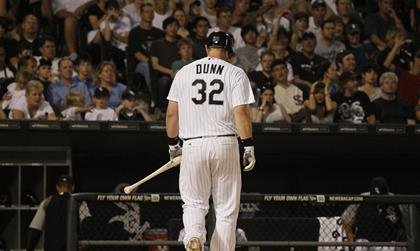
Adam Dunn

There aren’t enough home runs in the world to make up for the rest of his game.

Chone Figgins

Come on, now.  This is getting a little ridiculous.

Rafael Furcal

A career to be proud of, but not one that ends with election to the Hall.

Jason Giambi

The 2000 AL MVP should stick around on the ballot, but the PED stigma will likely keep him on the outside looking in.

Raul Ibanez

The former slugger may get a little support, but not enough to keep him on the ballot for a second go-around.

Derek Jeter

The only question here is whether he will join his former teammate, Mariano Rivera, in getting 100% of the vote.

Paul Konerko

Personal feelings aside, he will likely see enough support to hang on the ballot, but not enough to actually make it.

Cliff Lee

Continue reading →

2020 Hall Of Fame Ballot – The Holdovers


baseballhof
The BBWAA recently released their ballot for the Hall of Fame class of 2020. The results of the vote are due to be revealed on January 21st, with induction taking place July 26th.  After Mariano Rivera, Mike Mussina, Edgar Martinez, and Roy Halladay were elected in last year’s voting, the new ballot contains 14 holdovers along with 18 newcomers, which may potentially continue the logjam caused by the current BBWAA rules which limit the number of votes on one ballot to 10 and the ongoing refusal by some writers to vote for players tainted by PEDs, leaving too many qualified candidates fighting for limited spots.

Let’s take a look at the returning candidates today before moving on to the newcomers.

Barry Bonds
Years on ballot: 7
2019 Percentage: 59.1

The all time home run champion saw his vote percentage rise for the fifth straight time last year, so the PED bias holding him back may be slightly subsiding.  But, with only 3 more shots with the writers, it remains to be seen if he has enough time to get up to 75%.

Roger Clemens
Years on ballot: 7
2019 Percentage: 59.5

Roger Clemens, he of the 354 career victories and 7 Cy Young awards, also found himself with a fourth consecutive rise after his seventh run through the voting process.  For some odd reason, perhaps by having played for more teams, Clemens continues to get marginally more support than his fellow PED poster child Barry Bonds.

Todd Helton
Years on ballot: 1
2019 Percentage: 16.5

A fine first showing for Helton, but it looks like he’s going to suffer from the same Colorado bias as Larry Walker.

Andruw Jones
Years on ballot: 2
2019 Percentage: 7.5

If voters were to stick to his first 11 seasons, Jones looks like a shoe-in for the Hall.  His last 7 seasons, though, were so bad that it makes it hard to consider him.  Based on his initial vote total, those final seasons seem to be holding sway.

Jeff Kent
Years on ballot: 6
2019 Percentage: 18.1

Continue reading →

Fitbit V: Week 43

Yet another horrible week.  Sunday got things started with a bang, as I finished with a grand total of 2400 steps.  Monday rebounded a little bit, but PI Planning kept me at my desk most of the day, so I finished just over 6500 steps.  Tuesday was more of the same, with worse results as I came in just shy of 5500 steps.  Wednesday was the low point of the work week, with less than 4200 steps.  Thursday wrapped up PI Planning and improved a bit, up to 5000 steps.  Friday was the high point of the week, with a rousing total of 6700 steps.  Finally, the less said about Saturday’s 2100 steps, the better.

Total steps: 32,623

Daily average: 4660.4

Adios Yolmer

Mere weeks after becoming the first White Sox Gold Glove winner in 21 years, Yolmer Sanchez was placed on outright waivers Monday night, effectively ending his tenure with the only franchise he has ever known.  The move was somewhat unorthodox, as the team was expected to non-tender the infielder prior to next Monday’s arbitration deadline, where Sanchez was expected to nab a salary north of $6 million.

Aside from his increasing salary and anemic offense, Sanchez looked to be losing his spot in the White Sox starting lineup sometime in 2020 when Nick Madrigal, the team’s first round draft pick in 2018, is promoted to the big leagues.  There is still an outside chance that Sanchez could resign at a lower salary, but there’s bound to be other suitors and, with Leury Garcia and Danny Mendick on the roster, losing Sanchez should not stop the White Sox from becoming a contender in 2020.

Sanchez’s numbers in a White Sox uniform, both for games I attended and overall, were:

Continue reading →

All Season Pitching Leaders – Through 2019

MLB: Cincinnati Reds at Los Angeles DodgersLast week, we took our first look at the offensive leaders per season since 2014.  Today, we do the same with the pitchers for all of the games I’ve attended from 1984 through the 2019 season.  As with the hitters, there is little change from our first look after the 2011 season, but the time was right for another perusal of the stats.  We start with that most maligned pitching stat:

Wins

Year Name Total
2008 Mark Buehrle 8
2003 Matt Clement 6
2006 Freddy Garcia 6
2003 Mark Prior 6
2004 Greg Maddux 6
2005 Mark Buehrle 6
2008 Gavin Floyd 6

Losses

Year Name Total
2003 Kerry Wood 6
2008 Javier Vazquez 6
2003 Matt Clement 5
2004 Greg Maddux 5
2011 Gavin Floyd 5
2005 Greg Maddux 5
2017 Jose Quintana 5
2019 Ivan Nova 5

ERA (> 8 IP)

Year Name Total
1987 Floyd Bannister 0.00
2000 Livan Hernandez 0.00
1997 Wilson Alvarez 0.00
2001 Jeff Fassero 0.00
Continue reading →

Games Per Stadium By Year

With the 2019 season in the rear view mirror, let’s take a look at the number of games I’ve attended per year at one of the 25 different stadiums I’ve visited over the years.


Year Stadium Name Total Games
2008 US Cellular Field 46
2003 Wrigley Field 46
Surprise playoff runs for the White Sox in 2008 and the Cubs in 2003 led to my highest single season totals ever, boosted by post-season play.
2007 Wrigley Field 43
2004 Wrigley Field 41
My highest non-playoff total saw me attending over half of the home games for the Cubs in 2004.
2011 US Cellular Field 40
2009 US Cellular Field 40
2010 US Cellular Field 36
2005 Wrigley Field 34
2008 Wrigley Field 34
2017 Guaranteed Rate Field 33
2006 US Cellular Field 32
Post World Series championship started an attendance jump.
2016 US Cellular Field 32
2012 US Cellular Field 31
2015 US Cellular Field 31
2007 US Cellular Field 29
2014 US Cellular Field 28
Continue reading →

Ballpark Tour: Red Sox

With the offseason underway, we continue our tour of all of the different baseball stadiums I’ve been to over the years. This week, we look at the Boston Red Sox, owners of the oldest stadium in MLB. So, without further ado, let’s take a deeper look at my one game history with Fenway Park.

Stadium Name: Fenway Park

Years in Service: 1912 – Present

Visits: 1

In 1911, Red Sox owner John I. Taylor purchased the land bordered by Brookline Avenue, Jersey Street, Van Ness Street and Lansdowne Street and developed it into a larger baseball stadium, which he named after the Fenway neighborhood where it was located.  The first game was played April 20, 1912, as the Red Sox defeated the New York Highlanders, who would become the Yankees the following year, 7-6 in 11 innings.

I attended my first (and, so far, only) game at Fenway Park in August of 2017, cashing in my birthday gift from the year before.  The hope was that Angelina would be moving in to Boston University around that time, but her gap year put a kibosh on that.  The ballpark was… a little underwhelming.  From the outside, you could barely tell that it was a stadium.  Michael even asked where it was as we were standing outside it.

The game went about as you would expect.  With James Shields on the mound, the White Sox did not put up much of a fight.  We were sitting down the left field line, with a good view of the Green Monster.  The seats, which may or may not date back to the stadium’s opening in 1912, were not really designed for people well over 6 feet tall, so there was a lot of uncomfortable shifting as Danny and my knees were smooshed in to the seats in front of us.

With Angelina now ensconced at BU, I hope to increase my number of visits in the years to come, especially with the White Sox making an early April appearance next season.

The White Sox Strike

The hot stove warmed up a bit this past week as the White Sox signed former Brewers catcher Yasmani Grandal to a four-year, $73 million contract, the largest deal in franchise history.  Grandal improves the White Sox both behind the plate, where he ranked second in framing metrics according to FanGraphs, and at the plate, where his 2019 OPS would have ranked third on the White Sox, behind Yoan Moncada and Tim Anderson.

Grandal also adds some much needed patience in the batter’s box, finishing second in the major leagues with a 17.2% walk rate.  His total of 109 bases on balls was 25 more than the top 2 White Sox leaders in the category, Moncada and Yolmer Sanchez, who combined for 84 walks.  As a switch hitter, Grandal also gives the south siders some much needed pop from the left hand side.

For the time being, Grandal, James McCann, and Zack Collins look to be splitting time between catcher and DH, with some backup work at first base thrown in for good measure.  The addition of a 26th man to the active roster makes keeping 3 catchers feasible.  But. the offseason is still young and, one would hope, there are plenty of additional moves to make before the White Sox report to spring training.

To make room for Grandal on the roster, the White Sox designated Daniel Palka for assignment.  After a surprising rookie year in 2018, Palka crashed spectacularly last year.  He’s likely to catch on with another rebuilding team in the hopes of regaining some of his mojo.