By The Numbers – 19

In 1929, uniform numbers appeared on the back of baseball jerseys for the first time, thanks to the Indians and the Yankees.  By 1937, numbers finally appeared across all uniforms, both home and away, across both major leagues.  Since that time, 81 distinct numbers have been worn by members of the White Sox, while the Cubs boast 76.

Today, we continue our look at those players, picking our favorite, if not the best, player to wear each uniform number for both Chicago teams with #19.  83 different players have donned #19 while playing in Chicago, 32 for the White Sox, one of whom had it retired in his honor, and 51 for the Cubs.

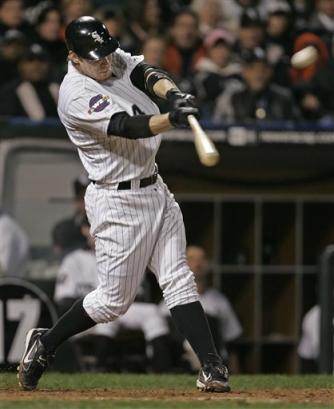
With a new ownership group in place and looking to make a quick splash, the White Sox purchased Greg Luzinski from the Phillies on March 30, 1981.  Coming off a disappointing season, the Chicago-area native, wearing his familiar #19, responded well to the change, hitting .265 with 21 home runs in the strike-shortened season.  He earned Comeback Player of the Year honors, beating out teammate Bill Almon by 5 votes, and finished 23rd in MVP voting.  Luzinski had another strong year in 1982, raising his average to .292, his highest total since 1977, while hitting 18 home runs and driving in 102 runs.

In 1983, Luzinski was a powerful cog in leading the White Sox to their first division title.  He launched the 8th, 9th, and 10th rooftop home runs in Comiskey Park history between June 26 and August 28.  While his average dropped to .255, he hit 32 home runs and drove in 95, good enough to finish 17th in MVP voting.  Like the rest of his teammates, he struggled during the ALCS against the Orioles, hitting only .133 in the 4-game series.  Unfortunately, those struggles carried over in to 1984.  His average dropped again, down to .238, and his power output fell as well, finishing the year with only 13 home runs, his lowest total since 1974, and 58 RBIs.  He did manage to hit his fourth rooftop blast on July 3 against the Tigers.  He became a free agent following the year and decided to retire.

On the north side of town, Matt Murton donned #19 when he made his major league debut for the Cubs on July 8, 2005.  He appeared in 51 games for the Cubs, hitting .321 with a .908 OPS.  That helped earn him the starting nod in left field for 2006, where he managed to post a .297 batting average with 13 home runs and 62 RBIs.  Despite his success, Murton saw his playing time diminish in 2007 after the Cubs signed Cliff Floyd, even getting sent back to Triple A in June.  He returned in late July, and finished the year with a .281 average and a .791 OPS in only 94 games.  His playing time was diminished ever further in 2008, appearing in only 19 games before being traded, 4 years to the day of his major league debut, to the A’s, as part of the haul for Rich Harden.

By The Numbers – 20

In 1929, uniform numbers appeared on the back of baseball jerseys for the first time, thanks to the Indians and the Yankees.  By 1937, numbers finally appeared across all uniforms, both home and away, across both major leagues.  Since that time, 81 distinct numbers have been worn by members of the White Sox, while the Cubs boast 76.

Today, we continue our look at those players, picking our favorite, if not the best, player to wear each uniform number for both Chicago teams with #20.  85 different players have donned #20 while playing in Chicago, 30 for the White Sox and 55 for the Cubs.

Carlos Quentin was acquired by the White Sox in a December 2007 trade with the Diamondbacks for Chris Carter, earning the nickname “The Carlos Quentin” after general manager Kenny Williams was quoted saying that the team’s goals for the winter meetings were to “acquire Carlos Quentin, and not a guy like him but actually Carlos Quentin.”  Quentin played immediate dividends, breaking through in a big way for the 2008 White Sox.  He was leading the American League in home runs and was third in slugging percentage, OPS, and RBIs when he broke his wrist slamming his bat following a strikeout against Cliff Lee, causing him to miss the last 6 weeks of the season.  The injury likely cost him the MVP award, and certainly impacted the White Sox, as their battle with the Twins for the AL Central title came down to 163rd game and left the starting rotation is disarray before playing, and eventually losing to, the Rays in the ALDS.

Quentin continued to struggle with injuries for the remainder of his White Sox career, never appearing in more than 131 games.  A shoulder injury ended his 2011 season, and his White Sox career, at the end of August.  That December, just over 4 years since he was acquired, Quentin was shipped to the Padres, for Simon Castro and Pedro Hernandez.

On the north side of town, Corey Patterson switched to #20 when he was recalled to the Cubs in 2001, appearing in 51 games and hitting only .221.  He became a full time player in 2002, hitting .253 in 153 games and slugging 14 home runs while driving in 54.  He was breaking out in 2003, becoming the threat the Cubs had hoped he would be, with a .839 OPS, a .298 average, and 13 and 55 for the power numbers when a torn ACL ended his season on July 6.  He returned in 2004, playing 157 games and hitting .266, but was never quite the same player as before the injury.  2005 was not a good season for Patterson, as he saw himself demoted in July following an 8-game losing streak.  Following the season, he was traded to the Orioles.

By The Numbers – 21

In 1929, uniform numbers appeared on the back of baseball jerseys for the first time, thanks to the Indians and the Yankees.  By 1937, numbers finally appeared across all uniforms, both home and away, across both major leagues.  Since that time, 81 distinct numbers have been worn by members of the White Sox, while the Cubs boast 76.

Today, we continue our look at those players, picking our favorite, if not the best, player to wear each uniform number for both Chicago teams with #21.  69 different players have donned #21 while playing in Chicago, 26 for the White Sox and 43 for the Cubs.

Near the end of the spring training in 1992, Sammy Sosa, along with Ken Patterson, was acquired from the White Sox for a fading George Bell.  Wearing #21, Sosa blossomed with the Cubs, going from 8 home runs and 25 RBIs in his first season to 33 home runs and 93 RBIs in his second, becoming the first 30-30 player in Cubs history.  Sosa continued to hit for power and speed in 1994, but he also upped his batting average to .300 for the first time.  Sosa was named to his first All-Star team in 1995, on his way to 36 home runs and 119 RBIs.  In 1996, Sosa continued his success, hitting .273 with 40 home runs and 100 RBIs.  1997, however, saw a decline in Sosa, who batted just .251 and posted a paltry .300 on-base percentage while leading the league with 174 strikeouts, despite hitting 36 home runs and driving in 119 runs.

A bulked-up Sammy Sosa arrived in camp in 1998, looking to turn things around, and turn them around he did.  While the surprising Cubs were in contention for the first time in nearly a decade, Sosa put on a home run barrage of historic proportions.  In the month of June, Sosa launched 20 home runs, drove in 47, and slugged .842 while pulling himself into the home run chase with Mark McGwire.  Sosa hit his 62nd home run on September 13, passing Roger Maris, and finished the season with 66, 4 behind McGwire’s then-record 70.  Sosa replicated that performance in 1999, hitting 63 home runs, again trailing McGwire, who hit 65.  Sosa finally led the league in home runs in 2000, though with “only” 50.  He managed another season for the ages in 2001, as he hit 64 home runs, becoming the first player to hit 60 or more home runs three times, and setting career highs in runs scored, RBIs, walks, OBP, slugging percentage, and batting average.  He notched his second career home run crown in 2002, adding 49 to his ledger.

Things started to turn for Sosa in 2003, despite the Cubs driving towards their first division title since 1989.  He went on the disabled list for the first time since 1996 in May and, when he returned, he was ejected, and ultimately suspended, for using a corked bat in the June 3 game against the Devil Rays.  He finished the season with 40 home runs, his lowest total since 1997, as the Cubs famously blew a 3-1 lead in the NLCS despite being 5 outs away from the pennant in Game 6.  The following May, he landed on the disabled list again following a violent sneeze at PETCO Park.  After returning from the DL, Sosa struck out 98 times the rest of the way, while hitting .238 and posting an OPS of .749.  For the entire year, Sosa hit .253, his worst average since 1997, with only 35 home runs and 80 RBIs, his lowest total since 1994.  When the Cubs fell out of contention for the NL Central title after losing 7 of their final 9 games, Sosa was given the day off for the final game of the season.  Unfortunately, he was spotted leaving Wrigley Field before the game even started while his teammates took out their frustrations with their “leader” my smashing his boombox with their bats.  That January, with the declined performance and the growing suspicion of PED use on their minds along with the end of the 2004 season, the Cubs decided to move on, trading Sosa to the Orioles for Jerry Hairston Jr. and Mike Fontenot.

On the South Side, Todd Frazier wore #21 after being acquired from the Reds in a three-team deal prior to the 2016 season.  On July 11, Frazier placed second in the Home Run Derby, losing to Giancarlo Stanton in the final round.  Frazier finished the year with career highs in home runs, runs batted in and walks despite hitting a career low .225 batting average in 158 games.  With the White Sox throwing in the towel and entering a full-fledged rebuild in 2017, Frazier was traded to the Yankees at the deadline.

Against The Yankees All Time Leaders – Through 2021

YankeesIn the past, we’ve looked at the all time leaders in both offensive and defensive categories for all 30 teams. This offseason, we will take our first ever look at those leaders against all 30 clubs.  We continue today with the New York Yankees.

The Yankees began life in 1901 as the Baltimore Orioles, moving to New York in time for the 1903 season.  I’ve seen them play 28 times, first in 1997 and most recently this past August at Truist Park in Atlanta.

Home Runs

Name Total
Paul Konerko 4
Alexei Ramirez 4
Jim Thome 3

Hits

Name Total
Paul Konerko 21
Gordon Beckham 16
A.J. Pierzynski 13

Runs

Name Total
Paul Konerko 8
Jim Thome 7
Gordon Beckham 6
Carlos Quentin 6

RBI

Name Total
Paul Konerko 9
Alexei Ramirez 8
Gordon Beckham 7

Doubles

Name Total
Gordon Beckham 7
Jose Abreu 5
Alexei Ramirez 3
A.J. Pierzynski 3

Triples Continue reading →

Against The Orioles All Time Leaders – Through 2021

oriolesIn the past, we’ve looked at the all time leaders in both offensive and defensive categories for all 30 teams. This offseason, we will take our first ever look at those leaders against all 30 clubs. We continue today with the Baltimore Orioles.

The Orioles began life in 1901 as the Milwaukee Brewers, one of the charter members of the American League.  They moved to St. Louis the following year, becoming the Browns, before finally arriving in Baltimore in 1954.  I’ve seen them play 35 times in 6 different stadiums across 4 cities and 2 countries, first in 1985 at the original Comiskey Park and most recently this past May at Guaranteed Rate Field.

Home Runs

Name Total
Paul Konerko 5
7 tied with 2

Hits

Name Total
Paul Konerko 13
Jose Abreu 13
A.J. Pierzynski 12

Runs

Name Total
Paul Konerko 9
Jose Abreu 7
A.J. Pierzynski 6
Tim Anderson 6

RBI

Name Total
Paul Konerko 14
Jose Abreu 7
Yoan Moncada 6

Doubles

Name Total
Jose Abreu 4
Jim Thome 3
9 tied with  2

Triples Continue reading →

By The Numbers – 24

In 1929, uniform numbers appeared on the back of baseball jerseys for the first time, thanks to the Indians and the Yankees.  By 1937, numbers finally appeared across all uniforms, both home and away, across both major leagues.  Since that time, 81 distinct numbers have been worn by members of the White Sox, while the Cubs boast 76.

Today, we continue our look at those players, picking our favorite, if not the best, player to wear each uniform number for both Chicago teams with #24.  104 different players have donned #24 while playing in Chicago, 49 for the White Sox and 55 for the Cubs.

Joe Crede earned a September call-up from Double A in 2000, and, wearing #24, made his major league debut on September 12, replacing Herbert Perry and going 0-1 in the Tigers 10-3 victory at Comiskey Park.  Crede appeared in 7 games, making the most of his 14 at bats, and finished with a .357 average.  Crede got another cup of coffee with the big league club in September of 2001, earning a little more playing time, but he was less successful, finishing with a .220 average in 50 at bats over 17 games.  Crede returned to the White Sox for good in July of 2002.  On August 12, he hit his first major league home run off of former teammate James Baldwin and he finished with 12 home runs, 35 RBIs, and a .285 average.  Crede established himself as the starting third baseman in 2003.  He appeared in a career high 151 games and launched 19 home runs with 75 RBIs while posting a .261 average.  He struggled in 2004, seeing his average drop to .239 while hitting 21 home runs with 69 RBIs.

In 2005, Crede started to come in to his own.  While he improved his average to .252 and hit 22 home runs with 62 RBIs, he came alive in the second half, culminating with a game winning, and possible season saving, home run in the 10th inning against the Indians on September 20, which pushed the White Sox to a 3.5 game lead and propelled them into the playoffs.  Crede had a rough series in the ALDS against the Red Sox, getting only 1 hit in 9 at bats, but rebounded in the ALCS and World Series, hitting .368 and .294 respectively, with 2 home runs in each series.  2006 was Joe Crede’s breakout season.  He hit .283 with career highs in home runs, with 30, and RBIs, with 94, winning his first, and only, Silver Slugger award.  A back injury in 2007 limited him to 47 games and only 4 home runs.  He returned with a bang in 2008, hitting a grand slam on opening day against the Twins and parlayed a good first half into his first All Star selection, but the back injury recurred and kept him out for most of the second half of the season, including the playoffs, thus ending his White Sox career.

On the north side of town, Dexter Fowler joined Cubs via trade prior to the 2015 season.  Donning #24, he ended the year with a .250 average, 102 runs scored, 46 RBIs, 17 home runs, and 20 stolen bases as the Cubs made a surprise run for the NL Wild Card.  Fowler helped propel the Cubs to the NLDS, putting up three hits, three runs scored, a home run, and a stolen base in defeating the Pirates.  In nine postseason games, Fowler batted .396 with two home runs and three RBIs, as the Cubs made it to the NLCS against the Mets.

Fowler became a free agent after the season and was unsigned into the start of spring training.  Despite reportedly agreeing to a three-year contract with the Orioles, Fowler arrived in Cubs camp and signed a one year deal.  And what a year it was.  Fowler finished the year with a .276 average, 13 home runs, 48 RBIs, and 84 runs scored as the Cubs won the NL Central.  Fowler’s .333 average with 4 RBI helped the Cubs win the NLCS against the Dodgers, advancing to the World Series for the first time since 1945.  On October 25, 2016, Dexter Fowler became the first African-American to appear and to bat for the Cubs in a World Series game.  Fowler led off Game 7 of the World Series with a home run, becoming the first player in history to do so, and helping the Cubs win 8–7 in 10 innings, giving the team their first championship in 108 years.

2021 Final Standings

The 2021 season, at least the portion which would see me attending games, has come to an end after the White Sox lost to the Astros in the ALDS 3-1.  After a year without in-person baseball thanks to the corona virus, I ended up attending the most games I’ve seen since 2009 and my 5th highest total of all time.  I also managed to travel to four different stadiums, bringing my total up to 27.  All told, I managed to see 25 of the 30 teams a year after seeing none.

2021 Team Records
Team Name Won Loss Winning Pctg
Tampa Bay Rays 3 0 1.000
New York Yankees 2 0 1.000
Arizona Diamondbacks 1 0 1.000
Washington Nationals 1 0 1.000
Philadelphia Phillies 1 0 1.000
Los Angeles Angels 1 0 1.000
San Francisco Giants 1 0 1.000
Boston Red Sox 1 0 1.000
Seattle Mariners 2 1 0.667
Chicago White Sox 29 20 0.592
Cleveland Indians 3 3 0.500
Kansas City Royals Continue reading →

By The Numbers – 36

In 1929, uniform numbers appeared on the back of baseball jerseys for the first time, thanks to the Indians and the Yankees.  By 1937, numbers finally appeared across all uniforms, both home and away, across both major leagues.  Since that time, 81 distinct numbers have been worn by members of the White Sox, while the Cubs boast 76.

Today, we continue our look at those players, picking our favorite, if not the best, player to wear each uniform number for both Chicago teams with #36.  83 different players have donned #36 while playing in Chicago, 54 for the White Sox and 29 for the Cubs.

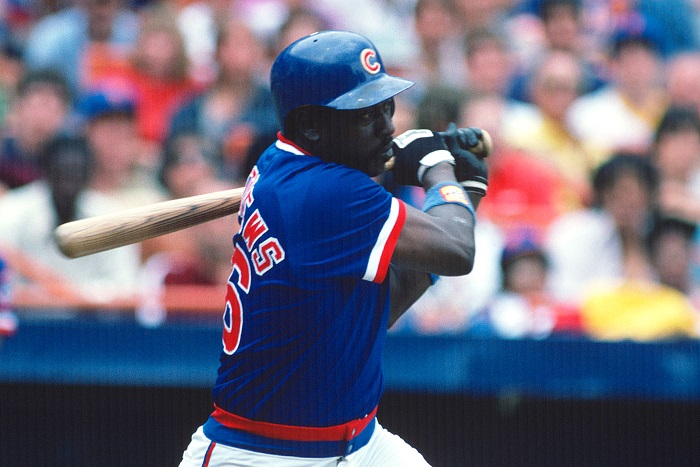
Acquired by the Cubs, along with Bob Dernier and Porfi Altamirano, from the Phillies for Bill Campbell and Mike Diaz near the end of spring training in 1984, Gary “Sarge” Matthews, wearing #36, became a spark plug that helped lead the Cubs to their first ever division title.  Leading the league in walks and OBP, Matthews set a career high with 101 runs scored and finished 5th in MVP voting, behind teammates Ryne Sandberg and Rick Sutcliffe.  He saw a big drop-off in 1985, appearing in only 97 games and hitting a career low .235.  He bounced back a bit in 1986, appearing in 123 games and hitting 21 home runs, his highest total since 1979.  Reduced to a bench player in 1987, Matthews had 42 ABs in 44 games when he was traded to the Mariners on July 11 for a minor league player to be named later.

On the south side of town, Jerry Koosman donned #36 when he joined the White Sox on August 30, 1981 after coming to the White Sox via trade from the Twins.  Koosman appeared in 8 games down the stretch, starting 3, as the White Sox finished 6th in the second half of the crazy strike season.  He returned in 1982, working mostly out of the bullpen but still starting 19 games as the White Sox squandered a quick start to finish in 3rd place.  The veteran lefty spent most of the 1983 season in the starting rotation, but saw his ERA inflate to a career high 4.77.  However, after a shaky start, the White Sox caught fire and Koosman was the starting pitcher on September 17, when the White Sox clinched their first division title.  Koosman made one relief appearance during the ALCS against the Orioles, throwing 1/3 of a disastrous inning in the Game 3 blowout, giving up 1 hit, 2 walks, and 3 runs (2 earned).  He re-upped with the White Sox following the season, but was sent to the Phillies the following spring to complete the trade for Ron Reed.

Prolific Authors – 2 Books

Way back in December of 2011 (and again every other December since), we’ve taken a look at the authors I have read the most, dating back to high school.  This year, since I’ve far surpassed my reading output of any year on record, I thought it would be nice to take a deeper dive into those books I’ve read through August. Since our last check-in, I’ve read an additional 60 books from 54 different authors. There shouldn’t be much movement over the past 2 years, but it’s time to take another look and see if my “favorite” authors have changed much in that time span.  Today, we start things off with the 35 authors I’ve read twice.

Max Barry

An Australian author, I’ve enjoyed the two novels of his I’ve read, Jennifer Government and Company.

Laura Caldwell

I have no idea how I came across the work of this local author, but I must have enjoyed it enough to go back for seconds.  Unfortunately, she passed away last year.

The Amazing Adventures Of Kavalier & Clay – Michael Chabon

Michael Chabon

Winner of the 2001 Pulitzer Prize for Fiction for The Amazing Adventures of Kavalier & Clay, the most recent of  the two works of his I’ve read.  I have another, Wonder Boys, waiting in the to read pile, so he rise up some day.

Matthew V. Clemens

The co-author, with Max Allan Collins, of the final two chapters of the Reeder and Rogers trilogy.

Felicia Day

The first author here that I’ve happened to meet in person.

Cameron Dokey

She makes the list based on two entries in the Buffy the Vampire Slayer series.

Diane Duane

Living in Ireland, she is responsible for a Star Trek: The Next Generation book and a Spider-Man novel, of all things.

Warren Ellis

The comic writer, currently in exile after being called out for abusing women, makes the list thanks to two prose novels.

David Fisher Continue reading →

By The Numbers – 40

In 1929, uniform numbers appeared on the back of baseball jerseys for the first time, thanks to the Indians and the Yankees.  By 1937, numbers finally appeared across all uniforms, both home and away, across both major leagues.  Since that time, 81 distinct numbers have been worn by members of the White Sox, while the Cubs boast 76.

Today, we continue our look at those players, picking our favorite, if not the best, player to wear each uniform number for both Chicago teams with #40.  55 different players have donned #40 while playing in Chicago, 25 for the White Sox and 30 for the Cubs.

Acquired in mid-June, along with George Frazier and Ron Hassey, from the Indians in exchange for Mel Hall, Joe Carter, Don Schulze, and Darryl Banks, Rick Sutcliffe, wearing #40, quickly became the ace of the Cubs staff, going 16-1 with a 2.69 ERA in leading the Cubs to their first division title and his first Cy Young Award.  He then homered in and won Game 1 of the NLCS, the first post-season game at Wrigley Field since the 1945 World Series, before dropping the deciding Game 5 in San Diego.  A free agent after the season, Sutcliffe signed a long term deal with the Cubs.

A hamstring injury limited him to 20 starts in 1985, while arm injuries in 1986 led him to a 5-14 record with a 4.64 ERA in 28 appearances.  He bounced back in 1987, leading the league with 18 wins in 34 starts for the last place Cubs, finishing second in the Cy Young Award voting.  He went 13-14 in 1988, but did somehow manage a steal of home plate on July 29th in a victory against the Phillies.  A resurgence in 1989 helped lead the Cubs to their second divisional title, and he made one start against the Giants in the NLCS.  Recurring arm injuries caused Sutcliffe to miss most of the 1990 and 1991 seasons, with only 24 appearances between the two years, and the Cubs let him leave as a free agent following the 1991 season.

On the other side of town, Wilson Alvarez was acquired by the White Sox, along with Scott Fletcher and Sammy Sosa, for Harold Baines and Fred Manrique on July 29, 1989, making his White Sox debut on August 11, 1991 by throwing an unlikely no hitter against the Orioles at Memorial Stadium.  He made 8 additional starts for the White Sox down the stretch, finishing the year with a 3-2 record and a respectable 3.51 ERA.  1992 saw Alvarez work mostly out of the bullpen, getting only 9 starts out of his 34 appearances.  He posted a career high 1.674 WHIP, giving up 65 walks in just over 100 innings.  This led to an unfortunate 5.20 ERA, despite a 5-3 record.  In 1993, Alvarez managed to break in to the rotation full time.  Despite leading the league with 122 walks, he finished second in the AL with an ERA of 2.95 and ended up with a 15-8 record as the White Sox won the AL West title for the first time in a decade.  He was the winning pitcher in Game 3 of the ALCS, holding the Blue Jays to a single run while throwing a complete game.

Alvarez improved in 1994, earning his first (and only) All Star nod and cutting his walk total nearly in half, helped by the player strike that ended the season in August, and he finished the year with a 12-8 record and a 3.45 ERA.  When baseball returned in 1995, Alvarez struggled to regain his groove, finishing with a losing record for the first time and an ERA of 4.32.  1996 saw a nice bounce back for Alvarez.  While his ERA was still an elevated 4.22, he tied his career high with 15 wins and set career highs for innings pitched and strikeouts.  He continued to impress in 1997, putting up a 9-8 record with a 3.03 ERA by the end of July, when, with the White Sox a mere 3 games back in the standings, he, along with Danny Darwin and Roberto Hernandez, was sent to the Giants for Brian Manning, Lorenzo Barceló, Mike Caruso, Keith Foulke, Bob Howry, and Ken Vining in what would become known as the White Flag Trade.