#67 – Richard Dotson

dotsonName: Richard Dotson

Rank: 67

Position: P

Years With White Sox: 1979-1987, 1989

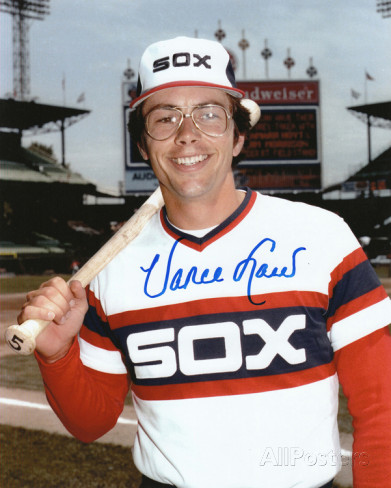
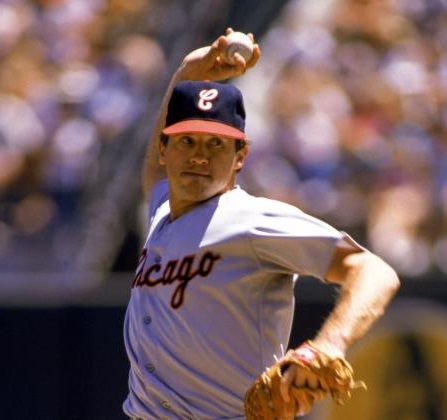
Richard Dotson joined the White Sox organization, along with Bobby Bonds and Thad Bosley, in a December 5, 1977 trade that sent Brian Downing, Dave Frost, and Chris Knapp to the Angels.  He made his major league debut on September 4, 1979 against those same Angels, going 1 and 1/3 innings and giving up 5 earned runs, leaving him with a 33.75 ERA after 1 start.  He made 4 more starts over the final month of the season, giving up just 5 additional earned runs and finishing with a 2-0 record with a 3.70 ERA.

Dotson moved into the rotation full time for the White Sox in 1980.  He finished second on the team with 12 wins, finishing 12-10 with a 4.27 ERA.  He ended up placing 7th in Rookie of the Year voting, behind winner Joe Charboneau and teammate Britt Burns.

Dotson saw improvement in the strike-shortened 1981 season.  He finished with a 9-8 record and improved his ERA to 3.77 in 24 starts, leading the league with 4 shutouts.

1982 was a disappointing season for Dotson and the White Sox.  He finished with a losing record for the first time and gave up more hits than innings pitched, yet still ended the season with a 3.84 ERA.

Dotson had his breakout season in 1983, as he helped lead the White Sox to their first division title.  He finished the regular season 22-7 with a 3.23 ERA, good enough to place 4th in Cy Young Award voting and 20th in MVP consideration.  Unfortunately, he wasn’t as successful in the ALCS, giving up 6 runs in 5 innings and earning the loss in Game 3 against the Orioles.

1984 was another good year for Dotson, as he earned his first All Star Game nod, throwing 2 scoreless innings in the mid-summer classic at Candlestick Park.  He finished with a losing record for the disappointing White Sox team, going 14-15 with a 3.59 ERA in a career high 245 2/3 innings pitched.

An injury derailed Dotson’s 1985 campaign, as he started only 9 games before undergoing surgery for a career-threatening circulatory problem in his upper chest near the right shoulder.  He returned in 1986 and was the only White Sox starter to not miss a turn in the rotation.  His results, unfortunately, were not as encouraging as he went 10-17 with a 5.48 ERA.

Dotson bounced back a little in 1987.  He went 11-12 with a 4.17 ERA for a White Sox team that finished with a losing record for the second straight year.  Following the season, he was traded, along with Scott Nielson, to the Yankees for Dan Pasqua, Steve Rosenberg, and Mark Salas.

After being released by the Yankees at the end of June in 1989, Dotson rejoined the White Sox for the last 3 months of a season in which they would lose over 90 games.  Appearing in 17 games, Dotson went 3-7 with a respectable 3.88 ERA.  At the end of the season, Dotson became a free agent and left the White Sox for good.  After retiring, Dotson rejoined the White Sox organization as a coach and has spent the last 10 seasons as pitching coach for the Charlotte Knights, the team’s Triple A affiliate.

Dotson’s numbers in a White Sox uniform, both for games I attended and overall, were:

Continue reading →

#69 – Roberto Hernandez

roberto-hernandezName: Roberto Hernandez

Rank: 69

Position: P

Years With White Sox: 1991-1997

Roberto Hernandez was acquired by the White Sox, along with Mark Doran, via trade with the Angels in exchange for Mark Davis on August 4, 1989.  After falling victim to numbness in his hands caused by blood clots and emergency surgery to transplant veins from his thigh into his forearm, he made his major league debut on September 2, 1991, getting the start and going 7 innings for the victory in the White Sox win over the Royals.  He appeared in 9 games in the final month of the season, making the only 3 starts of his career, and finished the year with a 7.80 ERA.

In 1992, Hernandez split the year between Triple A Vancouver and Chicago, eventually supplanting Bobby Thigpen as the team’s primary closer.  He finished the year with 12 saves and a sparkling 1.65 ERA.

Hernandez had another great year in 1993, saving 38 games in 70 appearances with a 2.29 ERA as the White Sox won their final AL West title.  During the ALCS against the Blue Jays, Hernandez threw 4 scoreless innings in 4 appearances, earning 1 save.

In the strike-shortened 1994 season, Hernandez struggled.  His ERA jumped to 4.91 and he saved only 14 games before the season ended on August 12, despite leading the league in games finished.

When baseball returned in 1995, Hernandez bounced back somewhat, once again leading the league in games finished and lowering his ERA by nearly a full run to 3.92.

1996 was a true return to form for Hernandez.  He led the league in games finished for the third straight year and lowered his ERA by 2 full runs to 1.91.  He earned his first All Star selection and, with 38 saves, finished 6th in Cy Young Award voting.

Hernandez was well on his way to another strong season in 1997, with 27 saves and a 2.44 ERA, when he was included in the infamous White Flag trade on July 31.  With Jerry Reinsdorf announcing that “Anyone who thinks we can catch Cleveland is crazy,” Hernandez, along with Wilson Alzarez and Danny Darwin, to the Giants for Brian Manning, Lorenzo Barcelo, Mike Caruso, Keith Foulke, Bob Howry, and Ken Vining.

Hernandez’s numbers in a White Sox uniform, both for games I attended and overall, were:

Continue reading →

#71 – George Bell

Name: George Bell

Rank: 71

Position: DH

Years With White Sox: 1992-1993

George Bell came to the White Sox following the 1991 season in a trade with the Cubs for Sammy Sosa and Ken Patterson.  Bell posted a steady, if unspectacular, season for the White Sox in 1991, finishing the year with 25 home runs and a .255 average, driving in 112.

Things started to go south for Bell in 1993, as a knee injury limited his effectiveness and his playing time.  Splitting time at DH with Bo Jackson, Bell appeared in only 102 games, with only 13 home runs and a career low .217 average.  Despite the White Sox facing Bell’s former team, the Blue Jays, in the ALCS, Bell did not make an appearance.  He was released following the season and quickly announced his retirement.

Bell’s numbers in a White Sox uniform were:

Continue reading →

#72 – Ron Karkovice

karkoName: Ron Karkovice

Rank: 72

Position: C

Years With White Sox: 1986-1997

Ron Karkovice joined the White Sox organization as their first round selection in the 1982 draft.  He made his major league debut on August 17, 1986, going 1-4 in the White Sox 7-4 victory over the Brewers at Comiskey Park while catching future Hall of Famer Steve Carlton.  He appeared in 36 additional games, hitting .247, as the White Sox rolled to their worst record since 1980.

Karkovice broke camp with the White Sox in 1987, but was completely overmatched on offense.  He appeared in 39 games, getting only 85 at bats and hitting an anemic .071.  He didn’t do much better in Triple A, putting up a .183 average for Hawaii.

He returned to Triple A for 1988, but got some extended playing time in the big leagues when Carlton Fisk went down with a broken hand.  In 46 games, Karkovice hit .174 and drove in 9 runs.

Karkovice stuck in the big leagues for good starting in 1989.  Getting more regular playing time, he improved his average to a career high .264 while splitting time behind the plate with Fisk.  1990 was more of the same for Karkovice, as he appeared in 68 games and hit .246.

As the White Sox moved across the street to the new Comiskey Park in 1991, Karkovice had a near repeat of his 1990 season, finishing with the same average and nearly the same power numbers.  In 1992, Karkovice finally supplanted Fisk and became the primary backstop.  Appearing in 123 games, he hit .237 but saw his home runs increase to 13.

Karkovice appeared in a career high 128 games for the 1993 White Sox, as the team captured their first division title in a decade.  He went hitless during the ALCS as the White Sox fell to the Blue Jays in 6 games.  1994 saw his offensive numbers continue to fall, as his average dropped to .213, partially due to a sore knee, before the season came to an untimely end due to the strike.

When baseball returned in 1995, Karkovice was back behind the plate for the White Sox.  He appeared in 113 games and saw his average bounce back slightly to .217.  1996 was more of the same for Karkovice, as he appeared in 111 games and hit .220 with 10 home runs, before undergoing knee surgery in September.

Things went south for Karkovice and the White Sox in 1997.  By the middle of May, he had been replaced as the starting catcher by Chad Kreuter.  By the middle of July, he had fallen to third on the depth chart, behind the newly acquired Jorge Fabergas and veteran Tony Pena.  He had requested to be released at the end of May, but was refused by general manager Ron Schueler.  He finished the year with only 51 appearances and an average that had dropped to .181.  He became a free agent at the end of the year, but never played in the major leagues again.

Karkovice’s numbers in a White Sox uniform, both for games I attended and overall, were:

Continue reading →

#75 – Donn Pall

thepopeName: Donn Pall

Rank: 75

Position: P

Years With White Sox: 1988-1993

Chicago native Donn Pall joined the White Sox organization via the 23rd round of the draft in 1985.  He made his major league debut 3 years later, throwing a mop-up inning of relief at the end of the Sox 10-2 loss to the A’s on August 1 at Comiskey Park.  Pall appeared in 16 additional games down the stretch for a miserable White Sox squad, finishing the year with a respectable 3.45 ERA.

Pall returned to the White Sox bullpen in 1989, earning his first career win on April 27 in a 16 inning victory over the Red Sox.  He finished the year 4-5 with a 3.31 ERA and 6 saves in 53 appearances for the last place White Sox.

The surprising White Sox found themselves in a pennant race in 1990 as they said goodbye to Comiskey Park.  Pall continued to be a mainstay in the bullpen, going 3-5 with a 3.32 ERA in 56 appearances, including one appearance during the final weekend at the park he grew up attending.

Pall and the White Sox moved across the street for the 1991 season, where Pall put up the best numbers of his career.  He finished the year 7-2 with a sparkling 2.41 ERA in 51 appearances, including a scoreless inning of relief in the first game at new Comiskey Park.  Pall struggled in 1992, seeing his ERA jump to 4.93 and his appearances drop to 39 despite a 5-2 record.

In 1993, as the White Sox headed towards their first division title since 1983, Pall bounced back to put up 3.22 ERA in 39 appearances heading into September.  However, he found himself in a roster crunch and, to make room for the re-acquired Ivan Calderon, he was traded to the Phillies on August 31 for a player to be named later.  Pall, along with Carlton Fisk, who had been released earlier in the year, came to Comiskey Park before game 1 of the ALCS to wish their former teammates well.  Sadly, they were both turned away, souring Fisk’s relationship with the organization for years.

Pall returned to the White Sox organization in 1995, spending the entire year in Triple A before leaving at the end of the year as a free agent.

Pall’s numbers in a White Sox uniform, both for games I attended and overall, were:

Continue reading →

#77 – Mike Squires

squiresName: Mike Squires

Rank: 77

Position: 1B

Years With White Sox: 1975, 1977-1985

Mike Squires joined the White Sox organization as their 18th round draft pick in 1973.  He made his major league debut on September 1, 1975, going 2-3 in the White Sox loss to the Royals at Comiskey Park.  He appeared in 19 additional games down the stretch, hitting .231 in 74 plate appearances.

After spending all of 1976 back in Triple A, Squires returned to the South Side for 3 games in 1977, going hitless in 3 at bats.  He was up in the big leagues to stay in 1978, appearing in 46 games and hitting .280 in 150 at bats.

1979 saw Squires getting his most extensive playing time to date, appearing in 122 games and hitting a modest .264, including his first major league home run.  1980 was more of the same for Squires, hitting a career-high .283 in 131 games.  He also became the first left-handed catcher in the major leagues since 1961 when he replaced Bruce Kimm in the 9th inning of an 11-1 loss to the Brewers on May 4.

During the strike-shortened season of 1981, Squires hit .265 in 92 games, failing to homer for the first time since 1978 and earning the Gold Glove award for first basemen.  1982 was more of the same for Squires, as he put up a .267 average in only 195 at bats, his lowest total since 1978.  As the White Sox ran away with the division title in 1983, Squires set a career high in games played with 143, but garnered only 153 at bats, hitting a meek .222.  He became the first left handed third baseman in at least 50 years when he replaced Vance Law in the 8th inning of a 10-2 loss to the Royals.  He went 0-4 in the ALCS against the Orioles, appearing in all 4 games.

1984 was the beginning of the end for Squires, as his average slipped to a career low .183 in only 82 at bats.  He was released during spring training in 1985, before being re-signed in September, appearing in 2 games without a plate appearance.  Following the season, his career came to an end.

Squires’ numbers in a White Sox uniform were:

Continue reading →

#84 – Floyd Bannister

Floyd-Bannister-02Name: Floyd Bannister

Rank: 84

Position: P

Years With White Sox: 1983-1987

Floyd Bannister signed with the White Sox as a free agent on December 13, 1982, much to the chagrin of Yankees owner George Steinbrenner, who was not used to losing out on free agents that he was interested in.  The signing quickly paid dividends for the White Sox and Bannister, who won a career high 16 games as the White Sox ran away with the AL West crown, earning their first post-season berth since 1959.  Bannister started and lost game 2 of the ALCS, going 6 innings and giving up all 4 runs in the White Sox 4-0 loss to the Orioles.

Bannister, and the White Sox, faltered somewhat in 1984, with his ERA jumping up to 4.83.  1985 was more of the same, with an ERA at 4.87 and finishing with a losing record of 10-14.  Bannister rebounded in 1986, posting a 3.54 ERA in 28 starts despite finishing the year with the same 10-14 record.  Bannister tied his career high with 16 wins in 1987, finishing the year with a 3.58 ERA.  Following the season, with the White Sox in full rebuilding mode, Bannister and Dave Cochrane were traded to the Royals for Greg Hibbard, Melido Perez, John Davis, and Chuck Mount.

Bannister’s numbers in a White Sox uniform, both for games I attended and overall, were:

Continue reading →

#85 – Scott Fletcher

fletcherName: Scott Fletcher

Rank: 85

Position: SS/2B

Years With White Sox: 1983-1985, 1989-1991

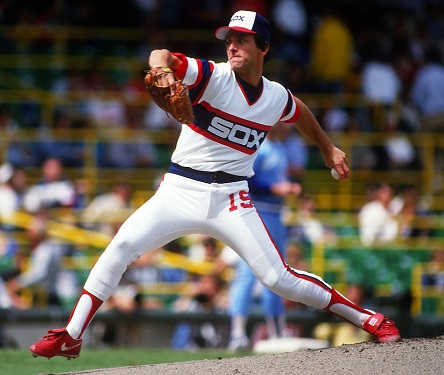
Scott Fletcher first joined the White Sox on January 25, 1983 when he was acquired from the crosstown Cubs, along with Randy Martz, Pat Tabler, and Dick Tidrow, in exchange for Warren Brusstar and Steve Trout.  He split time at shortstop with Jerry Dybzinski for the 1983 squad, who ran away and hid with the Western Division title, their first post-season appearance since the 1959 World Series.  Fletcher appeared in 114 games, hitting only .237.  During the ALCS against the Orioles, he went hitless in 7 at bats across 3 games.

Fletcher became the primary shortstop in 1984 and saw his numbers improve.  His average jumped up to .250 while appearing in 149 games.  Despite the improvement, his job became less secure over the offseason, as the White Sox acquired a young shortstop named Ozzie Guillen.  When Guillen was named the starting shortstop for 1985 during spring training, Fletcher reacted poorly.  “Taking nothing away from the way Ozzie can play,” Fletcher said, “he hasn`t been that great to take the job away from me. He hasn`t just put it on fire and clearly won it.”  Despite the reduced playing time, Fletcher once again improved his numbers, with this average rising to .256 in only 301 at bats.

Following the 1985 season, Fletcher, along with Ed Correa and Jose Mota, was traded to the Rangers for Dave Schmidt and Wayne Tolleson.  He returned at the trade deadline in 1989, when he, along with Wilson Alvarez and Sammy Sosa, were acquired from the Rangers for Harold Baines and Fred Manrique.  With his former nemesis Ozzie Guillen entrenched at shortstop, Fletcher became the team’s starting second baseman.  He hit .272 for the White Sox after the trade, despite constant criticism from the fans who were angry at the loss of Baines.

1990 was the final season for the White Sox at Comiskey Park, and Scott Fletcher again manned second base for the suddenly contending team.  Ironically, Fletcher put up his worst numbers since 1983, the last time the team contended for a division title.  Across the street in the new Comiskey Park, Fletcher again saw diminished playing time as Joey Cora established himself as the everyday second baseman.  Appearing in only 90 games, his lowest total since getting cups of coffee with the Cubs in the early 80s, Fletcher’s average dropped to .206.  Following the season, he became a free agent.

Fletcher’s numbers in a White Sox uniform, both for games I attended and overall, were:
Continue reading →

#90 – Neal Cotts

neal-cotts-whitesoxName: Neal Cotts

Rank: 90

Position: P

Years With White Sox: 2003-2006

Neal Cotts was acquired by the White Sox, along with Billy Koch and Daylan Holt, from the A’s in exchange for Keith Foulke, Mark Johnson, and Joe Valentine in December of 2002.  He made his major league debut on August 12, 2003, lasting only 2 1/3 innings in a start against the Angels, walking 6 and giving up 2 hits and 2 runs.  He made 3 additional starts, finishing the year with an 8.10 ERA in only 13 1/3 innings pitched.

Under new manager Ozzie Guillen, Cotts moved to the bullpen in 2004.  Appearing in 56 games, he managed to lower his ERA somewhat, to a still-horrid 5.65.  He did manage to pick up his first major league hit, against the Expos on June 18.

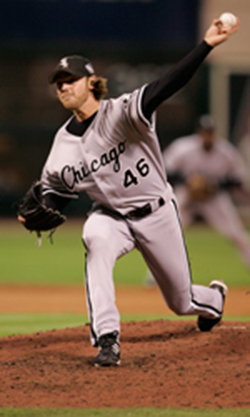
Things clicked in 2005, both for Cotts and the White Sox.  He appeared in 69 regular season games and posted a sparkling 1.94 ERA as the White Sox took the AL Central crown.  He faced one batter in the ALDS, getting Trot Nixon to flyout in Game 1 of the sweep against the Red Sox.  He was the only White Sox reliever to appear in the ALCS, getting the final 2 outs in the Game 1 loss to the Angels.  As the White Sox moved on to their first World Series since 1959, Cotts appeared in all 4 games, winning Game 2 and giving up only 1 hit in an inning and a third.

Cotts reverted back to his previous form in 2006, appearing in 70 games and seeing his ERA balloon back up to 5.17, though he did earn his first career save.  Following the season, he was traded across town to the Cubs for fellow relief pitcher David Aardsma.

Cotts’ numbers in a White Sox uniform, both for games I attended and overall, were:

Continue reading →

#94 – Vance Law

vance-lawName: Vance Law

Rank: 94

Position: 3B

Years With White Sox: 1982-1984

As spring training was winding down in 1982, the White Sox acquired Vance Law, along with Ernie Camacho, from the Pirates in exchange for Ross Baumgarten and Butch Edge.  Law jumped around the infield for the White Sox, spending time at shortstop, third base, and second base.  In his first major league stint with regular playing time, Law responded by hitting .281 with 5 home runs.

The offseason acquisitions of Jerry Dybzinski and Scott Fletcher meant Law could focus on third base for the 1983 season.  His offense suffered some, with his batting average dropping nearly 40 points, but he helped the White Sox secure their first post-season appearance since 1959.  Unfortunately, Law, like the rest of his teammates, struggled against the Orioles in the ALCS.  Law managed only 2 hits in the 4 game series.

While the White Sox regressed in 1984, Law put up arguably his best season as a pro.  He set a career high in games played and home runs, while his batting average rebounded to .252 and his OPS again surpassed the .700 mark.  Following the season, however, he was traded by the White Sox to the Expos for closer Bob James.

Law’s numbers in a White Sox uniform, both for games I attended and overall, were:
Continue reading →