2025 Predictions

With the Cubs and Dodgers having already gotten their seasons off to an early start in Tokyo, the North American portion of the 2025 baseball season is scheduled to kick off on Thursday, with a full slate of games featuring all 30 teams.  For the fifteenth consecutive year, I’ve looked into the crystal ball to make my picks for the upcoming season.

American League

East: Red Sox

Central: Guardians

West: Mariners

Wild Cards: Rays, Twins, Orioles

AL Champion: Guardians

Cy Young: Garrett Crochet

MVP: Julio Rodriguez

National League

Continue reading →

Active Pitching Leaders – Through 2024

Last weekend, we looked at the active leaders in games I’ve attended through 2024 on the offensive side of the ball.  With spring training winding down and Opening Day just a few days away, let’s take a look at the defensive side of the ball and the active pitching leaders.

Wins

Name Total
Chris Sale 21
Lucas Giolito 12
Reynaldo Lopez 10
Jose Quintana 9
Dylan Cease 7
Lance Lynn 7

Losses

Name Total
Jose Quintana 17
Carlos Rodon 13
Chris Sale 12
Lucas Giolito 9
Kyle Hendricks 9

ERA (> 35 IP)

Name Total
David Robertson 2.13
Taijuan Walker 2.25
Liam Hendriks 2.88
Johnny Cueto 2.97
Chris Sale 3.09

ERA (> 70 IP)

Name Total
Johnny Cueto 2.97
Chris Sale 3.09
Dylan Cease 3.15
Aaron Bummer 3.31
Reynaldo Lopez 3.64

Strikeouts

Name Total
Chris Sale 313
Jose Quintana 214
Lucas Giolito 185
Continue reading →

Ballpark Tour: Cubs

With spring training wrapping up this week and Opening Day just days away, we wind down our tour of all of the different baseball stadiums I’ve been to over the years. This week, we have our penultimate entry from the north side of Chicago. So, without further ado, let’s take a deeper look at my history with Wrigley Field.

Stadium Name: Wrigley Field

Years in Service: 1914 – Present

Visits: 388 (that I’m aware of)

Weeghman Park, home of the Chicago Chifeds of the Federal League, opened on April 23, 1914.  When the Federal League folded in December of 1915, team owner Charles Weeghman was allowed to buy the rival Chicago Cubs and immediately moved them from the dilapidated West Side Park and into his stadium for the 1916 season.  The Cubs played their first game at Weeghman Park on April 20, 1916, besting the Cincinnati Reds 7–6 in eleven innings.

That year, Weeghman sold a minority interest in the Cubs to chewing gum magnate William Wrigley.  As Weeghman’s financial fortunes started to decline, Wrigley acquired an increasing number of shares in the club and took on a growing role in the team’s affairs until November 1918, when Weeghman gave up his remaining interest to Wrigley, resigned as president, and left baseball for good. Wrigley would acquire complete control of the Cubs by 1921, and, prior to the start of the 1927 season, the park was officially renamed Wrigley Field.

William’s son, Philip K. Wrigley, had intended to install lights at Wrigley Field prior to the 1942 season.  However, when the Japanese attacked Pearl Harbor in December of 1941 and the US entered World War II, Wrigley donated the materials for the lights to the war effort.  The Cubs eventually became the only team without lights, continuing to play day games at home exclusively until 1988, when lights were finally installed.  To this day, the Cubs are still limited in the number of night games they may schedule per season, though that number has increased significantly since the late 80s.

As Wrigley Field continues in its second century, renovations to the stadium to make it economically viable for the 21st century are nearly complete.  Expanded clubhouses and new training facilities have been put in place for the players, both home and away.  New scoreboards, rebuilt bleachers, new clubs, and expanded concourses have been put in place for the fans.

I’ve managed to identify 388 games I’ve attended at Wrigley Field, most of them since 2002, when I became a season ticket holder.  After years of futility with the occasional bit of success tossed in, the Cubs saw sustained success for the first time in decades to close out the 2010s but have struggled to repeat it since.

Active Batting Leaders – Through 2024

Last month, we looked at the overall leaders on both sides of the ball from all of the games I’ve attended between 1984 and 2024.  With the end of spring training in sight, Opening Day is right around the corner.  Let’s take another look at those numbers, limiting it to players that are still active heading into the 2025 season.

Home Runs

Name Total
Jose Abreu 49
Tim Anderson 24
Luis Robert 22
Yoan Moncada 16
Avisail Garcia 15
Andrew Vaughn 15

Hits

Name Total
Jose Abreu 273
Tim Anderson 218
Yoan Moncada 133
Avisail Garcia 101
Eloy Jimenez 98

Runs

Name Total
Jose Abreu 129
Tim Anderson 117
Yoan Moncada 64
Avisail Garcia 58
Luis Robert 56

RBI

Name Total
Jose Abreu 159
Tim Anderson 73
Yoan Moncada Continue reading →

Ballpark Tour: Brewers

Spring training is in full swing and opening day is about a month away, as we continue our tour of all of the baseball stadiums I’ve been to over the years. The closest city, outside of Chicago, for baseball, contains the homes of the Milwaukee Brewers. Between the two stadiums that have been located in the heart of cheeseland, I’ve seen 8 games. So, without further ado, let’s take a deeper look at my history with County Stadium and Miller Park.

Stadium Name: County Stadium

Years in Service: 1953 – 2000

Visits: 1

Milwaukee County Stadium was built with the intention of drawing a major league baseball team to Milwaukee, and it worked quicker than anybody would have expected, as the Braves announced they would be moving from Boston 3 weeks before the stadium, and the 1953 season, opened.  The Braves would call Milwaukee home for the next 13 seasons before leaving for Atlanta for the 1966 season.

During the 1968 and 1969 seasons, the struggling Chicago White Sox wound up playing 20 home games at County Stadium in an effort to keep the baseball fandom alive in Milwaukee.  In 1970, local businessman Bud Selig purchased the expansion Seattle Pilots out of bankruptcy court and moved them to Milwaukee and rechristened them the Brewers.  The Brewers would call County Stadium home until 2000, when they would move next door in to the newly built Miller Park.

I made one trip up to County Stadium for a White Sox/Brewers tilt on July 18, 1993.  The White Sox were victorious thank to a 2-run single by Bo Jackson in the 9th inning. I remember sitting out in the bleachers, but, beyond that, have no particular memory of the stadium or what amenities, if any, it offered.

Stadium Name: Miller Park/American Family Field

Years in Service: 2003 – Present

Visits: 7

The Brewers broke ground on a new stadium on November 9, 1996, in a parking lot behind County Stadium, with plans to open the park for the 2000 season.  Construction was delayed in 1999 after a crane collapsed while lifting a 400-ton roof section, killing three workers.  This caused the opening to be delayed for a year, and the new Miller Park did not open until April 6, 2001.  In 2007, the stadium hosted an Indians series against the Angels after snowstorms in Cleveland forced the cancellation of the previous series against the Mariners.  The Astros called Miller Park home for two games in 2008 when Hurricane Ike stormed through Houston.  Prior to the 2021 season, the park was renamed American Family Field

I made the first of my seven visits to Miller Park during the inaugural season of 2001.  That May 7th contest had the Cubs squeaking out a 7-6 victory against the hosting Brewers.  My most recent trip up north was this past summer, to once again see the Cubs battle (or destroy) the Brewers.  Miller Park was a vastly superior replacement over County Stadium, and I’ve enjoyed each of my subsequent trips up to Milwaukee to see the local ballclubs.

Ballpark Tour: Reds

Spring training is in full swing and opening day is coming up in a little less than 3 weeks, as we continue our tour of all of the baseball stadiums I’ve been to over the years.  Now tied for my most visited city, outside of Chicago for baseball contains the homes of the Cincinnati Reds.  Between the two stadiums that have been located on the riverfront of the Ohio River, I’ve seen 8 games.  So, without further ado, let’s take a deeper look at my history with Cinergy Field and Great American Ball Park.

Stadium Name: Riverfront Stadium/Cinergy Field

Years in Service: 1970 – 2002

Visits: 1

Riverfront Stadium, Cincinnati’s version of the cookie cutter stadium that popped up in the late 60s and early 70s, opened on June 30, 1970 as the Reds hosted the Atlanta Braves.  In 1996, the stadium was renamed Cinergy Field thanks to a sponsorship deal with the local energy company.  Prior to the 2001 season, after the Bengals moved to their new home down the street, the stadium was reconfigured for baseball-only use, and portions of the outfield stands were removed to make room for the construction of the Reds’ new home, the future Great American Ball Park.  The 2002 season was the final one for the stadium, with the final game played on September 22 and the stadium was imploded on December 29.

In 2000, Ken Griffey Jr. joined the Cincinnati Reds, which put two of the most feared sluggers in the game in the NL Central.  When Sammy Sosa and the Chicago Cubs were scheduled to make an opening week visit to Cincinnati in 2000 to face Griffey for the first time, the idea of a road trip was hatched.  Friday, April 7, 2000 started with Krispy Kreme donuts at the house before heading towards Cincinnati.  Along the way, there was a brief stop at Purdue. because why not, and the trifecta of a KFC/Taco Bell/Pizza Hut seemed like a good place to stop for lunch.  We arrived in Cincinnati well before the stadium opened, so some time was spent walking around the bustling metropolis that was, and continues to be, Cincinnati.

Our tickets were in the upper deck and, to be honest, I have little to no recollection of the game itself.  My one and only memory of the game is losing my balance and tumbling down 5-10 rows, landing on a group of fans below.  Certainly not my proudest moment.  I do recall some of the drive home after the game, which included listening to the White Sox/A’s game where Jose Valentin committed a number of errors for the eventual AL Central champs.

Stadium Name: Great American Ball Park

Years in Service: 2003 – Present

Visits: 7

After 32 1/2 seasons at Riverfront Stadium, the Reds moved next door to the newly built Great American Ball Park for the 2003 season, opening against the Pittsburgh Pirates.  Bronze statues of former stars Joe Nuxhall, Ernie Lombardi, Ted Kluszewski, and Frank Robinson are located in front of the main entrance.

Less than a month into the stadium’s existence, I made my first trip to the GABP with my friend Scott, who had moved to the Cincinnati area, to see the Reds take on the Padres.  The next season, the Cubs opened their season in Cincinnati against the Reds, so another trip was in order, where Vice President Dick Cheney threw out the first pitch.  In August of 2005, I attended the Reds game against the Diamondbacks, kicking off a string of 3 stadiums in 3 states in 9 days.  In 2006, the Cubs once again opened their season on the road against the Reds and again it constituted a road trip down to see, where this time President George W Bush threw out the first pitch.  I made a return trip that summer for interleague play to see the White Sox battle the Reds.  In 2007, when the Cubs were looking the clinch the division, I made the trip down, but missed it by one day.  The next year, I made my final, to date, trip down to Cincinnati and saw the Rockies defeat the Reds.

Of all the newer stadiums that have opened over the past 20 years, Great American Ball Park does not often illicit the praise that the others get.  However, I like it.  It’s a fine place to see a game and has plenty of the modern amenities that are required here in the 21st century.  I wouldn’t hesitate to return, despite the fact that it has been over 16 years since I’ve been there.

Ballpark Tour: Rangers

With a little more than a month until the start of the 2025 baseball season, we continue our tour of all of the different baseball stadiums I’ve been to over the years. This week, we look at the Texas Rangers, a team you would think I would have visited more often due to its proximity to my father. So, without further ado, let’s take a deeper look at my history with the building originally named as the Ballpark in Arlington, the now former home of the Rangers.

Stadium Name: The Ballpark In Arlington/Ameriquest Field/Rangers Ballpark in Arlington/Globe Life Park

Years in Service: 1994 – 2019

Visits: 7

After spending their entire history at nearby Arlington Stadium, the Texas Rangers broke ground on their new stadium on April 2, 1992, and held their first game there nearly two years later, on April 11, 1994, against the Brewers.  The stadium was known by the somewhat clunky moniker of The Ballpark in Arlington until May of 2004, when Ameriquest bought the naming rights.  That deal ended in March of 2007, and the stadium was renamed again, this time to Rangers Ballpark in Arlington.  Corporate money came calling again in 2014, when Globe Life and Accident Insurance Company purchased the naming rights.  The stadium also features a Rangers Hall of Fame, which includes historical artifacts from the team along with visiting collections from Cooperstown.

I made my first trip to the Ballpark on May 22, 1998, to see the Rangers defeat the Royals during a visit to the Dallas area to see my dad.  I returned in 2001 for two games, against the Tigers and two days later against the White Sox.  In 2005, on my last trip to the area to date, I took in the entire four game series between the Rangers and the eventual World Series champion White Sox.

With Michael attending college in Texas, I should be able to add their new stadium, which opened in 2020, to my collection sooner rather than later.

2025 Tickets – Southside Edition

This was a much more exciting day back when the White Sox delivered physical tickets for non-premium season ticket holders, but season tickets have been uploaded to the MLB Ballpark app.  While this does make the actual game day use of the tickets more convenient, I can’t help but miss the old days of paper tickets and getting a big, fancy box filled with tickets in the mail.

All Time Batting Leaders – Through 2024

Last week, we took our annual look at the all-time leaders in pitching stats for the now 1,110 games I’ve attended (and identified) between 1984 and 2024.  With the first full squad spring training workout in the books, it’s time to move over to the other side of the ball and take a look at the offensive stat leaders for those games, starting with our first category:

Home Runs

Name Total
Paul Konerko 93
Jose Abreu 49
Sammy Sosa 42
Aramis Ramirez 41
Derrek Lee 40
Jermaine Dye 40

Hits

Name Total
Paul Konerko 366
Alexei Ramirez 300
Jose Abreu 273
Derrek Lee 255
A.J. Pierzynski 239

Runs

Name Total
Paul Konerko 200
Derrek Lee 140
Alexei Ramirez 134
Jose Abreu 129
Aramis Ramirez 120

RBI

Name Total
Paul Konerko 235
Jose Abreu 159
Aramis Ramirez 158
Alexei Ramirez 140
Derrek Lee 134

Doubles Continue reading →

Ballpark Tour: Padres

As pitchers and catchers start reporting across Arizona and Florida, we continue our tour of all of the baseball stadiums I’ve been to over the years. This week, we travel to southern California for the baseball homes of the San Diego Padres. Between the two stadiums that have been located in the paradise that is San Diego, I’ve seen four games. So, without further ado, let’s take a deeper look at my history with Qualcomm Stadium and PETCO Park.

Stadium Name: Jack Murphy Stadium/Qualcomm Stadium

Years in Service: 1969 – 2003

Visits: 1

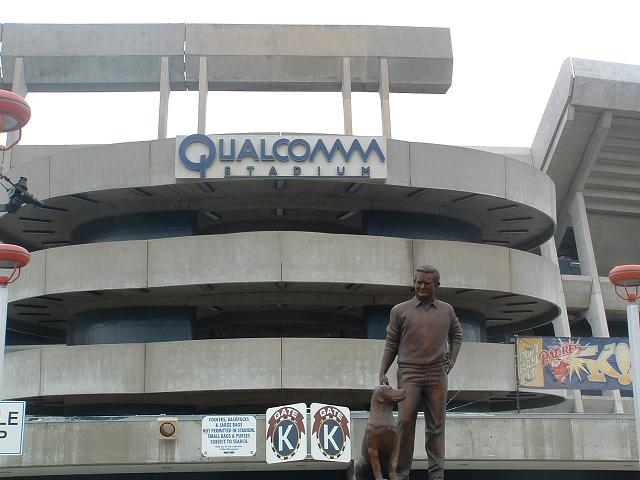
San Diego Stadium opened on August 20, 1967, as the home of the AFL’s Chargers and opened for baseball the following spring for the final season of the minor league San Diego Padres.  The following season, San Diego’s expansion team, also named the Padres, moved in and stayed as the main tenants until the end of the 2003 season.  The stadium was renamed in 1980 for local sportswriter Jack Murphy, who had championed support for the building of the stadium, after he passed away.  That name stuck until 1997, when the naming rights were sold to technology company Qualcomm.

In 2003, I was in San Diego for what, to date, was my 3rd and final Comic Con.  On the afternoon of July 17, I skipped out on the con and took the trolley out to Mission Valley to take in the day’s contest between the Padres and the Diamondbacks.  I don’t remember much about the game, which the Diamondbacks won handedly 9-1, other than Curt Schilling taking the bump for the Dbacks.  The park, one of the last remaining cookie cutter stadiums that popped up in the late 60s and early 70s and designed to house both baseball and football teams while doing service to neither, did not really register one way or the other and holds no particular space in my memory.  I do seem to remember a giant outdoor escalator, but that might have been Candlestick.

Stadium Name: PETCO Park

Years in Service: 2004 – Present

Visits: 3

After 35 seasons at the Murph, the Padres moved downtown in 2004 with the opening of PETCO Park.  The new stadium was initially supposed to open for the 2002 season, but legal battles and political tomfoolery delayed the project for two years.  The first event held at PETCO Park was an NCAA invitational tournament hosted by San Diego State University, whose head coach was former Padres great Tony Gwynn.  The Padres themselves christened the stadium on April 8 with a 10-inning victory over the Giants.

With the Cubs, coming off their surprising run towards the NL title in 2003, scheduled for a weekend series at the newly opened PETCO Park in the middle of May in 2004, a trip out to the coast was in order.  The Cubs swept the three-game series against the Padres, and a tremendous weekend was had.  The new park was a vast improvement over the old Jack Murphy.  I had a return trip planned in the spring of 2020, but COVID had other plans.