Red Sox All Time Leaders – Through 2019

redsoxWith baseball shut down because of the corona virus, I thought it would be an interesting time to look at the all time leaders in both offensive and defensive categories for all 30 teams. We continue things today with the Boston Red Sox.

I’ve seen the Red Sox play 31 times at 4 different stadiums, first in the White Sox home opener in 1985, through the 2005 ALDS, and, most recently, in last May.  The game total would have been 2 higher, if the corona virus hadn’t put the kibosh on my early April weekend trip to Fenway Park.

Home Runs

Name Total
David Ortiz 6
Mike Lowell 4
5 tied with 3

Hits

Name Total
David Ortiz 22
Mike Lowell 17
Kevin Youkilis 15

Runs

Name Total
David Ortiz 16
Dustin Pedroia 9
Mike Lowell 8
Kevin Youkilis 8
Jacoby Ellsbury 8

RBI

Name Total
David Ortiz 19
Mike Lowell 13
Kevin Youkilis 12

Doubles

Name Total
David Ortiz 6
Manny Ramirez 4
Mookie Betts 4

Triples Continue reading →

Ballpark Tour: White Sox

Opening day was supposed to be less than a week away, so it is time to wrap up our tour of all of the baseball stadiums I’ve been to over the years with the one I’ve been to the most: the homes of the Chicago White Sox.  Between the two stadiums that have been located at the corners of 35th and Shields, I’ve seen at least 542 games, all but one of which have involved the White Sox.  So, without further ado, let’s take a deeper look at my history with Comiskey Park and Guaranteed Rate Field.

Stadium Name: Comiskey Park

Years in Service: 1910 – 1990

Visits: 12 (that I’m aware of)

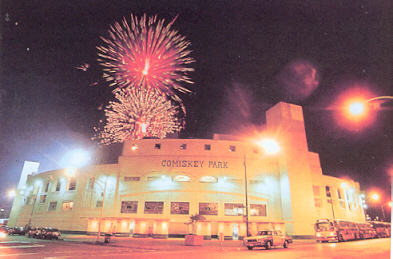
Comiskey Park, the so-called Baseball Palace of the World, was the home of the White Sox from 1910 through the 1990 season.  Built on a former city dump at the corner of 35th Street and Shields Avenue, the stadium opened on July 1, 1910, as the White Sox lost to the St. Louis Browns 2-0.  The final game for the old ballyard occurred on September 30, 1990, a 2-1 victory over the Mariners.

Comiskey Park was the host for 4 World Series, including 3 in a row from 1917-1919.  The White Sox won the World Series in 1917 against the New York Giants.  The Cubs, looking for a larger seating capacity, moved their home games in the 1918 series against the Red Sox to Comiskey Park.  The 1919 World Series, of course, was the Black Sox scandal, where the White Sox threw the series against the Reds.  The White Sox returned to the World Series 40 years later in 1959, but fell to the Dodgers.  The final post-season games to be played in Comiskey Park were games 3 and 4 of the 1983 ALCS, which the White Sox lost to the Baltimore Orioles.

Comiskey Park was also the host to 3 All-Star games.  The first All-Star game, in 1933, was held in conjunction with Century of Progress Exposition being held on Chicago’s lakefront.  The event returned to Chicago’s south side in 1950 and the final All-Star game at Comiskey Park was in 1983, the 50th anniversary of the first game.  Comiskey Park was also the frequent home of the Negro League East-West All-Star Game from 1933 to 1960.

Looking back, I’ve been able to piece together evidence of 12 games that I attended at Comiskey Park, either from pictures, stadium giveaways, or specific memories.  I know there are more, but I have not been able to pinpoint exact games as of yet.  The most memorable game I can remember would be the final night game, on September 29, 1990, where, after the game, the lights were symbolically turned off for the final time.

Stadium Name: Comiskey Park II/US Cellular Field/Guaranteed Rate Field

Years in Service: 1991 – Present

Visits: 530

On the evening of June 30, 1988, with the clock literally stopped, the Illinois legislature passed a bill that provided the financing for a new stadium for the White Sox, stopping them from moving to St. Petersburg, Florida.  2 and a half years later, on April 18, 1991, Comiskey Park II opened, the first new major facility built in Chicago since the erection of the Chicago Stadium in 1929.  Sadly, the White Sox were embarrassed by the Tigers, losing 16-0 in the opening of their new park.

Unfortunately for the White Sox, the new Comiskey Park was the last stadium to be built prior to the wave of retro ballparks that started with the opening of Camden Yards the following year.  Because of this, there have been numerous renovations to the park, starting in 2001 with the addition of nearly 2000 seats and the relocation of the bullpens.  More extensive renovations began in 2003 in preparation for that season’s All Star Game and using the money generated from selling the naming rights to US Cellular, and continued through 2007, when the replacement of the blue seats with green seats was completed.  Less extensive renovations have occurred since, replacing the different video boards and creating premium seating areas.

The post-season came to the new Comiskey Park for the first time in 1993, as the White Sox battled the Blue Jays in the ALCS.  The stadium hosted its first World Series games in 2005, the first to be played in the city of Chicago since 1959, as the White Sox went on to sweep the Houston Astros and win their first World Series since 1917.

I attended my first game at the new Comiskey Park on April 20, 1991, the second game in the stadium’s history.  Since then, I’ve been to 529 other games at the stadium, the majority coming from 2005 on, when I became a season ticket holder.  I went to both games of the 2000 ALDS, which the White Sox lost to the Mariners, both games of the 2005 ALDS, which the White Sox won against the Red Sox, both games of the 2005 ALCS, which the White Sox split against the Angels, and game 2 of the 2005 World Series.  I attended game 163 of the 2008 season to break the tie between the White Sox and the Twins. and then the two ALDS games against the Rays, the first time I saw the White Sox actually end a post-season series, either in victory or defeat.

Notable regular season games I’ve seen at what is now known as Guaranteed Rate Field include the September 18, 2001 game against the Yankees as baseball returned following the attacks of 9/11, the April 16, 2005 game where Mark Buehrle defeated the Mariners in 1 hour and 39 minutes, the April 2, 2006 season opener against the Indians when the World Series championship banner was raised, the April 4, 2006 game where the players received their World Series rings, and the September 16, 2007 game where Jim Thome hit his 500th career home run against the Angels.  Not to mention a streak of 19 consecutive home openers.

#1 – Harold Baines

Name: Harold Baines

Rank: 1

Position: RF/DH

Years With White Sox: 1980-1989, 1996-1997, 2000-2001

Harold Baines was the first overall selection in the 1977 draft after White Sox owner Bill Veeck had seen him play little league years before.  He made his major league debut less than 3 years later, on Opening Day 1980, going 0-4 against the Orioles at old Comiskey Park.  He appeared in 141 games and finished the year hitting .255 with 13 home runs and 49 RBIs.

Baines started to break out in 1981, where the long player’s strike led him to only appearing in 82 games.  He boosted his average to .286 and hit 10 home runs with 41 RBIs in only 280 at bats.

With labor problems behind them, a full slate of games was played in 1982, with Baines appearing in all but one of them.  Hitting .271, Baines smacked 25 home runs with 105 RBIs, while setting a career high with 10 stolen bases.  His numbers were good enough to garner 9 votes for AL MVP.

1983 was a banner year on the south side, as the White Sox captured their first ever division title.  Baines was a key contributor, hitting .280 with 20 home runs and 99 RBIs.  During the ALCS against the Orioles, Baines struggled, like most of his teammates, getting only 2 hits in the 4 game series.  At season’s end, he picked up 49 votes to finish 10th in MVP voting.

Baines continued to excel in 1984, though the rest of the team did not.  On May 8, he ended the longest game in major league history (8 hours and 6 minutes over 25 innings on successive evenings) with a walk-off home run against Chuck Porter of the Brewers.  He finished the year with a .304 average, a career high 29 home runs, and 94 RBIs, while leading the league in slugging at .541.  He once again garnered MVP consideration, finishing the vote tied for 13th place.

1985 was another strong season for Baines.  He earned his first All Star selection, singling off former teammate LaMarr Hoyt in his only at bat at the Metrodome.  He finished the year hitting .309 with 22 home runs and a career high 113 RBIs.  He earned 49 votes in placing 9th in MVP voting.

Baines saw his body start to betray him for the first time in 1986.  He appeared in his second straight All Star game, going hitless in his one at bat.  A late August knee injury caused him to miss time, and a late September collision with Neal Heaton in a loss to the Twins reinjured the knee, leading to arthroscopic surgery following the season.  He finished the season hitting .296, just missing his 3rd consecutive .300 season, with 21 home runs and 88 RBIs.

Baines returned for opening day in 1987, getting two hits and knocking in the winning runs on the hard artificial turf of Royals Stadium, but was unable to walk the following day.  A second arthroscopic surgery caused him to miss 23 games before he returned, moving from right field to designated hitter.  He still was named to his 3rd straight All Star team, going hitless in the 2-0 loss by the AL.  Come year end, he had hit .293 with 20 home runs and 93 RBIs.

1988 was a down year for Baines, though he managed to appear in 158 games.  His average dropped to .277, his lowest total since 1982, while hitting only 13 home runs, his lowest total since 1981.  He made only 9 appearances in the outfield while becoming accustomed to being a full time designated hitter.

Baines bounced back in 1989.  He was named the starting DH in the All Star game, going 1-3 with an RBI in the AL’s victory at Angel Stadium.  On July 29, he was traded to the Rangers, along with Fred Manrique, for Wilson Alvarez, Scott Fletcher, and Sammy Sosa.  “It’s an unpopular decision as far as the fans are concerned, but sometimes unpopular means exactly that-unpopular,” GM Larry Himes said at the time.  “It doesn`t mean that it isn`t a good decision.  This is a decision we made as far as direction of the Chicago White Sox for today and for our future.”  Baines was hitting .321 with 13 home runs and 56 RBIs at the time of the trade.  Less than a month later, as the Rangers visited Chicago for the first time on August 20, the White Sox retired Baines’ #3, a somewhat awkward attempt to placate the enraged fanbase.

Baines returned to the White Sox as a free agent in 1996.  Appearing in 143 games, Baines hit .311 with 22 home runs and 95 RBIs.  He returned in 1997 and was putting together another fine season, putting up a .305 average with 12 home runs and 52 RBIs in 93 games when, on July 29 again, he was traded to the Orioles for a player to be named later.

Three years later, once again on July 29, the White Sox re-acquired Baines, along with Charles Johnson, from the Orioles for Miguel Felix, Juan Figueroa, Jason Lakman, and Brook Fordyce.  Appearing in 24 games down the stretch, Baines hit .213 with a single home run and 9 RBIs as the White Sox took the Central Division crown.  Baines went 1-4 in the ALDS as the White Sox were swept by the Mariners.

Baines returned to the White Sox in 2001 at the age of 42, getting extra playing time once Frank Thomas went down with an injury.  In 32 games, he hit .131, failing to homer and driving in only 6.

Baines returned to the White Sox dugout in 2004, when new manager Ozzie Guillen named him bench coach.  He would remain on staff until 2015, when he became an ambassador for the team.  On July 20, 2008, the White Sox unveiled a bronze statue of Baines at U.S. Cellular Field prior to their game against the Royals.  On December 9, 2018, Baines was elected to the National Baseball Hall of Fame Class of 2019 via the Today’s Game Era ballot.

Baines’ numbers in a White Sox uniform, both for games I attended and overall, were:

Continue reading →

#3 – Paul Konerko

PaulKonerkoRedName: Paul Konerko

Rank: 3

Position: 1B

Years With White Sox: 1999-2014

After brief appearances with the Dodgers and the Reds in 1997 and 1998, Paul Konerko was traded to the White Sox on November 11, 1998 for center fielder Mike Cameron.  He started at DH on opening day in 1999, an 8-2 victory over the Mariners, going 1-4 with a home run and 2 RBI.

2000 saw Konerko get off to a quick start with an inside the park home run on April 11 against the Devil Rays, the first by a White Sox player since 1990.  In his second full season, he helped lead the surprising White Sox to their first Central Division title.  He, along with the rest of the White Sox offense, struggled during the Division Series against the Mariners, going 0-9 in the three game sweep.

After steadily improving in 2001 and 2002, Konerko ran into trouble in 2003, with his average under .200 for the first half of the season.  He found himself coming off the bench as manager Jerry Manuel seemingly lost confidence in him.  He bounced back in the second half and re-established himself as the starting first baseman.

Konerko bounced back in a big way in 2004, hitting 41 home runs and knocking in over 100 RBIs en route to the Comeback Player of the Year award.  2005 saw him put up a second consecutive 40 HR, 100 RBI season as the White Sox found themselves back in the playoffs for the second time in his career.  This time, things would go much differently for both Konerko and the White Sox.

Konerko homered twice and drove in 4 runs during the three game sweep against the Red Sox, catching the final out that sent the White Sox to the ALCS for the first time since 1993.  Konerko hit another 2 home runs and drove in 7 against the Angels during the 5 game series.  Once again, Konerko caught the final putout that sent the White Sox to their first World Series since 1959.  Following the victory in game 5, Konerko was named ALCS MVP.

Konerko cooled down during the World Series, hitting only one home run against the Astros, but what a home run it was.  With the White Sox trailing in the 7th inning, Konerko came up to face new pitcher Chad Qualls with the bases loaded.  Konerko made contact on the first pitch, sending it into the left field seats for a grand slam and the lead.  Like the previous 2 series, Konerko caught the final putout at first base in Game 4, giving the White Sox their first World Series title since 1917.

With the afterglow of winning the World Series starting to subside, Konerko became a free agent.  Despite rumors of him getting more lucrative offers from both the Dodgers and the Orioles, Konerko finally resigned with the White Sox, inking a 5-year, $60 million contract that would keep him on the south side through 2010.

Konerko battled through injuries in 2008, leading to his worst season since 2003, but he did manage to help the White Sox reach the post-season for the third time during his career.  He hit 2 solo home runs in the 4 game series against the Rays, in what would be his final playoff appearance.

Konerko had two more chances at free agency, signing a 3 year deal with the White Sox prior to 2011 and, finally, re-upping for one last season in 2014.  He finishes his career as the White Sox all time leader in total bases and second all time in home runs, RBIs, and games played.  In addition, he was a 6-time All Star and had served as team captain since 2006.  He also is the only White Sox player to appear in the post season 3 different times.

Konerko’s numbers in a White Sox uniform, both for games I attended and overall, were:

Continue reading →

#5 – Frank Thomas

Name: Frank Thomas

Rank: 5

Position: 1B/DH

Years With White Sox: 1990-2005

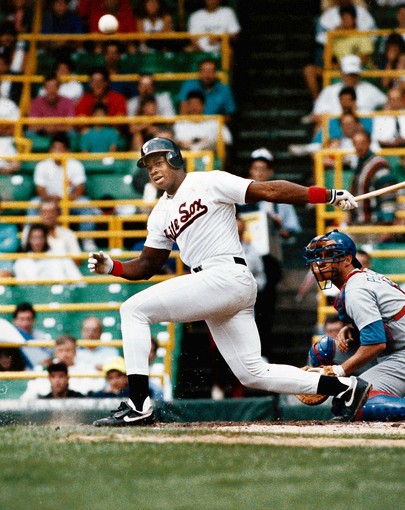
Frank Thomas was selected by the White Sox with the seventh pick in the first round of the 1989 draft.  A little more than 1 year later, he made his major league debut on August 2, 1990 against the Brewers at County Stadium, going hitless in 4 at bats with an RBI as the White Sox won 4-3.  The next night, he tripled off of Mark Knudson for his first major league hit.  On August 28, he hit the first home run of his career, off Gary Wayne, in a 12-6 loss against the Twins at the Metrodome.  He finished the year with a .330 average, with 7 home runs and 31 RBIs.

In 1991, as the White Sox moved into the new Comiskey Park, Thomas became one of the most feared hitters in the American League.  On April 22, he hit the first White Sox home run in the new stadium, in an 8-7 victory over the Orioles.  When the season ended, Thomas finished with a .318 average, 32 home runs, and 109 RBIs.  He lead the league in walks, OBP, OPS, and OPS+.  He won his first Silver Slugger award and finished 3rd in MVP voting.

Thomas continued his mastery in 1992.  He ended the year hitting .323, with 24 home runs and 115 RBIs. He led the league in doubles, walks, OBP, and OPS.  Those numbers were good enough for him to place 8th in MVP voting.

In 1993, Thomas helped the White Sox win their first division title since 1983.  He made his first All Star game appearance, getting a hit in his only at bat.  On August 31, he clubbed his 100th career home run against the Yankees at Yankee Stadium.  He finished the year batting .317 and set a club-record with 41 homers.  He added 128 RBI, 106 runs scored, and 112 walks, to join Babe Ruth, Lou Gehrig, Jimmie Foxx and Ted Williams as the only players in baseball history to eclipse .300 with more than 20 homers and more than 100 RBI, runs, and walks in three straight seasons.  In the ALCS against the Blue Jays, Thomas hit .353 in the 6 game series.  Thanks to his historic season, Thomas collected his second Silver Slugger award and all 28 first place votes for a unanimous AL MVP award, the first by a White Sox player since Dick Allen in 1972.

1994 was on track to be even better, before the strike ended the season in August.  Thomas was elected to start the All Star game and got 2 hits in his 2 at bats.  In only 113 games, Thomas had 38 home runs, 101 RBIs, 106 runs scored, and 109 walks.  He led the league in runs scored, walks, OBP, slugging percentage, OPS, and OPS+.  For the second year in a row, he took home the Silver Slugger and MVP awards, becoming just the second first baseman to earn consecutive MVP awards.

When baseball returned in 1995, Thomas picked up where he had left off.  He started his second straight All Star Game for the American League, hitting a home run off John Smiley.  At the end of the season, Thomas had hit .308 with 40 home runs and 111 RBIs while leading the league in games played, walks, sacrifice flies, and intentional walks.  He dropped to 8th place in MVP voting as the White Sox found themselves out of contention for the first time in his career.

The White Sox bounced back in 1996 and Thomas continued to be an offensive force.  He mashed his 200th career home run on June 9, going deep at Camden Yards against the Orioles.  He was named to his fourth straight All Star team, though he didn’t make it into the game.  He set a career high with a .349 average, while again hitting 40 home runs with 134 RBIs.  For the second straight year, he led the league in intentional walks and finished 8th in MVP voting.

1997 was another strong year for Thomas.  He was named to his fifth, and final, All Star team.  He led the league with a .347 average, a .456 OBP, a 1.067 OPS, and an OPS+ of 181, while hitting 35 home runs and knocking in 125.  He finished 3rd in MVP voting, his 7th top 10 finish in his 7 full seasons.

Off the field issues started to show an effect on Thomas’ production in 1998, his first as a full time designated hitter.  Marital problems messed with his head, leading him to think the umpires were screwing him, opposing pitchers were taking advantage of him, and the media were ganging up on him. “I was miserable, and I made everyone around me miserable,” Thomas said early in the 1999 season. “It was an extremely humbling season.”  He hit .265, 65 points lower than his career average entering the season, and finished with only 29 home runs, his lowest total in six years.  He started referring to himself as Five O’clock Frank, a batting-practice terror who at game time sank under the weight of self-pity and tired excuses.

Thomas, and the White Sox, hoped that he would bounce back in 1999.  “I think he had a lot on his mind, personal things that were weighing on him,” hitting coach Von Joshua said early in the season. “He didn’t talk about it, but you could just see it in his eyes. He’s a lot more settled this year.”  Unfortunately, things didn’t go well, though he did hit his 300th career home run on August 7 against the A’s.  While his average did rebound, back up to .305, he hit only 15 home runs and drove in just 77 while setting a career low with a .471 slugging percentage.  Bone spurs on his ankle limited him to just 135 games.

2000 got off to an explosive start, and not the good kind.  Thomas and manager Jerry Manuel went toe to toe in spring training over Thomas’ ability to participate in drills, following his surgery the previous September.  Once the regular season began, though, it looked like the old Thomas was back.  As the surprising White Sox ran off and won their first division title since 1993, Thomas, missing only 3 games all year, hit .328 and set career highs with 43 home runs and 143 RBIs.  Unfortunately, Thomas, like the rest of his teammates, struggled in the post-season, going hitless in the ALDS as the Mariners completed a 3 game sweep.  He won his fourth, and final, Silver Slugger award and finished 2nd in MVP voting, behind a juiced Jason Giambi.

2001 was a tough year for Thomas, both personally and professionally.  On April 27, he hurt his triceps diving for a ball while playing first base.  After spending 5 days back in Georgia due to the death of his father, Thomas returned to Chicago for tests, which revealed a muscle tear that would require surgery and end his season.  “This is the worst week of my life”, he said during a press conference. “First I lose my father, then come back and find out I’m lost for the season.”  In only 20 games, Thomas hit .221 with 4 home runs and 10 RBIs.

Thomas returned in 2002, but was obviously no longer the same player he was before the injury.  He struggled in the first half, before picking things up in the final month of the season, hitting .359 with 6 home runs in September.  He finished the season with a .252 average, 25 home runs and 92 RBIs.

2003 was a better year for Thomas, though still below his career norms.  On June 26th, he became the 36th player in history to reach the 400 career home run mark with a 5th inning shot against the Devil Rays at US Cellular Field.  At the end of the year, he had posted a .267 average with 42 home runs and 105 RBIs.

Injuries robbed Thomas of most of 2004.  He was placed on the disabled list on July 7th, with a .271 average, 18 home runs and 49 RBIs.  He underwent surgery in early October to remove debris from the ankle, perform a bone graft, and insert two screws.

Thomas began the 2005 season on the disabled list as he recovered from his ankle surgery.  He was activated on May 30, with the White Sox in first place in the AL Central.  On July 18, he clubbed his 448th and final home run with the White Sox against the Tigers at US Cellular Field.  He hit .219 with 12 home runs and 26 RBIs in 34 games before breaking his foot on July 21, causing him to miss the rest of the season and the post-season.  Thomas threw out the first pitch prior to game one of the ALDS against the Red Sox.

Thomas is the White Sox all time leader in home runs, runs scored, doubles, RBIs, walks, on-base percentage, slugging percentage, and OPS.  He is the only player in major league history to have seven consecutive seasons (1991-1997) with a .300 average and at least 100 walks, 100 runs, 100 runs batted in, and 20 home runs.  His number 35 was retired by the White Sox on August 29, 2010 and he was part of the 2014 Hall of Fame class, elected on the first ballot with 83.7% of the vote.

Thomas’s numbers in a White Sox uniform, both for games I attended and overall, were: Continue reading →
#7 – A.J. Pierzynski

Name: A.J. Pierzynski

Rank: 7

Position: C

Years With White Sox: 2005-2012

A.J. Pierzynski signed with the White Sox on January 6, 2005 following a year with the Giants that called his professionalism into question.  He rewarded the White Sox organization with 8 seasons of stability behind the plate the included 1 All-Star selection, 2 playoff appearances, and, of course, the 2005 World Series championship.  Over those 8 seasons, Pierzynski was involved in many key moments that endeared him to the White Sox faithful, including:

The walk-off home run, and resulting bat flip pictured to the left, against the Dodgers in 2005.

The two home runs in a thrashing of the Red Sox in game one of the 2005 ALDS, the first White Sox home postseason victory since 1959.

The controversial dropped third strike that led to a White Sox victory in game two of the 2005 ALCS against the Angels.

The 2006 brawl against the Cubs where Michael Barrett sucker-punched him after Pierzynski enthusiastically scored a run against the crosstown rivals.

Hanging on to the throw from Ken Griffey Jr. to preserve the shutout in the 2008 tie-breaker game that pushed the White Sox into the playoffs over the Twins.

Being behind the plate for Mark Buehrle’s no-hitter in 2007 and Philip Humber’s perfect game in 2012.

A.J. Pierzynski’s White Sox career officially came to an following the 2012 season, when the free agent catcher signed a contract with the Texas Rangers, leaving Paul Konerko as the last remaining member of the 2005 World Series champions to play for the South Siders.

Pierzynski’s numbers in a White Sox uniform, both for games I attended and overall, were:

Continue reading →

#8 – Jermaine Dye

Name: Jermaine Dye

Rank: 8

Position: RF

Years With White Sox: 2005-2009

Jermaine Dye signed with the White Sox as a free agent on December 9, 2004, as a replacement for the departing Magglio Ordonez.  He appeared in 145 games, his highest total since breaking his leg in the 2001 ALDS as a member of the A’s.  He ended the regular season hitting .274 with 31 home runs, 86 RBIs, and an .846 OPS as the White Sox won their first Central Division title since 2000.  In the ALDS, Dye scored 2 hits in the 3 game sweep of the Red Sox.  He picked things up in the ALCS, hitting .263 against the Angels as the White Sox won their first AL pennant since 1959.

Dye ratcheted things up again in the World Series against the Astros.  He hit a home run in game 1, had a phantom hit-by-pitch in game 2 setting up Paul Konerko’s grand slam, and drove in the only run in the clinching game 4, hitting .438 for the series and earning World Series MVP honors as the White Sox took home their first world championship in 88 years.

2006 proved to be Dye’s best offensive season.  He was named to his second All Star game, going hitless in his only at bat.  He finished the year second in the league with 44 home runs, third in slugging at .622, fifth in RBIs with 120, while hitting .315.  Those numbers were good enough for fifth place in AL Most Valuable Player voting and earned him his first, and only, Silver Slugger award.

2007 turned out to be more of a down year, for both Dye and the White Sox.  He struggled in the first half, including a cold June in which he batted just .203 with one home run.  He was able to turn things around in the second half, batting .298 and knocking out 20 doubles and 16 home runs.  He finished the year with a .254 average, 28 home runs, and 78 RBIs.  To reward his turnaround, he was given a two-year contract extension in August.

Dye continued his bounce back in 2008, and helped the White Sox rebound as well.  He finished the year with a .292 average, 34 home runs, and 96 RBIs, while finishing second in the American League with 77 extra-base hits, as the White Sox won the division title for the second time in his tenure.  Dye hit .375 with a home run in the ALDS, a four game loss against the Rays.  He earned 15th place in MVP voting.

Dye looked to slow down again in 2009, as his OPS fell to its lowest total since 2004.  He did, along with teammate Paul Konerko, make history on April 13, as they went back-to-back against the Tigers to each notch their 300th career home run.  According to Elias Sports Bureau, it was the first time teammates hit century milestone home runs of at least 300 in the same game, let alone back-to-back.  He ended the year hitting .250, with 27 home runs and 81 RBIs.  He became a free agent after the season when his option for 2010 was bought out.

Dye’s numbers in a White Sox uniform, both for games I attended and overall, were:

Continue reading →

#9 – Magglio Ordonez

Name: Magglio Ordonez

Rank: 9

Position: RF

Years With White Sox: 1997-2004

Signed by the White Sox as an amateur free agent in 1991.  Starting in 1992, he worked his way up the ladder, making his major league debut on August 29, 1997, going 2-3 in the interleague victory against the Astros at Comiskey Park.  Appearing in 21 games down the stretch, Ordonez hit .319 with 4 home runs and 11 RBIs.

Ordonez made the White Sox roster out of spring training in 1998.  He appeared in 145 games, and finished the year with a .282 average, 14 home runs, and 65 RBIs.  Those totals were good enough for him to finish in 5th place in AL Rookie of the Year voting, behind winner Ben Grieve and teammate Mike Caruso.

1999 was a breakout year for Ordonez.  Earning his first All Star selection, he went 0-1 in the AL’s victory at Fenway Park.  He finished the year hitting .301 with 30 home runs, 117 RBIs, and an OPS of .858.

Ordonez’s hot streak continued in to 2000.  In his second straight All Star game, he doubled and hit a sacrifice fly in his 2 plate appearances, driving in one run.  When the season ended, he had a .315 average with 32 home runs and 126 RBIs.  With the White Sox winning their first division title since 1993, Ordonez hit .182 in the ALDS against the Mariners, joining his teammates in not hitting at all during the 3 game sweep.  After the season, Ordonez won the Silver Slugger award and finished 12th in MVP voting.

While the White Sox failed to replicate their success in 2001, Ordonez kept up his end of the bargain.  He earned his third straight All Star nod, going 2-3 with an RBI and a run scored at Safeco Field.  Missing only 2 games, Ordonez ended up hitting .305 with 31 home runs, 113 RBIs, and a .914 OPS.

Ordonez saw his streak of All Star appearances snapped in 2002, mostly due to his .320 average, career high 38 home runs, 135 RBIs, and a .978 OPS.  Following the season, he came in 8th place for MVP voting and earned his second Silver Slugger award.

2003 was another excellent year for Ordonez.  He was named to his fourth All Star team, going 0-1 in his home stadium of US Cellular Field.  He hit .317 with 29 home runs and 99 RBIs, his lowest totals since his rookie year.  Even with that, he finished 18th in MVP voting.  During the off-season, Ordonez was nearly traded to the Red Sox, contingent on the Red Sox acquiring Alex Rodriguez from the Rangers for outfielder Manny Ramirez.  The Red Sox would then send Nomar Garciaparra to the White Sox for Ordonez.  When the Rodriguez-for-Ramirez trade fell through, the Ordonez deal was off as well, and he remained with the White Sox.

Ordonez’s 2004 season was on track to match his career norms when, during the May 19 game against the Indians, he collided with second baseman Willie Harris on Omar Vizquel’s popup to right field.  Two trips to the disabled list and two surgeries on his left knee later, his season was over after only 52 games.  Following the season, he became a free agent and his White Sox career came to an end.

Ordonez’s numbers in a White Sox uniform, both for games I attended and overall, were:

Continue reading →

#13 – Aaron Rowand

Name: Aaron Rowand

Rank: 13

Position: CF

Years With White Sox: 2001-2005

Aaron Rowand joined the White Sox organization in 1998, selected in the first round of the draft.  He earned his first call up to the show on June 15, 2001 and made his major league debut the following day, pinch hitting and lining out to end an 8-2 loss to the Cardinals.  He ended the season hitting .293, fourth amongst rookies in the American League.

An off-season dirt bike accident looked to derail Rowand’s 2002 season, but he recovered enough to appear in 126 games, hitting .258 with 7 home runs and taking over as the starting center fielder following the mid-season trade of Kenny Lofton.  Rowand earned a return trip to Triple A in 2003 after hitting .133 in his first 60 games, but after a little more than a month, he returned to the big leagues, hitting .387 the rest of the way and ending the season with a .287 average.

2004 was a breakout year for Rowand.  A full time starter for the first time, Rowand appeared in 140 games, setting career highs with a .310 average and .905 OPS.  He also managed 24 home runs and 24 doubles.  He finished the year with 5.7 WAR, the seventh highest total in the American League.

The good times continued in 2005, for both Rowand and the White Sox.  In 157 games, Rowand hit .270 with 13 home runs.  Defensively, he committed only 3 errors in 394 chances, giving him the seventh highest defensive WAR in the American League.  Rowand went 4 for 10 against the Red Sox in the ALDS, driving in 2 runs and scoring 3 more in the 3 game sweep.  In the ALCS against the Angels, Rowand managed only 3 hits in the 5 game series, all doubles.  He bounced back in the World Series, going 5-17 against the Astros as the White Sox won their first title in 88 years.

Less than a month after the final out of the World Series, Rowand was traded, along with Gio Gonzalez and Daniel Haigwood, to the Phillies for Jim Thome.

Rowand’s numbers in a White Sox uniform, both for games I attended and overall, were:

Continue reading →

All Time Playoff Team Records

As the Cubs prepare for their third consecutive post-season appearance and an NLDS tilt against the Nationals, it’s time to take an updated look at the team records for the now 26 playoff contests I have attended. These contests come from the ALDS in 2000, 2005, and 2008, the NLDS in 2003, 2007, 2008, 2015, and 2016, the NLCS in 2003, 2015, and 2016, the ALCS in 2005, and, of course, the 2005 and 2016 World Series.

Post-Season Team Records
Team Name Won Loss Winning Pctg
Florida Marlins 3 0 1.000
Seattle Mariners 2 0 1.000
New York Mets 2 0 1.000
Arizona Diamondbacks 1 0 1.000
Chicago White Sox 5 4 0.556
Los Angeles Dodgers 2 2 0.500
Tampa Bay Rays 1 1 0.500
Los Angeles Angels 1 1 0.500
Cleveland Indians 1 1 0.500
Atlanta Braves 1 1 0.500
Chicago Cubs 7 10 0.412
St. Louis Cardinals 0 1 0.000
San Francisco Giants 0 2 0.000
Houston Astros 0 1 0.000
Boston Red Sox 0 2 0.000