Another Mix Tape Monday – Volume 10

20 years ago, during my sophomore year of high school, I put together the first of what would become a nearly 20 volume collection of mix tapes, containing my favorite songs that I had gathered either from the radio, a cassette tape, or (eventually) CD. We last looked back at all 20 volumes three years ago to see which of my “favorite” songs still resonated in today’s digital world. Today, we revisit those mix tapes and see how, or if, things have changed in the past 3 years.

Volume 10 covers the spring and summer of 1993, following my freshman year of college, and features the top rap and alternative hits of the summer, along with some pop and the last remnants of hair metal.

Side A

Pearl Jam – Black

Hitting #3 on Billboard’s Mainstream Rock Tracks chart despite the band’s refusal to release it as an official single, the song was only listened to 5 times in the past 3 years.

iTunes Stats
2012 2015 2019
5 plays 6 plays 11 plays, most recently on 5/1/2018 

Def Leppard – Two Steps Behind

The big hit from Arnold Schwarzenegger’s bomb Last Action Hero, originally recorded from The Blaze during a nightly song battle, garnered 10 additional listens over the last 3 years.

iTunes Stats
2012 2015 2019
5 plays 7 plays 17 plays, most recently on 7/13/2018 

UB40 – Can’t Help Falling In Love

After going unheard for 3 years, the track, featured on the Sliver soundtrack, doubled its plays over the past 3 years.

iTunes Stats
2012 2015 2019
8 plays 8 plays 16 plays, most recently on 10/29/2018 

Aerosmith – Cryin’

The first installment of Alicia Silverstone’s video trilogy, which finished as the 60th biggest single of 1993, picked up 10 new plays over the past 3 years.

iTunes Stats
2012 2015 2019
4 plays 6 plays 16 plays, most recently on 10/3/2018 

TLC – Get It Up

The cover of the The Time hit, created for the Poetic Justice soundtrack, finally picked up some listens over the past 3 years.

iTunes Stats
2012 2015 2019
0 plays 0 plays 4 plays, most recently on 7/31/2018 

4 Non Blondes – What’s Up?

The 50th biggest single of 1993 picked up a small increase of 3 listens for the ubiquitous debut from 4 Non Blondes.

iTunes Stats
2012 2015 2019
9 plays 16 plays 19 plays, most recently on 11/5/2018 

whoompTag Team – Whoomp! (There It Is)

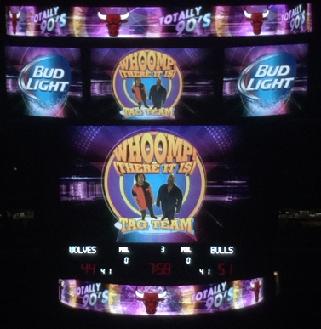
The unofficial theme to the Bulls third straight NBA championship, who showed up for 90s night at the game I attended in February 2015, added 30 new listens over the past 3 years, thanks to its use by the Cubs when someone hits a home run.

iTunes Stats
2012 2015 2019
8 plays 13 plays 43 plays, most recently on 9/1/2018 

Side B

Continue reading →

#3 – Paul Konerko

PaulKonerkoRedName: Paul Konerko

Rank: 3

Position: 1B

Years With White Sox: 1999-2014

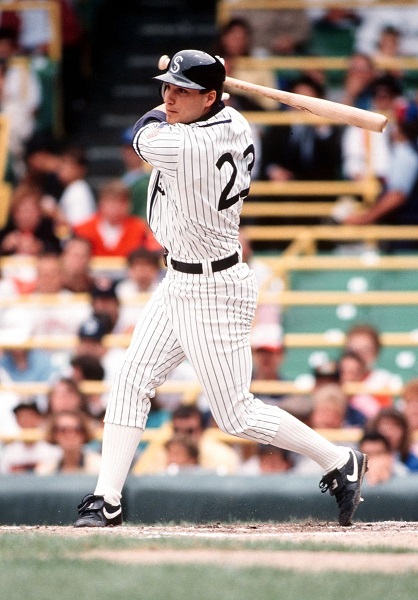
After brief appearances with the Dodgers and the Reds in 1997 and 1998, Paul Konerko was traded to the White Sox on November 11, 1998 for center fielder Mike Cameron.  He started at DH on opening day in 1999, an 8-2 victory over the Mariners, going 1-4 with a home run and 2 RBI.

2000 saw Konerko get off to a quick start with an inside the park home run on April 11 against the Devil Rays, the first by a White Sox player since 1990.  In his second full season, he helped lead the surprising White Sox to their first Central Division title.  He, along with the rest of the White Sox offense, struggled during the Division Series against the Mariners, going 0-9 in the three game sweep.

After steadily improving in 2001 and 2002, Konerko ran into trouble in 2003, with his average under .200 for the first half of the season.  He found himself coming off the bench as manager Jerry Manuel seemingly lost confidence in him.  He bounced back in the second half and re-established himself as the starting first baseman.

Konerko bounced back in a big way in 2004, hitting 41 home runs and knocking in over 100 RBIs en route to the Comeback Player of the Year award.  2005 saw him put up a second consecutive 40 HR, 100 RBI season as the White Sox found themselves back in the playoffs for the second time in his career.  This time, things would go much differently for both Konerko and the White Sox.

Konerko homered twice and drove in 4 runs during the three game sweep against the Red Sox, catching the final out that sent the White Sox to the ALCS for the first time since 1993.  Konerko hit another 2 home runs and drove in 7 against the Angels during the 5 game series.  Once again, Konerko caught the final putout that sent the White Sox to their first World Series since 1959.  Following the victory in game 5, Konerko was named ALCS MVP.

Konerko cooled down during the World Series, hitting only one home run against the Astros, but what a home run it was.  With the White Sox trailing in the 7th inning, Konerko came up to face new pitcher Chad Qualls with the bases loaded.  Konerko made contact on the first pitch, sending it into the left field seats for a grand slam and the lead.  Like the previous 2 series, Konerko caught the final putout at first base in Game 4, giving the White Sox their first World Series title since 1917.

With the afterglow of winning the World Series starting to subside, Konerko became a free agent.  Despite rumors of him getting more lucrative offers from both the Dodgers and the Orioles, Konerko finally resigned with the White Sox, inking a 5-year, $60 million contract that would keep him on the south side through 2010.

Konerko battled through injuries in 2008, leading to his worst season since 2003, but he did manage to help the White Sox reach the post-season for the third time during his career.  He hit 2 solo home runs in the 4 game series against the Rays, in what would be his final playoff appearance.

Konerko had two more chances at free agency, signing a 3 year deal with the White Sox prior to 2011 and, finally, re-upping for one last season in 2014.  He finishes his career as the White Sox all time leader in total bases and second all time in home runs, RBIs, and games played.  In addition, he was a 6-time All Star and had served as team captain since 2006.  He also is the only White Sox player to appear in the post season 3 different times.

Konerko’s numbers in a White Sox uniform, both for games I attended and overall, were:

Continue reading →

Changes Are A’comin’

Yesterday, MLB announced a slew of rule changes to be implemented for the upcoming 2019 season and the 2020 season.  For 2019, the changes include shortening the breaks between innings, reducing mound visits, modifying the trade deadline, and updates around the All Star Game.  2020 changes include changes to the active roster, the minimum number of batters a pitcher must face, and increasing the time pitchers must spend either on the injured list or in the minor leagues when optioned.

The breaks between innings will be reduced from 2:05 to 2:00 for local games, and from 2:25 to 2:00 for national games.  This should remove between one and a half minutes to 7 and a half minutes of dead time from every game, shortening game times across the league.  Of course, the fine print says that these changes are “subject to discussions with broadcast partners”, which means, nationally, FOX, ESPN, and TBS need to be aligned with losing over 7 minutes of their commercial inventory.  Which, frankly, seems unlikely.

The number of mound visits is being reduced from 6, which was first introduced last season, to 5.  Since the limit of 6 affected exactly zero teams in 2018, this doesn’t seem to be much of a change and shouldn’t have much, if any, impact.

The trade deadline is staying put on July 31st, but trade waivers, the archaic system by which trades enacted after the trade deadline, will be eliminated.  Players may continue to be placed and claimed on outright waivers after July 31st, but players may not be traded after that date.  This means buyers and sellers will need to make a final call on their season a month earlier than they do now.  There is also some thought that this will help with the service time manipulation of young phenoms, as injured and ineffective players will no longer be able to be replaced from the outside over the final two months of the season.

Voting for the All Star Game is being changed, with fan voting conducted in two rounds.  Each team will nominate one player per position (three outfielders), who will be voted on by fans during the first, “Primary Round”.  In late June or early July, the top three vote-getters at each position during the Primary Round will be voted on by fans to determine the All Star Game starters, in what is currently being called “Election Day”.  Final details on the new fan voting format will be announced sometime in April.  Bonus payments will be given to the top three vote-getters at each position per league during the Primary Round (top six for outfielders).  Additionally, the prize money awarded to players on the winning All Star team will be increased.  None of this really should have any effect on the game itself, unless the new bonuses and increased prize money is substantial enough to make the players take winning the exhibition more seriously.

The big change is that, in the case of extra innings at the All Star Game, both teams will start the 10th inning, and each subsequent inning, with a runner on second base, with re-entry substitutions allowed for the runners.  This follows changes made in hockey and college football, where, when a game “ends” in a tie, you change the rules of the game to determine a winner.  I’m not a fan of this type of change, as it fundamentally changes how the game is played.  If it stays in the realm of exhibition games, where the goal is more to finish the game without anyone getting hurt, I can live with that.  I would hate to ever see this implemented during regular season, or post-season, play.

The final change for 2019 is an increase in prize money for the Home Run Derby, up to $2.5 million with the winner receiving $1 million.  Maybe this reduces the number of players turning down the derby?  As someone who doesn’t care about the derby, this does nothing to move my needle.

The changes due to take effect for the 2020 season include the following: Continue reading →

Fitbit V: Week 6

Yet another week where poor weekends bring down a decent work week.  Things got off to a slow start on Sunday, where I didn’t leave the house and finished just shy of 2400 steps.  Monday put a couple of coffee runs to good use to come in over 7800 steps.  Tuesday missed both the morning and afternoon coffee runs, which is why I finished with just over 6100 steps.  Wednesday bounced back, coming in a mere 31 steps over my daily goal.  Thursday was the highlight of the week, coming in over 11,400 steps thanks to an after-work trip to Woodfield Mall while killing time before seeing Captain Marvel.  Friday fell back down to just over 7000 steps.  Saturday was a complete bust, as I failed to crack 1300 steps while not leaving the house.

Total steps: 43,622

Daily average: 6231.7

Another Mix Tape Monday – Volume 9

20 years ago, during my sophomore year of high school, I put together the first of what would become a nearly 20 volume collection of mix tapes, containing my favorite songs that I had gathered either from the radio, a cassette tape, or (eventually) CD.  We last looked back at all 20 volumes three years ago to see which of my “favorite” songs still resonated in today’s digital world.  Today, we revisit those mix tapes and see how, or if, things have changed in the past 3 years.

Volume 9 places us squarely in the early months of 1993, overlapping with the second semester of my freshman year of college.  The hip hop and pop are rounded out with some alternative and what passes for hair metal in the post-grunge era.

Side A

Dan Baird – I Love You Period

Despite not knowing if this song, which peaked at #26 on the Billboard charts, ever got radio play in the state of Illinois, I’ve somehow managed to add 5 new listens over the past 3 years..

iTunes Stats
2012 2015 2019
2 plays 9 plays 14 plays, most recently on 11/1/2018 

Ugly Kid Joe – Cats In The Cradle

The cover of the Harry Chapin hit, which gave the band their highest charting hit of their career, picked up a mere 4 new plays over the past 3 years.

iTunes Stats
2012 2015 2019
4 plays 6 plays 10 plays, most recently on 11/15/2018 

Arrested Development – Mr. Wendal

The story of a wise homeless man, which hit #6 on the Billboard charts, managed to pick up 7 plays over the past 3 years.

iTunes Stats
2012 2015 2019
5 plays 12 plays 19 plays, most recently on 11/27/2018 

Naughty By Nature – Hip Hop Hooray

The 45th biggest hit of 1993 nearly doubled its total over the past 3 years.

iTunes Stats
2012 2015 2019
8 plays 12 plays 23 plays, most recently on 12/19/2018 

Positive K – I Got A Man

The rappers only top 40 hit, peaking at #14, garnered a slight 4 play increase in the last 3 years.

iTunes Stats
2012 2015 2019
6 plays 10 plays 14 plays, most recently on 11/16/2018 

REM – Man On The Moon

The tribute to comedian Andy Kaufman, which peaked at #2 on the Alternative Songs chart, picked up a mere 4 new listens over the past 3 years.

iTunes Stats
2012 2015 2019
2 plays 5 plays 9 plays, most recently on 11/28/2018 

Aerosmith – Livin’ On The Edge

Spending 9 weeks atop the Album Rock Tracks chart, the first single from the band’s 11th studio album, which I bought at a midnight release at the Musicland that would eventually become Kazoo’s, managed a slight increase over the past 3 years.

iTunes Stats
2012 2015 2019
2 plays 5 plays 8 plays, most recently on 7/3/2018 

Side B

Continue reading →

#4 – Robin Ventura

Name: Robin Ventura

Rank: 4

Position: 3B

Years With White Sox: 1989-1998

Robin Ventura joined the White Sox organization as the 10th overall pick in the 1988 draft.  He made his major league debut the following September, going 1-4 with an RBI in a 11-1 victory over the Orioles at Memorial Stadium.  He appeared in 16 games down the stretch, hitting only .178 while driving in 7 runs in 45 at bats.

A good spring in 1990 led to Ventura breaking camp with the White Sox.  He struggled, both on the field and at the plate, suffering through a horrendous 0-for-41 slump while committing 25 errors over the course of the season.  However, he did lead AL rookies with 150 games played and his 123 hits were the most by a White Sox rookie since Ozzie Guillen in 1985.  He finished the year with a .249 average, 5 home runs, and 54 RBIs.  He placed 7th in Rookie of the Year voting and was named to the Topps All Star Rookie team.

Ventura and the White Sox moved in to the new Comiskey Park in 1991, hoping to improve on the previous year’s growth.  He improved his fielding enough to earn his first Gold Glove award and led the league in putouts.  At the plate, he set a White Sox team record for RBIs by a third baseman, finishing with an even 100.  He upped his average to .284 and hit 23 home runs.  His work was enough to garner enough MVP votes to finish in 20th place.

1992 was another good year for Ventura.  He earned his first All Star nod, going 2-2 in the AL’s victory at Jack Murphy Stadium.  He finished the year with a .282 average, 16 home runs, and 93 RBIs.  He also snagged his second consecutive Gold Glove award.

Ventura continued his successful ways in 1993.  He collected his 500th hit in May and, on August 4, he entered the public consciousness with an event that would come to define his entire career.  While batting against the Rangers, Ventura was hit by a pitch thrown by Nolan Ryan and charged the mound.  Ryan, 20 years Ventura’s senior, placed him in a headlock and punched him several times, starting a bench-clearing brawl that was voted the best baseball brawl of all time by SportCenter.  Ventura saw his average drop to .262, but his OPS set a new career high.  His 94 RBIs made him the first AL third baseman with three consecutive 90-RBI seasons since Graig Nettles in the mid 70s.  During the ALCS against the Blue Jays, Ventura hit .200, with just 1 home run and 5 RBIs across the six game series.  After the season, he was awarded his third consecutive Gold Glove award.

The strike in 1994 saw Ventura’s streak of 90 RBI seasons and Gold Gloves come to an end.  When baseball stopped in August, Ventura was hitting .282 with 18 home runs and 78 RBIs, while posting a new career high with an .832 OPS.

When play resumed in late April 1995, Ventura struggled out of the gate, committing ten errors in the first ten games.  As the White Sox started to tear down the team that had finished the previous two seasons on top of their division, trade rumors started to follow Ventura, though nothing came to fruition.  On September 4, he became the eighth player in history to hit two grand slams in one game, and the first since Frank Robinson in 1970.  He finished the year setting career highs with a .295 average, an .882 OPS, and 26 home runs while driving in 93 runs.

Ventura had the best year of his career to date in 1996.  He set White Sox team records in career home runs by a third baseman, with 142, and grand slams, with 9.  He set new career highs with 34 home runs, 105 RBIs, 2 triples, an OPS of .888, and a .974 fielding percentage at the hot corner.  He hit .287, while earning his fourth Gold Glove award.

1997 turned into a dismal year for Ventura and the White Sox.  During a spring training game at Ed Smith Stadium, Ventura caught his foot in the mud while sliding into home plate and suffered a broken and dislocated right ankle.  Expected to miss the entire season, he returned on July 24, collecting the game-winning hit that night, and homered in his first at-bat the next night.  With the White Sox only 3.5 games behind the Indians in the standings, a healthy Ventura might have put them over the top.  A week later, the team threw in the towel in what eventually became to be known as the White Flag Trade, sending Wilson Alvarez, Roberto Hernandez, and Danny Darwin to the Giants for prospects.  “We didn’t realize Aug. 1 was the end of the season,” said an upset Ventura.  He finished the year appearing in 54 games, hitting .262 with 6 home runs and 26 RBIs.

As Ventura entered the last year of his contract in 1998, the White Sox made little attempt to sign him to an extension, with owner Jerry Reinsdorf claiming his skills were “deteriorating” after his injury the year before.  With more trade rumors following him throughout the season, he finished the year with a .263 average, 21 home runs, and 91 RBIs while earning his fifth Gold Glove award.  Following the season, he became a free agent, ending his White Sox playing career.

On October 6, 2011, Ventura returned to the White Sox as their 39th manager.  He resigned following the 2016 season, finishing with a career record of 375-435 for a winning percentage of .463.

For his career, Ventura ranks 6th in White Sox history with 39.4 WAR, 8th with 28.8 OWAR, 8th with 12.9 DWAR, 6th with 171 home runs, 8th with 741 RBIs, and 5th with 668 walks.

Ventura’s numbers in a White Sox uniform, both for games I attended and overall, were:

Continue reading →

Pitching Mound To Prison Pipeline

Former White Sox pitcher Esteban Loaiza was sentenced to 36 months in prison earlier today after pleading guilty to felony cocaine possession with intent to distribute.  Loaiza, who was facing a potential life sentence, was arrested last year after he was caught trying to move more than $500,000 in cocaine from a house located near a school.  He was initially stopped by police during a routine stop for a minor traffic violation, but a search of the car led to the discovery of a “sophisticated aftermarket compartment used to conceal contraband.”  A subsequent search of a home he had been renting, mere “steps away from an area preschool”, found roughly 20 kilograms of cocaine, with an estimated street value of $500,000.  Following his release from prison, he will be deported to his native Mexico.

Loaiza, the second winningest pitcher from Mexico, had two stints with the White Sox.  He scored All Star nods in both 2003 and 2004 and finished his career with the team in a brief stint in 2008.  He earned over $40 million during his career, making the need to participate in this type of scheme baffling.  He made an unannounced appearance at Sox Fest just prior to his arrest last year.

2019 Games Of Interest

April 6 – White Sox Hoodie
April 27 – Jose Abreu Silver Slugger Bobblehead
May 4 – R2D2 Bobblehead & Star Wars Night
May 5 – Los White Sox Soccer Jersey
May 5 – Cubs Hooded Pullover
May 17 – Fireworks
May 18 – Carlos Rodon Bobblehead
June 1 – Chicago-themed White Sox Jersey
June 13 – Free T-shirt Thursday
June 15 – White Sox Hawaiian Shirt and Fireworks
July 15 – Kris Bryant Bobblehead
July 27 – White Sox Spider-Man Bobblehead and Fireworks
August 11 – Harold Baines Day and HOF Plaque
September 15 – Pedro Strop Bobblehead
September 28 – Halfway to St Patrick’s Day
September 29 – Fan Appreciation Day

Fitbit V: Week 5

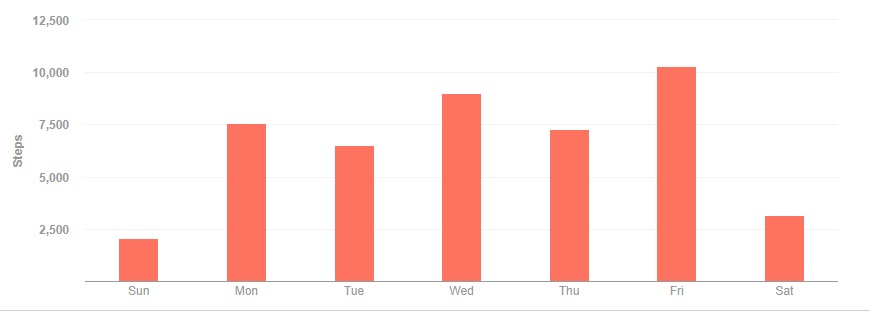
Another week that was done in by lack of activity on the weekends.  The week got off to a poor start on Sunday with just over 2000 steps.  Monday picked up a bit, finishing 54 steps over goal.  Tuesday fell back again, coming in just shy of 6500 steps.  Wednesday was a nice day, finishing just 17 steps shy of 9000.  Thursday was back down again, finishing 10 steps shy of 7300.  Friday was the highpoint of the week, as Val and I headed down to Pilsen after work to see Rhea Butcher at Thalia Hall, scoring nearly 10,300 steps.  Saturday was a bust, with a few errands and trips for food getting me a mere 3100 steps.

Total steps: 45,831

Daily average: 6547.3

2019 Tickets – Northside Edition

Changes are afoot for the Cubs season ticket package this year.  Rather than print physical tickets, the team is moving to all-digital tickets through the MLB Ballpark app, similar to the what the White Sox have done for the past 4 seasons.  Unlike the White Sox, the Cubs are planning to offer commemorative printed tickets after the season, at least according to their announcement last fall.  This is good for those of us who collect ticket stubs, as the Cubs, unlike their neighbors to the south, do not give printouts once you scan in.