20 Years Of Remembrance

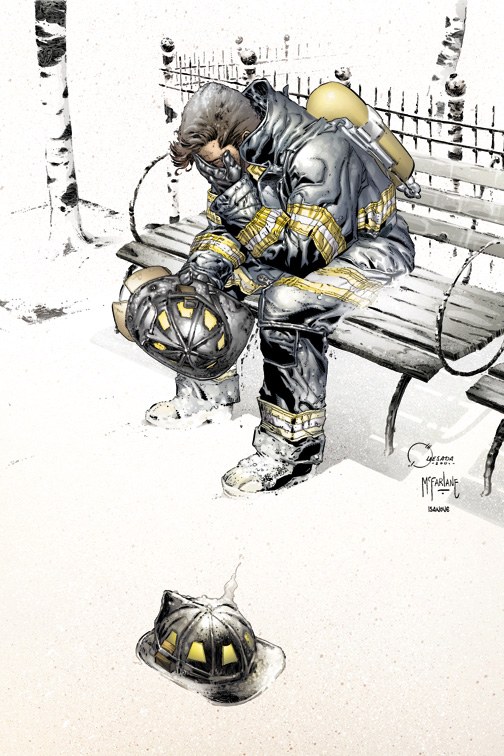
It was a normal Tuesday morning, 20 years ago this morning, when someone stopped by my desk to say that a plane had crashed into the World Trade Center and that we were under attack.  Little did I know that for once, Chicken Little was right and the sky really was falling.

Most of the morning remains a blur.  Updates were hard to get through traditional sources and most of the news I was getting was from the old Warren Ellis forum on Delphi and whatever incarnation of the Bendis Board was up at the time.  At one point, I went out to my car to get an update from the Howard Stern show, which at the time was on a one hour tape delay here in Chicago, but we were one of the few markets that cut away from the show in order to simulcast a news station.

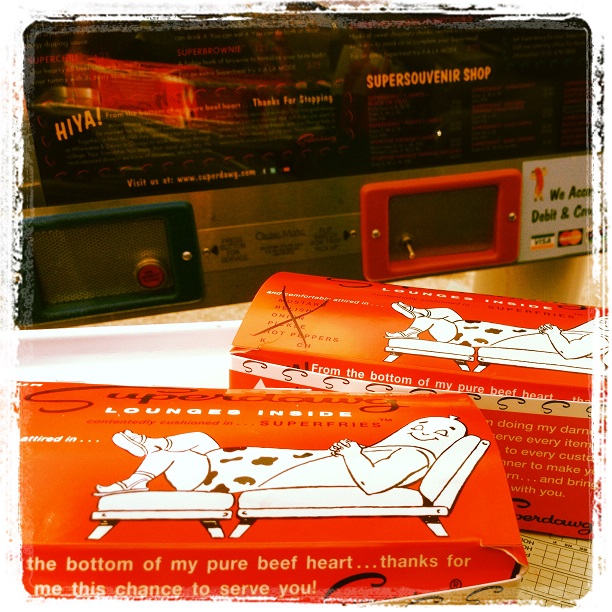
We all know what happens next: the Pentagon gets hit, another flight crashes in Pennsylvania, and, eventually, the towers fell.  We went to a pretty deserted Superdawg for lunch that day, listening to the radio for updates the entire time.  I remember the eerie drive to the gym after work, as people were as polite as they’ve even been on the roads.

The legacy of that day is messy.  Two long, ill-advised wars followed.  The nation united in a way that it is unable, or unwilling, to do today, as the COVID pandemic, our biggest tragedy since the 9/11 attacks, continues to rage as the right battles against both masks and vaccinations.

It’s a day that, for a little while, unified the country, but at great cost.  A day we would all like to forget.  A day we never will.

iTunes Top 200 Artists: #9

It’s been 4 years since we last counted down the Top 200 artists in my iTunes library. Since my iTunes stats are still intact, across multiple PCs, iPods, iPads, and iPhones, I figured it was time to take another look at the artists that have entertained me the most based on number of plays from late 2007 through January 1, 2021.

Widely known for his stand-up performances, the sketch comedy series Mr. Show, and his role as Tobias Fünke in Arrested Development, David Cross checks in today, at #9 as we continue with the top 10.  Cross began performing stand up comedy at 17, eventually becoming part of the Boston comedy scene after dropping out of Emerson College.

#9: David Cross
iTunes stats: 567 plays
Previous ranking: #11

Funnyman David Cross saw an 86% increase to his total number of listens, thanks in part to the addition of a new stand-up album, which allowed him to move up two spots on the rankings.  Encompassing 52 tracks from 4 different comedy albums, he is averaging just about 11 listens per track.  The first one, Shut Up, You Fucking Baby!, was released in 2002 and covered the post-9/11 world that we found ourselves in.  The most recent, …America…Great…, came out in 2016, and looked at the world that gave us Republican presidential candidate Donald Trump.

200 Things To Do In Illinois – Superdawg

Illinois celebrated its bicentennial as a state in December of 2018.  To celebrate, the Chicago Tribune published the Bicentennial Bucket List: 200 Things To Do In Illinois, celebrating the best the state has to offer in history, food, architecture, culture, sports, nature, drink, and oddities.  With the state still shut down due to the corona virus outbreak, I figured this was the second-best time to look through this collection and cover the ones I’ve done/eaten/seen.

We kick things off with one of the entries from the Food category: Superdawg, from Chicago, IL.

A Chicago-style hot dog with all the trimmings comes with a heaping side of nostalgia at Norwood Park’s 70-year-old Superdawg Drive-In.  No need to leave the car; place your order via the intercom and wait for a server to emerge with your order in a retro cardboard box filled with stubby crinkle-cut fries.

Another north side tradition that I was unfamiliar with growing up, but was introduced to after starting to work up north in 1997.  I don’t remember the first time I went to Superdawg, but my most memorable trip would have been on September 11, 2001.  There weren’t many cars in the lot that day, but it was a nice opportunity to catch up on the radio news of the events of the morning.

It’s been a few years since I’ve been down to the original location, thanks to the Wheeling location opening in 2010.  It may be worth a trip, once this whole shelter-in-place business is over with.

Ballpark Tour: White Sox

Opening day was supposed to be less than a week away, so it is time to wrap up our tour of all of the baseball stadiums I’ve been to over the years with the one I’ve been to the most: the homes of the Chicago White Sox.  Between the two stadiums that have been located at the corners of 35th and Shields, I’ve seen at least 542 games, all but one of which have involved the White Sox.  So, without further ado, let’s take a deeper look at my history with Comiskey Park and Guaranteed Rate Field.
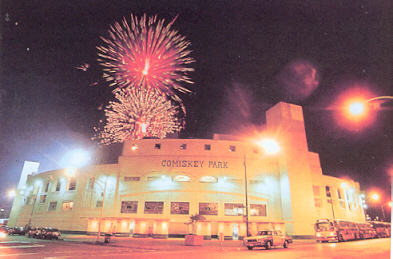
Stadium Name: Comiskey Park

Years in Service: 1910 – 1990

Visits: 12 (that I’m aware of)

Comiskey Park, the so-called Baseball Palace of the World, was the home of the White Sox from 1910 through the 1990 season.  Built on a former city dump at the corner of 35th Street and Shields Avenue, the stadium opened on July 1, 1910, as the White Sox lost to the St. Louis Browns 2-0.  The final game for the old ballyard occurred on September 30, 1990, a 2-1 victory over the Mariners.

Comiskey Park was the host for 4 World Series, including 3 in a row from 1917-1919.  The White Sox won the World Series in 1917 against the New York Giants.  The Cubs, looking for a larger seating capacity, moved their home games in the 1918 series against the Red Sox to Comiskey Park.  The 1919 World Series, of course, was the Black Sox scandal, where the White Sox threw the series against the Reds.  The White Sox returned to the World Series 40 years later in 1959, but fell to the Dodgers.  The final post-season games to be played in Comiskey Park were games 3 and 4 of the 1983 ALCS, which the White Sox lost to the Baltimore Orioles.

Comiskey Park was also the host to 3 All-Star games.  The first All-Star game, in 1933, was held in conjunction with Century of Progress Exposition being held on Chicago’s lakefront.  The event returned to Chicago’s south side in 1950 and the final All-Star game at Comiskey Park was in 1983, the 50th anniversary of the first game.  Comiskey Park was also the frequent home of the Negro League East-West All-Star Game from 1933 to 1960.

Looking back, I’ve been able to piece together evidence of 12 games that I attended at Comiskey Park, either from pictures, stadium giveaways, or specific memories.  I know there are more, but I have not been able to pinpoint exact games as of yet.  The most memorable game I can remember would be the final night game, on September 29, 1990, where, after the game, the lights were symbolically turned off for the final time.

Stadium Name: Comiskey Park II/US Cellular Field/Guaranteed Rate Field

Years in Service: 1991 – Present

Visits: 530

On the evening of June 30, 1988, with the clock literally stopped, the Illinois legislature passed a bill that provided the financing for a new stadium for the White Sox, stopping them from moving to St. Petersburg, Florida.  2 and a half years later, on April 18, 1991, Comiskey Park II opened, the first new major facility built in Chicago since the erection of the Chicago Stadium in 1929.  Sadly, the White Sox were embarrassed by the Tigers, losing 16-0 in the opening of their new park.

Unfortunately for the White Sox, the new Comiskey Park was the last stadium to be built prior to the wave of retro ballparks that started with the opening of Camden Yards the following year.  Because of this, there have been numerous renovations to the park, starting in 2001 with the addition of nearly 2000 seats and the relocation of the bullpens.  More extensive renovations began in 2003 in preparation for that season’s All Star Game and using the money generated from selling the naming rights to US Cellular, and continued through 2007, when the replacement of the blue seats with green seats was completed.  Less extensive renovations have occurred since, replacing the different video boards and creating premium seating areas.

The post-season came to the new Comiskey Park for the first time in 1993, as the White Sox battled the Blue Jays in the ALCS.  The stadium hosted its first World Series games in 2005, the first to be played in the city of Chicago since 1959, as the White Sox went on to sweep the Houston Astros and win their first World Series since 1917.

I attended my first game at the new Comiskey Park on April 20, 1991, the second game in the stadium’s history.  Since then, I’ve been to 529 other games at the stadium, the majority coming from 2005 on, when I became a season ticket holder.  I went to both games of the 2000 ALDS, which the White Sox lost to the Mariners, both games of the 2005 ALDS, which the White Sox won against the Red Sox, both games of the 2005 ALCS, which the White Sox split against the Angels, and game 2 of the 2005 World Series.  I attended game 163 of the 2008 season to break the tie between the White Sox and the Twins. and then the two ALDS games against the Rays, the first time I saw the White Sox actually end a post-season series, either in victory or defeat.

Notable regular season games I’ve seen at what is now known as Guaranteed Rate Field include the September 18, 2001 game against the Yankees as baseball returned following the attacks of 9/11, the April 16, 2005 game where Mark Buehrle defeated the Mariners in 1 hour and 39 minutes, the April 2, 2006 season opener against the Indians when the World Series championship banner was raised, the April 4, 2006 game where the players received their World Series rings, and the September 16, 2007 game where Jim Thome hit his 500th career home run against the Angels.  Not to mention a streak of 19 consecutive home openers.

Book 27 (of 52) – Doxology

Doxology – Nell Zink

Nell Zink’s fifth novel, Doxology, is basically two inter-connected stories with a tragedy separating them.  The first half is the tale of a punk adjacent couple and their friend who somehow becomes a pop sensation.  When the World Trade Center is attacked on 9/11, the couple bring their daughter to Washington DC, leaving her with her grandparents, and the story follows her life, through high school, college, and the 2016 Presidential campaign, which leaves her pregnant and, in a twist of fate, headed back to New York and her parents.

I picked this book up after seeing a review in the Chicago Tribune calling it the “Gen-X novel of the year.”  I don’t know if I’m willing to go that far, but I enjoyed the work.  The first half more than the second, as the story of Pam and Daniel, and how the attacks of 9/11 changed their world, resonated a little more than the coming of age of Flora, who wants to save the world and works for the Jill Stein campaign.  I haven’t come into contact with Zink’s work before this, so I may keep a look out and see what else she has to offer.


Book 20 (of 52) – The Daily Show: An Oral History

The Daily Show (The Book): An Oral History – Chris Smith

On December 17, 1998, Craig Kilbon signed off from The Daily Show for the last time.  The following January, a new host, looking to bounce back after a failed late night talk show earlier in his career, took over.  16 years later, Jon Stewart said goodbye, changing the face of the show, and late night television, forever.  For this history of Stewart’s time with the show, Chris Smith interviews Stewart, the correspondents, writers, producers, and guests that turned a late night spoof in to an Emmy-award winning juggernaut that is the longest running program in Comedy Central’s history.

The history of the show covers all of the big news stories of the 21st century, from the disputed presidential election in 2000, to the 9/11 attacks, to the election of Barack Obama in 2008 and the rise of Donald Trump as a serious(?) candidate in 2015.  Smith gets stories from all of the contributors over the years, minus, of course, Kilborn.

I was a fan of the show when it first premiered with Kilborn.  When Stewart took over, I was just out of college and had lost track of the show, but eventually came back to it for the last few years.  The spirit of the show lives on, with John Oliver and Samantha Bee doing similar shows on a weekly basis and, of course, Trevor Noah continuing the flagship.


2016: The Year In Movies

Movie_Reel_22

2016 saw a bit of an uptick in movie watching for me, with the vacation over the past 3 weeks of December helping to greatly boost my total to its highest level since 2011.  I managed to watch 88 movies last year, 19 more than last year, though my fifth consecutive year under 100.  Again, many things contributed to this, chiefly the insane amount of TV I’ve been watching, the greater effort made towards going out for walks, and the awful amount of time I spend either at work or getting to and from work.

Here’s a look back at the first 50 movies I did manage to watch last year and what recollection, if any, I have of them. The films are listed in the order I saw them.

RU Awake? (2015)
A short film starring the lovely and talented Molly C. Quinn.

Extremely Loud & Incredibly Close (2011)
A young kid tries to solve a mystery connected to his father who died in the 9/11 attacks.

The Pact (2012)
A bad horror film starring TV’s Caity Lotz.

Tell Tale (2010)
A short that I have no real recollection of.

Let’s Be Cops (2014)
Two Purdue alums find that impersonating cops is better than their normal lives.

John Wick (2014)
Keanu Reeves returns in a surprisingly good turn about a mourning hitman who returns to work after his former boss turns on him.

If I Stay (2014)
A teenage girl faces a choice to live or die after a car accident puts her in a coma.

Two Night Stand (2014)
A snow storm forces a hookup to last much longer than either participant anticipated.

Hot Pursuit (2015)
Reese Witherspoon is a no-nonsense cop who learns to bend the rules while trying to arrest Sofia Vergara.

Backcountry (2015)
A city couple gets lost in the woods while camping. Continue reading →

A Quarter Century Of Memories

To celebrate the 25th anniversary of US Cellular Field, the White Sox are asking fans to vote for the top moment in US Cellular Field history, broken down into 4 brackets: Postseason Perks, Memorable Moments, Records and Milestones, and Honors and More.  Today, we shall take a look at the first 2 groupings of these moments and decide which is the best.

postseason_peaksThe Postseason Peaks region boasts 6 entries from or related to the 2005 World Series champions plus another 2 from the team’s last division winner in 2008.  The disappointing post-season appearances from 1993 and 2000 are left out altogether.  As an added plus, I attended all of the games in this region.

The first match-up is a no-brainer, with Scott Podsednik’s walk-off home run to win Game 2 of the World Series pitted against Alexei Ramirez’s grand slam against the Tigers to force game 163 against the Twins for the division crown.  With all due respect to Alexei, Podsednik takes this with ease.

The next battle is between the aforementioned game 163, the Blackout Game that sent the White Sox to the playoffs, against Joe Crede’s walk-off single against the Angels in Game 2 of the 2005 ALCS.  While the Blackout was great fun, it was just a regular season game.  Crede’s hit, following the A.J. Pierzynski drama, would have blown the roof off the place, if it had one.

Next, we have the unfair fight of Paul Konerko’s grand slam in Game 2 of the 2005 World Series versus Tadahito Iguchi’s go-ahead home run against the Red Sox in Game 2 of the ALDS.  No real contest here.

The final match-up is again from Game 2 of the 2005 ALCS, when Pierzynski struck out and somehow managed to get the umpires to let him take first base, going up against the second game of the 2006 season, when the White Sox received their World Series championship rings.  While the ring ceremony was indeed cool, it can’t beat the game action of one of the smartest players in baseball using his wits to outduel the opponent.

memorable_momentsWe now turn our attention to the Memorable Moments region, a more varied group of games, only 5 of which I managed to attend.

We begin with the second to last day of the 2014 season, when the White Sox honored their retiring captain with a special ceremony, doing battle against the July 7, 1999 contest against the Royals where Chris Singleton hit for the cycle.  Once again, I’ll have to give the nod to Konerko.

The next match-up pits Frank Thomas, hitting the first White Sox home run at the then-New Comiskey Park on April 22, 1991 against Bo Jackson’s home run in the division-clinching game on September 27, 1993.  You can’t really go wrong with either of these, to be honest.

The next battle is between Mark Buerhle’s kick save followed by a flip between the legs which Paul Konerko barehanded for the putout on Opening Day 2010 and the 10 year reunion of the 2005 champions last summer.  I’ll give the nod to Buehrle.

The last match-up features the White Sox game against the Yankees on September 18, 2001, the first game after the tragedy of 9/11 versus Carlos Lee’s 10th inning walk-off grand slam off Courtney Duncan in the June 8, 2001 victory over the Cubs.  While Lee’s hit is obviously the better baseball moment, the meaning of the return to the field after the attack on New York and the Pentagon have a greater meaning overall.

Coming out of these brackets, you have either Konerko or Podsednik’s home run from Game 2 of the World Series going up against Buehrle’s play against the Indians on Opening Day 2010.  We’ll check out the remaining 2 regions next week.

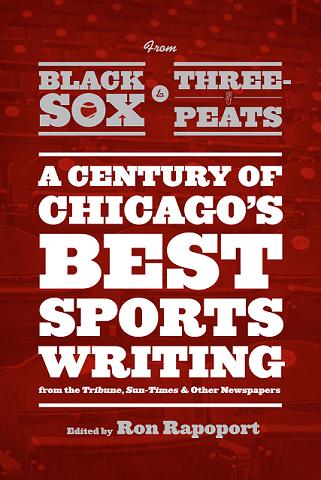
Book 17 (of 52) – From Black Sox To Threepeats

From Black Sox to Threepeats - Ron Rapoport

From Black Sox to Threepeats – Ron Rapoport

Former Sun-Times columnist Ron Rapoport put together this collection of the best writing in the Chicago sports pages over the last century and more.  From the sole crosstown World Series between the White Sox and Cubs in 1906 through the White Sox World Series championship of 2005, this collection covers all of the highs and lows in Chicago sports from all of the local newspapers.  There were the over the top champions of the 1985 Bears, the thrills of Michael Jordan and Scottie Pippen bringing home 6 titles in the 90s, and the (mostly) heartbreak of the local baseball teams who usually come up just a little (or a whole heck of a lot) short.

Alongside the traditional stories detailing the local teams, there are also those columns fighting against the segregation that followed black players to spring training, the bombings of both Oklahoma City and the Twin Towers, the murder of Israeli athletes at the 1972 Olympics in Munich, and many other stories of local, national, and international scope.

Fans of the local sports teams will likely enjoy this book, and may have even read some of the stories when they originally appeared in the newspaper.  It gives a nice historical look at the best writing the papers had to offer, as well as the historical highs and lows of our favorite teams.