With spring training wrapping up this week and Opening Day just days away, we wind down our tour of all of the different baseball stadiums I’ve been to over the years. This week, we have our penultimate entry from the north side of Chicago. So, without further ado, let’s take a deeper look at my history with Wrigley Field.

Stadium Name: Wrigley Field
Years in Service: 1914 – Present
Visits: 388 (that I’m aware of)
Weeghman Park, home of the Chicago Chifeds of the Federal League, opened on April 23, 1914. When the Federal League folded in December of 1915, team owner Charles Weeghman was allowed to buy the rival Chicago Cubs and immediately moved them from the dilapidated West Side Park and into his stadium for the 1916 season. The Cubs played their first game at Weeghman Park on April 20, 1916, besting the Cincinnati Reds 7–6 in eleven innings.
That year, Weeghman sold a minority interest in the Cubs to chewing gum magnate William Wrigley. As Weeghman’s financial fortunes started to decline, Wrigley acquired an increasing number of shares in the club and took on a growing role in the team’s affairs until November 1918, when Weeghman gave up his remaining interest to Wrigley, resigned as president, and left baseball for good. Wrigley would acquire complete control of the Cubs by 1921, and, prior to the start of the 1927 season, the park was officially renamed Wrigley Field.
William’s son, Philip K. Wrigley, had intended to install lights at Wrigley Field prior to the 1942 season. However, when the Japanese attacked Pearl Harbor in December of 1941 and the US entered World War II, Wrigley donated the materials for the lights to the war effort. The Cubs eventually became the only team without lights, continuing to play day games at home exclusively until 1988, when lights were finally installed. To this day, the Cubs are still limited in the number of night games they may schedule per season, though that number has increased significantly since the late 80s.
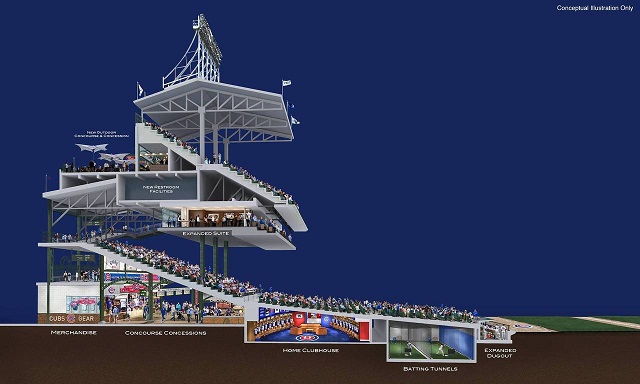
As Wrigley Field continues in its second century, renovations to the stadium to make it economically viable for the 21st century are nearly complete. Expanded clubhouses and new training facilities have been put in place for the players, both home and away. New scoreboards, rebuilt bleachers, new clubs, and expanded concourses have been put in place for the fans.
I’ve managed to identify 388 games I’ve attended at Wrigley Field, most of them since 2002, when I became a season ticket holder. After years of futility with the occasional bit of success tossed in, the Cubs saw sustained success for the first time in decades to close out the 2010s but have struggled to repeat it since.