Book 28 (of 52) – The Storyteller

The Storyteller: Tales of Life and Music – Dave Grohl

When the world shut down in March of 2020 due to the corona virus, Dave Grohl put down his guitar and picked up a pen.  His stories cover the gamut of his life, from his childhood in Virginia, to his fateful trip to Chicago where a concert at the Cubby Bear introduced him to the world of punk rock, from joining local-punk legends Scream right out of high school to hooking up with an up-and-coming Nirvana after Scream imploded to creating the Foo Fighters after the death of Kurt Cobain, from going on epic concert tours to planning tour dates around his children’s school dances.

Dave Grohl has been a favorite for years, from his time with Nirvana through his years as the leader of the Foo Fighters.  The Storyteller: Tales of Life and Music does a great job of explaining where his love of music came from and how he has used that to build a pretty great and surreal life for himself and his family.  If you are looking for a tell-all book about the inner demons of Kurt Cobain or a listing of all the celebrities he slept with, this is not the book for you.  Instead, it is a journey through life with music, and the love of music, as its throughline.  Dave Grohl is considered to be one of the nicest people in rock and roll and, reading his stories, you can see why.
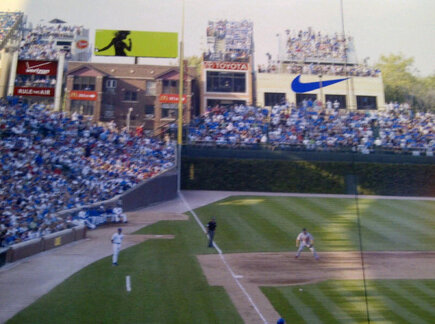


Rooftop Problems

rooftopsWhat started as a quaint tradition brought about by Wrigley Field’s unique neighborhood setting has turned in to a bit of a problem for the Cubs.  The rooftop owners, fearful that the Cub’s recently announced renovation plans would kill their golden goose by blocking the views from their buildings, held a press conference on Friday to tout their own plans that would negate the need for the Cubs to put additional advertising in the outfield above the bleachers.  Their plan calls for selling advertising on the buildings surrounding Wrigley Field and letting the Cubs and the city split the revenues.  Unfortunately, it seems they put as much thought into their plan as they did in their mocked-up examples.

The Cubs, after having one of their representatives removed from the press conference, turned down the offer, pointing out that the revenue generated by ads on the buildings surrounding Wrigley Field would be significantly lower than ads that were inside the stadium, and thus more likely to be featured on television.  This kind of logic is likely lost on the rooftop owners, who have always ignored the fact that they have been selling the Cubs product for years and seem to think that their businesses have the right to exist without offering much in the way of a product.  In fact, it is this kind of delusional thinking that led George Loukas, owner of three rooftops, to opine that the Cubs “might not have been here” without local bars Murphy’s and Cubby Bear, another Loukas holding.

The main leverage the rooftop owners have had over the years is that the Cubs were looking for public financing in their attempts to renovate Wrigley Field.  Things are different this time, though, as the team is willing to finance the work themselves as long as the city eases some of the landmark restrictions that would prevent the work from moving forward.  They know that their days of profiting wildly while offering up someone else’s product are numbered, and their ploys to remain relevant look just as desperate as they truly are.