Ballpark Tour: Brewers

Spring training is in full swing and opening day is about a month away, as we continue our tour of all of the baseball stadiums I’ve been to over the years. The closest city, outside of Chicago, for baseball, contains the homes of the Milwaukee Brewers. Between the two stadiums that have been located in the heart of cheeseland, I’ve seen 8 games. So, without further ado, let’s take a deeper look at my history with County Stadium and Miller Park.

Stadium Name: County Stadium

Years in Service: 1953 – 2000

Visits: 1

Milwaukee County Stadium was built with the intention of drawing a major league baseball team to Milwaukee, and it worked quicker than anybody would have expected, as the Braves announced they would be moving from Boston 3 weeks before the stadium, and the 1953 season, opened.  The Braves would call Milwaukee home for the next 13 seasons before leaving for Atlanta for the 1966 season.

During the 1968 and 1969 seasons, the struggling Chicago White Sox wound up playing 20 home games at County Stadium in an effort to keep the baseball fandom alive in Milwaukee.  In 1970, local businessman Bud Selig purchased the expansion Seattle Pilots out of bankruptcy court and moved them to Milwaukee and rechristened them the Brewers.  The Brewers would call County Stadium home until 2000, when they would move next door in to the newly built Miller Park.

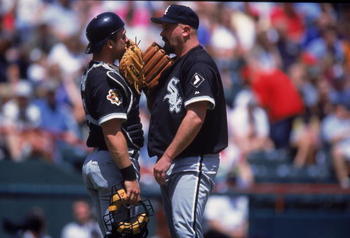
I made one trip up to County Stadium for a White Sox/Brewers tilt on July 18, 1993.  The White Sox were victorious thank to a 2-run single by Bo Jackson in the 9th inning. I remember sitting out in the bleachers, but, beyond that, have no particular memory of the stadium or what amenities, if any, it offered.

Stadium Name: Miller Park/American Family Field

Years in Service: 2003 – Present

Visits: 7

The Brewers broke ground on a new stadium on November 9, 1996, in a parking lot behind County Stadium, with plans to open the park for the 2000 season.  Construction was delayed in 1999 after a crane collapsed while lifting a 400-ton roof section, killing three workers.  This caused the opening to be delayed for a year, and the new Miller Park did not open until April 6, 2001.  In 2007, the stadium hosted an Indians series against the Angels after snowstorms in Cleveland forced the cancellation of the previous series against the Mariners.  The Astros called Miller Park home for two games in 2008 when Hurricane Ike stormed through Houston.  Prior to the 2021 season, the park was renamed American Family Field

I made the first of my seven visits to Miller Park during the inaugural season of 2001.  That May 7th contest had the Cubs squeaking out a 7-6 victory against the hosting Brewers.  My most recent trip up north was this past summer, to once again see the Cubs battle (or destroy) the Brewers.  Miller Park was a vastly superior replacement over County Stadium, and I’ve enjoyed each of my subsequent trips up to Milwaukee to see the local ballclubs.
Ballpark Tour: Brewers

Spring training is in full swing and opening day is about a month away, as we continue our tour of all of the baseball stadiums I’ve been to over the years. The closest city, outside of Chicago, for baseball, contains the homes of the Milwaukee Brewers. Between the two stadiums that have been located in the heart of cheeseland, I’ve seen 8 games. So, without further ado, let’s take a deeper look at my history with County Stadium and Miller Park.

Stadium Name: County Stadium

Years in Service: 1953 – 2000

Visits: 1

Milwaukee County Stadium was built with the intention of drawing a major league baseball team to Milwaukee, and it worked quicker than anybody would have expected, as the Braves announced they would be moving from Boston 3 weeks before the stadium, and the 1953 season, opened.  The Braves would call Milwaukee home for the next 13 seasons before leaving for Atlanta for the 1966 season.

During the 1968 and 1969 seasons, the struggling Chicago White Sox wound up playing 20 home games at County Stadium in an effort to keep the baseball fandom alive in Milwaukee.  In 1970, local businessman Bud Selig purchased the expansion Seattle Pilots out of bankruptcy court and moved them to Milwaukee and rechristened them the Brewers.  The Brewers would call County Stadium home until 2000, when they would move next door in to the newly built Miller Park.

I made one trip up to County Stadium for a White Sox/Brewers tilt on July 18, 1993.  The White Sox were victorious thank to a 2-run single by Bo Jackson in the 9th inning. I remember sitting out in the bleachers, but, beyond that, have no particular memory of the stadium or what amenities, if any, it offered.

Stadium Name: Miller Park

Years in Service: 2003 – Present

Visits: 7

The Brewers broke ground on a new stadium on November 9, 1996, in a parking lot behind County Stadium, with plans to open the park for the 2000 season.  Construction was delayed in 1999 after a crane collapsed while lifting a 400-ton roof section, killing three workers.  This caused the opening to be delayed for a year, and the new Miller Park did not open until April 6, 2001.  In 2007, the stadium hosted an Indians series against the Angels after snow storms in Cleveland forced the cancellation of the previous series against the Mariners.  The Astros called Miller Park home for two games in 2008 when Hurricane Ike stormed through Houston.

I made the first of my seven visits to Miller Park during the inaugural season of 2001.  That May 7th contest had the Cubs squeaking out a 7-6 victory against the hosting Brewers.  My most recent trip up north was this past summer, to once again see the Cubs battle (or destroy) the Brewers.  Miller Park was a vastly superior replacement over County Stadium, and I’ve enjoyed each of my subsequent trips up to Milwaukee to see the local ballclubs.

Labor Peace

Last week, Major League Baseball and the Player’s Association avoided a lockout and agreed to a new collective bargaining agreement, ensuring labor peace through the 2021 season.  The big changes involve free agent compensation and a few things related to the Mid-Summer Classic.

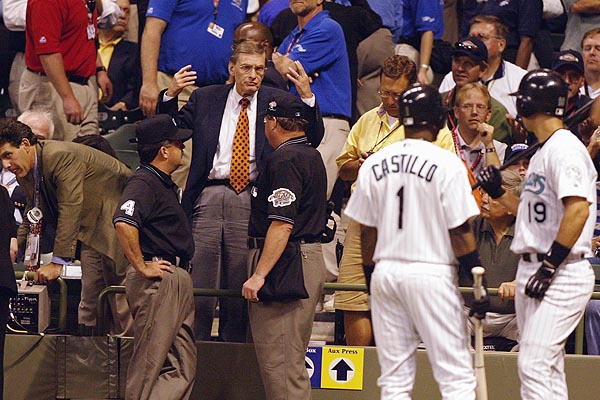
Let’s start with the All Star Game.  After the fiasco in Milwaukee in 2002, where the game ended in a tie after both teams ran out of pitchers, Commissioner Bud Selig decided that, going forward, the winning team would earn home field advantage for their participant in the World Series.  The new labor agreement changes that, giving home field advantage to the World Series participant with the best regular season record.  Given the scheduling disparities between the leagues, this is not a perfect solution, but is a step in the right direction.

The other ASG-related change is the removal of roster slots available for the manager’s discretion.  The Commissioner’s office will now fill out the remaining spots after the fan and player votes.  Meaning, of course, that the days of the manager bringing loads of his own players, deserving or not, is over.

Changes affecting the regular season include a new 10 day disabled list, replacing the current 15 day list.  Starting in 2018, the schedule will be expanded to provide teams with four additional off days, meaning the season will now begin in the middle of the week.

On the revenue sharing side of things, the A’s will no longer be treated as a small market team, meaning they will lose the $30+ million they get today.

Finally, free agents who have been made a qualifying offer will no longer cost a first round draft pick.  The draft pick compensation will depend on which team makes the signing and how much the contract is worth.  International bonuses have been capped between $4.75 million and $5.75 million, depending on where the team falls in the competitive balance pools.

#63 – Mike Sirotka

sirotka

Name: Mike Sirotka

Rank: 63

Position: P

Years With White Sox: 1995-2000

Mike Sirotka joined the White Sox organization after being selected in the 15th round of the 1993 draft.  He made his major league debut 2 years later on July 19, 1995, going 6 2/3 innings and giving up 11 hits while picking up the loss against the Red Sox at Comiskey Park.  He made 5 additional starts in the big leagues, finishing the year 1-2 with a respectable 4.19 ERA.

1996 saw Sirotka splitting time between Chicago and Triple A Nashville.  His time in the big leagues did not go well, as he worked mostly out of the bullpen and finished the year with 7.18 ERA in 15 appearances.

Sirotka again split time between Triple A and Chicago in 1997, but saw markedly better results.  In 7 games with the White Sox, he went 3-0 with a sparkling 2.25 ERA.

Sirotka earned a spot in the White Sox rotation coming out of spring training in 1998.  He started 33 games, going 14-15 with an elevated 5.06 ERA.

1999 saw improvement in Sirotka’s numbers, as he lowered his ERA by over a run to 4.00 while finishing the year with an 11-13 record.

Sirotka got off to an inauspicious start in 2000, giving up a hit to country singer Garth Brooks, who was playing with the Padres, in spring training.  Once the games counted for real, though, Sirotka put up the best season of his young career, going 15-10 with a 3.79 ERA as the White Sox won their first AL Central crown.  Sirotka started, and lost, game 2 of the ALDS against the Mariners at Comiskey Park.

The following January, Sirotka, along with Mike Williams, Kevin Beirne, and Brian Simmons, was traded to the Blue Jays for David Wells and Matt DeWitt.  When Sirotka was found to have a shoulder injury, Blue Jays GM Gord Ash accused Kenny Williams of withholding information and labeling Sirotka as “damaged goods”.  Ash appealed to Commissioner Bud Selig, who refused to overturn the trade.  Sirotka never pitched in the major leagues again.

Sirotka’s numbers in a White Sox uniform, both for games I attended and overall, were:

Continue reading →

#279 – David Wells

David Wells #33, Josh Paul #27

Name: David Wells

Rank: 279

Position: P

Year With White Sox: 2001

After the White Sox surprised everyone to win the AL Central title in 2000, new general manager Kenny Williams thought the team was an ace pitcher away from winning the World Series.  To that end, he struck a deal with the Blue Jays to acquire David Wells, along with Matt DeWitt, for Mike Williams, Kevin Beirne, Brian Simmons, and Mike Sirotka.  Wells’ White Sox career began under a cloud of controversy when Sirotka was determined to be injured and ultimately never pitched for the Blue Jays, or anyone else, again.  The Blue Jays asked for the trade to be overturned, but Commissioner Bud Selig ruled for the White Sox.

Things did not work out so well for the White Sox either.  The team, and Wells, struggled and were unable to repeat their performance from the year before.  Wells went 5-7 with a 4.47 ERA in 16 starts before being shut down with back problems.

After the season, Wells became a free agent, ending his brief White Sox career.

Wells’ numbers in a White Sox uniform, both for games I attended and overall, were:

Continue reading →

Ballpark Tour: County Stadium

Stadium Name: County Stadium

Location: Milwaukee

Home Team: Braves, White Sox, Brewers

Years in Service: 1953 – 2000

Visits: 1

Milwaukee County Stadium was built with the intention of drawing a major league baseball team to Milwaukee, and it worked quicker than anybody would have expected, as the Braves announced they would be moving from Boston 3 weeks before the stadium, and the 1953 season, opened.  The Braves would call Milwaukee home for the next 13 seasons before leaving for Atlanta for the 1966 season.

Across the 1968 and 1969 seasons, the struggling Chicago White Sox wound up playing 20 home games at County Stadium in an effort to keep the baseball fandom alive in Milwaukee.  In 1970, local businessman Bud Selig purchased the expansion Seattle Pilots out of bankruptcy court and moved them to Milwaukee and rechristened them the Brewers.  The Brewers would call County Stadium home until 2000, when they would move next door in to the newly built Miller Park.

I made one trip up to County Stadium for a White Sox/Brewers tilt on July 18, 1993.  The White Sox were victorious thank to a 2-run single by Bo Jackson in the 9th inning. I remember sitting out in the bleachers, but, beyond that, have no particular memory of the stadium or what amenities, if any, it offered.