Ballpark Tour: Rangers

With a little more than a month until the start of the 2025 baseball season, we continue our tour of all of the different baseball stadiums I’ve been to over the years. This week, we look at the Texas Rangers, a team you would think I would have visited more often due to its proximity to my father. So, without further ado, let’s take a deeper look at my history with the building originally named as the Ballpark in Arlington, the now former home of the Rangers.

Stadium Name: The Ballpark In Arlington/Ameriquest Field/Rangers Ballpark in Arlington/Globe Life Park

Years in Service: 1994 – 2019

Visits: 7

After spending their entire history at nearby Arlington Stadium, the Texas Rangers broke ground on their new stadium on April 2, 1992, and held their first game there nearly two years later, on April 11, 1994, against the Brewers.  The stadium was known by the somewhat clunky moniker of The Ballpark in Arlington until May of 2004, when Ameriquest bought the naming rights.  That deal ended in March of 2007, and the stadium was renamed again, this time to Rangers Ballpark in Arlington.  Corporate money came calling again in 2014, when Globe Life and Accident Insurance Company purchased the naming rights.  The stadium also features a Rangers Hall of Fame, which includes historical artifacts from the team along with visiting collections from Cooperstown.

I made my first trip to the Ballpark on May 22, 1998, to see the Rangers defeat the Royals during a visit to the Dallas area to see my dad.  I returned in 2001 for two games, against the Tigers and two days later against the White Sox.  In 2005, on my last trip to the area to date, I took in the entire four game series between the Rangers and the eventual World Series champion White Sox.

With Michael attending college in Texas, I should be able to add their new stadium, which opened in 2020, to my collection sooner rather than later.

2025 Tickets – Southside Edition

This was a much more exciting day back when the White Sox delivered physical tickets for non-premium season ticket holders, but season tickets have been uploaded to the MLB Ballpark app.  While this does make the actual game day use of the tickets more convenient, I can’t help but miss the old days of paper tickets and getting a big, fancy box filled with tickets in the mail.

All Time Batting Leaders – Through 2024

Last week, we took our annual look at the all-time leaders in pitching stats for the now 1,110 games I’ve attended (and identified) between 1984 and 2024.  With the first full squad spring training workout in the books, it’s time to move over to the other side of the ball and take a look at the offensive stat leaders for those games, starting with our first category:

Home Runs

Name Total
Paul Konerko 93
Jose Abreu 49
Sammy Sosa 42
Aramis Ramirez 41
Derrek Lee 40
Jermaine Dye 40

Hits

Name Total
Paul Konerko 366
Alexei Ramirez 300
Jose Abreu 273
Derrek Lee 255
A.J. Pierzynski 239

Runs

Name Total
Paul Konerko 200
Derrek Lee 140
Alexei Ramirez 134
Jose Abreu 129
Aramis Ramirez 120

RBI

Name Total
Paul Konerko 235
Jose Abreu 159
Aramis Ramirez 158
Alexei Ramirez 140
Derrek Lee 134

Doubles Continue reading →

Ballpark Tour: Padres

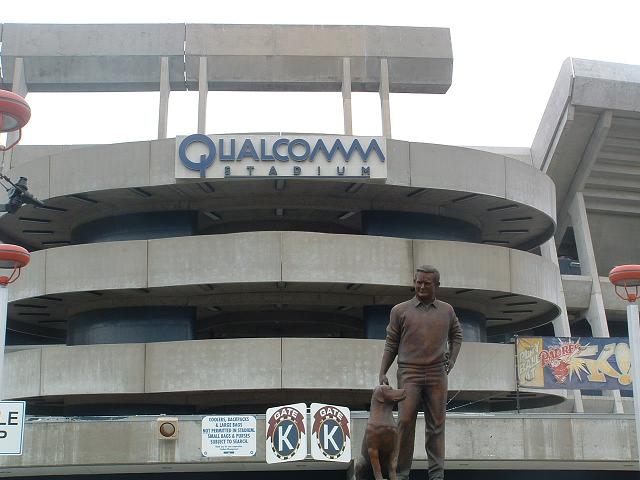
As pitchers and catchers start reporting across Arizona and Florida, we continue our tour of all of the baseball stadiums I’ve been to over the years. This week, we travel to southern California for the baseball homes of the San Diego Padres. Between the two stadiums that have been located in the paradise that is San Diego, I’ve seen four games. So, without further ado, let’s take a deeper look at my history with Qualcomm Stadium and PETCO Park.

Stadium Name: Jack Murphy Stadium/Qualcomm Stadium

Years in Service: 1969 – 2003

Visits: 1

San Diego Stadium opened on August 20, 1967, as the home of the AFL’s Chargers and opened for baseball the following spring for the final season of the minor league San Diego Padres.  The following season, San Diego’s expansion team, also named the Padres, moved in and stayed as the main tenants until the end of the 2003 season.  The stadium was renamed in 1980 for local sportswriter Jack Murphy, who had championed support for the building of the stadium, after he passed away.  That name stuck until 1997, when the naming rights were sold to technology company Qualcomm.

In 2003, I was in San Diego for what, to date, was my 3rd and final Comic Con.  On the afternoon of July 17, I skipped out on the con and took the trolley out to Mission Valley to take in the day’s contest between the Padres and the Diamondbacks.  I don’t remember much about the game, which the Diamondbacks won handedly 9-1, other than Curt Schilling taking the bump for the Dbacks.  The park, one of the last remaining cookie cutter stadiums that popped up in the late 60s and early 70s and designed to house both baseball and football teams while doing service to neither, did not really register one way or the other and holds no particular space in my memory.  I do seem to remember a giant outdoor escalator, but that might have been Candlestick.

Stadium Name: PETCO Park

Years in Service: 2004 – Present

Visits: 3

After 35 seasons at the Murph, the Padres moved downtown in 2004 with the opening of PETCO Park.  The new stadium was initially supposed to open for the 2002 season, but legal battles and political tomfoolery delayed the project for two years.  The first event held at PETCO Park was an NCAA invitational tournament hosted by San Diego State University, whose head coach was former Padres great Tony Gwynn.  The Padres themselves christened the stadium on April 8 with a 10-inning victory over the Giants.

With the Cubs, coming off their surprising run towards the NL title in 2003, scheduled for a weekend series at the newly opened PETCO Park in the middle of May in 2004, a trip out to the coast was in order.  The Cubs swept the three-game series against the Padres, and a tremendous weekend was had.  The new park was a vast improvement over the old Jack Murphy.  I had a return trip planned in the spring of 2020, but COVID had other plans.

All Time Pitching Leaders – Through 2024

White Sox pitchers and catchers are scheduled to report to camp today, so that means it is time for our annual look at the pitching leaders in the now 1,110 games I’ve attended, and identified, between 1984 and 2024.  Very, very few changes from last year, with just the appearances leader board impacted.  So, without further ado, let’s get things started with our first category, the always popular:

Wins

Name Total
Mark Buehrle 31
Gavin Floyd 24
Carlos Zambrano 21
Chris Sale 21
John Danks 19

Losses

Name Total
Mark Buehrle 17
Jose Quintana 17
John Danks 16
Carlos Zambrano 15
Gavin Floyd 15

ERA (>= 35 IP)

Name Total
David Robertson 2.13
DJ Carrasco 2.20
Nate Jones Continue reading →

Ballpark Tour: Giants

With pitchers and catchers reporting within the week, is a little less than a month away as we continue our tour of all of the baseball stadiums I’ve been to over the years.  Today we travel west to the Bay area for the baseball homes of the San Francisco Giants.  Between the two stadiums that have been located in and around San Francisco, I’ve seen three games, all against the same opponent.  So, without further ado, let’s take a deeper look at my history with 3Com Park and Oracle Park.

Stadium Name: 3 Com Park

Years in Service: 1960 – 1999

Visits: 1

When the New York Giants moved west in 1958, the city of San Francisco began constructing a new ballpark for them, and Candlestick Park was born. The stadium opened in 1960 and was the home of the now-San Francisco Giants through the 1999 season. Along the way, the stadium has also played host to the Oakland Raiders, the San Francisco 49ers, dozens of commercials and movies, and, in 1965, the final commercial concert appearance by the Beatles.

In September of 1999, I headed out to the Bay Area to visit an old friend. One of the items on our agenda was to head out to Candlestick, which had been renamed 3Com Park by this point, to see a game before the Giants moved to their new home the following season. With only 13 home games left on the schedule, we set out to see the Giants take on the Phillies on September 2. The Giants, behind starter Joe Nathan, defeated the Phillies 3-2 on a cool autumn afternoon.

Stadium Name: AT&T Park/Oracle Park

Years in Service: 2000 – Present

Visits: 2

After flirting with a move to Tampa Bay, the Giants opened Pacific Bell Park in 2000 after 40 seasons at Candlestick Park. The ballpark was the first stadium built without public funds since the completion of Dodger Stadium in 1962. The stadium was renamed SBC Park in 2003 and then finally AT&T Park in 2006 thanks to the corporate upheaval in the telecommunications world. In April 2010, the stadium became the first MLB ballpark to receive LEED Silver Certification for Existing Buildings, Operations and Maintenance.

In May of 2008, I made my second trip out to Bay Area, this time to attend the Java One conference. The week started with the A’s in town while the Giants returned home for a weekend series, so I adjusted my schedule so that I could attend games at both stadiums. Friday night, after most of the techies had left town, I hopped on the bus down to AT&T Park to see the Giants, once again, take on the Phillies. I dropped some major coin for the best tickets in the house, which got me in a box between home plate and the Phillie dugout and a prime spot on the evening’s telecast. The Phillies, on their way to a World Series championship, defeated the Giants 7-4.

In August of 2018, I made my third trip to San Francisco, this time for a trip to one of our affiliates for talks about their entry into the broader corporate umbrella.  Wouldn’t you know it, but the Phillies were in town once again at the building now known as Oracle Park.  With Madison Bumgarner on the bump, the Giants shut down the Phillies as I took in the game a mere three rows behind the Giants’ dugout.

Ballpark Tour: Tigers

Spring training is right around the corner as we continue our tour of all of the baseball stadiums I’ve been to over the years. Today we travel northeast to Michigan for the baseball homes of the Detroit Tigers. Between the two stadiums that have been located in Motown, I’ve seen 3 games. So, without further ado, let’s take a deeper look at my history with Tiger Stadium and Comerica Park.

Stadium Name: Tiger Stadium

Years in Service: 1912 – 1999

Visits: 1

Tiger Stadium opened as Navin Field on April 20, 1912, the same date as Boston’s Fenway Park.  It would serve as the home of the Tigers until the final game on September 27, 1999, an 8-2 Tiger victory over the Royals.

My one and only trip to Tiger Stadium was during its final season, on August 2, 1999, when rookie Kip Wells made his major league debut for the White Sox, picking up the win in the victory against the Tigers.  The stadium reminded me of the old Comiskey Park, with the dark ramps and tunnels leading out to the glorious green of the field.

Stadium Name: Comerica Park

Years in Service: 2000 – Present

Visits: 2

After 87 seasons at Tiger Stadium, the Tigers opened their new stadium in 2000 on a snowy afternoon against the Mariners.  In contrast to Tiger Stadium, which had been considered one of the most hitter-friendly parks in baseball, Comerica Park is considered to be extremely friendly to pitchers.  After years of irrelevance, the new stadium was one step leading the Tigers back to contention, which they achieved in 2006, making the World Series and being in the hunt more often than not ever since.

The White Sox were 3.5 games behind the Twins for the AL Central lead heading into a Labor Day holiday series against the Tigers in 2010.  After they split the first 2 games of the series, I decided to head up to Detroit to take in the final two games, my first trip to Comerica Park.  I had booked a room at the Caesars hotel and casino in Windsor, so I drove up to Canada and checked in prior to the night’s game back in Detroit.  I booked a round trip on a bus back to the US which dropped me off near the park, where I took in the Tigers 5-1 victory.  The next afternoon, I drove back to Detroit and stopped for the afternoon’s series finale, which the Tigers once again won.

The stadium itself was a vast improvement over Tiger Stadium.  For the first game, I sat in the upper deck behind home plate and had a good view of the entire field.  For the second game, I was right behind the White Sox dugout, which, while a bit pricey, did provide another nice view.  The only disappointment, besides the play of the south siders, was the food.  Since the Tigers owner also owns Little Caesars pizza, that is the food that is available.  I remember making it through a few bites before leaving the pizza underneath my seat for whoever wanted it.

A New Class Of Imortals

With temperatures hovering around four degrees Tuesday night in the hamlet of Cooperstown, New York, the attention of the baseball world turns to summer of the past now that the votes have been tallied, and the 2025 Hall of Fame class is complete.  Ichiro Suzuki, CC Sabathia, and Billy Wagner join Dick Allen and Dave Parker, who were elected by the Veteran’s Committee last month, in obtaining baseball immortality.  Suzuki and Sabathia make it on their first try while Wagner made it in his final shot.

Just two others scored greater than 50% of the vote, led by Carlos Beltran, who came just short at 70.3% and seems likely to make it next year.  Andruw Jones rose to 66.2% with two more years to go.

On the local front, Manny Ramirez, who spent a little more than a month with the White Sox at the tail end of his career, saw a small increase in support, finishing with 34.3% of the vote thanks to his multiple PED suspensions.  Jimmy Rollins, who spent the final 41 games of his career on the south side, picked up 18% in his fourth go-around.  The disgraced Omar Vizquel, accused of both sexual abuse of an autistic teen and spousal abuse since being added to the ballot, stayed stagnant with 17.8%.    Mark Buehrle saw a small increase, going up to 11.4% in his fifth time on the ballot, living to fight another day.  Former Cubs Carlos González, Fernando Rodney, and Ben Zobrist nabbed a single vote between them.

Ten players will fall off the ballot after failing to score 5% of the vote.

As for the newest Hall of Famers, I’ve seen Suzuki play fifteen times, Sabathia eight times, and Wagner five times.  They will get their day in the sun on Sunday, July 27.

Ichiro Suzuki’s numbers in games I’ve attended were: Continue reading →

So Long, Skipper

Former White Sox manager Jeff Torborg, who was suffering from Parkinson’s disease, died at the age of 83.  Torborg took over the White Sox following the 1988 season, replacing Jim Fregosi.  It was a tough go for the rebuilding White Sox, who finished with a record of 69–92, giving them a last place finish in the AL West.

Things got significantly better in 1990, when the young White Sox surprised the world, going 94-68 in their final season at Comiskey Park and finishing in second behind the A’s.  The 25-game improvement earned Torborg the Manager of the Year award.  As the White Sox opened the new Comiskey Park II across the street in 1991, they posted another second-place finish.  Following the season, Torborg bolted to the Mets, getting a hefty pay raise.

Torborg ended his tenure on the South Side at fifteen games over .500 and became a mentor to future manager Ozzie Guillen.  His son Dale was a roving strength and conditioning coordinator for the White Sox from 2004-22.