A Disastrous Outcome

For the first time since 1995, a work stoppage will wipe the scheduled Opening Day off the schedule for Major League Baseball.  Weeks after saying that missed regular season games would be “a disastrous outcome.” Commissioner Rob Manfred, with a telling smile on his face, announced he was cancelling the first two series of the regular season after the MLBPA (rightfully) turned down the so-called final offer from the owners yesterday afternoon.  With talks breaking down, the earliest the two sides will get back together is tomorrow.

Locally, both teams would lose two series against Central division foes.  The White Sox would miss out on the opening series against the Twins at Guaranteed Rate Field and a trip to Kansas City to face the Royals.  The Cubs would avoid opening the season at Great American Ballpark against the Reds and their home opening series versus the Cardinals at Wrigley Field.  Of course, there has been no mention yet of refunds for fans who bought tickets to those cancelled games.

Who knows what will happen at this point.  The owners won’t see any real financial pressure to start the season until late April, when they will have to start returning money to their television partners for missed games.  As we saw in 2020, when the pandemic shut down the sport for months on end, there are plenty of owners who would prefer to play the fewest number of games they can get away with and still make all of their money.  Of course, they could just lift the lockout and continue negotiating while the season played out, but that is only something mature adults might do.

By The Numbers – 19

In 1929, uniform numbers appeared on the back of baseball jerseys for the first time, thanks to the Indians and the Yankees.  By 1937, numbers finally appeared across all uniforms, both home and away, across both major leagues.  Since that time, 81 distinct numbers have been worn by members of the White Sox, while the Cubs boast 76.

Today, we continue our look at those players, picking our favorite, if not the best, player to wear each uniform number for both Chicago teams with #19.  83 different players have donned #19 while playing in Chicago, 32 for the White Sox, one of whom had it retired in his honor, and 51 for the Cubs.

With a new ownership group in place and looking to make a quick splash, the White Sox purchased Greg Luzinski from the Phillies on March 30, 1981.  Coming off a disappointing season, the Chicago-area native, wearing his familiar #19, responded well to the change, hitting .265 with 21 home runs in the strike-shortened season.  He earned Comeback Player of the Year honors, beating out teammate Bill Almon by 5 votes, and finished 23rd in MVP voting.  Luzinski had another strong year in 1982, raising his average to .292, his highest total since 1977, while hitting 18 home runs and driving in 102 runs.

In 1983, Luzinski was a powerful cog in leading the White Sox to their first division title.  He launched the 8th, 9th, and 10th rooftop home runs in Comiskey Park history between June 26 and August 28.  While his average dropped to .255, he hit 32 home runs and drove in 95, good enough to finish 17th in MVP voting.  Like the rest of his teammates, he struggled during the ALCS against the Orioles, hitting only .133 in the 4-game series.  Unfortunately, those struggles carried over in to 1984.  His average dropped again, down to .238, and his power output fell as well, finishing the year with only 13 home runs, his lowest total since 1974, and 58 RBIs.  He did manage to hit his fourth rooftop blast on July 3 against the Tigers.  He became a free agent following the year and decided to retire.

On the north side of town, Matt Murton donned #19 when he made his major league debut for the Cubs on July 8, 2005.  He appeared in 51 games for the Cubs, hitting .321 with a .908 OPS.  That helped earn him the starting nod in left field for 2006, where he managed to post a .297 batting average with 13 home runs and 62 RBIs.  Despite his success, Murton saw his playing time diminish in 2007 after the Cubs signed Cliff Floyd, even getting sent back to Triple A in June.  He returned in late July, and finished the year with a .281 average and a .791 OPS in only 94 games.  His playing time was diminished ever further in 2008, appearing in only 19 games before being traded, 4 years to the day of his major league debut, to the A’s, as part of the haul for Rich Harden.

Against The Pirates All Time Leaders – Through 2021

pirates-primaryIn the past, we’ve looked at the all time leaders in both offensive and defensive categories for all 30 teams. This offseason, we will take our first ever look at those leaders against all 30 clubs.  We continue today with the Pittsburgh Pirates.

The Pirates began life in 1887 as the Alleghenys, before taking on the Pirates moniker in 1891.  I’ve seen them play 46 times, including a double header sweep in 2003, enabling the Cubs to clinch their first NL Central title and a work outing in 2008 against the White Sox.

Home Runs

Name Total
Sammy Sosa 6
Alfonso Soriano 4
Jermaine Dye 3
Corey Patterson 3
Aramis Ramirez 3

Hits

Name Total
Derrek Lee 17
Aramis Ramirez 16
Sammy Sosa 15
Alfonso Soriano 15

Runs

Name Total
Sammy Sosa 14
Aramis Ramirez 10
Derrek Lee 8
Alfonso Soriano 8
Corey Patterson 8

RBI

Name Total
Sammy Sosa 12
Alfonso Soriano 8
Aramis Ramirez 7
Derrek Lee 7
Jermaine Dye 7

Doubles

Name Total
Geovany Soto 5
Michael Barrett 5
Aramis Ramirez 4
Carlos Zambrano 4

Triples Continue reading →

RIP Julio Cruz

Former White Sox second baseman Julio Cruz passed away yesterday at age 67 following a bout with cancer.  He joined the White Sox in 1983 and gave the team the spark they were looking for, helping them go on a 72-31 run to finish the season and go from 6 1/2 games back to 20 games ahead.  Cruz famously scored the winning run on a Harold Baines sacrifice fly against his former team, the Mariners, on September 17, clinching the first division title in White Sox history.  A toe injury in 1984 sapped his speed and basically ended his career, as he struggled in 1985 and 1986 and was finally released at the end of spring training in 1987.  He is survived by his wife, three sons, and their families.

Cruz is the third person associated with that 1983 Winning Ugly team to die within the last five months.  Pitcher LaMarr Hoyt also died of cancer last November and General Manager Roland Hemond, who put the team together, died in mid-December at the age of 92.

Against The Rays All Time Leaders – Through 2021

414_tampa_bay-rays-miscellaneous-2012In the past, we’ve looked at the all time leaders in both offensive and defensive categories for all 30 teams. This offseason, we will take our first ever look at those leaders against all 30 clubs.   We continue things today with the Tampa Bay Rays.

The Rays began life in 1998 as the Devil Rays, dropping the Devil portion of their name in 2008.  I’ve seen them play 25 times, 5 as the Devil Rays and 20 as the Rays, including the 2008 ALDS, where they defeated the White Sox.

Home Runs

Name Total
Paul Konerko 4
Jermaine Dye 4
Tim Anderson 2
Jose Abreu 2

Hits

Name Total
Paul Konerko 19
A.J. Pierzynski 13
Alexei Ramirez 13

Runs

Name Total
Paul Konerko 11
Jermaine Dye 7
Alex Rios 6

RBI

Name Total
Paul Konerko 9
Jermaine Dye 8
Tim Anderson 6
Jose Abreu 6

Doubles

Name Total
Tim Anderson 3
A.J. Pierzynski 3
Alex Rios 3
Gordon Beckham 3

Triples Continue reading →

By The Numbers – 20

In 1929, uniform numbers appeared on the back of baseball jerseys for the first time, thanks to the Indians and the Yankees.  By 1937, numbers finally appeared across all uniforms, both home and away, across both major leagues.  Since that time, 81 distinct numbers have been worn by members of the White Sox, while the Cubs boast 76.

Today, we continue our look at those players, picking our favorite, if not the best, player to wear each uniform number for both Chicago teams with #20.  85 different players have donned #20 while playing in Chicago, 30 for the White Sox and 55 for the Cubs.

Carlos Quentin was acquired by the White Sox in a December 2007 trade with the Diamondbacks for Chris Carter, earning the nickname “The Carlos Quentin” after general manager Kenny Williams was quoted saying that the team’s goals for the winter meetings were to “acquire Carlos Quentin, and not a guy like him but actually Carlos Quentin.”  Quentin played immediate dividends, breaking through in a big way for the 2008 White Sox.  He was leading the American League in home runs and was third in slugging percentage, OPS, and RBIs when he broke his wrist slamming his bat following a strikeout against Cliff Lee, causing him to miss the last 6 weeks of the season.  The injury likely cost him the MVP award, and certainly impacted the White Sox, as their battle with the Twins for the AL Central title came down to 163rd game and left the starting rotation is disarray before playing, and eventually losing to, the Rays in the ALDS.

Quentin continued to struggle with injuries for the remainder of his White Sox career, never appearing in more than 131 games.  A shoulder injury ended his 2011 season, and his White Sox career, at the end of August.  That December, just over 4 years since he was acquired, Quentin was shipped to the Padres, for Simon Castro and Pedro Hernandez.

On the north side of town, Corey Patterson switched to #20 when he was recalled to the Cubs in 2001, appearing in 51 games and hitting only .221.  He became a full time player in 2002, hitting .253 in 153 games and slugging 14 home runs while driving in 54.  He was breaking out in 2003, becoming the threat the Cubs had hoped he would be, with a .839 OPS, a .298 average, and 13 and 55 for the power numbers when a torn ACL ended his season on July 6.  He returned in 2004, playing 157 games and hitting .266, but was never quite the same player as before the injury.  2005 was not a good season for Patterson, as he saw himself demoted in July following an 8-game losing streak.  Following the season, he was traded to the Orioles.

Against The Red Sox All Time Leaders – Through 2021

redsoxIn the past, we’ve looked at the all time leaders in both offensive and defensive categories for all 30 teams. This offseason, we will take our first ever look at those leaders against all 30 clubs. We continue things today with the Boston Red Sox.

I’ve seen the Red Sox play 32 times at 4 different stadiums, first in the White Sox home opener in 1985, through the 2005 ALDS, and, most recently, this past September.  The game total would have been 2 higher, if the corona virus hadn’t put the kibosh on my April 2000 weekend trip to Fenway Park.

Home Runs

Name Total
Paul Konerko 5
Jermaine Dye 5
Tadahito Iguchi 3
Jim Thome 3
Carlos Quentin 3
A.J. Pierzynski 3

Hits

Name Total
Paul Konerko 18
Scott Podsednik 18
A.J. Pierzynski 13

Runs

Name Total
Paul Konerko 10
Scott Podsednik 7
A.J. Pierzynski 7
Jermaine Dye 7

RBI

Name Total
Paul Konerko 15
A.J. Pierzynski 9
Jermaine Dye 9

Doubles

Name Total
Paul Konerko 4
Jermaine Dye 4
Luis Robert 3

Triples Continue reading →

Top 200 Albums: #150 – 158

itunes_imageWe last counted down the Top 200 albums in my iTunes library four years ago. Since that time, the world has literally changed, and my commute has decreased from 1+ hours each way to 25 steps. So, despite the decrease in potential listening time, I figured it was time to take another look, based on number of plays from late 2007 through the morning of January 1, 2022.

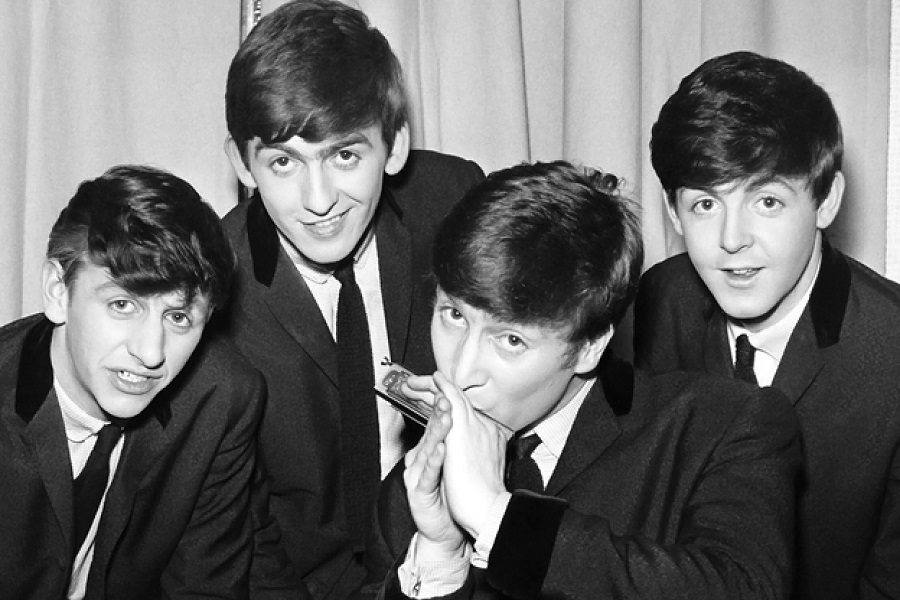
We wrap up the first quarter of our chart with the next batch of ten albums that I have listened to the most over the last 15 years, including 2 compilations, 1 greatest hits package, and two albums from one of the greatest bands of all time.

#158: The Beatles – Revolver
iTunes stats: 79 plays
Previous Ranking: 143

Three of the fourteen tracks from this 1966 release, the bands seventh studio album, added 25 new listens over the past four years.

#158: Guns N’ Roses – Use Your Illusion II
iTunes stats: 79 plays
Previous Ranking: 182

The fourth studio album from the band, released the same day as its companion album Use Your Illusion I, is the third of the six CDs I left for college with in the fall of 1992 to appear on this chart.

#158: Various Artists – Austin Powers: The Spy Who Shagged Me (More Music From The Motion Picture)
iTunes stats: 79 plays
Previous Ranking: NR

The second soundtrack to the 1999 Mike Myers film, featuring songs by Steppenwolf, Lenny Kravitz, and the Bangles, among others, makes its debut after increasing its plays by over 125%.

#156: Metallica – …And Justice For All
iTunes stats: 80 plays
Previous Ranking: 104

A 52-spot drop for the 1988 mainstream breakthrough album from the metal denizens, caused by the retirement of White Sox first baseman Paul Konerko, who had used one the songs as his walkup song.

#156: Various Artists – Reality Bites
iTunes stats: 80 plays
Previous Ranking: 136

The soundtrack to the 1994 hit film starring Winona Ryder had three tracks, from The Knack, Lisa Loeb, and The Julianna Hatfield Three, contribute its 43% increase.

Continue reading →

By The Numbers – 21

In 1929, uniform numbers appeared on the back of baseball jerseys for the first time, thanks to the Indians and the Yankees.  By 1937, numbers finally appeared across all uniforms, both home and away, across both major leagues.  Since that time, 81 distinct numbers have been worn by members of the White Sox, while the Cubs boast 76.

Today, we continue our look at those players, picking our favorite, if not the best, player to wear each uniform number for both Chicago teams with #21.  69 different players have donned #21 while playing in Chicago, 26 for the White Sox and 43 for the Cubs.

Near the end of the spring training in 1992, Sammy Sosa, along with Ken Patterson, was acquired from the White Sox for a fading George Bell.  Wearing #21, Sosa blossomed with the Cubs, going from 8 home runs and 25 RBIs in his first season to 33 home runs and 93 RBIs in his second, becoming the first 30-30 player in Cubs history.  Sosa continued to hit for power and speed in 1994, but he also upped his batting average to .300 for the first time.  Sosa was named to his first All-Star team in 1995, on his way to 36 home runs and 119 RBIs.  In 1996, Sosa continued his success, hitting .273 with 40 home runs and 100 RBIs.  1997, however, saw a decline in Sosa, who batted just .251 and posted a paltry .300 on-base percentage while leading the league with 174 strikeouts, despite hitting 36 home runs and driving in 119 runs.

A bulked-up Sammy Sosa arrived in camp in 1998, looking to turn things around, and turn them around he did.  While the surprising Cubs were in contention for the first time in nearly a decade, Sosa put on a home run barrage of historic proportions.  In the month of June, Sosa launched 20 home runs, drove in 47, and slugged .842 while pulling himself into the home run chase with Mark McGwire.  Sosa hit his 62nd home run on September 13, passing Roger Maris, and finished the season with 66, 4 behind McGwire’s then-record 70.  Sosa replicated that performance in 1999, hitting 63 home runs, again trailing McGwire, who hit 65.  Sosa finally led the league in home runs in 2000, though with “only” 50.  He managed another season for the ages in 2001, as he hit 64 home runs, becoming the first player to hit 60 or more home runs three times, and setting career highs in runs scored, RBIs, walks, OBP, slugging percentage, and batting average.  He notched his second career home run crown in 2002, adding 49 to his ledger.

Things started to turn for Sosa in 2003, despite the Cubs driving towards their first division title since 1989.  He went on the disabled list for the first time since 1996 in May and, when he returned, he was ejected, and ultimately suspended, for using a corked bat in the June 3 game against the Devil Rays.  He finished the season with 40 home runs, his lowest total since 1997, as the Cubs famously blew a 3-1 lead in the NLCS despite being 5 outs away from the pennant in Game 6.  The following May, he landed on the disabled list again following a violent sneeze at PETCO Park.  After returning from the DL, Sosa struck out 98 times the rest of the way, while hitting .238 and posting an OPS of .749.  For the entire year, Sosa hit .253, his worst average since 1997, with only 35 home runs and 80 RBIs, his lowest total since 1994.  When the Cubs fell out of contention for the NL Central title after losing 7 of their final 9 games, Sosa was given the day off for the final game of the season.  Unfortunately, he was spotted leaving Wrigley Field before the game even started while his teammates took out their frustrations with their “leader” my smashing his boombox with their bats.  That January, with the declined performance and the growing suspicion of PED use on their minds along with the end of the 2004 season, the Cubs decided to move on, trading Sosa to the Orioles for Jerry Hairston Jr. and Mike Fontenot.

On the South Side, Todd Frazier wore #21 after being acquired from the Reds in a three-team deal prior to the 2016 season.  On July 11, Frazier placed second in the Home Run Derby, losing to Giancarlo Stanton in the final round.  Frazier finished the year with career highs in home runs, runs batted in and walks despite hitting a career low .225 batting average in 158 games.  With the White Sox throwing in the towel and entering a full-fledged rebuild in 2017, Frazier was traded to the Yankees at the deadline.

By The Numbers – 22

In 1929, uniform numbers appeared on the back of baseball jerseys for the first time, thanks to the Indians and the Yankees.  By 1937, numbers finally appeared across all uniforms, both home and away, across both major leagues.  Since that time, 81 distinct numbers have been worn by members of the White Sox, while the Cubs boast 76.

Today, we continue our look at those players, picking our favorite, if not the best, player to wear each uniform number for both Chicago teams with #22.  76 different players have donned #22 while playing in Chicago, 26 for the White Sox and 50 for the Cubs.

Acquired from the Dodgers, along with Ivan DeJesus, in exchange for Rick Monday and Mike Garman, Bill Buckner joined the Cubs, wearing #22, in 1977.  A staph infection in his ankle the previous year caused the Cubs to move the former outfielder to first base, a position he would man for the rest of his career.  Appearing in 122 games, he hit .284 with 11 home runs and 27 doubles.  He improved in 1978, raising his average to .323 and placed 17th in MVP voting.  1979 was another steady year for Buckner.  On May 17th, in the infamous slugfest where the Cubs lost 23-22 to the Phillies, he went 4–for–7 with a grand slam and a career-high seven RBIs.  He finished the year hitting .284 with 14 home runs and 34 doubles, but was also described as “nuts” when manager Herman Franks resigned late in the season.

In 1980, Buckner won a batting title, hitting .324 while striking out only 18 times, earning him a 14th place finish in MVP voting.  In the strike-shortened 1981 season, he was the lone Cub representative for the All Star game and batted .311 while tying Cecil Cooper for the major league lead with 35 doubles.  1982 saw Buckner hit over .300 for the fourth time as a Cub while racking up career highs in hits, with 201, RBIs, with 105, and assists at first base, setting a major league record with 159.

In 1983, Buckner again led the NL with 38 doubles, but saw his batting average drop to .280, his lowest finish as a Cub.  With the acquisition of Gary Matthews in 1984 pushing Leon Durham to first base, Buckner found himself the odd man out.  Appearing mostly as a pinch hitter, Buckner hit a paltry .209 through the end of May, when he was traded to the Red Sox, ending his Cub tenure.

Scott Podsednik was acquired by the White Sox from the Brewers for Carlos Lee on December 13, 2004.  Wearing #22, he moved in to the leadoff spot and, after putting up a .294 average with 44 steals in the first half, he earned his first All Star game nod.  While injuries slowed him in the second half, he was back to full strength when the regular season came to an end and the White Sox embarked on their first post-season appearance in 5 years.  After going the entire regular season without a home run, Podsednik went deep against the Red Sox in Game 1 of the ALDS, helping the White Sox to a 14-2 victory on their way to a 3 game sweep of the defending champions.  Podsednik continued his steady play during the ALCS, hitting .294 with a triple and 3 stolen bases in the 5 game series.  The shining moment of his career came in Game 2 of the World Series, thanks to a walkoff home run against Brad Lidge in the 9th inning, giving the White Sox a 2-0 lead on their way to a sweep and their first world championship in 88 years.  For his efforts, Podsednik finished in 12th place for MVP voting.

As the White Sox looked to repeat in 2006, Podsednik found it difficult to duplicate his efforts from the year before.  His average was down 29 points, to .261, and his stolen base total was off by 19.  Injuries limited Podsednik to 62 games in 2007.  His offensive production continued to be lacking and, after the White Sox fell completely out of contention for the first time in years, the team decided to change their approach and gave Podsednik his release.  He returned to the White Sox organization in 2009, signing a minor league deal.  Injuries to Brian Anderson, Dewayne Wise, and Carlos Quentin gave him plenty of opportunity with the big league club, and he responded by hitting .304, his highest total since 2003.  Following the season, he became a free agent.