Against The Braves All Time Leaders – Through 2021

bravesIn the past, we’ve looked at the all time leaders in both offensive and defensive categories for all 30 teams.  This offseason, we will take our first ever look at those leaders against all 30 clubs.  We continue today with the Atlanta Braves.

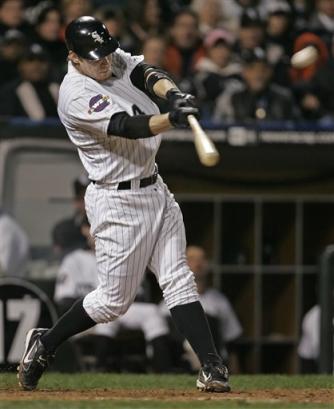
The Braves began life in Boston, moving to Milwaukee in 1953 and finally landing in Atlanta in 1966.  I’ve seen them play 20 times, 12 against the Cubs, 7 against the White Sox, and once against the Yankees, including games 3 and 4 of the 2003 NLDS against the Cubs.

Home Runs

Name Total
Derrek Lee 2
Eric Karros 2
Frank Thomas 2

Hits

Name Total
Moises Alou 9
Alex Rios 8
Alexei Ramirez 7
Aramis Ramirez 7

Runs

Name Total
Aramis Ramirez 5
Alexei Ramirez 5
Alex Rios 4
Alejandro de Aza 4
Derrek Lee 4

RBI

Name Total
Alex Rios 9
Jeromy Burnitz 5
Derrek Lee 4
Rene Rivera 4

Doubles

Name Total
Derrek Lee 2
Alex Gonzalez 2
Mark Grudzielanek 2
Josh Phegley 2

Triples Continue reading →

Top 200 Albums: #171 – 177

itunes_imageWe last counted down the Top 200 albums in my iTunes library four years ago. Since that time, the world has literally changed, and my commute has decreased from 1+ hours each way to 25 steps. So, despite the decrease in potential listening time, I figured it was time to take another look, based on number of plays from late 2007 through the morning of January 1, 2022.

We continue today with the next batch of ten albums that I have listened to the most over the last 15 years, including two compilations, one greatest hits package, two remastered albums from one of the greatest bands of all time, and nine entries from the 90s.

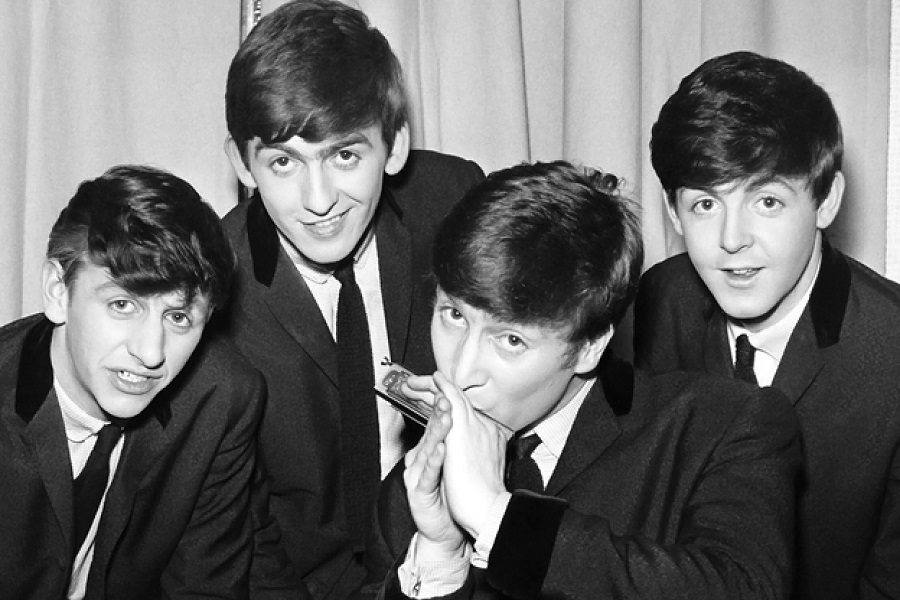
#177: The Beatles – Rubber Soul
iTunes stats: 72 plays
Previous Ranking: NR

Released in 1965, this sixth studio album from the Beatles, behind four of the 14 tracks, makes its debut after adding 33 additional listens over the past four years.

#177: Red Hot Chili Peppers – Blood Sugar Sex Magik
iTunes stats: 72 plays
Previous Ranking: NR

The Chili Peppers climb on to the chart thanks to four singles from their 1991 breakthrough release, which increased its listens by more than 85%.

#177: Various Artists – Rock ‘n’ Roll Era: 1962
iTunes stats: 72 plays
Previous Ranking: 196

This entry in the Time Life series, featuring tracks by Dion & The Belmonts, The Beach Boys, and The Drifters, among others, added 32 additional plays to jump up 19 slots.

#177: Run DMC – Ultimate Run DMC
iTunes stats: 72 plays
Previous Ranking: 192

Four tracks from this collection of the seminal rap group’s greatest hits saw 31 new listens over the past four years.

#175: The Beatles – Beatles For Sale
iTunes stats: 73 plays
Previous Ranking: 179

Only three of the fourteen tunes from this remastered version of the Beatles fourth studio album make up this total, which would be higher if I hadn’t deleted the original versions outright.

Continue reading →

By The Numbers – 23 Bonus!

In 1929, uniform numbers appeared on the back of baseball jerseys for the first time, thanks to the Indians and the Yankees. By 1937, numbers finally appeared across all uniforms, both home and away, across both major leagues. Since that time, 81 distinct numbers have been worn by members of the White Sox, while the Cubs boast 76.

Sunday, we continued our look at those players, picking our favorite, if not the best, player to wear each uniform number for both Chicago teams with #23.  Today, we take a special bonus look at player who famously wore #23 for other Chicago teams, making it possibly the most successful jersey number in town.

Michael Jordan was selected by the Chicago Bulls with the third overall pick in the 1984 NBA draft.  He would go on to become the greatest player in the history of the NBA, leading the Bulls to six titles, nabbing six Finals MVP awards, five MVP awards, three All Star Game MVPs, one Defensive Player of the Year award, and the 1985 Rookie of the Year award.  He was a 14-time All Star, 10-time first team All NBA, 9-time first team All-Defensive, 10-time scoring champion, 3-time steals leader, and 2-time Slam Dunk Contest champion.  A member of the NBA’s 50th and 75th Anniversary teams, his #23 has been retired by both the Bulls and the Miami Heat, for whom he never played.

Selected by the Bears him in the second round of the 2006 NFL Draft, Devin Hester quickly became one of, if not the, greatest return specialists in NFL history.  In his first 13 weeks as a professional, Hester recorded six return touchdowns, including three punt returns, two kickoff returns, and a then-record tying 108-yard touchdown from a missed field goal against the New York Giants.  As the Bears advanced to the Super Bowl, Hester became the first and only person to return the opening kick of the Super Bowl back for a touchdown.  2007 added an additional 6 touchdowns, followed by 2 quieter seasons.  In 2010, he added an additional 3 punt returns for touchdowns, followed by 2 punt returns and 1 kickoff return in 2011.  He added an additional punt return in 2013, his final season with the Bears.  This past September, in his first year of eligibility, Hester was nominated for the induction into the Pro Football Hall of Fame.

A Class Of One

With the unneeded lockout still in full effect, the baseball world had nothing to distract it yesterday from the small hamlet of Cooperstown in upstate New York, where the votes were tallied, and the 2021 Hall of Fame class completed with one additional member.  Former Red Sox DH David Ortiz scored 77.9% of the vote to earn enshrinement in his first election.

Six others tallied greater than 50% of the vote, led by Barry Bonds, who jumped up to 66% in his final go around on the ballot.  Roger Clemens was right behind him at 65.2% and will also leave his fate to the veteran’s committee.  Scott Rolen saw another big jump, rising to 63.2% and looks like he’s on track to eventually make it.  Curt Schilling, who threw a temper tantrum after not getting elected last year, saw a bit drop and ended his 10-year run with 58.6% of the vote.  Todd Helton and Billy Wagner continued to make strides, coming in at 52% and 51%, respectively, though Helton has more time on his side to make a good run towards induction.

On the local front, former White Sox outfielder Andruw Jones saw a large increase, going up to 41.1%.  Manny Ramirez, who spent a little more than a month with the White Sox, stayed about even, finishing with 28.9% of the vote thanks to his multiple PED suspensions.  The disgraced Omar Vizquel, who added sexual abuse of an autistic teen to the spousal abuse charges that had popped up the previous year, dropped even further, to 23.9%.  In his last go-around, former Cub superstar Sammy Sosa saw a small increase to 18.5%.  Jimmy Rollins, who spent the final 41 games of his career on the south side, picked up 9.4% in his first go-around.  Mark Buehrle saw his percentage cut in half, to 5.8%. but lives to fight another day.  Justin Morneau, who spent the final 58 games of his career with the White Sox, picked up 5 votes.  A.J. Pierzynski scored 2, while his former battery mate Jake Peavy was tossed a shutout.

Fifteen players will fall off the ballot, either due to reaching 10 years or failing to score 5% of the vote.

As for the newest Hall of Famer, I’ve seen Ortiz play 24 times, including the 2005 ALDS.  He joins Bud Fowler, Gil Hodges, Jim Kaat, Minnie Minoso, Tony Oliva and Buck O’Neil, who were elected by the veteran’s committees in December, in the class of 2022.  They will all get their day in the sun on Sunday, July 24.

David Ortiz’s numbers in games I’ve attended were: Continue reading →

2021: The Year In Travel

In normal times, this is where I would take a look back at all of the trips I took over the past year and look ahead to what, if any. travel plans I already have for 2022.  Unfortunately, 2021 continued to be far from normal times, as the global pandemic raged on for a second year, though things did manage to open back up slightly.

My first “trip” of the year, if you can call it that, was in March.  On a Friday afternoon, I drove down to Purdue to pick up Danny, before continuing on to Indianapolis so we could watch Purdue in the NCAA tournament.  They managed to completely crap the bed, which made the whole effort worthwhile.  After the game, we traveled back the way we came and I was home early the next morning.

In August, I made my only big trip of the year, driving down to Florida for some fun in the sun.  I had rented a condo on AirBNB that was right on the water, which, thanks to the spacious deck, let me enjoy the view while relaxing and reading.  I also managed to make my first two trips to Tropicana Field, as the White Sox were in town to battle the Rays.  Those experiences did not turn out quite as well.

On the drive home, I stopped in Atlanta and managed to take in a game at Truist Park to see the Yankees battle the Braves.  The following day I completed my journey, making it home in the midst of a torrential downpour, which made the last hour or so of driving so much fun.

The only other trips were back down to Purdue for football games, one in October and two in November.  We didn’t manage to make the second game in November, but it’s the drive that matters.

Looking ahead to 2022, despite the rise in COVID cases due to the omicron variant, I’m planning to return to Hawaii later this month and the family is headed to Boston in May for Angelina’s graduation.  Other than that, there are some baseball trips I want to take this year, but nothing is solid just yet.  Here’s hoping that the world returns to some sort of normalcy, though I’m not optimistic.

By The Numbers – 23

In 1929, uniform numbers appeared on the back of baseball jerseys for the first time, thanks to the Indians and the Yankees.  By 1937, numbers finally appeared across all uniforms, both home and away, across both major leagues.  Since that time, 81 distinct numbers have been worn by members of the White Sox, while the Cubs boast 76.

Today, we continue our look at those players, picking our favorite, if not the best, player to wear each uniform number for both Chicago teams with #23, one of the most famous and successful numbers in city history across all sports.  67 different players have donned #23 while playing in Chicago, 35 for the White Sox and 31 for the Cubs, including a familiar face for both sides of town.
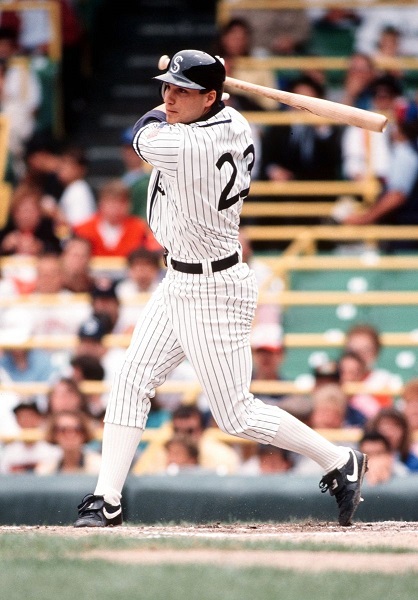
Robin Ventura made his major league debut donning #23 in September of 1989, appearing in 16 games down the stretch, hitting only .178 while driving in 7 runs in 45 at bats.  A good spring in 1990 led to Ventura breaking camp with the White Sox, but he struggled both on the field and at the plate, suffering through a horrendous 0-for-41 slump while committing 25 errors over the course of the season.  He finished the year with a .249 average, 5 home runs, and 54 RBIs and placed 7th in Rookie of the Year voting and was named to the Topps All Star Rookie team.

Ventura and the White Sox moved in to the new Comiskey Park in 1991, hoping to improve on the previous year’s growth.  He improved his fielding enough to earn his first Gold Glove award and, at the plate, he set a White Sox team record for RBIs by a third baseman, finishing with an even 100.  He upped his average to .284 and hit 23 home runs.  His work was enough to garner enough MVP votes to finish in 20th place.  1992 was another good year for Ventura.  He earned his first All Star nod, going 2-2 in the AL’s victory at Jack Murphy Stadium.  He finished the year with a .282 average, 16 home runs, and 93 RBIs.  He also snagged his second consecutive Gold Glove award.  Ventura continued his successful ways in 1993, collecting his 500th hit in May and, on August 4, entering the public consciousness with an event that would come to define his entire career.  While batting against the Rangers, Ventura was hit by a pitch thrown by Nolan Ryan and charged the mound.  Ryan, 20 years Ventura’s senior, placed him in a headlock and punched him several times, starting a bench-clearing brawl that was voted the best baseball brawl of all time by SportsCenter.  After the season, he was awarded his third consecutive Gold Glove award.

The strike in 1994 saw Ventura’s streak of 90 RBI seasons and Gold Gloves come to an end.  When baseball stopped in August, Ventura was hitting .282 with 18 home runs and 78 RBIs, while posting a new career high with an .832 OPS.  When play resumed in late April 1995, Ventura struggled out of the gate, committing ten errors in the first ten games.  As the White Sox started to tear down the team that had finished the previous two seasons on top of their division, trade rumors started to follow Ventura, though nothing came to fruition.  On September 4, he became the eighth player in history to hit two grand slams in one game, and the first since Frank Robinson in 1970.  He finished the year setting career highs with a .295 average, an .882 OPS, and 26 home runs while driving in 93 runs.  Ventura had the best year of his career to date in 1996, setting White Sox team records in career home runs by a third baseman, with 142, and grand slams, with 9.  He set new career highs with 34 home runs, 105 RBIs, 2 triples, an OPS of .888, and a .974 fielding percentage at the hot corner.  He hit .287, while earning his fourth Gold Glove award.

1997 turned into a dismal year for both Ventura and the White Sox.  During a spring training game, Ventura caught his foot in the mud while sliding into home plate and suffered a broken and dislocated right ankle.  Expected to miss the entire season, he returned on July 24, collecting the game-winning hit that night, and homered in his first at-bat the next night.  With the White Sox only 3.5 games behind the Indians in the standings, a healthy Ventura might have put them over the top.  A week later, the team threw in the towel in what eventually became to be known as the White Flag Trade, sending 3 pitchers to the Giants for prospects.  “We didn’t realize Aug. 1 was the end of the season,” said an upset Ventura.  He finished the year appearing in 54 games, hitting .262 with 6 home runs and 26 RBIs.  Entering the last year of his contract in 1998, the White Sox made little attempt to sign Ventura to an extension, with owner Jerry Reinsdorf claiming his skills were “deteriorating” after his injury the year before.  With more trade rumors following him throughout the season, he finished the year with a .263 average, 21 home runs, and 91 RBIs while earning his fifth Gold Glove award.  Following the season, he became a free agent, ending his White Sox playing career.

Continue reading →
Top 200 Albums: #177 – 188

itunes_imageWe last counted down the Top 200 albums in my iTunes library four years ago. Since that time, the world has literally changed, and my commute has decreased from 1+ hours each way to 25 steps. So, despite the decrease in potential listening time, I figured it was time to take another look, based on number of plays from late 2007 through the morning of January 1, 2022.

We continue today with the next batch of ten albums that I have listened to the most over the last 15 years, including one comedy album, one compilation, and an even one half of the albums coming from the 90s.

#187: Tegan and Sara – Sainthood
iTunes stats: 68 plays
Previous Ranking: 140

Eleven of the thirteen songs from this sixth studio album from the Canadian twins added only 13 new listens, causing it to drop 60 spots over the last four years.

#187: Pink – Missundaztood
iTunes stats: 68 plays
Previous Ranking: NR

Pink climbs on to the chart thanks to three singles from her 2001 smash release, which increased its listens by more than 74%.

#187: Cracker – Cracker
iTunes stats: 68 plays
Previous Ranking: 176

The 1992 debut from Cracker needed contributions from only two songs, which added a combined 22 new listens, while dropping 18 spots.

#187: The Muffs – The Muffs
iTunes stats: 68 plays
Previous Ranking: 179

The debut album from The Muffs, released in 1993, uses three songs, including one that was featured in a Fruitopia ad, to make up this total.

#186: Various Artists – Pure Disco Volume 2
iTunes stats: 69 plays
Previous Ranking: NR

Five tracks from this compilation album, featuring hits by Barry White, Wild Cherry, and others, powered a nearly 92% increase in plays.

Continue reading →

By The Numbers – 24

In 1929, uniform numbers appeared on the back of baseball jerseys for the first time, thanks to the Indians and the Yankees.  By 1937, numbers finally appeared across all uniforms, both home and away, across both major leagues.  Since that time, 81 distinct numbers have been worn by members of the White Sox, while the Cubs boast 76.

Today, we continue our look at those players, picking our favorite, if not the best, player to wear each uniform number for both Chicago teams with #24.  104 different players have donned #24 while playing in Chicago, 49 for the White Sox and 55 for the Cubs.

Joe Crede earned a September call-up from Double A in 2000, and, wearing #24, made his major league debut on September 12, replacing Herbert Perry and going 0-1 in the Tigers 10-3 victory at Comiskey Park.  Crede appeared in 7 games, making the most of his 14 at bats, and finished with a .357 average.  Crede got another cup of coffee with the big league club in September of 2001, earning a little more playing time, but he was less successful, finishing with a .220 average in 50 at bats over 17 games.  Crede returned to the White Sox for good in July of 2002.  On August 12, he hit his first major league home run off of former teammate James Baldwin and he finished with 12 home runs, 35 RBIs, and a .285 average.  Crede established himself as the starting third baseman in 2003.  He appeared in a career high 151 games and launched 19 home runs with 75 RBIs while posting a .261 average.  He struggled in 2004, seeing his average drop to .239 while hitting 21 home runs with 69 RBIs.

In 2005, Crede started to come in to his own.  While he improved his average to .252 and hit 22 home runs with 62 RBIs, he came alive in the second half, culminating with a game winning, and possible season saving, home run in the 10th inning against the Indians on September 20, which pushed the White Sox to a 3.5 game lead and propelled them into the playoffs.  Crede had a rough series in the ALDS against the Red Sox, getting only 1 hit in 9 at bats, but rebounded in the ALCS and World Series, hitting .368 and .294 respectively, with 2 home runs in each series.  2006 was Joe Crede’s breakout season.  He hit .283 with career highs in home runs, with 30, and RBIs, with 94, winning his first, and only, Silver Slugger award.  A back injury in 2007 limited him to 47 games and only 4 home runs.  He returned with a bang in 2008, hitting a grand slam on opening day against the Twins and parlayed a good first half into his first All Star selection, but the back injury recurred and kept him out for most of the second half of the season, including the playoffs, thus ending his White Sox career.

On the north side of town, Dexter Fowler joined Cubs via trade prior to the 2015 season.  Donning #24, he ended the year with a .250 average, 102 runs scored, 46 RBIs, 17 home runs, and 20 stolen bases as the Cubs made a surprise run for the NL Wild Card.  Fowler helped propel the Cubs to the NLDS, putting up three hits, three runs scored, a home run, and a stolen base in defeating the Pirates.  In nine postseason games, Fowler batted .396 with two home runs and three RBIs, as the Cubs made it to the NLCS against the Mets.

Fowler became a free agent after the season and was unsigned into the start of spring training.  Despite reportedly agreeing to a three-year contract with the Orioles, Fowler arrived in Cubs camp and signed a one year deal.  And what a year it was.  Fowler finished the year with a .276 average, 13 home runs, 48 RBIs, and 84 runs scored as the Cubs won the NL Central.  Fowler’s .333 average with 4 RBI helped the Cubs win the NLCS against the Dodgers, advancing to the World Series for the first time since 1945.  On October 25, 2016, Dexter Fowler became the first African-American to appear and to bat for the Cubs in a World Series game.  Fowler led off Game 7 of the World Series with a home run, becoming the first player in history to do so, and helping the Cubs win 8–7 in 10 innings, giving the team their first championship in 108 years.

Top 200 Albums: #188 – 196

itunes_imageWe last counted down the Top 200 albums in my iTunes library four years ago. Since that time, the world has literally changed, and my commute has decreased from 1+ hours each way to 25 steps. So, despite the decrease in potential listening time, I figured it was time to take another look, based on number of plays from late 2007 through the morning of January 1, 2022.

We kick things off with the first batch of ten albums that I have listened to the most over the last 15 years, including six released in the 1990s, one comedy albums, and two greatest hits collections.

#196: Ice Cube – The Predator
iTunes stats: 66 plays
Previous Ranking: NR

Ice Cube makes his chart debut thanks to two tracks from his third studio album, released in 1992, which added 37 new listens.

#196: The Presidents of the United States of America – The Presidents of the United States of America
iTunes stats: 66 plays
Previous Ranking: 192

The band’s debut album, released in 1995, drops 4 spots despite a nearly 61% increase in listens over the past 4 years.

#196: Patton Oswalt – Annihilation
iTunes stats: 66 plays
Previous Ranking: NR

The comic’s 2017 special, dealing with the tragic death of his wife, Michelle McNamara, debuts with a strong showing, thanks to the 20 tracks from the album.

#196: Tegan and Sara – If It Was You
iTunes stats: 66 plays
Previous Ranking: 171

The album that introduced me to Tegan and Sara, thanks to radio play for I Hear Noises, drops 25 spots thanks to a small 40% increase in its number of plays in the past four years.

#196: Beastie Boys – Licensed to Ill
iTunes stats: 66 plays
Previous Ranking: NR

The group’s 1986 debut album makes its first appearance on the charts after nearly doubling its listens to four of the album’s thirteen tracks.

Continue reading →

By The Numbers – 25

In 1929, uniform numbers appeared on the back of baseball jerseys for the first time, thanks to the Indians and the Yankees.  By 1937, numbers finally appeared across all uniforms, both home and away, across both major leagues.  Since that time, 81 distinct numbers have been worn by members of the White Sox, while the Cubs boast 76.

Today, we continue our look at those players, picking our favorite, if not the best, player to wear each uniform number for both Chicago teams with #25.  87 different players have donned #25 while playing in Chicago, 51 for the White Sox and 36 for the Cubs.

Acquired by the Cubs following the 2003 season for Hee Seop Choi, Derrek Lee, wearing #25, quickly became a mainstay of the Cubs lineup.  He hit .278 with 32 home runs and 98 RBIs in his first year on the north side.  2005 was a career year for Lee, and that was just in the first half.  He led the majors with a .376 average and 72 RBIs while tying for the lead with 27 home runs.  For the full season, he hit 46 home runs and a .335 average, the highest for a Cub since Bill Madlock in 1976 and he notched the first batting title for a Cub since Bill Buckner in 1980.  When it was all said and done, he had won the Gold Glove and Silver Slugger awards and finished third in MVP voting.

A broken wrist limited Lee to 50 games in 2006, but he rebounded in 2007 to hit .317 with 22 home runs as the Cubs won their first NL Central title since 2003.  Lee went 4 for 12 as the Cubs were swept in 3 games by the Diamondbacks.  Another strong season in 2008, with a .291 average, 20 home runs, and 90 RBIs helped push the Cubs back to the post-season.  Lee did all he could, hitting .545 in the NLDS against the Dodgers, but the Cubs were once again swept.  Lee overcame a slow start in 2009 thanks to a 21 game hitting streak and finished with a .306 batting average, 35 home runs and 111 RBIs, which earned him enough votes to finish ninth in MVP voting.

2010 was a strange year for Lee and the Cubs.  On June 9th, he hit his 300th career home run.  Later that month, however, he would get in to a fight in the dugout with Carlos Zambrano, which led to a suspension for Zambrano.  In the last year of his contract and with the team going nowhere fast, Lee was traded to the Braves on August 18th, ending his Cub tenure.

Looking to reload after winning their first World Series championship in 88 years, the White Sox acquired Jim Thome from the Phillies for Aaron Rowand, Gio Gonzalez, and Daniel Haigwood.  Thome, wearing his familiar #25, made an immediate impact, setting a major league record by scoring in each of Chicago’s first 17 games and setting the team record with 10 home runs in April.  By season’s end, Thome had put up a .288 average with 42 home runs, 102 RBIs, and an OPS of 1.014.  One of the few bright spots for the 2007 White Sox came in mid-September, when Thome, on his bobblehead day, launched his 500th career home run, the first player to do so on a walk-off.  For the year, Thome hit .275, with 35 home runs and 96 RBIs.  2008 was a bit of a down year for Thome, as his average and OPS both fell, but he still managed 34 home runs and 90 RBIs.  The most important of each came in the 163rd game of the year, as he hit a solo home run to give the White Sox a 1-0 victory over the Twins and the Central Division title.  With the White Sox going nowhere in 2009, Thome was traded to the Dodgers on August 31 for a warm body.