150 Years Of Cubs Baseball – Outfielders Part 3

Originally founded in 1869, the Chicago Cubs became a charter member of the National League in 1876.  Over the next 150 seasons, the Cubs have played more than 22,000 games, scored over 103,000 runs and recorded more than 200,000 hits, more than any other team in baseball history.  Nearly 2,300 players have worn a Cubs uniform, earning eight division titles, 17 NL pennants, and three World Series championships.

Fans have witnessed generations of unforgettable players, from historical heroes like Joe Tinker, Gabby Hartnett, Ernie Banks, and Billy Williams to more recent stars like Ryne Sandberg, Derrek Lee, Kerry Wood, and Anthony Rizzo.  The team has called Wrigley Field home for 110 of those 150 seasons.

To celebrate this milestone, the Cubs are holding a fan vote to select the franchise’s anniversary team.  Each week, we will go through the provided options for each position and declare who should, and, if different, who will, win the fan vote.  We continue today with the final eight selections for outfielder.

Frank Schulte debuted for the Cubs in September of 1904.  He was part of four pennant-winning teams, including the back-to-back championships in 1907 and 1908.  He led the NL in home runs in 1910 and 1911, when he became the first player in MLB history to have 20 or more doubles, triples, home runs, and stolen bases in a single season.  That feat earned him the NL MVP award, then known as the Chalmers Award.  He remained with the Cubs through July of 1916.

Jimmy Sheckard spent seven seasons with the Cubs near the turn of the 20th Century, helping the team to four NL pennants and World Series Championships in 1907 and 1908.  One of the most versatile outfielders of his time, Sheckard still holds the record for most double plays as a left fielder, with twelve in 1911.  His best offensive season also came in 1911, leading the NL in runs and walks, and his 147 walks remains a team record.

Jimmy Slagle manned center field for seven seasons, helping the Cubs win back-to-back-to-back NL championships from 1906-1908, the latter two ending with World Series titles.  He is the first player to accomplish a straight steal of home plate in a World Series in 1907.  A classic leadoff man for his era, Slagle was known for his speed, contact hitting, and exceptional defense.
Continue reading →

Setting More Records

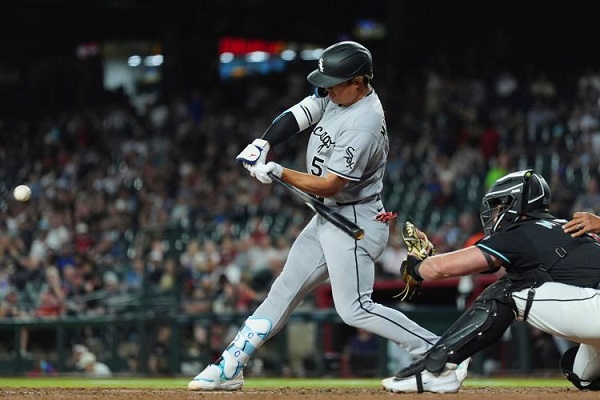
With his seventh inning home run last night against the Twins, Munetaka Murakami became the first rookie in MLB history to reach the 20-home run plateau before the start of June.  The previous rookie mark of 19 was held by Pete Alonso and Mark McGwire.  He joins Frank Thomas and Jim Thome as the only White Sox players overall to reach the mark.

The White Sox have four more games scheduled through the remainder of May.

The Hall Comes Calling

Cubs radio play-by-play man Pat Hughes was awarded the 2023 Ford C. Frick Award yesterday, presented annually for excellence in broadcasting by the National Baseball Hall of Fame and Museum.  Hughes, who joined the Cubs booth in 1996, will have spent 28 of his 41 seasons as a broadcaster for the Cubs after starting his career with the Twins in 1983 followed by a twelve-season run with the Brewers.

Hughes joined the Cubs booth in 1996, joining long time color commentator, and Cub legend, Ron Santo.  The chemistry between the two grew to the point where their broadcasts came to be known as “The Pat and Ron Show”.  Following Santo’s death in 2010, Hughes has worked alongside former Cubs Keith Moreland and Ron Coomer.

Along the way, Hughes has called many memorable moments, including eight no-hitters, the 25-inning contest between the White Sox and the Brewers which remains the longest game in American League history, Kerry Wood’s 20-strikeout game in 1998, Mark McGwire’s record-breaking 62nd home run in 1998, and, of course, the final out clinching the Cubs 2016 World Series title.

Hughes, 67, is the sixth announcer with ties to Chicago to earn the honor, following Ken Harrelson, Milo Hamilton, Harry Caray, Jack Brickhouse, and Bob Elson.

By The Numbers – 21

In 1929, uniform numbers appeared on the back of baseball jerseys for the first time, thanks to the Indians and the Yankees.  By 1937, numbers finally appeared across all uniforms, both home and away, across both major leagues.  Since that time, 81 distinct numbers have been worn by members of the White Sox, while the Cubs boast 76.

Today, we continue our look at those players, picking our favorite, if not the best, player to wear each uniform number for both Chicago teams with #21.  69 different players have donned #21 while playing in Chicago, 26 for the White Sox and 43 for the Cubs.

Near the end of the spring training in 1992, Sammy Sosa, along with Ken Patterson, was acquired from the White Sox for a fading George Bell.  Wearing #21, Sosa blossomed with the Cubs, going from 8 home runs and 25 RBIs in his first season to 33 home runs and 93 RBIs in his second, becoming the first 30-30 player in Cubs history.  Sosa continued to hit for power and speed in 1994, but he also upped his batting average to .300 for the first time.  Sosa was named to his first All-Star team in 1995, on his way to 36 home runs and 119 RBIs.  In 1996, Sosa continued his success, hitting .273 with 40 home runs and 100 RBIs.  1997, however, saw a decline in Sosa, who batted just .251 and posted a paltry .300 on-base percentage while leading the league with 174 strikeouts, despite hitting 36 home runs and driving in 119 runs.

A bulked-up Sammy Sosa arrived in camp in 1998, looking to turn things around, and turn them around he did.  While the surprising Cubs were in contention for the first time in nearly a decade, Sosa put on a home run barrage of historic proportions.  In the month of June, Sosa launched 20 home runs, drove in 47, and slugged .842 while pulling himself into the home run chase with Mark McGwire.  Sosa hit his 62nd home run on September 13, passing Roger Maris, and finished the season with 66, 4 behind McGwire’s then-record 70.  Sosa replicated that performance in 1999, hitting 63 home runs, again trailing McGwire, who hit 65.  Sosa finally led the league in home runs in 2000, though with “only” 50.  He managed another season for the ages in 2001, as he hit 64 home runs, becoming the first player to hit 60 or more home runs three times, and setting career highs in runs scored, RBIs, walks, OBP, slugging percentage, and batting average.  He notched his second career home run crown in 2002, adding 49 to his ledger.

Things started to turn for Sosa in 2003, despite the Cubs driving towards their first division title since 1989.  He went on the disabled list for the first time since 1996 in May and, when he returned, he was ejected, and ultimately suspended, for using a corked bat in the June 3 game against the Devil Rays.  He finished the season with 40 home runs, his lowest total since 1997, as the Cubs famously blew a 3-1 lead in the NLCS despite being 5 outs away from the pennant in Game 6.  The following May, he landed on the disabled list again following a violent sneeze at PETCO Park.  After returning from the DL, Sosa struck out 98 times the rest of the way, while hitting .238 and posting an OPS of .749.  For the entire year, Sosa hit .253, his worst average since 1997, with only 35 home runs and 80 RBIs, his lowest total since 1994.  When the Cubs fell out of contention for the NL Central title after losing 7 of their final 9 games, Sosa was given the day off for the final game of the season.  Unfortunately, he was spotted leaving Wrigley Field before the game even started while his teammates took out their frustrations with their “leader” my smashing his boombox with their bats.  That January, with the declined performance and the growing suspicion of PED use on their minds along with the end of the 2004 season, the Cubs decided to move on, trading Sosa to the Orioles for Jerry Hairston Jr. and Mike Fontenot.

On the South Side, Todd Frazier wore #21 after being acquired from the Reds in a three-team deal prior to the 2016 season.  On July 11, Frazier placed second in the Home Run Derby, losing to Giancarlo Stanton in the final round.  Frazier finished the year with career highs in home runs, runs batted in and walks despite hitting a career low .225 batting average in 158 games.  With the White Sox throwing in the towel and entering a full-fledged rebuild in 2017, Frazier was traded to the Yankees at the deadline.

HOF Election Thoughts

baseballhofAll eyes turned towards Cooperstown yesterday as the votes were tallied and two new members were announced as the Hall of Fame class of 2016: Ken Griffey Jr. and Mike Piazza.  Griffey, in his first year of eligibility, set the all time record by being named on 99.3% of the ballots, eclipsing Tom Seaver’s mark of 98.8% in 1992.  Piazza earned 83% of the vote in his 4th year of eligibility, an increase 13.1 point increase from last year.

Four others tallied greater than 50% of the vote, led by Jeff Bagwell, who fell a mere 15 votes shy of election.  Next was Tim Raines, who only has one more chance to boost his total from 69.8% to the required 75%.  Trevor Hoffman had a surprisingly strong showing in his first year, garnering 67.3% of the vote.  Finally, Curt Schilling showed a big improvement in his 4th year on the ballot, going from 39.2% to 52.3%.

The news continued to be bleak for the alleged PED users, as Barry Bonds, Roger Clemens, Mark McGwire, and Sammy Sosa still failed to gain entry.  McGwire, in his 10th year of eligibility, now falls off the ballot, as does former Tigers shortstop Alan Trammel.  13 others failed to reach 5% and will also fall off the ballot.

As for the newest Hall of Famers, I’ve seen Griffey play 37 times, mostly during his stint with the White Sox in 2008, including the ALDS against the Rays. I only saw Piazza play 7 times over the course of his career.

Ken Griffey Jr’s numbers in games I attended were:

Continue reading →

2016 Hall Of Fame Ballot – The Holdovers

baseballhof

The BBWAA released their ballot for the Hall of Fame class of 2016 on Monday.  The results of the vote are due to be revealed on January 6th, with induction taking place next July.  After Craig Biggio, Randy Johnson, Pedro Martinez, and John Smoltz were elected in last year’s voting, the new ballot contains 17 holdovers along with 15 newcomers, which may start to cause a bit of a problem.  The current BBWAA rules continue to limit the number of votes on one ballot to 10, and there may be more than 10 deserving candidates, so there will be too many qualified candidates fighting for limited spots in a shorter amount of time.  Once again, the BBWAA and the Hall may find themselves with a mess on their hands.

Let’s take a look at the returning candidates today before moving on to the newcomers.

Jeff Bagwell
Years on ballot: 5
2015 Percentage: 55.7

Bagwell bounced back last year with a small increase, but things continue to look bleak for him thanks to seemingly unsubstantiated PED rumors.  I fear he’ll continue to wait for that elusive call.

Barry Bonds
Years on ballot: 3
2015 Percentage: 36.8

The all time home run champion saw his vote percentage rise for the first time last year, but not significantly.  I doubt he’ll see much more support this year, leaving him on the outside looking in.

Roger Clemens
Years on ballot: 3
2015 Percentage: 37.5

Roger Clemens, he of the 354 career victories and 7 Cy Young awards, also found himself with a slight rise after his third run through the voting process.  For some odd reason, perhaps by having played for more teams, Clemens continues to get marginally more support than his fellow PED poster child Barry Bonds.

Nomar Garciaparra
Years on ballot: 1
2015 Percentage: 5.5

Considered at one time on an even keel with Derek Jeter and Alex Rodriguez, Garciaparra is likely to drop off the ballot after this election.

Jeff Kent
Years on ballot: 2
2015 Percentage: 14.0

The 2000 NL MVP saw his support wane in his second year of eligibility.  With the number of candidates coming down the pike, the future does not look good for him.

Edgar Martinez
Years on ballot: 6
2015 Percentage: 27.0

The longtime DH for the Mariners has had plenty of support from the Internet but not as much from the BBWAA, though his percentage did increase slightly last year.  His long career as a DH in the Pacific Northwest may be holding him back.

Fred McGriff
Years on ballot: 6
2015 Percentage: 12.9 Continue reading →

Franchise Four – Chicago Cubs

Major League Baseball is asking its fans to vote for the four most impactful players who best represent the history of each franchise.  The winners will be announced in July at the All Star Game in Cincinnati.  Today, I will give my Franchise Four picks for the Chicago Cubs.

F4Cubs

EBErnie Banks, who was elected to the Hall of Fame in 1977, played his entire 19 year career with the Cubs, earning back-to-back MVP honors in 1958 and 1959.  When he retired following the 1971 season, he ranked 9th all-time in home runs, with 512.

RSRyne Sandberg joined the Cubs in 1982 and quickly became a fixture in the middle of the Cub infield, where he remained until 1997.  The 10-time all star, who earned MVP honors in 1984, was elected to the Hall of Fame in 2005.

TFBMordecai “Three Finger” Brown, who earned his nickname due to farming incident in his youth, spent 10 of his 14 seasons with the Cubs, leading them to World Series titles in 1907 and 1908.  He was elected to the Hall of Fame in 1949.

RoSRon Santo spent 14 of his 15 big league seasons with the Cubs, earning 9 All Star game appearances and 5 Gold Gloves.  He followed his playing career with a long broadcasting stint with the team.  He was posthumously elected to the Hall of Fame in 2012.

GHGabby Hartnett spent the first 19 years of his career with the Cubs, appearing in 6 All Star games and earning the MVP award in 1935.  Perhaps best remembered for the “Homer in the Gloamin'” in 1938, Hartnett was considered the best National League catcher until the emergence of Johnny Bench.  He was elected to the Hall of Fame in 1955. Continue reading →

Election Thoughts

mlb_hof

The votes were tallied in Cooperstown and, for the first time since 1955, four former players were elected to become members of the Hall of Fame.  Ballot newcomers John Smoltz, Pedro Martinez, and Randy Johnson, along with third-timer Craig Biggio, became the newest members of baseball’s greatest fraternity, garnering more than 75% of the votes.  Only three other candidates, Mike Piazza, Jeff Bagwell, and Tim Raines, managed to top 50% of the vote.

The news for players with PED connections was mixed, with Roger Clemens and Barry Bonds gaining a little ground, while Sammy Sosa and Mark McGwire lost votes.  Don Mattingly falls off the ballot after 15 tries.  17 candidates who were eligible for the first time will drop off the ballot due to not receiving 5% of the vote.

As for the newest Hall of Famers, I’ve somehow seen 755 baseball games over the past 30 years, none of which included Pedro Martinez or Randy Johnson.  John Smoltz I saw twice, during his closing phase.  Craig Biggio, as an everyday player, was the enshrinee I saw most often, including Game 2 of the 2005 World Series.

Craig Biggio’s numbers in games I attended were:

Continue reading →

2015 Hall Of Fame Ballot – The Holdovers

mlb_hofThe BBWAA released their ballot for the Hall of Fame class of 2015 yesterday.  The results of the vote are due to be revealed on January 7th, with induction taking place next July.  After Frank Thomas, Greg Maddux, and Tom Glavine were elected in last year’s voting, the new ballot contains 17 holdovers along with 17 newcomers, which may start to cause a bit of a problem.  The current BBWAA rules continue to limit the number of votes on one ballot to 10, and there may be more than 10 deserving candidates.  To complicate things, the number of years of eligibility has been dropped from 15 to 10, with those who were between 10 and 15 grandfathered in.  So, there will be too many qualified candidates fighting for limited spots in a shorter amount of time.  Once again, the BBWAA and the Hall may find themselves with a mess on their hands.

Let’s take a look at the returning candidates today before moving on to the newcomers.

Jeff Bagwell
Years on ballot: 4
2014 Percentage: 54.3

Things have started to trend in the wrong direction for Bagwell, which may be due to the 10 vote limit.  Given the qualified list of newcomers and the continued PED rumors, I expect he will continue to be waiting for that elusive call.

Craig Biggio
Years on ballot: 2
2014 Percentage: 74.8

Narrowly missing election in last year’s vote, Biggio seems destined to make it on his third try, giving Astros fans something to look forward to next summer.

Barry Bonds
Years on ballot: 2
2014 Percentage: 34.7

The all time home run champion saw his vote percentage drop in his second year on the ballot.  While the Giants may be softening on having Bonds involved with them, having him throw out a first pitch during this year’s NLCS, the writers voting for the Hall are unlikely to have done the same.

Roger Clemens
Years on ballot: 2
2014 Percentage: 35.4

Roger Clemens, he of the 354 career victories and 7 Cy Young awards, also found himself falling after his second run through the voting process.  For some odd reason, perhaps by having played for more teams, Clemens continues to get marginally more support than his fellow PED poster child Barry Bonds.

Jeff Kent
Years on ballot: 1
2014 Percentage: 15.2

The 2000 NL MVP did not find much support in his first year of eligibility.  With the number of candidates coming down the pike, the future does not look good for him.

Edgar Martinez
Years on ballot: 5
2014 Percentage: 25.2

The longtime DH for the Mariners has had plenty of support from the Internet but not as much from the BBWAA, as his percentage dropped by over 10 percentage points.  His long career as a DH in the Pacific Northwest may be holding him back.

Don Mattingly
Continue reading →

2014 Hall Of Fame Ballot – The Holdovers

mlb_hofThe BBWAA released their ballot for the Hall of Fame class of 2014.  The results of the vote are due to be revealed on January 8th, with induction taking place next July.  After nobody was elected in last year’s voting, the new ballot contains 17 holdovers along with 19 newcomers, which may start to cause a bit of a problem.  The current BBWAA rules limit the number of votes on one ballot to 10, and there may be more than 10 deserving candidates.  As they start to pile up, and even more deserving candidates become eligible, the BBWAA and the Hall may find themselves with a mess on their hands.

Let’s take a look at the returning candidates today before moving on to the newcomers.

Jeff Bagwell
Years on ballot: 3
2013 Percentage: 59.6

Bagwell is going to be one of those candidates that, I think, gets hurt due to 10 vote limit.  He would have been elected already were it not for seemingly unfounded PED rumors.

Craig Biggio
Years on ballot: 1
2013 Percentage: 68.2

Biggio was the highest vote getter in last year’s election, only 39 votes shy of getting elected.  You would think he could make up that total this year as voters who have some inane theories on when someone deserves to be elected add him to their ballot.  It would be a boost to the Astros if both he and Bagwell were to go in together.

Barry Bonds
Years on ballot: 1
2013 Percentage: 36.2

Barry Bonds, he of the 7 MVP awards and 762 career home runs, found himself on the outside looking in after his initial run through the voting process.  Due to his connection to BALCO and PEDs, he’s unlikely to do much better this year.

Roger Clemens
Years on ballot: 1
2013 Percentage: 37.6

Roger Clemens, he of the 354 career victories and 7 Cy Young awards, also found himself on the outside looking in after his initial run through the voting process.  The interesting thing is that, despite his inclusion in the Mitchell Report and his connection to Andy Pettitte’s PED confession, Clemens picked up 8 more votes than Bonds.

Edgar Martinez
Years on ballot: 4
2013 Percentage: 35.9

The longtime DH for the Mariners has had plenty of support from the Internet but not as much from the BBWAA.  His long career as a DH may be holding him back.

Don Mattingly
Years on ballot: 13
2013 Percentage: 13.2

Back in 2010, I said that “being the best Yankee in a decade of bad Yankee teams does not a Hall of Famer make.”  Nothing that has happened since then would change my, or, seemingly, the voters, mind.

Fred McGriff
Years on ballot: 4
2013 Percentage: 20.7

A very good argument could be made that Fred McGriff has been hurt by the PED users more than anyone else.  Had he stuck around to hit an additional 7 home runs, he would likely have been elected thanks to his 500 home runs.  Without them, he gets penalized for not putting up better numbers than the PED users, who are also being penalized.  Doesn’t seem right.

Mark McGwire
Years on ballot: 7
2013 Percentage: 16.9

McGwire finds himself over 100 votes behind fellow PED users Barry Bonds and Roger Clemens.  Even if the voters do start to reverse track and start to vote for the convicted users, I think McGwire might still have trouble getting elected.

Jack Morris
Years on ballot: 14
2013 Percentage: 67.7

Morris enters his final year on the ballot needing only 42 additional votes to get enshrined, but with the influx of new, and exceptionally deserving, candidates,  I don’t see how he gets them.  Not that I would be too disappointed in that, as Morris, while a very good pitcher, falls short in my estimation.

Continue reading →