iTunes Top 200: #11 – 19

Music.  It is a powerful thing that brings people together, creates memories, and evokes emotions.  It is the universal language that speaks to the soul.  It forms the soundtrack of our lives.

It has now been five years since we last counted down the Top 200 songs in my iTunes library, featuring he songs I have listened to the most since 2007.  It is time to do so again, seeing which older songs still resonate and if any newer ones have joined the fray.  So, without further ado, here are my most listened to songs, based on number of plays as of January 1, 2025.

With the top of the charts in sight, we continue this week with songs ranking from 19th place with 65 plays, breaking past the century mark, and finishing with the one track with 114 plays, good enough for 11th place since my stats began in late 2007.

#19: Metallica – Harvester of Sorrow
iTunes stats: 65 plays, most recently on 11/5/2024
Previous ranking: #19

Released as the first single from the band’s fourth studio album, it was used as the at-bat music for former White Sox first baseman Paul Konerko for the majority of his career and thus featured on most of my victory playlists leading up to his retirement.

#19: The Lonely Island – Natalie’s Rap (ft. Natalie Portman & Chris Parnell)
iTunes stats: 65 plays, most recently on 11/1/2022
Previous ranking: #17

A slight drop for the second digital short from The Lonely Island, which featured Natalie Portman playing against type as a lewd gangsta.

#18: Foo Fighters – My Hero
iTunes stats: 67 plays, most recently on 9/30/2024
Previous ranking: #19

The highest-ranking tune from the Foo Fighters, up one spot from five years ago, is this live version from their previously mentioned concert in London’s Hyde Park.

#16: P.O.D. – Boom
iTunes stats: 94 plays, most recently on 9/25/2022
Previous ranking: #12

The entrance song for former White Sox closer Bobby Jenks, it made a number of appearances on my early victory playlists.

#16: Blues Brothers – Sweet Home Chicago
iTunes stats: 94 plays, most recently on 9/15/2024
Previous ranking: #170

Getting added to my White Sox victory playlist helped make this classic jump up the chart. Continue reading →

Ballpark Tour: White Sox

With Opening Day in the books, it is time to wrap up our tour of all of the baseball stadiums I’ve been to over the years with the ones I’ve been to the most: the homes of the Chicago White Sox.  Between the two stadiums that have been located at the corners of 35th and Shields, I’ve seen at least 668 games, all but one of which have involved the White Sox.  So, without further ado, let’s take a deeper look at my history with Comiskey Park and the facility currently known as Rate Field.
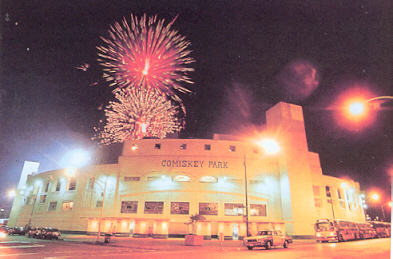
Stadium Name: Comiskey Park

Years in Service: 1910 – 1990

Visits: 13 (that I’m aware of)

Comiskey Park, the so-called Baseball Palace of the World, was the home of the White Sox from 1910 through the 1990 season.  Built on a former city dump at the corner of 35th Street and Shields Avenue, the stadium opened on July 1, 1910, as the White Sox lost to the St. Louis Browns 2-0.  The final game for the old ballyard occurred on September 30, 1990, a 2-1 victory over the Mariners.

Comiskey Park was the host for four World Series, including three in a row from 1917-1919.  The White Sox won the World Series in 1917 against the New York Giants.  The Cubs, looking for a larger seating capacity, moved their home games in the 1918 series against the Red Sox to Comiskey Park.  The 1919 World Series, of course, was the Black Sox scandal, where the White Sox threw the series against the Reds.  The White Sox returned to the World Series 40 years later in 1959 but fell to the Dodgers.  The final post-season games to be played in Comiskey Park were games 3 and 4 of the 1983 ALCS, which the White Sox lost to the Baltimore Orioles.

Comiskey Park was also the host to three All-Star games.  The first All-Star game, in 1933, was held in conjunction with Century of Progress Exposition being held on Chicago’s lakefront.  The event returned to Chicago’s south side in 1950 and the final All-Star game at Comiskey Park was in 1983, the 50th anniversary of the first game.  Comiskey Park was also the frequent home of the Negro League East-West All-Star Game from 1933 to 1960.

Looking back, I’ve now been able to piece together evidence of 13 games that I attended at Comiskey Park, either from pictures, stadium giveaways, or specific memories.  I know there are more, but I have not been able to pinpoint exact games as of yet.  The most memorable game I can remember would be the final night game, on September 29, 1990, where, after the game, the lights were symbolically turned off for the final time.

Stadium Name: Comiskey Park II/US Cellular Field/Guaranteed Rate Field/Rate Field

Years in Service: 1991 – Present

Visits: 655

On the evening of June 30, 1988, with the clock literally stopped, the Illinois legislature passed a bill that provided the financing for a new stadium for the White Sox, stopping them from moving to St. Petersburg, Florida.  Two and a half years later, on April 18, 1991, Comiskey Park II opened, the first new major facility built in Chicago since the erection of the Chicago Stadium in 1929.  Sadly, the White Sox were embarrassed by the Tigers, losing 16-0 in the opening of their new park.

Unfortunately for the White Sox, the new Comiskey Park was the last stadium to be built prior to the wave of retro ballparks that started with the opening of Camden Yards the following year.  Because of this, there have been numerous renovations to the park, starting in 2001 with the addition of nearly 2000 seats and the relocation of the bullpens.  More extensive renovations began in 2003 in preparation for that season’s All-Star Game and using the money generated from selling the naming rights to US Cellular, and continued through 2007, when the replacement of the blue seats with green seats was completed.  Less extensive renovations have occurred since, replacing the different video boards and creating premium seating areas.

The post-season came to the new Comiskey Park for the first time in 1993, as the White Sox battled the Blue Jays in the ALCS.  The stadium hosted its first World Series games in 2005, the first to be played in the city of Chicago since 1959, as the White Sox went on to sweep the Houston Astros and win their first World Series since 1917.

I attended my first game at the new Comiskey Park on April 20, 1991, the second game in the stadium’s history.  Since then, I’ve been to 654 other games at the stadium, the majority coming from 2005 on, when I became a season ticket holder.  I went to both games of the 2000 ALDS, which the White Sox lost to the Mariners, both games of the 2005 ALDS, which the White Sox won against the Red Sox, both games of the 2005 ALCS, which the White Sox split against the Angels, and game 2 of the 2005 World Series.  I attended game 163 of the 2008 season to break the tie between the White Sox and the Twins. and then the two ALDS games against the Rays, the first time I saw the White Sox actually end a post-season series, either in victory or defeat.

Notable regular season games I’ve seen at what is now known as Guaranteed Rate Field include the September 18, 2001 game against the Yankees as baseball returned following the attacks of 9/11, the April 16, 2005 game where Mark Buehrle defeated the Mariners in 1 hour and 39 minutes, the April 2, 2006 season opener against the Indians when the World Series championship banner was raised, the April 4, 2006 game where the players received their World Series rings, and the September 16, 2007 game where Jim Thome hit his 500th career home run against the Angels.  Not to mention a streak of 24 consecutive home openers.

Here We Go Again

Stop me if you’ve heard this one before.  In order to jumpstart their latest rebuilding effort, the White Sox have traded their stud left-handed starter to the Red Sox for four prospects.  Hopefully the end result will be different from the Chris Sale deal back in 2016.  This time around, Garrett Crochet is heading east, while the White Sox will receive catcher Kyle Teel, outfielder Braden Montgomery, infielder Chase Meidroth, and right-hander Wikelman Gonzalez.

Crochet was the 11th overall selection by the White Sox in the 2020 draft.  Thanks to the pandemic, he didn’t spend any time in the minor leagues before making his major league debut on September 18, throwing a scoreless inning with two strikeouts against the Reds.  Crochet worked out of the bullpen for the remainder of the year, giving up just three hits without allowing a run to score in five appearances as the White Sox made the post-season for the first time since 2008.  He made a single appearance in the Wild Card round against the A’s, striking out the two batters he faced.

Crochet returned to the bullpen in 2021, going 3-5 with a 2.82 ERA.  He appeared in three of the four games in the ALDS against the Astros, giving up five hits in just two and a third innings without surrendering a run.  An elbow injury and Tommy John surgery wiped out his 2022 season, and he returned to the big leagues in 2023, making thirteen appearances with a 3.55 ERA.

Last year, following the Dylan Cease trade, Crochet moved to the starting rotation full time and was named the opening day starter.  Coming off the injury and having totaled 73 total career innings, he was restricted to save his arm.  After notching his first All-Star, he struggled a little in the second half, finishing the season with 32 starts and a 6-2 record, posting a 3.58 ERA.

Teel, ranked as the #25 prospect in all of baseball, is the centerpiece of the deal.  A 22-year-old left-handed hitter, he was the first round draft choice of the Red Sox in 2023.  He split 2024 between Double A and Triple A and is expected to be ready to reach the major leagues next year.  Montgomery, a 21-year-old switch hitter, is ranked as the #54 prospect and was the top pick for the Red Sox in this summer’s draft.  Meidroth, a 23-year-old right hander, spent last season in Triple A, showing good plate discipline with little pop.  Gonzalez, 22, posted a 4.73 ERA in Double A last season, working mostly as a starter.

Will this deal work out better for the White Sox than the Sale trade did eight years ago?  Only time will tell, as the south siders look to bounce back from the worst season in baseball history.

Crochet’s numbers in a White Sox uniform, both for games I attended and overall, were: Continue reading →

A Change Can Do You Good

New general manager Chris Getz put his first stamp on the White Sox organization yesterday, declining the team’s $14 million option on Tim Anderson’s contract for 2024, making him a free agent.  Anderson, who was arguably the face of the franchise, saw his fortunes fall in the second half of 2022 and continued to freefall in 2023.

Drafter by the White Sox in the first round in 2013, Tim Anderson made his major league debut on June 10, 2016, going 2-3 in a victory against the Royals at US Cellular Field.  Replacing veteran Jimmy Rollins, who would be released five days later, Anderson played 99 games, hitting .283 with nine home runs, and finished seventh in Rookie of the Year balloting.  Showing that he was still a work in progress, Anderson slashed .257/.276/.402 in 2017, with a 2.1% walk rate, the lowest in the major leagues.  Defensively, he led the major leagues in errors, with 28, as well as fielding errors (16) and throwing errors (12).  He showed slight improvements in 2018, with slight improvements in his OBP and slugging percentage, while reducing his overall errors.

2019 was Anderson’s coming out party.  He led the major leagues with a .335 average while raising his OPS to .865, setting career highs with 167 hits, 32 doubles, and 81 runs.  He still had some issues on defense, leading all major league players with 26 errors, leading to the lowest fielding percentage amongst all shortstops.  His hot bat continued into the pandemic-shortened 2020 season, notching a .322 average and an .886 OPS.  He won his first Silver Slugger award while leading the White Sox to their first post-season appearance since 2008.  He thrived in the Wild Card series against the A’s, going 9-14 in the three-game series.

Anderson continued to prove that he his offensive improvement wasn’t a fluke when baseball returned full time in 2021.  He was named to his first All Star team and, on the game’s biggest stage, he hit a walk-off home run against the Yankees in the inaugural Field of Dreams game in the cornfields of Iowa.  Overall, he hit .309 and posted an .807 OPS while hitting 17 home runs and driving in 61 RBIs.  Continuing where he left off the previous October, Anderson hit .368 in the ALDS against the Astros.

Things started to sour for Anderson in 2022, both on the field and off.  Injuries limited him to just 79 games and left him with his lowest OPS since 2018.  Off the field, an Instagram post by a woman who was not Anderson’s wife insinuated they were in a relationship, and he was the father of her unborn child.  Looking for a fresh start, Anderson played with Team USA in the 2023 World Baseball Classic, earning praise from manager Mark DeRose and outfielder Mike Trout.  Unfortunately, those good vibes did not spill over to the 2023 season.  After an early injury, Anderson struggled the entire year, his OPS dropped to a career-low .582 and he managed just a single home run.

Now Anderson will look to rebuild his career outside of the only franchise he has ever known while the White Sox look to find a stopgap shortstop for 2024 until 2021 first round draft pick Colson Montgomery is ready to take the reins.

Anderson’s numbers in a White Sox uniform, both for games I attended and overall, were:

Continue reading →

Playoffs?

On Friday, with the White Sox sitting in third place, the team sent out post-season invoices to their season ticket holders.  For the low, low price of $2549, I will receive two tickets to all three potential Wild Card games, three potential Division Series games, one League Championship Series game, and one World Series game, along with parking for all games.  My seats are on the opposite side of the field and 15 rows closer than my normal seats, but I’m not sure how aligned they are to my needs.

I assume only electronic tickets will be issued.  I would hope commemorative tickets will be sent out should a good run occur late into October.

By The Numbers – 3

In 1929, uniform numbers appeared on the back of baseball jerseys for the first time, thanks to the Indians and the Yankees.  By 1937, numbers finally appeared across all uniforms, both home and away, across both major leagues.  Since that time, 81 distinct numbers have been worn by members of the White Sox, while the Cubs boast 76.

Today, we continue our look at those players, picking our favorite, if not the best, player to wear each uniform number for both Chicago teams with #3.  52 different players have donned #3 while playing in Chicago, 33 for the White Sox and 19 for the Cubs, including one who had it retired for him while he was still an active player.

Harold Baines was the first overall selection in the 1977 draft after White Sox owner Bill Veeck had seen him play little league years before.  He made his major league debut less than 3 years later, on Opening Day 1980 against the Orioles at old Comiskey Park.  Baines started to break out in 1981, but the long player’s strike limited him to only 82 games.  With a full slate of games played in 1982, Baines appeared in all but one of them, with numbers good enough to garner votes for AL MVP.

1983 was a banner year on the south side, as the White Sox captured their first ever division title.  Baines was a key contributor, hitting .280 with 20 home runs and 99 RBIs.  During the ALCS against the Orioles, Baines struggled, like most of his teammates, getting only 2 hits in the 4-game series.  At season’s end, he picked up 49 votes to finish 10th in MVP voting.

Baines continued to excel in 1984, though the rest of the team did not.  On May 8, he ended the longest game in major league history (8 hours and 6 minutes over 25 innings on successive evenings) with a walk-off home run against Chuck Porter of the Brewers.  He finished the year with a .304 average, a career high 29 home runs, and 94 RBIs, while leading the league in slugging at .541.  He once again garnered MVP consideration, finishing the vote tied for 13th place.  1985 was another strong season for Baines.  He earned his first All Star selection, singling off former teammate LaMarr Hoyt in his only at bat at the Metrodome.  He finished the year hitting .309 with 22 home runs and a career high 113 RBIs.  He earned 49 votes in placing 9th in MVP voting.

Baines saw his body start to betray him for the first time in 1986.  He appeared in his second straight All Star game, going hitless in his one at bat.  A late August knee injury caused him to miss time, and a late September collision with Neal Heaton in a loss to the Twins reinjured the knee, leading to arthroscopic surgery following the season.  He finished the season hitting .296, just missing his 3rd consecutive .300 season, with 21 home runs and 88 RBIs.  He returned for opening day in 1987, getting two hits and knocking in the winning runs on the hard artificial turf of Royals Stadium, but was unable to walk the following day.  A second arthroscopic surgery caused him to miss 23 games before he returned, moving from right field to designated hitter.  He still was named to his 3rd straight All Star team, going hitless in the 2-0 loss by the AL.  Come year end, he had hit .293 with 20 home runs and 93 RBIs.

1988 was a down year for Baines, though he managed to appear in 158 games.  His average dropped to .277, his lowest total since 1982, while hitting only 13 home runs, his lowest total since 1981.  He made only 9 appearances in the outfield while becoming accustomed to being a full-time designated hitter.  He bounced back in 1989.  He was named the starting DH in the All Star game, going 1-3 with an RBI in the AL’s victory at Angel Stadium.  On July 29, he was traded to the Rangers, along with Fred Manrique, for Wilson Alvarez, Scott Fletcher, and Sammy Sosa.  “It’s an unpopular decision as far as the fans are concerned, but sometimes unpopular means exactly that-unpopular,” GM Larry Himes said at the time.  “It doesn`t mean that it isn`t a good decision.  This is a decision we made as far as direction of the Chicago White Sox for today and for our future.”  Baines was hitting .321 with 13 home runs and 56 RBIs at the time of the trade.  Less than a month later, as the Rangers visited Chicago for the first time on August 20, the White Sox retired Baines’ #3, a somewhat awkward attempt to placate the enraged fanbase.

Baines returned to the White Sox as a free agent in 1996.  Appearing in 143 games, Baines hit .311 with 22 home runs and 95 RBIs.  He returned in 1997 and was putting together another fine season, putting up a .305 average with 12 home runs and 52 RBIs in 93 games when, on July 29 again, he was traded to the Orioles for a player to be named later.

Three years later, once again on July 29, the White Sox re-acquired Baines, along with Charles Johnson, from the Orioles for Miguel Felix, Juan Figueroa, Jason Lakman, and Brook Fordyce.  Appearing in 24 games down the stretch, Baines hit .213 with a single home run and 9 RBIs as the White Sox took the Central Division crown.  Baines went 1-4 in the ALDS as the White Sox were swept by the Mariners.  He returned to the White Sox in 2001 at the age of 42, getting extra playing time once Frank Thomas went down with an injury.  In 32 games, he hit .131, failing to homer and driving in only 6.

On July 20, 2008, the White Sox unveiled a bronze statue of Baines at U.S. Cellular Field prior to their game against the Royals.  On December 9, 2018, Baines was elected to the National Baseball Hall of Fame Class of 2019 via the Today’s Game Era ballot.

David Ross donned #3 when he joined the Cubs in 2015 on a two-year deal.  Ross announced his plans to retire following the 2016 season, after playing 15 seasons in the major leagues.  During Game 7 of the World Series, Ross hit a home run in his final at-bat, making him the oldest player to homer in World Series history.

By The Numbers – 5

In 1929, uniform numbers appeared on the back of baseball jerseys for the first time, thanks to the Indians and the Yankees.  By 1937, numbers finally appeared across all uniforms, both home and away, across both major leagues.  Since that time, 81 distinct numbers have been worn by members of the White Sox, while the Cubs boast 76.

Today, we continue our look at those players, picking our favorite, if not the best, player to wear each uniform number for both Chicago teams with #5.  75 different players have donned #5 while playing in Chicago, 42 for the White Sox and 33 for the Cubs.

Selected in the fifth round of the 1990 draft, Ray Durham broke camp with the White Sox in 1995 and, wearing #5, made his major league debut on Opening Day, leading off and going 1-4 in the 12-3 loss to the Brewers at County Stadium.  Durham stuck in the leadoff spot and finished the year with a .257 average, 7 home runs, and 51 RBI, good enough for a 6th place finish in Rookie of the Year voting.  He saw improvement in 1996, raising his average to .275 and his OBP to .350.  His home run and RBI totals also jumped, going to 10 and 65 respectively.  1997 was another good year for Durham, as he hit .271 with 11 home runs.

In 1998, Durham earned his first All Star nod and finished the year setting career highs with a .285 average, 19 home runs, 67 RBIs, and 36 stolen bases.  Durham improved his average again in 1999, raising it to .296, his career best.  It was also his second of seven straight years with an OPS over .800.  Durham nabbed his second All Star selection in 2000.  When the season came to an end, Durham had a .280 average with 17 home runs and 75 RBIs and the White Sox were atop the AL Central for the first time.  Like the rest of his teammates, Durham struggled during the ALDS, hitting .200 in the three game sweep against the Mariners.

2001 saw Durham’s average drop to .267, his lowest total since his rookie year.  He did manage to set a new career high with 20 home runs as the White Sox failed to repeat.  Durham was hitting .299 with 9 home runs at the trade deadline in 2002 when, facing free agency, he was shipped to the A’s for Jon Adkins.  At the time of the trade, Durham was the club’s all-time leader in leadoff home runs, while placing in the top 10 in franchise history in steals (5th), doubles (7th), extra base hits (7th), and runs (8th).

Michael Barrett wore #5 for the Cubs when he was acquired for the 2004 season.  Barrett gave up his cherished # 5 in early August, handing it over to the newly acquired shortstop Nomar Garciaparra, while switching to #8, in tribute to former Hall of Fame catcher Yogi Berra.

By The Numbers – 7

In 1929, uniform numbers appeared on the back of baseball jerseys for the first time, thanks to the Indians and the Yankees.  By 1937, numbers finally appeared across all uniforms, both home and away, across both major leagues.  Since that time, 81 distinct numbers have been worn by members of the White Sox, while the Cubs boast 76.

Today, we continue our look at those players, picking our favorite, if not the best, player to wear each uniform number for both Chicago teams with #7.  88 different players have donned #7 while playing in Chicago, 43 for the White Sox and 45 for the Cubs.

After wearing #12 when he was first called up to the big leagues, Tim Anderson switched to #7 starting with his second season in 2017.  Showing that he was still a work in progress, Anderson slashed .257/.276/.402 in 2017, with a 2.1% walk rate, the lowest in the major leagues.  Defensively, he led the major leagues in errors, with 28, as well as fielding errors (16) and throwing errors (12).  He showed slight improvements in 2018, with slight improvements in his OBP and slugging percentage, while reducing his overall errors.

2019 was Anderson’s coming out party.  He led the major leagues with a .335 average while raising his OPS to .865, setting career highs with 167 hits, 32 doubles, and 81 runs.  He still had some issues on defense, leading all major league players with 26 errors, leading to the lowest fielding percentage amongst all shortstops.  His hot bat continued into the pandemic-shortened 2020 season, notching a .322 average and an .886 OPS.  He won his first Silver Slugger award while leading the White Sox to their first post-season appearance since 2008.  He thrived in the Wild Card series against the A’s, going 9-14 in the three-game series.

Anderson continued to prove that he his offensive improvement wasn’t a fluke when baseball returned full time in 2021.  He was named to his first All Star team and, on the game’s biggest stage, he hit a walk-off home run against the Yankees in the inaugural Field of Dreams game in the cornfields of Iowa.  Overall, he hit .309 and posted an .807 OPS while hitting 17 home runs and driving in 61 RBIs.  Continuing where he left off the previous October, Anderson hit .368 in the ALDS against the Astros.

On the north side of town, Peoria-native and Northwestern graduate Joe Girardi made his Major League debut for the Cubs on April 4, 1989 wearing #7.  He batted .248 with a home run and 14 runs batted in (RBIs) in 59 games as the surprising Cubs took home a division title. Getting more consistent playing time in 1990, he hit .270 with a home run and 38 RBIs.  Limited to only 21 games in 1991, he managed just a .191 average with only 6 RBIs. In 1992, he rebounded to play in 91 games, hitting .270 with a home run and 12 RBIs.  Following the season, he was left unprotected in the expansion draft and was selected by the Rockies.

Last Run For Dallas

After nearly a seasons-worth of poor performances, the White Sox cut bait on Dallas Keuchel yesterday, designating the veteran left hander for assignment.  Keuchel, 34, had a 2-5 record with a 7.88 ERA in eight starts this season and finished his White Sox career 17-16 with a 4.79 ERA in 51 appearances, 49 of them starts.

Signed prior to the 2020 season, Keuchel looked like a steal during the pandemic shortened season.  He went 6-2 with a 1.99 ERA in 11 starts, finishing fifth in Cy Young Award voting.  He started strong in 2021, going 6-1 with a 3.78 ERA in his first 14 starts, but things went south quickly from there.  In his last 18 appearances, he put up a 3-8 record with a 6.70 ERA.  Things were bad enough that he was left off the playoff roster for the ALDS against the Astros.

Keuchel said during spring training that the end of 2021 left a “sour taste” in his mouth, so he started throwing earlier in the offseason than usual to in hopes of a rebound season.  Unfortunately, it didn’t produce the results he was hoping for.  He managed to go at least five innings in just half of his eight starts.  In his last two starts, against the Yankees and the Red Sox, he gave up a combined 12 earned runs in just 6 innings pitched.

Is this the end of the road for Keuchel?  It certainly seems possible, given not just his poor results but also how he’s been getting them.  His long-held ability to limit damage by not giving up free baserunners has left him, as he walked 20 batters in jut 32 innings this year.  But, injuries have a way of making teams desperate for pitching, so his phone may ring sometime over the next few months.

By The Numbers – 10

In 1929, uniform numbers appeared on the back of baseball jerseys for the first time, thanks to the Indians and the Yankees.  By 1937, numbers finally appeared across all uniforms, both home and away, across both major leagues.  Since that time, 81 distinct numbers have been worn by members of the White Sox, while the Cubs boast 76.

Today, we continue our look at those players, picking our favorite, if not the best, player to wear each uniform number for both Chicago teams with #10.  65 different players have donned #16 while playing in Chicago, 26 for the White Sox and 22 for the Cubs, who retired the number in 2003.

Alexei Ramirez signed with the White Sox on December 21, 2007 after defecting from Cuba.  He made his major league debut the following March 31, wearing #10 while going 0-4 against the Indians while playing center field.  When Juan Uribe went down with an injury in May, Ramirez settled in at second base.  On September 19, Ramirez hit his 3rd grand slam of the year, tying the major league rookie record.  10 days later, he grabbed the record for himself, hitting his 4th slam against Gary Glover to push the White Sox to an 8-2 victory and the tiebreaking game 163.  He finished the regular season with .290 average and a career high 21 home runs.  During the ALDS, he hit .250 in the 4 game series against the Rays, with 2 RBI.  Once the season came to an end, Ramirez placed second in Rookie of the Year voting, behind Evan Longoria.

With Orlando Cabrera gone, Ramirez shifted over to shortstop for the 2009 season.  On July 23, he fielded the final out in Mark Buehrle’s perfect game.  He ended the year with a .277 average, 15 home runs, and 68 RBI.  2010 saw Ramirez earn his first Silver Slugger award, thanks to 18 home runs, 70 RBI, and a .282 average.  In 2011, his average dropped somewhat, but he remained consistent, hitting .269 with 15 home runs and 70 RBI.  Ramirez saw his power numbers slip in 2012, dropping to 9 home runs, but the rest of his game remained consistent with a .265 average and 73 RBIs, though he did set a new career high with 20 stolen bases.  His power fell off even further in 2013, finishing with only 6 home runs and 48 RBI, but he logged his highest average, .284, since his rookie year.  He also set a new career high with 30 stolen bases.

2014 may have been the finest season of his career.  On May 5, he notched his 1000th career hit, off Justin Grimm and the Cubs.  In July, he earned his first All Star selection and, after the season, his second Silver Slugger award.  He finished with a .273 average, 15 home runs, and 74 RBIs.  Ramirez struggled for much of the first half in 2015.  He rebounded in the second half, but still finished the year with the lowest batting average, .249, and OPS, .642, of his career.  Following the season, the White Sox declined his option for 2016, making him a free agent.

Ron Santo spent 14 of his 15 big league seasons with the Cubs, switching to #10 during his rookie season of 1960.  He earned 9 All Star game appearances and 5 Gold Gloves and followed his playing career with a long broadcasting stint with the team.   The Cubs retired number 10 in his honor in 2003 and he was posthumously elected to the Hall of Fame in 2012.