By The Numbers – 3

In 1929, uniform numbers appeared on the back of baseball jerseys for the first time, thanks to the Indians and the Yankees.  By 1937, numbers finally appeared across all uniforms, both home and away, across both major leagues.  Since that time, 81 distinct numbers have been worn by members of the White Sox, while the Cubs boast 76.

Today, we continue our look at those players, picking our favorite, if not the best, player to wear each uniform number for both Chicago teams with #3.  52 different players have donned #3 while playing in Chicago, 33 for the White Sox and 19 for the Cubs, including one who had it retired for him while he was still an active player.

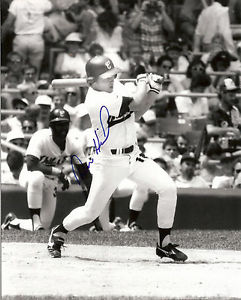
Harold Baines was the first overall selection in the 1977 draft after White Sox owner Bill Veeck had seen him play little league years before.  He made his major league debut less than 3 years later, on Opening Day 1980 against the Orioles at old Comiskey Park.  Baines started to break out in 1981, but the long player’s strike limited him to only 82 games.  With a full slate of games played in 1982, Baines appeared in all but one of them, with numbers good enough to garner votes for AL MVP.

1983 was a banner year on the south side, as the White Sox captured their first ever division title.  Baines was a key contributor, hitting .280 with 20 home runs and 99 RBIs.  During the ALCS against the Orioles, Baines struggled, like most of his teammates, getting only 2 hits in the 4-game series.  At season’s end, he picked up 49 votes to finish 10th in MVP voting.

Baines continued to excel in 1984, though the rest of the team did not.  On May 8, he ended the longest game in major league history (8 hours and 6 minutes over 25 innings on successive evenings) with a walk-off home run against Chuck Porter of the Brewers.  He finished the year with a .304 average, a career high 29 home runs, and 94 RBIs, while leading the league in slugging at .541.  He once again garnered MVP consideration, finishing the vote tied for 13th place.  1985 was another strong season for Baines.  He earned his first All Star selection, singling off former teammate LaMarr Hoyt in his only at bat at the Metrodome.  He finished the year hitting .309 with 22 home runs and a career high 113 RBIs.  He earned 49 votes in placing 9th in MVP voting.

Baines saw his body start to betray him for the first time in 1986.  He appeared in his second straight All Star game, going hitless in his one at bat.  A late August knee injury caused him to miss time, and a late September collision with Neal Heaton in a loss to the Twins reinjured the knee, leading to arthroscopic surgery following the season.  He finished the season hitting .296, just missing his 3rd consecutive .300 season, with 21 home runs and 88 RBIs.  He returned for opening day in 1987, getting two hits and knocking in the winning runs on the hard artificial turf of Royals Stadium, but was unable to walk the following day.  A second arthroscopic surgery caused him to miss 23 games before he returned, moving from right field to designated hitter.  He still was named to his 3rd straight All Star team, going hitless in the 2-0 loss by the AL.  Come year end, he had hit .293 with 20 home runs and 93 RBIs.

1988 was a down year for Baines, though he managed to appear in 158 games.  His average dropped to .277, his lowest total since 1982, while hitting only 13 home runs, his lowest total since 1981.  He made only 9 appearances in the outfield while becoming accustomed to being a full-time designated hitter.  He bounced back in 1989.  He was named the starting DH in the All Star game, going 1-3 with an RBI in the AL’s victory at Angel Stadium.  On July 29, he was traded to the Rangers, along with Fred Manrique, for Wilson Alvarez, Scott Fletcher, and Sammy Sosa.  “It’s an unpopular decision as far as the fans are concerned, but sometimes unpopular means exactly that-unpopular,” GM Larry Himes said at the time.  “It doesn`t mean that it isn`t a good decision.  This is a decision we made as far as direction of the Chicago White Sox for today and for our future.”  Baines was hitting .321 with 13 home runs and 56 RBIs at the time of the trade.  Less than a month later, as the Rangers visited Chicago for the first time on August 20, the White Sox retired Baines’ #3, a somewhat awkward attempt to placate the enraged fanbase.

Baines returned to the White Sox as a free agent in 1996.  Appearing in 143 games, Baines hit .311 with 22 home runs and 95 RBIs.  He returned in 1997 and was putting together another fine season, putting up a .305 average with 12 home runs and 52 RBIs in 93 games when, on July 29 again, he was traded to the Orioles for a player to be named later.

Three years later, once again on July 29, the White Sox re-acquired Baines, along with Charles Johnson, from the Orioles for Miguel Felix, Juan Figueroa, Jason Lakman, and Brook Fordyce.  Appearing in 24 games down the stretch, Baines hit .213 with a single home run and 9 RBIs as the White Sox took the Central Division crown.  Baines went 1-4 in the ALDS as the White Sox were swept by the Mariners.  He returned to the White Sox in 2001 at the age of 42, getting extra playing time once Frank Thomas went down with an injury.  In 32 games, he hit .131, failing to homer and driving in only 6.

On July 20, 2008, the White Sox unveiled a bronze statue of Baines at U.S. Cellular Field prior to their game against the Royals.  On December 9, 2018, Baines was elected to the National Baseball Hall of Fame Class of 2019 via the Today’s Game Era ballot.

David Ross donned #3 when he joined the Cubs in 2015 on a two-year deal.  Ross announced his plans to retire following the 2016 season, after playing 15 seasons in the major leagues.  During Game 7 of the World Series, Ross hit a home run in his final at-bat, making him the oldest player to homer in World Series history.

Throwback Thursday – Batting Leaders Of The 1980s

Our Throwback Thursday feature continues, as we point the wayback machine back to the 1980s and put our focus on the offensive leaders of that decade.  As a reminder, I’ve identified 14 games that I attended during this time period, when I would have been ages 5 through 14.

Home Runs

Name Total
Carlton Fisk 3
Greg Walker 2
Harold Baines 2
Eddie Murray 2
Brian Downing 2
Daryl Boston 2

Hits

Name Total
Carlton Fisk 14
Harold Baines 14
Greg Walker 12
7 tied with  5

Runs

Name Total
Harold Baines 8
Greg Walker 6
Gary Ward 5
Daryl Boston 4
9 tied with 3

RBI

Name Total
Carlton Fisk 11
Greg Walker 8
Harold Baines Continue reading →

By The Numbers – 40

In 1929, uniform numbers appeared on the back of baseball jerseys for the first time, thanks to the Indians and the Yankees.  By 1937, numbers finally appeared across all uniforms, both home and away, across both major leagues.  Since that time, 81 distinct numbers have been worn by members of the White Sox, while the Cubs boast 76.

Today, we continue our look at those players, picking our favorite, if not the best, player to wear each uniform number for both Chicago teams with #40.  55 different players have donned #40 while playing in Chicago, 25 for the White Sox and 30 for the Cubs.

Acquired in mid-June, along with George Frazier and Ron Hassey, from the Indians in exchange for Mel Hall, Joe Carter, Don Schulze, and Darryl Banks, Rick Sutcliffe, wearing #40, quickly became the ace of the Cubs staff, going 16-1 with a 2.69 ERA in leading the Cubs to their first division title and his first Cy Young Award.  He then homered in and won Game 1 of the NLCS, the first post-season game at Wrigley Field since the 1945 World Series, before dropping the deciding Game 5 in San Diego.  A free agent after the season, Sutcliffe signed a long term deal with the Cubs.

A hamstring injury limited him to 20 starts in 1985, while arm injuries in 1986 led him to a 5-14 record with a 4.64 ERA in 28 appearances.  He bounced back in 1987, leading the league with 18 wins in 34 starts for the last place Cubs, finishing second in the Cy Young Award voting.  He went 13-14 in 1988, but did somehow manage a steal of home plate on July 29th in a victory against the Phillies.  A resurgence in 1989 helped lead the Cubs to their second divisional title, and he made one start against the Giants in the NLCS.  Recurring arm injuries caused Sutcliffe to miss most of the 1990 and 1991 seasons, with only 24 appearances between the two years, and the Cubs let him leave as a free agent following the 1991 season.

On the other side of town, Wilson Alvarez was acquired by the White Sox, along with Scott Fletcher and Sammy Sosa, for Harold Baines and Fred Manrique on July 29, 1989, making his White Sox debut on August 11, 1991 by throwing an unlikely no hitter against the Orioles at Memorial Stadium.  He made 8 additional starts for the White Sox down the stretch, finishing the year with a 3-2 record and a respectable 3.51 ERA.  1992 saw Alvarez work mostly out of the bullpen, getting only 9 starts out of his 34 appearances.  He posted a career high 1.674 WHIP, giving up 65 walks in just over 100 innings.  This led to an unfortunate 5.20 ERA, despite a 5-3 record.  In 1993, Alvarez managed to break in to the rotation full time.  Despite leading the league with 122 walks, he finished second in the AL with an ERA of 2.95 and ended up with a 15-8 record as the White Sox won the AL West title for the first time in a decade.  He was the winning pitcher in Game 3 of the ALCS, holding the Blue Jays to a single run while throwing a complete game.

Alvarez improved in 1994, earning his first (and only) All Star nod and cutting his walk total nearly in half, helped by the player strike that ended the season in August, and he finished the year with a 12-8 record and a 3.45 ERA.  When baseball returned in 1995, Alvarez struggled to regain his groove, finishing with a losing record for the first time and an ERA of 4.32.  1996 saw a nice bounce back for Alvarez.  While his ERA was still an elevated 4.22, he tied his career high with 15 wins and set career highs for innings pitched and strikeouts.  He continued to impress in 1997, putting up a 9-8 record with a 3.03 ERA by the end of July, when, with the White Sox a mere 3 games back in the standings, he, along with Danny Darwin and Roberto Hernandez, was sent to the Giants for Brian Manning, Lorenzo Barceló, Mike Caruso, Keith Foulke, Bob Howry, and Ken Vining in what would become known as the White Flag Trade.

#1 – Harold Baines

Name: Harold Baines

Rank: 1

Position: RF/DH

Years With White Sox: 1980-1989, 1996-1997, 2000-2001

Harold Baines was the first overall selection in the 1977 draft after White Sox owner Bill Veeck had seen him play little league years before.  He made his major league debut less than 3 years later, on Opening Day 1980, going 0-4 against the Orioles at old Comiskey Park.  He appeared in 141 games and finished the year hitting .255 with 13 home runs and 49 RBIs.

Baines started to break out in 1981, where the long player’s strike led him to only appearing in 82 games.  He boosted his average to .286 and hit 10 home runs with 41 RBIs in only 280 at bats.

With labor problems behind them, a full slate of games was played in 1982, with Baines appearing in all but one of them.  Hitting .271, Baines smacked 25 home runs with 105 RBIs, while setting a career high with 10 stolen bases.  His numbers were good enough to garner 9 votes for AL MVP.

1983 was a banner year on the south side, as the White Sox captured their first ever division title.  Baines was a key contributor, hitting .280 with 20 home runs and 99 RBIs.  During the ALCS against the Orioles, Baines struggled, like most of his teammates, getting only 2 hits in the 4 game series.  At season’s end, he picked up 49 votes to finish 10th in MVP voting.

Baines continued to excel in 1984, though the rest of the team did not.  On May 8, he ended the longest game in major league history (8 hours and 6 minutes over 25 innings on successive evenings) with a walk-off home run against Chuck Porter of the Brewers.  He finished the year with a .304 average, a career high 29 home runs, and 94 RBIs, while leading the league in slugging at .541.  He once again garnered MVP consideration, finishing the vote tied for 13th place.

1985 was another strong season for Baines.  He earned his first All Star selection, singling off former teammate LaMarr Hoyt in his only at bat at the Metrodome.  He finished the year hitting .309 with 22 home runs and a career high 113 RBIs.  He earned 49 votes in placing 9th in MVP voting.

Baines saw his body start to betray him for the first time in 1986.  He appeared in his second straight All Star game, going hitless in his one at bat.  A late August knee injury caused him to miss time, and a late September collision with Neal Heaton in a loss to the Twins reinjured the knee, leading to arthroscopic surgery following the season.  He finished the season hitting .296, just missing his 3rd consecutive .300 season, with 21 home runs and 88 RBIs.

Baines returned for opening day in 1987, getting two hits and knocking in the winning runs on the hard artificial turf of Royals Stadium, but was unable to walk the following day.  A second arthroscopic surgery caused him to miss 23 games before he returned, moving from right field to designated hitter.  He still was named to his 3rd straight All Star team, going hitless in the 2-0 loss by the AL.  Come year end, he had hit .293 with 20 home runs and 93 RBIs.

1988 was a down year for Baines, though he managed to appear in 158 games.  His average dropped to .277, his lowest total since 1982, while hitting only 13 home runs, his lowest total since 1981.  He made only 9 appearances in the outfield while becoming accustomed to being a full time designated hitter.

Baines bounced back in 1989.  He was named the starting DH in the All Star game, going 1-3 with an RBI in the AL’s victory at Angel Stadium.  On July 29, he was traded to the Rangers, along with Fred Manrique, for Wilson Alvarez, Scott Fletcher, and Sammy Sosa.  “It’s an unpopular decision as far as the fans are concerned, but sometimes unpopular means exactly that-unpopular,” GM Larry Himes said at the time.  “It doesn`t mean that it isn`t a good decision.  This is a decision we made as far as direction of the Chicago White Sox for today and for our future.”  Baines was hitting .321 with 13 home runs and 56 RBIs at the time of the trade.  Less than a month later, as the Rangers visited Chicago for the first time on August 20, the White Sox retired Baines’ #3, a somewhat awkward attempt to placate the enraged fanbase.

Baines returned to the White Sox as a free agent in 1996.  Appearing in 143 games, Baines hit .311 with 22 home runs and 95 RBIs.  He returned in 1997 and was putting together another fine season, putting up a .305 average with 12 home runs and 52 RBIs in 93 games when, on July 29 again, he was traded to the Orioles for a player to be named later.

Three years later, once again on July 29, the White Sox re-acquired Baines, along with Charles Johnson, from the Orioles for Miguel Felix, Juan Figueroa, Jason Lakman, and Brook Fordyce.  Appearing in 24 games down the stretch, Baines hit .213 with a single home run and 9 RBIs as the White Sox took the Central Division crown.  Baines went 1-4 in the ALDS as the White Sox were swept by the Mariners.

Baines returned to the White Sox in 2001 at the age of 42, getting extra playing time once Frank Thomas went down with an injury.  In 32 games, he hit .131, failing to homer and driving in only 6.

Baines returned to the White Sox dugout in 2004, when new manager Ozzie Guillen named him bench coach.  He would remain on staff until 2015, when he became an ambassador for the team.  On July 20, 2008, the White Sox unveiled a bronze statue of Baines at U.S. Cellular Field prior to their game against the Royals.  On December 9, 2018, Baines was elected to the National Baseball Hall of Fame Class of 2019 via the Today’s Game Era ballot.

Baines’ numbers in a White Sox uniform, both for games I attended and overall, were:

Continue reading →

#25 – Wilson Alvarez

Name: Wilson Alvarez

Rank: 25

Position: P

Years With White Sox: 1991-1997

Five days after making his major league debut for the Rangers, Wilson Alvarez was acquired by the White Sox, along with Scott Fletcher and Sammy Sosa, for Harold Baines and Fred Manrique on July 29, 1989.  After spending the next 2 calendar years in the minor leagues, Alvarez returned to the big leagues and made his White Sox debut on August 11, 1991, throwing an unlikely no hitter against the Orioles at Memorial Stadium.  With nowhere to go but down from there, he made 8 additional starts for the White Sox down the stretch, finishing the year with a 3-2 record and a respectable 3.51 ERA.

After tossing nearly 300 innings the previous year between winter league, Triple A, and the big leagues, 1992 saw Alvarez work mostly out of the bullpen, getting only 9 starts out of his 34 appearances.  He posted a career high 1.674 WHIP, giving up 65 walks in just over 100 innings.  This led to an unfortunate 5.20 ERA, despite a 5-3 record.

In 1993, Alvarez managed to break in to the rotation full time.  Despite leading the league with 122 walks, he finished second in the AL with an ERA of 2.95 and ended up with a 15-8 record as the White Sox won the AL West title for the first time in a decade.  He was the winning pitcher in Game 3 of the ALCS, holding the Blue Jays to a single run while throwing a complete game.

Alvarez improved in 1994, earning his first (and only) All Star nod and cutting his walk total nearly in half.  Part of that, of course, was due to the player strike that ended the season in August, and he finished the year with a 12-8 record and a 3.45 ERA.  When baseball returned in 1995, Alvarez struggled to regain his groove, finishing with a losing record for the first time and an ERA of 4.32.

1996 saw a nice bounce back for Alvarez.  While his ERA was still an elevated 4.22, he tied his career high with 15 wins and set career highs for innings pitched and strikeouts.  He continued to impress in 1997, putting up a 9-8 record with a 3.03 ERA by the end of July, when, with the White Sox a mere 3 games back in the standings, he, along with Danny Darwin and Roberto Hernandez, was sent to the Giants for Brian Manning, Lorenzo Barceló, Mike Caruso, Keith Foulke, Bob Howry, and Ken Vining in what would become known as the White Flag Trade.

Alvarez’s numbers in a White Sox uniform, both for games I attended and overall, were:

Continue reading →

#32 – Julio Cruz

Name: Julio Cruz

Rank: 32

Position: 2B

Years With White Sox: 1983-1986

Acquired by the White Sox on June 15, 1983 from the Mariners for counterpart Tony Bernazard, Julio Cruz gave the White Sox the spark they were looking for, helping the team go on a 72-31 run to finish the season and go from 6 1/2 games back to 20 games ahead.  Cruz scored the winning run on a Harold Baines sacrifice fly against, of all teams, the Mariners on September 17, clinching the first division title in White Sox history.  Cruz hit .333 during the ALCS against the Orioles, swiping 2 bases in the 4 game series.

In January of 1984, after nearly leaving to join the Angels, Cruz re-signed with the White Sox on a 6 year deal, thought to be worth between $3.6 to $4.8 million.  Unfortunately, time, and injuries, were starting to take their toll.  1984 was the best year of the deal, and Cruz saw his average drop to .222 and he stole only 14 bases, a career low to date.

1985 saw the bottom fall out for Cruz.  Dealing with a toe injury, he was limited to 91 games and he finished the year with a .197 average with only 8 stolen bases.  1986 was more of the same, as he managed to only get in to 81 games, swiping a mere 7 bases while hitting .215.

With Donnie Hill, Jerry Royster, and Fred Manrique in camp in 1987, things did not look good for Cruz.  General Manager Larry Himes hoped that a deal could be made to find Cruz a new home, but nothing materialized and, on March 23, Cruz was told he was being released.  He never played in the major leagues again.

Cruz’s numbers in a White Sox uniform, both for games I attended and overall, were:

Continue reading →

#85 – Scott Fletcher

fletcherName: Scott Fletcher

Rank: 85

Position: SS/2B

Years With White Sox: 1983-1985, 1989-1991

Scott Fletcher first joined the White Sox on January 25, 1983 when he was acquired from the crosstown Cubs, along with Randy Martz, Pat Tabler, and Dick Tidrow, in exchange for Warren Brusstar and Steve Trout.  He split time at shortstop with Jerry Dybzinski for the 1983 squad, who ran away and hid with the Western Division title, their first post-season appearance since the 1959 World Series.  Fletcher appeared in 114 games, hitting only .237.  During the ALCS against the Orioles, he went hitless in 7 at bats across 3 games.

Fletcher became the primary shortstop in 1984 and saw his numbers improve.  His average jumped up to .250 while appearing in 149 games.  Despite the improvement, his job became less secure over the offseason, as the White Sox acquired a young shortstop named Ozzie Guillen.  When Guillen was named the starting shortstop for 1985 during spring training, Fletcher reacted poorly.  “Taking nothing away from the way Ozzie can play,” Fletcher said, “he hasn`t been that great to take the job away from me. He hasn`t just put it on fire and clearly won it.”  Despite the reduced playing time, Fletcher once again improved his numbers, with this average rising to .256 in only 301 at bats.

Following the 1985 season, Fletcher, along with Ed Correa and Jose Mota, was traded to the Rangers for Dave Schmidt and Wayne Tolleson.  He returned at the trade deadline in 1989, when he, along with Wilson Alvarez and Sammy Sosa, were acquired from the Rangers for Harold Baines and Fred Manrique.  With his former nemesis Ozzie Guillen entrenched at shortstop, Fletcher became the team’s starting second baseman.  He hit .272 for the White Sox after the trade, despite constant criticism from the fans who were angry at the loss of Baines.

1990 was the final season for the White Sox at Comiskey Park, and Scott Fletcher again manned second base for the suddenly contending team.  Ironically, Fletcher put up his worst numbers since 1983, the last time the team contended for a division title.  Across the street in the new Comiskey Park, Fletcher again saw diminished playing time as Joey Cora established himself as the everyday second baseman.  Appearing in only 90 games, his lowest total since getting cups of coffee with the Cubs in the early 80s, Fletcher’s average dropped to .206.  Following the season, he became a free agent.

Fletcher’s numbers in a White Sox uniform, both for games I attended and overall, were:

Continue reading →

#239 – Donnie Hill

donnie-hillName: Donnie Hill

Rank: 239

Position: 2B

Years With White Sox: 1987-1988

Donnie Hill was acquired by the White Sox as the player to be named later in the earlier trade that sent Gene Nelson to the A’s.  The 1987 season was painful for him, both physically and emotionally.  An eye infection struck him in May and lingered for nearly 2 months, making it difficult to see.  As a result, his batting average plunged to .239.  “It was just a pain in the tail,” Hill said. “I don’t know how I got the problem.  Whatever I did only seemed to make it worse.  It was a distraction, but I’m not using it as an excuse.”

Going in to the 1988 season, Hill was slated to platoon at second base with Fred Manrique.  Things did not improve for Hill, though, as he appeared in only 83 games and his average dropped to .217.  “I never should have tried to change what I did in Oakland,” Hill said, “but I’m still confident in my ability. I know there are some things I need to do in the off-season-drop a little weight and get stronger. I’m not finished.”

The White Sox were just about finished with him, though.  Hill came to spring training in 1989, but was released on March 9, about a week into the Grapefruit League schedule.

Hill’s numbers in a White Sox uniform, both for games I attended and overall, were: Continue reading →

#278 – Jerry Royster

Jerry Royster (1987 White Sox) 2

Name: Jerry Royster

Rank: 278

Position: 3B/LF

Year With White Sox: 1987

Veteran infielder Jerry Royster joined the White Sox as a free agent in January of 1987.  “My biggest concern when I took over the team wasn’t our starters as much as our depth,” said then-Sox general manager Larry Himes. “With the previous acquisitions of Hill and Manrique, Jerry solidifies our infield. We can cover ourselves at all positions for 162 games.”

Royster moved into the starting lineup, platooning with Steve Lyons, in late June when manager Jim Fregosi sent Tim Hulett back to Triple A.  He put up a .240 average in 55 games through late August.

On August 26, his time with the White Sox came to an end when he was traded to the Yankees, along with minor leaguer Mike Soper, in exchange for lefty reliever Ken Patterson and a minor league player to be named later.

Interesting note on career minor leaguer Soper, an infielder who, at the time of this trade, had been part of a White Sox-Yankees trade three times over the previous two years.

Royster’s numbers in a White Sox uniform, both for games I attended and overall, were:

Continue reading →

#338 – Fred Manrique

Name: Fred Manrique

Rank: 338

Position: 2B

Years With White Sox: 1987-1989

Fred Manrique was acquired prior to the 1987 from the Cardinals in exchange for Bill Dawley.  After getting a smattering of playing time during his previous trips to the show, Manrique became a serviceable second baseman for the 1987 South Siders.  In 1988, Manrique got even more playing time, but his production fell off somewhat from the previous year.  In 1989, Manrique bounced back after starting the year in the minors, just in time to be included in the trade that sent Harold Baines to the Rangers in exchange for Wilson Alvarez, Scott Fletcher, and Sammy Sosa.

Manrique’s numbers in a White Sox uniform, both for games I attended and overall, were:

Continue reading →