#240 – Antonio Osuna

osunaName: Antonio Osuna

Rank: 240

Position: P

Years With White Sox: 2001-2002

When Bill Simas went down for the entire 2001 season during spring training, GM Kenny Williams struck a deal with the Dodgers on St. Patrick’s Day, acquiring Antonio Osuna for a collection of minor league talent. Unfortunately for Williams and the White Sox, a cyst in Osuna’s pitching shoulder limited him to 4 poor appearances in April before requiring season ending surgery.

Osuna bounced back in 2002, appearing in 59 games and posting a 3.86 ERA.  He, along with Damaso Marte, replaced Keith Foulke as the team’s closer at the All Star break, converting 11 out of 14 save opportunities.

In January of 2003, Osuna was sent to the Yankees as part of the 3 team deal that brought Bartolo Colon to the White Sox and sent Orlando Hernandez, Rocky Biddle, and Jeff Liefer to the Expos.

Osuna’s numbers in a White Sox uniform, both for games I attended and overall, were: Continue reading →

#241 – Mike Myers

mmyersName: Mike Myers

Rank: 241

Position: P

Year With White Sox: 2007

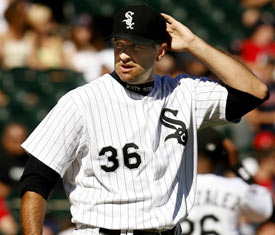
After spending 15 years in Smith’s Grove Sanitarium, Mike Myers escaped and returned to his hometown of Haddonfield, Illinois.  Oh wait, that’s the wrong Mike Myers.  After 6 seasons on Saturday Night Live, Mike Myers left to pursue a film career, where…what, still the wrong Mike Myers?  How many where there?

Baseball’s Mike Myers, a native of Arlington Heights, joined the White Sox in August of their lost 2007 season after being released by the Yankees.  He fit right in, which, sadly, means he did not pitch well, putting up an 11.20 ERA in 17 appearances.  Myers had a $1.1 million option for 2008, which the White Sox chose to decline.  Myers tried to latch on to a team the next spring, but never did pitch in the major leagues again.

Myers’ numbers in a White Sox uniform, both for games I attended and overall, were: Continue reading →

#242 – Rocky Biddle

rbiddleName: Rocky Biddle

Rank: 242

Position: P

Years With White Sox: 2000-2002

Rocky Biddle was drafted by the White Sox in the first round of the 1997 draft.  In August of 2000, with the White Sox heading towards a Central division title despite a pitching staff falling by the day, Biddle was called up and made his major league debut on August 10.  Pitching on only three days rest against the White Sox eventual ALDS foe Seattle, Biddle gave up 6 runs in 5 1/3 innings.  He ended up starting 4 games that season as the White Sox limped to the playoffs and a three game sweep against the Mariners.

Biddle spent parts of the next two seasons as one piece of the black hole that was the fifth starter for the White Sox.  Biddle started 28 of his 74 games over those two seasons, although his ERA did improve each season.

His time with the White Sox came to an end on January 15, 2003 when he was included in a 3 team trade that sent Biddle, Jeff Liefer, and Orlando Hernandez to the Expos, Antonio Osuna and minor-league pitcher Delvis Lantigua to the Yankees, and brought Bartolo Colon and minor-league infielder Jorge Nunez to the White Sox.

Biddle’s numbers in a White Sox uniform, both for games I attended and overall, were:

Continue reading →

100 Years Of Innovation

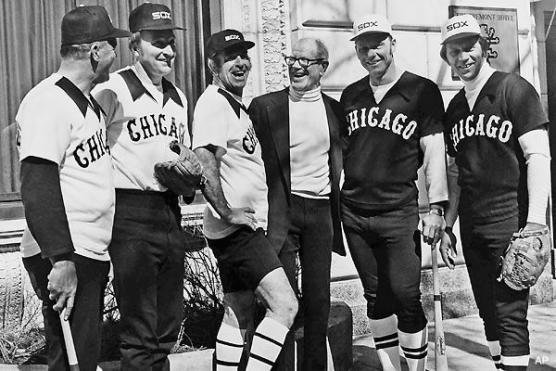
1976 Chicago White Sox100 years ago today, Bill Veeck, the former club treasurer for the Cubs and two-time owner of the White Sox, was born here in Chicago.  Veeck followed his father, the then president of the Cubs, into baseball.  As a 13 year old, Veeck came up with the idea of planting ivy to cover the outfield walls at Wrigley Field.  In 1937, as general manager, he oversaw the construction of the iconic hand operated scoreboard that is still in use today.

Veeck left the Cubs in 1941, striking out on his own and buying the minor league Milwaukee Brewers.  While he owned the team, he also served in the Marines during World War II, where he injured his leg, which required amputation.  After the war, Veeck sold his interests in the Brewers and bought the Cleveland Indians, returning to the major leagues.  In July of 1947, Veeck broke the color barrier in the American League by signing Larry Doby.  In 1948, the Indians won their first World Series title since 1920.  Veeck was forced to sell the Indians in 1949 due to his divorce.

2 years later, Veeck was back in business, purchasing the St. Louis Browns.  While trying to force the Cardinals out of town, Veeck came up with one of his most famous, or perhaps infamous, stunts, signing Eddie Gaedel, standing 3 feet and 7 inches tall, and sending him to the plate in the second game of a double header against the Detroit Tigers on August 19, 1951.  Gaedel walked on four pitches and was lifted for a pinch runner.  American League president Will Harridge voided Gaedel’s contract the next day, claiming that Veeck was making a mockery of the game. In response, Veeck threatened to request an official ruling on whether Yankees shortstop Phil Rizzuto, the reigning MVP, was a short ballplayer or a tall midget.

Continue reading →

#259 – Scott Bradley

scottbradleyName: Scott Bradley

Rank: 259

Position: C

Year With White Sox: 1986

Scott Bradley joined the White Sox on February 13, 1986 along with Neil Allen and a minor leaguer who never sniffed the big leagues from the Yankees in exchange for Ron Hassey, Matt Winters, and two additional minor leaguers who would never again heard from.  Bradley spent the majority of his time with the White Sox in Triple A, earning a promotion to the big league club on May 28th after the release of Marc Hill.  With Carlton Fisk and Joel Skinner also on the roster, Bradley wasn’t going to be limited to catching.  “Wherever they want to play me is fine with me,” Bradley said. “The whole key is being here.”

He wasn’t there for long, though.  On June 26, his short stay in Chicago came to an end when he was traded to the Mariners for a player to be named later, which, 5 days later, became Ivan Calderon.

Bradley’s numbers in a White Sox uniform were:

Continue reading →

#261 – Roy Smalley

roysmalleyName: Roy Smalley

Rank: 261

Position: 3B

Year With White Sox: 1984

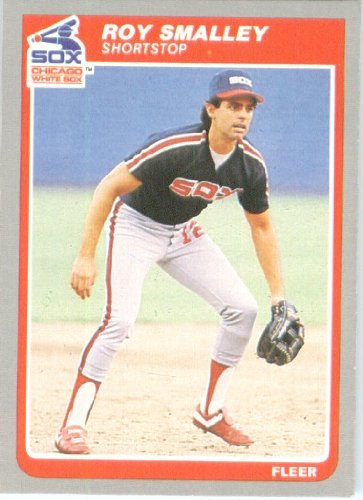
Roy Smalley came to the White Sox on July 18, 1984 from the Yankees in exchange for Kevin Hickey and future Cy Young award winner Doug Drabek.  The Sox took a chance that Smalley could help wake up their struggling club and help them to repeat as champions of the American League West.  He hit .239 with the Yankees, but the change of scenery didn’t end his struggles.  Smalley appeared hesitant defensively at third base and out of sync at the plate, hitting an anemic .170 in 48 games with the Sox.

The next February, the White Sox sent Smalley to the Twins, in exchange for minor leaguers Ron Scheer and Randy Johnson (no, not that Randy Johnson).  Under an unusual arrangement, the Twins had to keep Smalley for at least two years, at which point they had the option of returning him to the Sox.  Smalley ended up playing three years with the Twins before he, and the 3 years and $1.6 remaining on his contract, was shipped back to Chicago.

After adjusting things to make room for him during spring training, the White Sox made Smalley their final cut coming out of spring training.  “They’ve got a direction they are going in,” Smalley said. “It was obvious from the beginning that the direction didn’t include me.”  Despite not making the team, Smalley impressed the Sox brass.  “He’s a fine young man,” said Sox manager Jim Fregosi.  “He handled himself very well.”  The 35-year old Smalley never played in the major leagues again.

Smalley’s numbers in a White Sox uniform, both for games I attended and overall, were:

Continue reading →

Ending With A Whimper

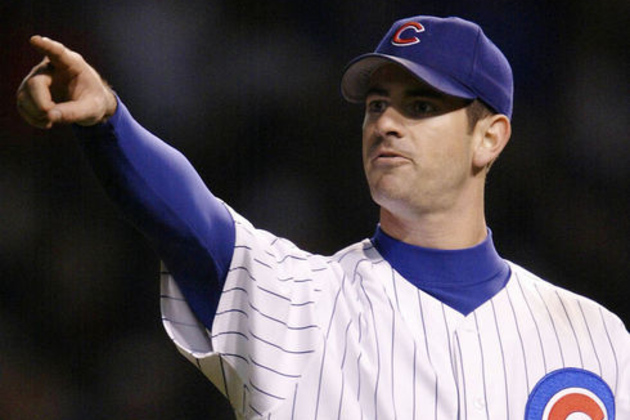
2591590_large7 seasons after his last major league appearance, former Cub phenom Mark Prior called it a career on Monday.  The second overall pick in the 2001 draft, Prior quickly rose to the major leagues, making his debut on May 22, 2002, earning the victory against the Pirates.  He excelled the following year, as a surprising Cubs team won their division and came within 5 outs of making their first World Series since 1945.  Prior finished the year 18-6, was named to the All Star team, finished third in Cy Young award voting and was ninth in voting for the MVP award.

2003 was also the start of Prior’s injury issues.  He hit the disabled list after colliding with Marcus Giles in a game in early July.  Thanks to the All Star break, he only missed 3 starts, but he never pitched a full season after that point.  He missed the first 2 months of the 2004 season due to an achilles injury.  In 2005, he again started the season on the disabled list and went back on after suffering a broken elbow after getting hit by a line drive off the bat of Brad Hawpe.  2006 marked the third straight season that Prior would start the season on the DL, where he would stay until June 18.  Less than a month later, he would return to the DL with a strained oblique suffered during batting practice.  On August 10, Prior made his final start of the season, going 3 innings and picking up the loss to the Brewers.  Four days later, he was placed on the DL for the third and final time that season, due to tendinitis.  He would never pitch in the major leagues again.

Prior left the Cubs following the 2007 season, and, since then, he has attempted comebacks with the Padres, Rangers, Yankees, Red Sox, and, most recently, the Reds, where he had to be shut down as a result of continuing shoulder problems after just 7 relief appearances in Triple A.  You couldn’t help but feel for him, a once in a lifetime stud pitcher who should have led the Cubs rotation for years and, instead, flamed out after 5 seasons.  Entire books could be written on what might have been, and now Mark Prior will have his summers free to read them.

Prior’s numbers in a Cub uniform, both for games I attended and overall, were: Continue reading →

2014 Hall Of Fame Ballot – The Holdovers

mlb_hofThe BBWAA released their ballot for the Hall of Fame class of 2014.  The results of the vote are due to be revealed on January 8th, with induction taking place next July.  After nobody was elected in last year’s voting, the new ballot contains 17 holdovers along with 19 newcomers, which may start to cause a bit of a problem.  The current BBWAA rules limit the number of votes on one ballot to 10, and there may be more than 10 deserving candidates.  As they start to pile up, and even more deserving candidates become eligible, the BBWAA and the Hall may find themselves with a mess on their hands.

Let’s take a look at the returning candidates today before moving on to the newcomers.

Jeff Bagwell
Years on ballot: 3
2013 Percentage: 59.6

Bagwell is going to be one of those candidates that, I think, gets hurt due to 10 vote limit.  He would have been elected already were it not for seemingly unfounded PED rumors.

Craig Biggio
Years on ballot: 1
2013 Percentage: 68.2

Biggio was the highest vote getter in last year’s election, only 39 votes shy of getting elected.  You would think he could make up that total this year as voters who have some inane theories on when someone deserves to be elected add him to their ballot.  It would be a boost to the Astros if both he and Bagwell were to go in together.

Barry Bonds
Years on ballot: 1
2013 Percentage: 36.2

Barry Bonds, he of the 7 MVP awards and 762 career home runs, found himself on the outside looking in after his initial run through the voting process.  Due to his connection to BALCO and PEDs, he’s unlikely to do much better this year.

Roger Clemens
Years on ballot: 1
2013 Percentage: 37.6

Roger Clemens, he of the 354 career victories and 7 Cy Young awards, also found himself on the outside looking in after his initial run through the voting process.  The interesting thing is that, despite his inclusion in the Mitchell Report and his connection to Andy Pettitte’s PED confession, Clemens picked up 8 more votes than Bonds.

Edgar Martinez
Years on ballot: 4
2013 Percentage: 35.9

The longtime DH for the Mariners has had plenty of support from the Internet but not as much from the BBWAA.  His long career as a DH may be holding him back.

Don Mattingly
Years on ballot: 13
2013 Percentage: 13.2

Back in 2010, I said that “being the best Yankee in a decade of bad Yankee teams does not a Hall of Famer make.”  Nothing that has happened since then would change my, or, seemingly, the voters, mind.

Fred McGriff
Years on ballot: 4
2013 Percentage: 20.7

A very good argument could be made that Fred McGriff has been hurt by the PED users more than anyone else.  Had he stuck around to hit an additional 7 home runs, he would likely have been elected thanks to his 500 home runs.  Without them, he gets penalized for not putting up better numbers than the PED users, who are also being penalized.  Doesn’t seem right.

Mark McGwire
Years on ballot: 7
2013 Percentage: 16.9

McGwire finds himself over 100 votes behind fellow PED users Barry Bonds and Roger Clemens.  Even if the voters do start to reverse track and start to vote for the convicted users, I think McGwire might still have trouble getting elected.

Jack Morris
Years on ballot: 14
2013 Percentage: 67.7

Morris enters his final year on the ballot needing only 42 additional votes to get enshrined, but with the influx of new, and exceptionally deserving, candidates,  I don’t see how he gets them.  Not that I would be too disappointed in that, as Morris, while a very good pitcher, falls short in my estimation.

Continue reading →

#278 – Jerry Royster

Jerry Royster (1987 White Sox) 2

Name: Jerry Royster

Rank: 278

Position: 3B/LF

Year With White Sox: 1987

Veteran infielder Jerry Royster joined the White Sox as a free agent in January of 1987.  “My biggest concern when I took over the team wasn’t our starters as much as our depth,” said then-Sox general manager Larry Himes. “With the previous acquisitions of Hill and Manrique, Jerry solidifies our infield. We can cover ourselves at all positions for 162 games.”

Royster moved into the starting lineup, platooning with Steve Lyons, in late June when manager Jim Fregosi sent Tim Hulett back to Triple A.  He put up a .240 average in 55 games through late August.

On August 26, his time with the White Sox came to an end when he was traded to the Yankees, along with minor leaguer Mike Soper, in exchange for lefty reliever Ken Patterson and a minor league player to be named later.

Interesting note on career minor leaguer Soper, an infielder who, at the time of this trade, had been part of a White Sox-Yankees trade three times over the previous two years.

Royster’s numbers in a White Sox uniform, both for games I attended and overall, were:

Continue reading →

Looking To Next Year Too

MLB: Cincinnati Reds at Los Angeles DodgersWith the 2013 season limping to the finish line, it became time to look forward to next year on Tuesday when the Cubs released their 2014 schedule. The north siders begin the 2014 campaign on the road against the Pirates on March 31.  Their home schedule kicks off against the Phillies that weekend.

Inter-league matchups against the AL East include home dates against the Yankees, Rays, and Orioles. The Cubs will travel to Boston, Toronto, and will also make their first ever trip to new Yankess Stadium to face the Yankees. The team will also split a 4 game series against the White Sox, similar to this season, with the first 2 games at Wrigley Field and the last 2 at US Cellular Field.

Should the team find themselves in contention, they finish the year with games mostly against their Central division foes, with only 7 September games coming outside the division.