Fitbit XI – Week 33

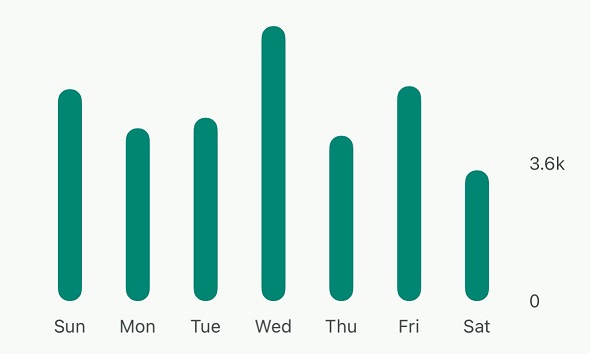
A strong week of vacation helped extend my 30,000-step week streak to 17 weeks.  Things got off to a strong start on Sunday as I gathered 5600 steps thanks to a visit to Rate Field to see the White Sox battle the Yankees.  Labor Day saw me come within 23 steps of 4600 on Monday.  A small increase on Tuesday again left me 40 steps away from 4900.  A Cubs game Wednesday night left me just 27 steps shy of 7300.  Thursday saw a big drop-off, needing 13 more steps just to reach 4400.  A doctor’s appointment on Friday put me 27 steps short of 5700.  The week’s low point came on Saturday, ending the week just 24 steps shy of 3500.

Total steps: 35,857

Daily average: 5122.4

Fitbit XI – Week 32

My 30,000-step week streak barely reaches sixteen weeks, thanks to a night out at the ballpark.  Things got off to a slow start on Sunday as I gathered just 3400 steps.  A walk around the block on Monday left me 15 steps shy of 5400.  A small decrease on Tuesday again left me 15 steps away from 5000.  Wednesday saw a big drop-off, going down to 3800 steps.  Things fell even further on Thursday, dropping down to 3100 steps.  Watching the White Sox do battle against the Yankees on Friday turned out to be my high point of the week, finishing 8 steps short of 6900.  The week’s low point came on Saturday, ending the week just 12 steps shy of 3100.

Total steps: 30,705

Daily average: 4386.4

Looking Ahead To 2026

Eschewing their traditional day after the All-Star Game release, Major League Baseball released their tentative 2026 schedule on a random Tuesday at the end of August.  For the fourth year in a row, MLB is keeping with a balanced schedule, playing 52 games against division opponents, 64 games against non-division opponents in the same league, and 46 interleague games, with series against every team in the opposite league.  With a young and improving White Sox team already looking ahead to next year and the Cubs trying to lock down a Wild Card spot, the 2026 season looks like it could be an interesting one for the city of Chicago.  So, for one day, at least, let’s turn our attention to next summer for both teams.

The White Sox open their season on March 26, the earliest North American start in league history, under the dome in Milwaukee against the Brewers, followed by a trip to South Beach to face the Marlins.  They open up their home schedule against the Blue Jays on April 2.

Aside from the Brewers and Marlins, the interleague schedule sees the White Sox going on the road to face the Phillies, Cardinals, Diamondbacks, and Padres, while the Pirates, Reds, Dodgers, Braves, Mets, Rockies, and Nationals make their way to Rate Field.  The rivalry with their north side foes continues with a three-game weekend series at home Wrigley Field in mid-May followed by a weekday series at Wrigley Field in mid-August.

The White Sox wrap up the 2026 season in September with series against the Twins, Guardians, and Tigers, should it matter.  The season ends at home with a three-game series against the Rockies.

On the north side, the Cubs kick off their season at home against the Nationals and the Angels before heading out on the road in early April.  Aside from the Angels, the Cubs will host the Twins, A’s, Yankees, Blue Jays, and Tigers, while travelling to visit the Mariners, Orioles, Guardians, Red Sox, and Royals.

Twelve of their 24 games in September are against their NL Central rivals, with six coming against the Brewers, which could make a difference should the Cubs find themselves in contention once again.  They end the year with a three-game road trip to Boston to face the Red Sox.

The Annual Selloff Begins

With the trade deadline approaching, the White Sox made their first deal, sending outfielder Austin Slater to the Yankees for right-handed pitcher Gage Ziehl.  Slater, 32, was signed as a free agent last November and has five home runs in 123 at bats this season.  Ziehl, 22, was the Yankees’ fourth round pick in the 2024 draft and has split time between three levels in the Yankee system and is their 18th ranked prospect.

We have less than 29 hours to go until the deadline, so I expect there to be more moves, both by the White Sox and the Cubs, coming soon.

Crossing Sides Of Town

So far in 2025, Brad Keller, Mike Tauchman, Nicky Lopez, and Reese McGuire pushed the total of players I’ve seen take the field in person for both the Cubs and the White Sox to 47.  With the final round of crosstown kicking off tonight at Rate Field, here’s a look at those players, in alphabetical order.

David Aardsma

After posting a decent season with the Cubs in 2006, Aardsma was traded to the White Sox for Neal Cotts.  Aardsma lasted one season with the Sox, where he was unable to duplicate his success from the year before.

Jason Bere

Drafted by the White Sox in the 36th round in 1990, Bere debuted with the big-league club in 1993, finishing 2nd in Rookie of the Year voting.  After an All Star selection in 1994, injuries marred the remainder of his tenure on the South Side, which ended in 1998.  He resurfaced with the Cubs in 2001 and had a decent season, but he went 1-10 in 2002 before being let go.

Emilio Bonifacio

Bonifacio spent back-to-back partial seasons in Chicago, first for the Cubs in 2014 after signing as a free agent, where he played decently enough to be flipped at the trade deadline, along with James Russell, to the Braves for a young catching prospect by the name of Victor Caratini.  He returned to Chicago in 2015, signing with the White Sox, where he he did not do well at all, hitting .167 in 47 games before being released in August.

Welington Castillo

Debuting with the Cubs in 2010, Castillo spent time behind the plate for the Cubs until May of 2015, when, having been replaced in the starting lineup by Miguel Montero, he was flipped to the Mariners.  He returned to Chicago in 2018 after signing with the White Sox as a free agent.  On May 24th of that season, he was suspended 80 games for a violation of the PED policy.  The White Sox then cut bait following the 2019 season, shipping him off to the Rangers.

Neal Cotts

Acquired by the White Sox in the Billy Koch trade, he debuted with the team in 2003.  He was a key contributor in the bullpen during the 2005 championship season and was the only relief pitcher to appear in all 3 rounds of the playoffs that season.  Following the 2006 season, he was traded to the Cubs for David Aardsma, and he spent the next 3 injury filled seasons on the North Side.

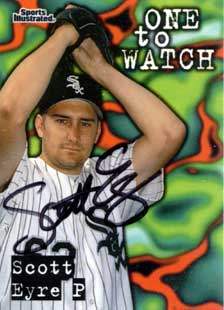
Scott Eyre

Joining the White Sox organization in a 1994 trade with the Rangers, he debuted with the big-league team in 1997.  He split the next 4 seasons between the rotation and the bullpen, not to mention between Chicago and Charlotte, before being moved to the Blue Jays following the 2000 ALDS loss to the Mariners.  He joined the Cubs as a free agent for the 2006 season and enjoyed 2 seasons of relative success, before falling apart in 2008, when he was traded to the Phillies.

Clint Frazier

After missing the second half of 2021 with an injury, Frazier was DFA’d by the Yankees.  He signed a deal with the Cubs that offseason, though he notched just 45 plate appearances before being DFA’s once again.  He chose to finish the year in the Cubs system before becoming a free agent following the season.  After failing to catch on with the Rangers, he signed a minor league deal with the White Sox, eventually hitting .197 in 33 games with the big-league club.

Kosuke Fukudome Continue reading →

It Has Indeed Been A While

As we hit the halfway point of the 2025 season, I’ve seen fourteen teams already this year, just under half of the league.  Stretching back to the start of 2024, that number jumps to 25, which leaves a quarter of the teams I’ve not seen in quite some time.

Of the remaining five, the Nationals hold the top stop, as it has been over four years now since I have seen them live and in person.  The Twins are the biggest surprise, since going two plus seasons without seeing a division rival is pretty rare. I do have the opportunity to add each of these five teams to this season’s slate in the second half.  Anyway, here’s a look at each team and the last time I saw them play.

Most Recent Game By Team

Team Date
Washington Nationals 5/19/2021
New York Yankees 5/15/2022
Minnesota Twins 10/5/2022
Philadelphia Phillies 6/29/2023
San Francisco Giants 9/5/2023
Cincinnati Reds 4/13/2024
Tampa Bay Rays 4/28/2024
Cleveland Guardians 5/12/2024
Atlanta Braves 5/21/2024
Baltimore Orioles 5/25/2024
Toronto Blue Jays 5/28/2024
Los Angeles Dodgers 6/24/2024
Pittsburgh Pirates 7/14/2024
Detroit Tigers 8/25/2024
New York Mets 8/31/2024
Oakland Athletics 9/15/2024
Los Angeles Angels 3/27/2025
San Diego Padres 4/5/2025
Boston Red Sox 4/13/2025
Milwaukee Brewers 5/1/2025
Houston Astros 5/3/2025
Miami Marlins 5/10/2025
Seattle Mariners 5/20/2025
Texas Rangers 5/24/2025
Colorado Rockies 5/26/2025
Chicago Cubs 5/26/2025
Kansas City Royals 6/8/2025
St. Louis Cardinals 6/19/2025
Chicago White Sox 6/24/2025
Arizona Diamondbacks 6/24/2025

Position Players Pitching

In the mid-2010s, putting in a position player to pitch in an effort to save overworked bullpens became more popular than ever before in the history of Major League Baseball.  Starting in 2023, rules changes restricted position players from pitching unless their team is leading by ten or more runs in the 9th inning, their team is losing by eight or more runs at any time, or the game is in extra innings.  This weekend, i saw my tenth eighth position player pitch, so it seemed like a good time to review.

5/6/2017
With a depleted bullpen and down by five against the Yankees, Joe Maddon turned to catcher Miguel Montero to pitch the final inning.  Montero’s inning could generously be called effectively wild, as he walked two and sailed one pitch over Chris Carter’s head but managed to escape without giving up a run.  Maddon’s notion to avoid going back to his bullpen proved prescient, as the following night the two teams went 18 innings, with the Cubs losing by one.

7/6/2017
Exactly two months later, Maddon again turned to his bench rather than his bullpen as the Brewers held a nine-run lead heading into the 9th inning.  This time he turned to veteran outfielder Jon Jay, who gave up just one hit while retiring the Brewers on just 16 pitches.

6/22/2019
Wrigley Field was again the stage for our next installment of position players pitching, as catcher Victor Caratini took the mound for the 9th inning with the Cubs down 10-1 to the Mets.  He did his part, throwing a 1-2-3 inning and giving the Cubs a chance to mount a comeback in the bottom of the 9th.  The rally fell short, however, as the Cubs lost 10-2.

8/17/2021
We move to the South Side for our next occurrence, this time for an opponent.  With the White Sox leading the A’s 9-0, first baseman Mitch Moreland came out to face the White Sox in the bottom of the 8th.  Facing the bottom of the batting order, Moreland gave up a single to Danny Mendick en route to a scoreless outing.

9/16/2021
Nearly a month later, the shoe was on the other foot as the White Sox were losing 9-3 to the Angels at Guaranteed Rate Field.  With two outs in the top of the 9th, Rick Renteria picks Romy Gonzalez to nail down the final out.  With Shohei Ohtani on first base, Gonzalez strikes out Max Stassi on four pitches to end the inning.

7/9/2022
With pitching in his genes, Kody Clemens took the mound for the bottom of the 8th with his Tigers trailing the White Sox 8-0.  Clemens did what none of his fellow Tigers could accomplish that day, giving up no hits and retiring the side on only fourteen pitches.

4/3/2023
The Giants had a big 7-3 lead against the White Sox heading into the 9th inning when Jose Ruiz took the mound looking to hold the line.  Instead, he faced six batters, giving up five runs on two home runs while only getting a single out.  Down by nine, rookie manager Pedro Grifol brought in infielder Hanser Alberto to mop up.  He gave up two hits but wrapped up the inning without giving up a run.

5/1/2025
With the White Sox holding a surprising 8-0 lead over the Brewers, Jake Bauers, who started the game in left field, came in to pitch the bottom of the 8th.  He quickly put down the White Sox, getting a 1-2-3 inning on just ten pitches.

Ballpark Tour: White Sox

With Opening Day in the books, it is time to wrap up our tour of all of the baseball stadiums I’ve been to over the years with the ones I’ve been to the most: the homes of the Chicago White Sox.  Between the two stadiums that have been located at the corners of 35th and Shields, I’ve seen at least 668 games, all but one of which have involved the White Sox.  So, without further ado, let’s take a deeper look at my history with Comiskey Park and the facility currently known as Rate Field.
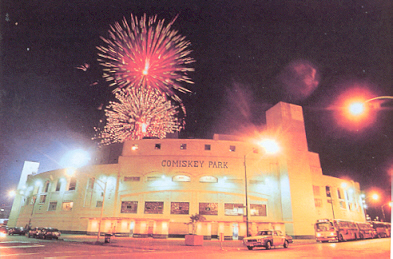
Stadium Name: Comiskey Park

Years in Service: 1910 – 1990

Visits: 13 (that I’m aware of)

Comiskey Park, the so-called Baseball Palace of the World, was the home of the White Sox from 1910 through the 1990 season.  Built on a former city dump at the corner of 35th Street and Shields Avenue, the stadium opened on July 1, 1910, as the White Sox lost to the St. Louis Browns 2-0.  The final game for the old ballyard occurred on September 30, 1990, a 2-1 victory over the Mariners.

Comiskey Park was the host for four World Series, including three in a row from 1917-1919.  The White Sox won the World Series in 1917 against the New York Giants.  The Cubs, looking for a larger seating capacity, moved their home games in the 1918 series against the Red Sox to Comiskey Park.  The 1919 World Series, of course, was the Black Sox scandal, where the White Sox threw the series against the Reds.  The White Sox returned to the World Series 40 years later in 1959 but fell to the Dodgers.  The final post-season games to be played in Comiskey Park were games 3 and 4 of the 1983 ALCS, which the White Sox lost to the Baltimore Orioles.

Comiskey Park was also the host to three All-Star games.  The first All-Star game, in 1933, was held in conjunction with Century of Progress Exposition being held on Chicago’s lakefront.  The event returned to Chicago’s south side in 1950 and the final All-Star game at Comiskey Park was in 1983, the 50th anniversary of the first game.  Comiskey Park was also the frequent home of the Negro League East-West All-Star Game from 1933 to 1960.

Looking back, I’ve now been able to piece together evidence of 13 games that I attended at Comiskey Park, either from pictures, stadium giveaways, or specific memories.  I know there are more, but I have not been able to pinpoint exact games as of yet.  The most memorable game I can remember would be the final night game, on September 29, 1990, where, after the game, the lights were symbolically turned off for the final time.

Stadium Name: Comiskey Park II/US Cellular Field/Guaranteed Rate Field/Rate Field

Years in Service: 1991 – Present

Visits: 655

On the evening of June 30, 1988, with the clock literally stopped, the Illinois legislature passed a bill that provided the financing for a new stadium for the White Sox, stopping them from moving to St. Petersburg, Florida.  Two and a half years later, on April 18, 1991, Comiskey Park II opened, the first new major facility built in Chicago since the erection of the Chicago Stadium in 1929.  Sadly, the White Sox were embarrassed by the Tigers, losing 16-0 in the opening of their new park.

Unfortunately for the White Sox, the new Comiskey Park was the last stadium to be built prior to the wave of retro ballparks that started with the opening of Camden Yards the following year.  Because of this, there have been numerous renovations to the park, starting in 2001 with the addition of nearly 2000 seats and the relocation of the bullpens.  More extensive renovations began in 2003 in preparation for that season’s All-Star Game and using the money generated from selling the naming rights to US Cellular, and continued through 2007, when the replacement of the blue seats with green seats was completed.  Less extensive renovations have occurred since, replacing the different video boards and creating premium seating areas.

The post-season came to the new Comiskey Park for the first time in 1993, as the White Sox battled the Blue Jays in the ALCS.  The stadium hosted its first World Series games in 2005, the first to be played in the city of Chicago since 1959, as the White Sox went on to sweep the Houston Astros and win their first World Series since 1917.

I attended my first game at the new Comiskey Park on April 20, 1991, the second game in the stadium’s history.  Since then, I’ve been to 654 other games at the stadium, the majority coming from 2005 on, when I became a season ticket holder.  I went to both games of the 2000 ALDS, which the White Sox lost to the Mariners, both games of the 2005 ALDS, which the White Sox won against the Red Sox, both games of the 2005 ALCS, which the White Sox split against the Angels, and game 2 of the 2005 World Series.  I attended game 163 of the 2008 season to break the tie between the White Sox and the Twins. and then the two ALDS games against the Rays, the first time I saw the White Sox actually end a post-season series, either in victory or defeat.

Notable regular season games I’ve seen at what is now known as Guaranteed Rate Field include the September 18, 2001 game against the Yankees as baseball returned following the attacks of 9/11, the April 16, 2005 game where Mark Buehrle defeated the Mariners in 1 hour and 39 minutes, the April 2, 2006 season opener against the Indians when the World Series championship banner was raised, the April 4, 2006 game where the players received their World Series rings, and the September 16, 2007 game where Jim Thome hit his 500th career home run against the Angels.  Not to mention a streak of 24 consecutive home openers.
All Time Team Records

After a long winter, the North American portion of the 2025 baseball season is set to get underway tomorrow.  To celebrate, it is time once again to look at the all-time team records for games that I have identified as having attended dating back to 1984.  Last year, I posted my lowest total since 2001, a decrease of 16 games from the year before, and managed to see 20 out of the 30 teams, so there should be some nice changes.

The White Sox are coming off the most losses in modern major league history and may be hard-pressed to avoid breaking that record again this year.  On the other side of town, the Cubs made some big moves to get back into playoff contention.  The 2025 season may look completely different on each side of town.

All-Time Team Records

Team Name Won Loss Winning Pctg
California Angels 2 0 1.000
Arizona Diamondbacks 16 4 0.800
Cleveland Guardians 4 2 0.667
Florida Marlins 15 8 0.652
New York Yankees 19 12 0.613
Toronto Blue Jays 18 12 0.600
Philadelphia Phillies 13 9 0.591
Colorado Rockies 11 8 0.579
Boston Red Sox 21 16 0.568
Los Angeles Angels 20 16 0.556
Washington Nationals 7 6 0.538
Detroit Tigers 35 30 0.538
Cleveland Indians 31 27 0.534
Chicago Cubs 238 215 0.525
Houston Astros 26 25 0.510
Chicago White Sox 372 360 0.508
Continue reading →

Ballpark Tour: Rays

With the offseason underway, we continue our tour of all of the different baseball stadiums I’ve been to over the years. This week, we head south to the Tampa Bay area for a look at the Tampa Bay Rays. So, without further ado, let’s take a deeper look at my history with the place now known as Tropicana Field.

Stadium Name: Tropicana Field

Years in Service: 1997 – Present

Visits: 2

Originally known as the Florida Suncoast Dome, the stadium now known as Tropicana Field was built in the late 1980s in the hopes of luring a baseball franchise to the Tampa/St. Pete area.  Ironically, the White Sox would have called the park home had the Illinois legislature not approved funding for what is now Guaranteed Rate Field.  The stadium opened in 1990, hosting the Davis Cup finals that fall, but was still looking for an MLB team as the primary tenant.  After National League owners blocked the sale of the Giants to Tampa-based investors who planned to move the team, the park was used for the local Arena Football team and as the initial home of the Tampa Bay Lightning.  In 1995, the area was awarded an expansion franchise, the Tampa Bay Devil Rays, who would begin play in 1997.

After the long pandemic, I decided to take the long drive down to Florida in August of 2021 for a long getaway.  After arriving in town on Friday night, I made my maiden voyage to Tropicana Field the following afternoon.  The White Sox put up little fight, losing to the Rays 8-4.  I returned the following afternoon looking for a better result but instead saw a 9-0 shutout by the Rays.

Due to damage from Hurricane Milton, the Rays will be forced to play their 2025 schedule at George M. Steinbrenner Field in Tampa, the spring training home of the Yankees.  A new stadium built in the same location in St. Petersburg was planned to open in 2028, but, if the funding is still in play, may be needed sooner.