Crossing Sides Of Town

So far in 2025, Brad Keller, Mike Tauchman, Nicky Lopez, and Reese McGuire pushed the total of players I’ve seen take the field in person for both the Cubs and the White Sox to 47.  With the final round of crosstown kicking off tonight at Rate Field, here’s a look at those players, in alphabetical order.

David Aardsma

After posting a decent season with the Cubs in 2006, Aardsma was traded to the White Sox for Neal Cotts.  Aardsma lasted one season with the Sox, where he was unable to duplicate his success from the year before.

Jason Bere

Drafted by the White Sox in the 36th round in 1990, Bere debuted with the big-league club in 1993, finishing 2nd in Rookie of the Year voting.  After an All Star selection in 1994, injuries marred the remainder of his tenure on the South Side, which ended in 1998.  He resurfaced with the Cubs in 2001 and had a decent season, but he went 1-10 in 2002 before being let go.

Emilio Bonifacio

Bonifacio spent back-to-back partial seasons in Chicago, first for the Cubs in 2014 after signing as a free agent, where he played decently enough to be flipped at the trade deadline, along with James Russell, to the Braves for a young catching prospect by the name of Victor Caratini.  He returned to Chicago in 2015, signing with the White Sox, where he he did not do well at all, hitting .167 in 47 games before being released in August.

Welington Castillo

Debuting with the Cubs in 2010, Castillo spent time behind the plate for the Cubs until May of 2015, when, having been replaced in the starting lineup by Miguel Montero, he was flipped to the Mariners.  He returned to Chicago in 2018 after signing with the White Sox as a free agent.  On May 24th of that season, he was suspended 80 games for a violation of the PED policy.  The White Sox then cut bait following the 2019 season, shipping him off to the Rangers.

Neal Cotts

Acquired by the White Sox in the Billy Koch trade, he debuted with the team in 2003.  He was a key contributor in the bullpen during the 2005 championship season and was the only relief pitcher to appear in all 3 rounds of the playoffs that season.  Following the 2006 season, he was traded to the Cubs for David Aardsma, and he spent the next 3 injury filled seasons on the North Side.
Scott Eyre

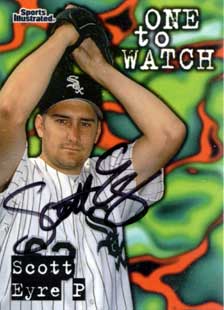
Joining the White Sox organization in a 1994 trade with the Rangers, he debuted with the big-league team in 1997.  He split the next 4 seasons between the rotation and the bullpen, not to mention between Chicago and Charlotte, before being moved to the Blue Jays following the 2000 ALDS loss to the Mariners.  He joined the Cubs as a free agent for the 2006 season and enjoyed 2 seasons of relative success, before falling apart in 2008, when he was traded to the Phillies.

Clint Frazier

After missing the second half of 2021 with an injury, Frazier was DFA’d by the Yankees.  He signed a deal with the Cubs that offseason, though he notched just 45 plate appearances before being DFA’s once again.  He chose to finish the year in the Cubs system before becoming a free agent following the season.  After failing to catch on with the Rangers, he signed a minor league deal with the White Sox, eventually hitting .197 in 33 games with the big-league club.

Kosuke Fukudome Continue reading →

Two Sides Of The Same Town

cws-chiFollowing last week’s trade deadline deals, Ryan Tepera and Craig Kimbrel became the 36th and 37th people I’ve seen play in person for both the Cubs and the White Sox.  With the first round of crosstown kicking off this afternoon at Wrigley, here’s a look at those players, in alphabetical order.

David Aardsma

After posting a decent season with the Cubs in 2006, Aardsma was traded to the White Sox for Neal Cotts.  Aardsma lasted one season with the Sox, where he was unable to duplicate his success from the year before.

Jason Bere

Drafted by the White Sox in the 36th round in 1990, Bere debuted with the big league club in 1993, finishing 2nd in Rookie of the Year voting.  After an All Star selection in 1994, injuries marred the remainder of his tenure on the South Side, which ended in 1998.  He resurfaced with the Cubs in 2001 and had a decent season, but he went 1-10 in 2002 before being let go.

Emilio Bonifacio

Bonifacio spent back-to-back partial seasons in Chicago, first for the Cubs in 2014 after signing as a free agent, where he played decently enough to be flipped at the trade deadline, along with James Russell, to the Braves for a young catching prospect by the name of Victor Caratini.  He returned to Chicago in 2015, signing with the White Sox, where he he did not do well at all, hitting .167 in 47 games before being released in August.

Welington Castillo

Debuting with the Cubs in 2010, Castillo spent time behind the plate for the Cubs until May of 2015, when, having been replaced in the starting lineup by Miguel Montero, he was flipped to the Mariners.  He returned to Chicago in 2018 after signing with the White Sox as a free agent.  On May 24th of that season, he was suspended 80 games for a violation of the PED policy.  The White Sox then cut bait following the 2019 season, shipping him off to the Rangers.

Neal Cotts

Acquired by the White Sox in the Billy Koch trade, he debuted with the team in 2003.  He was a key contributor in the bullpen during the 2005 championship season, and was the only relief pitcher to appear in all 3 rounds of the playoffs that season.  Following the 2006 season, he was traded to the Cubs for David Aardsma, and he spent the next 3 injury filled seasons on the North Side.

Scott Eyre

Joining the White Sox organization in a 1994 trade with the Rangers, he debuted with the big league team in 1997.  He split the next 4 seasons between the rotation and the bullpen, not to mention between Chicago and Charlotte, before being moved to the Blue Jays following the 2000 ALDS loss to the Mariners.  He joined the Cubs as a free agent for the 2006 season and enjoyed 2 seasons of relative success, before falling apart in 2008, when he was traded to the Phillies.

Kosuke Fukudome Continue reading →

#77 – Mike Squires

squiresName: Mike Squires

Rank: 77

Position: 1B

Years With White Sox: 1975, 1977-1985

Mike Squires joined the White Sox organization as their 18th round draft pick in 1973.  He made his major league debut on September 1, 1975, going 2-3 in the White Sox loss to the Royals at Comiskey Park.  He appeared in 19 additional games down the stretch, hitting .231 in 74 plate appearances.

After spending all of 1976 back in Triple A, Squires returned to the South Side for 3 games in 1977, going hitless in 3 at bats.  He was up in the big leagues to stay in 1978, appearing in 46 games and hitting .280 in 150 at bats.

1979 saw Squires getting his most extensive playing time to date, appearing in 122 games and hitting a modest .264, including his first major league home run.  1980 was more of the same for Squires, hitting a career-high .283 in 131 games.  He also became the first left-handed catcher in the major leagues since 1961 when he replaced Bruce Kimm in the 9th inning of an 11-1 loss to the Brewers on May 4.

During the strike-shortened season of 1981, Squires hit .265 in 92 games, failing to homer for the first time since 1978 and earning the Gold Glove award for first basemen.  1982 was more of the same for Squires, as he put up a .267 average in only 195 at bats, his lowest total since 1978.  As the White Sox ran away with the division title in 1983, Squires set a career high in games played with 143, but garnered only 153 at bats, hitting a meek .222.  He became the first left handed third baseman in at least 50 years when he replaced Vance Law in the 8th inning of a 10-2 loss to the Royals.  He went 0-4 in the ALCS against the Orioles, appearing in all 4 games.

1984 was the beginning of the end for Squires, as his average slipped to a career low .183 in only 82 at bats.  He was released during spring training in 1985, before being re-signed in September, appearing in 2 games without a plate appearance.  Following the season, his career came to an end.

Squires’ numbers in a White Sox uniform were:

Continue reading →

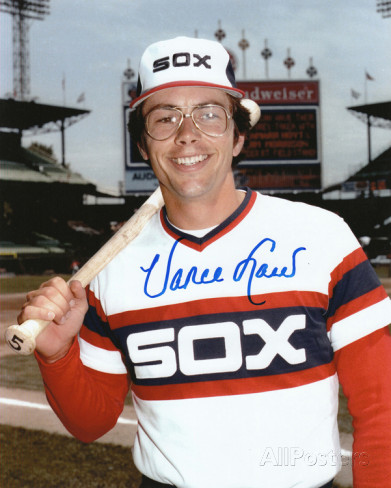
#94 – Vance Law

vance-lawName: Vance Law

Rank: 94

Position: 3B

Years With White Sox: 1982-1984

As spring training was winding down in 1982, the White Sox acquired Vance Law, along with Ernie Camacho, from the Pirates in exchange for Ross Baumgarten and Butch Edge.  Law jumped around the infield for the White Sox, spending time at shortstop, third base, and second base.  In his first major league stint with regular playing time, Law responded by hitting .281 with 5 home runs.

The offseason acquisitions of Jerry Dybzinski and Scott Fletcher meant Law could focus on third base for the 1983 season.  His offense suffered some, with his batting average dropping nearly 40 points, but he helped the White Sox secure their first post-season appearance since 1959.  Unfortunately, Law, like the rest of his teammates, struggled against the Orioles in the ALCS.  Law managed only 2 hits in the 4 game series.

While the White Sox regressed in 1984, Law put up arguably his best season as a pro.  He set a career high in games played and home runs, while his batting average rebounded to .252 and his OPS again surpassed the .700 mark.  Following the season, however, he was traded by the White Sox to the Expos for closer Bob James.

Law’s numbers in a White Sox uniform, both for games I attended and overall, were:

Continue reading →

#157 – Bob James

jamesName: Bob James

Rank: 157

Position: P

Years With White Sox: 1985-1987

Bob James was acquired by the White Sox on Decmber 7, 1984 from the Expos in exchange for Vance Law.  James was installed as the team’s closer for 1985 and helped to return the White Sox to a contending club.  Manager Tony La Russa said, “We’ve had a decent bullpen since I’ve been here, but, with Bob, our bullpen can compare with anybody’s in the league.”  Broadcaster, and Hall of Fame pitcher, Don Drysdale agreed.  “They have a guy down in the bullpen now who they haven’t had for quite a few years. . .a stopper,” Drysdale said.  “Without James, I don’t know where they would be.”

The White Sox finished the season in 3rd place, with an 85-77 record, but James finished with an 8-7 record, a 2.13 ERA, and 32 saves, behind only Royals reliever Dan Quisenberry.  Things appeared to be looking up for the White Sox heading in to the 1986 season.

Sadly, things went a bit crazy in 1986, both for James and the White Sox.  While new GM Hawk Harrelson turned the organization on its head, James lost any semblance of effectiveness that he had showed the previous year.  In early August, James went down with triceps issues and was lost for the season.  His final numbers were nightmarish: a 5-4 record but an ERA of 5.25 and only 14 saves in 49 appearances.

James continued to struggle in 1987, and in May, he lost his position as the team’s closer.  “I told him he`s not throwing as well as he could be,” manager Jim Fregosi said.  “I’m going to use him as a long man so he can get back to where he`s throwing well.”  Shoulder problems put him out of commission in July, and he finished the season with a 4-6 record and a 4.67 ERA.

The White Sox released James in December, but looked to resign him to an incentive-laden deal the following spring.  “We’ve had several talks with him,” general manager Larry Himes said.  “He’s looking at other places. The Sox are interested, but he knows the conditions. We’re willing to pay for performance. Bob James has not performed up to our expectations the last couple years.”  James ended up not signing with the White Sox, or anyone else, and his major league career came to an end.

James’s numbers in a White Sox uniform, both for games I attended and overall, were:

Continue reading →

Crosstown Competitors

cws-chiLast Saturday, Geovany Soto and Jeff Samardzija became the 25th and 26th people I’ve seen play in person for both the Cubs and the White Sox.  Here’s a look at those players, in alphabetical order.

DavidAardsma2David Aardsma

After posting a decent season with the Cubs in 2006, Aardsma was traded to the White Sox for Neal Cotts.  Aardsma lasted one season with the Sox, where he was unable to duplicate his success from the year before.

Jason Bere

Drafted by the White Sox in the 36th round in 1990, Bere debuted with the big league club in 1993, finishing 2nd in Rookie of the Year voting.  After an All Star selection in 1994, injuries marred the remainder of his tenure on the South Side, which ended in 1998.  He resurfaced with the Cubs in 2001 and had a decent season, but he went 1-10 in 2002 before being let go.

Neal Cotts

Acquired by the White Sox in the Billy Koch trade, he debuted with the team in 2003.  He was a key contributor in the bullpen during the 2005 championship season, and was the only relief pitcher to appear in all 3 rounds of the playoffs that season.  Following the 2006 season, he was traded to the Cubs for David Aardsma, and he spent the next 3 injury filled seasons on the North Side.

scott_eyre_autographScott Eyre

Joining the White Sox organization in a 1994 trade with the Rangers, he debuted with the big league team in 1997.  He split the next 4 seasons between the rotation and the bullpen, not to mention between Chicago and Charlotte, before being moved to the Blue Jays following the 2000 ALDS loss to the Mariners.  He joined the Cubs as a free agent for the 2006 season and enjoyed 2 seasons of relative success, before falling apart in 2008, when he was traded to the Phillies.

Kosuke Fukudome Continue reading →
#206 – Jerry Dybzinski

Jerry_Dybzinski_(White_Sox)_2

Name: Jerry Dybzinski

Rank: 206

Position: SS

Years With White Sox: 1983-1984

Jerry Dybzinski came to the White Sox in the trade that sent Pat Tabler to the Indians on April 1, 1983.  He split time with Scott Fletcher at shortstop for the eventual AL West champions, but came under fire for a base-running blunder in the 6th inning of game 4 of the ALCS against the Orioles.  With the game scoreless and Vance Law occupying third base, Dybzinski overran second, running the White Sox out of the inning and costing them the winning run that would have tied the series at 2 games a piece.  Instead, the Orioles scored 3 runs in the 10th inning to win the series and went on to win the World Series.

Dybzinski returned to the White Sox in 1984, backing up Fletcher and hitting a robust .235.  The following spring, 2 years to the day after he was acquired, he was released.

Dybzinski’s numbers in a White Sox uniform, both for games I attended and overall, were:

Continue reading →