#9 – Magglio Ordonez

Name: Magglio Ordonez

Rank: 9

Position: RF

Years With White Sox: 1997-2004

Signed by the White Sox as an amateur free agent in 1991.  Starting in 1992, he worked his way up the ladder, making his major league debut on August 29, 1997, going 2-3 in the interleague victory against the Astros at Comiskey Park.  Appearing in 21 games down the stretch, Ordonez hit .319 with 4 home runs and 11 RBIs.

Ordonez made the White Sox roster out of spring training in 1998.  He appeared in 145 games, and finished the year with a .282 average, 14 home runs, and 65 RBIs.  Those totals were good enough for him to finish in 5th place in AL Rookie of the Year voting, behind winner Ben Grieve and teammate Mike Caruso.

1999 was a breakout year for Ordonez.  Earning his first All Star selection, he went 0-1 in the AL’s victory at Fenway Park.  He finished the year hitting .301 with 30 home runs, 117 RBIs, and an OPS of .858.

Ordonez’s hot streak continued in to 2000.  In his second straight All Star game, he doubled and hit a sacrifice fly in his 2 plate appearances, driving in one run.  When the season ended, he had a .315 average with 32 home runs and 126 RBIs.  With the White Sox winning their first division title since 1993, Ordonez hit .182 in the ALDS against the Mariners, joining his teammates in not hitting at all during the 3 game sweep.  After the season, Ordonez won the Silver Slugger award and finished 12th in MVP voting.

While the White Sox failed to replicate their success in 2001, Ordonez kept up his end of the bargain.  He earned his third straight All Star nod, going 2-3 with an RBI and a run scored at Safeco Field.  Missing only 2 games, Ordonez ended up hitting .305 with 31 home runs, 113 RBIs, and a .914 OPS.

Ordonez saw his streak of All Star appearances snapped in 2002, mostly due to his .320 average, career high 38 home runs, 135 RBIs, and a .978 OPS.  Following the season, he came in 8th place for MVP voting and earned his second Silver Slugger award.

2003 was another excellent year for Ordonez.  He was named to his fourth All Star team, going 0-1 in his home stadium of US Cellular Field.  He hit .317 with 29 home runs and 99 RBIs, his lowest totals since his rookie year.  Even with that, he finished 18th in MVP voting.  During the off-season, Ordonez was nearly traded to the Red Sox, contingent on the Red Sox acquiring Alex Rodriguez from the Rangers for outfielder Manny Ramirez.  The Red Sox would then send Nomar Garciaparra to the White Sox for Ordonez.  When the Rodriguez-for-Ramirez trade fell through, the Ordonez deal was off as well, and he remained with the White Sox.

Ordonez’s 2004 season was on track to match his career norms when, during the May 19 game against the Indians, he collided with second baseman Willie Harris on Omar Vizquel’s popup to right field.  Two trips to the disabled list and two surgeries on his left knee later, his season was over after only 52 games.  Following the season, he became a free agent and his White Sox career came to an end.

Ordonez’s numbers in a White Sox uniform, both for games I attended and overall, were:

Continue reading →

#10 – Ozzie Guillen

Name: Ozzie Guillen

Rank: 10

Position: SS

Years With White Sox: 1985-1997

Acquired by the White Sox, along with Tim Lollar, Bill Long, and Luis Salazar, on December 6, 1984 from the Padres for Kevin Kristan, Todd Simmons, and LaMarr Hoyt, Ozzie Guillen made his major league debut on Opening Day 1985, leading off against the Brewers and going 1-5 in the 4-2 victory at County Stadium.  Settling in as the everyday shortstop, Guillen finished the year with a .273 average, 21 doubles, and 9 triples.  Those totals were good enough to score Guillen the 1985 AL Rookie of the Year trophy.

Guillen saw a slight drop off in his sophomore season.  His average dropped to .250 and he managed 19 doubles and 4 triples.  Defensively, he led the American League in Defensive WAR.

1987 was a nice bounce back for Guillen.  He raised his average back up to .279 with a .656 OPS.  For the second straight year, he led the AL, and all of baseball, in Defensive WAR.

Guillen earned his first All Star nod in 1988, though he didn’t get in to the game.  By the end of the season, he once again led all of baseball in Defensive WAR, while seeing his average drop to .261 with 7 triples, the fifth highest total in the AL.

1989 was a tough year for Guillen.  He posted his worst offensive numbers since 1986 and, on the base paths, he fell victim to the hidden ball trick.  Twice. On June 23, against the Brewers, first baseman Greg Brock held the ball after a pickoff attempt and when Guillen took his hand off the base to stand up, Brock tagged him out.  Less than 2 months later, on August 5 against the Tigers, Dave Bergman made the same play.  He finished the year with .253 average and, despite his adventures on pick off attempts, a career high 36 stolen bases.

As the surprising White Sox challenged for the AL West title while saying goodbye to Comiskey Park, Guillen put in one of the finest seasons of his career.  He was named to his second All Star team, going 0-2, finished in 17th place in MVP voting, and earned his first, and only, Gold Glove.  He raised his average back up to .279 and knocked in a career high 58 RBIs.

Expectations were high for the White Sox as they moved across the street to the new Comiskey Park in 1991.  Guillen earned his third, and final, All Star nod, getting a sacrifice in his only plate appearance.  He ended the year with a .273 average and set a career high with 3 home runs.

Guillen’s 1992 season came to an early end when, on April 21 during a loss against the Yankees, a collision with outfielder Tim Raines ended in a severe knee injury.  Appearing in only 20 games, he hit a career low .200 in only 40 at bats.

Guillen recovered in 1993, though he appeared in only 134 games, his lowest total to date.  However, it was his most productive season offensively, posting a .280 batting average, and career highs with 4 home runs and a .666 OPS, as the White Sox won their first division title in a decade.  He hit .273 and scored 4 runs in a losing effort, as the White Sox were defeated in 6 games by the Blue Jays in the ALCS.

1994 looked to be the year that the White Sox finally broke through.  Guillen was up to the challenge, hitting a career high .288 with a .659 OPS.  Unfortunately, the year ended early when players went on strike on August 12 with the White Sox in first place in the newly created AL Central.

The 1995 season got off to a late start and had an abbreviated schedule due to the long work stoppage.  The success of the White Sox, and for Guillen himself, didn’t survive the long layoff.  Guillen saw his average drop to .248, his lowest over a “full” season in his career to this point.  His OPS dropped to its lowest total, excepting 1992, since 1989.

1996 saw a slight improvement for Guillen.  He appeared in 150 games, his highest total since his knee injury in 1992.  He raised his average back to .263 and tied his career high with 4 home runs.

1997 was easily the worst season of Guillen’s White Sox career.  He had the lowest average of his career, coming in at .245, though he did once again tie his career high with 4 home runs.  Following the season, Guillen became a free agent and his playing career with the White Sox came to an end.

Guillen returned to the White Sox organization for the 2004 season as manager.  In 2005, he led the team to their first American League pennant since 1959 and their first World Series title in 88 years.  Ongoing personal difficulties with General Manager Kenny Williams led to his leaving with 2 games left in the 2011 season as the third winningest manager in franchise history.

Guillen’s numbers in a White Sox uniform, both for games I attended and overall, were:

Continue reading →

#11 – Bo Jackson

Name: Bo Jackson

Rank: 11

Position: RF/DH

Years With White Sox: 1991, 1993

Vincent Edward “Bo” Jackson joined the White Sox as a free agent on April 3, 1991 after being released by the Royals following a hip injury suffered in January during the NFL playoffs as a member of the Raiders.  “In making the business decision,” owner Jerry Reinsdorf said at the time, “I assume he will not play this year. If he does, it will be a big bonus.”  Jackson did spend most of 1991 on the disabled list, rehabbing the injury, but did eventually manage to make his way back to the field.  He appeared in 23 games, hitting only .225 with 3 home runs.

Diagnosed with avascular necrosis of the hip joint and having lost all of the cartilage supporting his hip, Jackson decided to undergo a hip replacement surgery, keeping him on the shelf for the entire 1992 season.  While rehabbing, Jackson promised his mother he would return to the major leagues and hit a home run for her.

Unfortunately, Jackson’s mother died before he could return, but, in his first at bat of the 1994 season, and his first with an artificial hip, he hit a home run to right field against the Yankees at Comiskey Park.  On September 27, Jackson belted a three-run home run off of the Mariners to help the White Sox clinch their first AL West Division title in a decade.  Jackson ended up appearing in 85 games for the White Sox, hitting .232 and hitting 16 home runs while driving in 45.  He appeared in 3 of the 6 ALCS games against the Blue Jays, going hitless in 10 at bats.

Following the season, he became a free agent, ending his White Sox playing career.  In 2014, he returned to the organization as an ambassador, a role he continues to play today.

Jackson’s numbers in a White Sox uniform, both for games I attended and overall, were:

Continue reading →

#12 – Jack McDowell

Name: Jack McDowell

Rank: 12

Position: P

Years With White Sox: 1987-1988, 1990-1994

Jack McDowell was selected as the fifth overall pick in the 1987 draft by the White Sox.  After 6 appearances split between Rookie ball and AA, he made his major league debut September 15, throwing 7 shutout innings and earning the win against the Twins at Comiskey Park.  He made 3 more starts to finish out the season, ending with a 3-0 record, a 1.93 ERA, and a seemingly bright future on the South Side.

In 1988, the success McDowell saw in his first stint in the big leagues was hard to find.  In 158.2 innings pitched, he struck out only 84 batters while walking 68.  While his ERA was a respectable 3.97, he finished with a 5-10 record.

Injuries, and a 6.13 ERA in 16 starts for AAA Vancouver, kept McDowell out of the big leagues in 1989.  He returned to the majors for good in 1990 and helped lead a surprising White Sox team to a 94-68 record and a season long battle with the A’s for the AL West crown.  McDowell finished with a 14-9 record and a 3.82 ERA and nearly doubled his strikeout total from 1988 in only about 50 more innings.

Expectations were high as the White Sox moved into their new stadium in 1991.  McDowell earned his first All Star game selection on his way to a 17-10 record and a 3.41 ERA.  Those numbers were good enough for a 9th place finish in Cy Young Award voting.

1992 was even better for McDowell.  He earned his second straight All Star Game nod, pitching a scoreless second inning and retiring Fred McGriff, Terry Pendleton, and Andy Van Slyke in order.  When all was said and done, he ended up with a 20-10 record and a 3.18 ERA, good enough for a 2nd place finish in Cy Young Award voting, behind Dennis Eckersley, and 19th place in MVP voting.

Everything came together for the White Sox and McDowell in 1993.  As the team ran off to their first division title in a decade, McDowell led the league with 22 victories and 4 shutouts, ending at 22-10 with a 3.37 ERA.  He nabbed his 3rd straight All Star selection, earning the victory while throwing a scoreless 5th inning, and finally claimed his first Cy Young Award.  He also finished 9th in MVP voting, behind teammate Frank Thomas.  McDowell made 2 starts during the ALCS against the Blue Jays, losing both and giving up 10 runs total in 9 innings pitched.

The 1994 season again had high expectations for the White Sox and McDowell.  Unfortunately, those expectations would be squashed, not on the field, where the White Sox held first place in the newly formed AL Central division, but in the boardrooms, where the end of the 1994 season and the post season were cancelled due to a work stoppage.  In just 25 starts, his fewest since 1987, McDowell went 10-9 with a 3.73 ERA.

In December, with the 1995 season in doubt, McDowell was traded to the Yankees, for Keith Heberling and a player to be named later who turned out to be Lyle Mouton.

McDowell’s numbers in a White Sox uniform, both for games I attended and overall, were:

Continue reading →

2018: The Year In Travel

As I arrive home from California, I thought it would be nice to look back at the many trips I took last year.  Things got started in March, when I headed out to Las Vegas for the IBM Think conference.  Along the way, I took in a show, Absinthe, at Caesar’s Palace, a Barenaked Ladies concert at Mandalay Bay, and a show by The Chainsmokers at MGM Grand, where I was staying.

Following the conference, I took a detour to Phoenix for a long weekend, where I took in some Cactus League action at Camelback Ranch and Peoria Sports Complex, seeing the White Sox, Cubs, and Mariners (twice!).  I also enjoyed a trip to the slot canyons and Horseshoe Bend in Page, followed by a quick trip to the Grand Canyon.

About a month later, I took a short weekend trip to New York.  Danny, Michael, and I flew to New York on a Friday night, where we met up with Angelina and had dinner with the family she was nannying for.  Saturday was a glorious spring day, spent sight seeing at the 9/11 Memorial & Museum, the Museum of the City of New York, Central Park, the Guggenheim museum, and the Empire State Building.  Sunday was spent at the Lyric Theatre, watching both parts of Harry Potter and the Cursed Child, before heading home early Monday morning.

My next trip came at the end of July, as Val and I headed down to Roanoke, Virginia, to celebrate Jeff’s 50th birthday.  After a day of “work”, the highlight of the trip was Saturday’s hike up Catawba Mountain to McAfee Knob.  Sunday was spent recovering, before heading home.

I spent most of September in Europe, starting with a week in Belfast, Northern Ireland.  Aside from work, there was a trip to Castle Ward in to look at Game of Thrones filming locations, a hockey game featuring the Belfast Giants, a trip to the Ulster American Folk Park and a nip across the border to the wonderful town of Muff in Ireland, and a Black Cab tour of locations in Belfast related to the Troubles. Continue reading →

#13 – Aaron Rowand

Name: Aaron Rowand

Rank: 13

Position: CF

Years With White Sox: 2001-2005

Aaron Rowand joined the White Sox organization in 1998, selected in the first round of the draft.  He earned his first call up to the show on June 15, 2001 and made his major league debut the following day, pinch hitting and lining out to end an 8-2 loss to the Cardinals.  He ended the season hitting .293, fourth amongst rookies in the American League.

An off-season dirt bike accident looked to derail Rowand’s 2002 season, but he recovered enough to appear in 126 games, hitting .258 with 7 home runs and taking over as the starting center fielder following the mid-season trade of Kenny Lofton.  Rowand earned a return trip to Triple A in 2003 after hitting .133 in his first 60 games, but after a little more than a month, he returned to the big leagues, hitting .387 the rest of the way and ending the season with a .287 average.

2004 was a breakout year for Rowand.  A full time starter for the first time, Rowand appeared in 140 games, setting career highs with a .310 average and .905 OPS.  He also managed 24 home runs and 24 doubles.  He finished the year with 5.7 WAR, the seventh highest total in the American League.

The good times continued in 2005, for both Rowand and the White Sox.  In 157 games, Rowand hit .270 with 13 home runs.  Defensively, he committed only 3 errors in 394 chances, giving him the seventh highest defensive WAR in the American League.  Rowand went 4 for 10 against the Red Sox in the ALDS, driving in 2 runs and scoring 3 more in the 3 game sweep.  In the ALCS against the Angels, Rowand managed only 3 hits in the 5 game series, all doubles.  He bounced back in the World Series, going 5-17 against the Astros as the White Sox won their first title in 88 years.

Less than a month after the final out of the World Series, Rowand was traded, along with Gio Gonzalez and Daniel Haigwood, to the Phillies for Jim Thome.

Rowand’s numbers in a White Sox uniform, both for games I attended and overall, were:

Continue reading →

Remaking the TV Landscape

Earlier this week, news broke that the White Sox, Bulls, and Blackhawks were nearing a new 5 year deal with NBC Sports Chicago following the expiration of their current contract in 2019.  The Cubs are expected to branch out on their own, creating the new Marquee network to carry their games.

Assuming the White Sox rebuild progresses as expected, this could be a good situation for them.  The 5 year deal gives them time to rebuild their audience with known partners while the sports world waits to see what the future of RSNs are and how, and if, in-market streaming comes to fruition.

The Cubs, on the other hand, are risking many things with their new venture.  The Dodgers did something similar a few years back and, while they received a tremendous amount of money for doing so, they still are having issues finding clearance among cable providers and most of their games are unavailable to a majority of their fanbase in Southern California.  Should the Cubs have similar issues, especially since they are spurning the largest cable provider in the Chicago area to create their new network, they will face considerable fan backlash.

Another issue the Cubs may have to deal with is the reputation of their reported partner in the new venture, Sinclair Broadcast Group.  Sinclair has come under fire over the past couple years for its right-wing political slant and forcing its individual TV stations, of which WGN narrowly avoided becoming earlier this year, to air hard-right commentary.  While that political stance seems to fit well amongst most of the Ricketts family, it will be a hard sell to many in the Cubs fanbase should it bleed over into their broadcasts.


Retooling For 2019

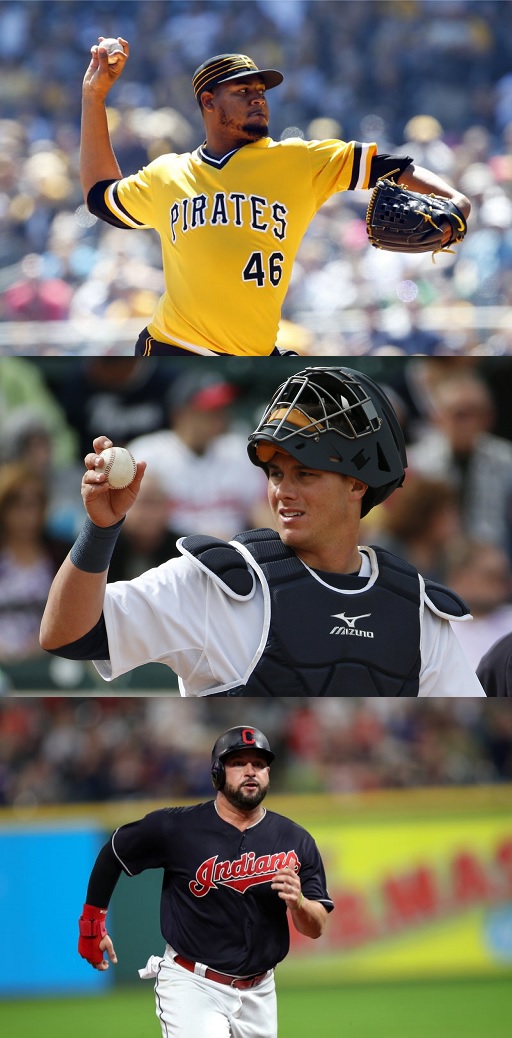
The White Sox made a trio of acquisitions over the past week, bolstering their roster for 2019.  Things started on Tuesday, when a trade with the Pirates netted the Sox right hander Ivan Nova in exchange for minor leaguer Yordi Rosario and international bonus money.  Yesterday, it was reported that the White Sox came to an agreement with free agent catcher James McCann.  Finally, the White Sox announced earlier this morning that they had acquired first baseman Yonder Alonso from the Indians for minor league outfielder Alex Call.

Nova, signed through 2019, basically steps in to the James Shields role as innings eater and mentor, though he should offer better results on the mound.  Over the past 3 years, Nova surpasses Shields in games, innings pitched, HR allowed, ERA, and FIP.  While he has given up more hits, that should be more than offset by a drastic reduction in walks.  Rosario is a lottery ticket at this point and, due to the Luis Robert signing, the White Sox couldn’t use the bonus money anyway, so the cost to get Nova was minimal.

With Omar Narvaez and Kevan Smith off to other organizations and Seby Zavala and Zack Collins still a year or so away, the White Sox needed a catcher to team with Welington Castillo for 2019.  McCann will fill that role, though he rates as sub-par both offensively and defensively.  His main pluses are the occasional home run and a strong arm to control the running game.

The trade for Alonso, at first glance, is a bit of a head scratcher.  Assuming there is nothing in the works on the Jose Abreu front, the two will split time between first base and designated hitter.  Another reported use is recruiting, as Alonso’s brother-in-law just happens to be Manny Machado, one of the two biggest fish in the free agency pond.  Who knows if it will help, but the White Sox reportedly have a meeting set with Machado for next week.  If that doesn’t pay off, then the move basically helps a division rival clear salary space in exchange for someone who isn’t likely to be a long term part of the rebuilding process.

A Shocking Development

Last night, the results of the Today’s Game Era Veteran’s Committee vote was revealed and 2 players will join the Hall of Fame class of 2019: Harold Baines and Lee Smith.  Smith was a unanimous selection by the 16 person committee, while Baines nabbed 12 votes, the minimum needed for election.

Baines, 59, was the first overall selection in the 1977 draft by then-White Sox owner Bill Veeck and reached the majors three years later.  He collected 2,866 hits, the 46th largest total in history, during a 22-year career, with parts of 14 spent with the White Sox.  He was a six-time American League All-Star selection and won the 1989 Silver Slugger award as a DH.  At the time of his retirement after the 2001 season, Baines was the all-time leader among designated hitters in games, hits, home runs and RBIs.

Smith, 61, retired in 1997 with 478 saves after an 18-year career, holding the title of all-time saves leader from 1993 until 2006, when he was surpassed by Trevor Hoffman.  He spent eight seasons with the Cubs, before becoming a journeyman and splitting his final ten seasons between seven teams.  The imposing right-hander was an All-Star seven times and saved 30 or more games 10 times.

Harold Baines’ numbers in games I’ve attended were: Continue reading →

Two Non-Tenders, A Trade, And A Pizza Place

Earlier today, the White Sox began clearing the deck of pieces they do not expect to be part of the team’s future success, dealing catcher Omar Narváez to the Mariners and not tendering 2019 contracts to Avisail García and Matt Davidson.  In return for Narváez, the White Sox received relief pitcher Álex Colomé.

Narváez, who broke out offensively last year and led the White Sox in fWAR, would, at first glance, seem to be someone to contribute to the future success of the White Sox.  His poor defense, however, would seem to say otherwise.  He was near the league’s worst in both passed balls and pitch framing, according to publicly available metrics, and the White Sox obviously thought he had little chance of improving.  Colomé should help improve a bullpen that was in dire need of talent at the end of 2018.

As for García and Davidson, the decision to cut ties with the duo probably had as much to do with their expected arbitration numbers than anything else.  García’s expected salary was around $8 million, which is chump change if he were to duplicate his 2017 season, but, at this point in his career, that does looks more and more to be an outlier.  With Eloy Jimenez expected to join the White Sox in mid-April, García became expendable.  Davidson, despite providing some unexpected flexibility last year as a mop-up reliever, never truly lived up to his potential.  He can still hit for power, but not much else, and the White Sox obviously thought they had seen everything there was to see from him.

García’s, Davidson’s, and Narváez’s numbers in a White Sox uniform, both for games I attended and overall, were: Continue reading →