By The Numbers – 36

In 1929, uniform numbers appeared on the back of baseball jerseys for the first time, thanks to the Indians and the Yankees.  By 1937, numbers finally appeared across all uniforms, both home and away, across both major leagues.  Since that time, 81 distinct numbers have been worn by members of the White Sox, while the Cubs boast 76.

Today, we continue our look at those players, picking our favorite, if not the best, player to wear each uniform number for both Chicago teams with #36.  83 different players have donned #36 while playing in Chicago, 54 for the White Sox and 29 for the Cubs.
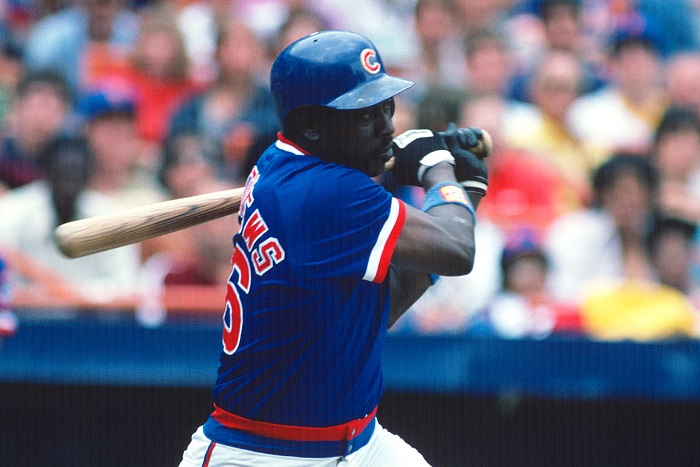
Acquired by the Cubs, along with Bob Dernier and Porfi Altamirano, from the Phillies for Bill Campbell and Mike Diaz near the end of spring training in 1984, Gary “Sarge” Matthews, wearing #36, became a spark plug that helped lead the Cubs to their first ever division title.  Leading the league in walks and OBP, Matthews set a career high with 101 runs scored and finished 5th in MVP voting, behind teammates Ryne Sandberg and Rick Sutcliffe.  He saw a big drop-off in 1985, appearing in only 97 games and hitting a career low .235.  He bounced back a bit in 1986, appearing in 123 games and hitting 21 home runs, his highest total since 1979.  Reduced to a bench player in 1987, Matthews had 42 ABs in 44 games when he was traded to the Mariners on July 11 for a minor league player to be named later.

On the south side of town, Jerry Koosman donned #36 when he joined the White Sox on August 30, 1981 after coming to the White Sox via trade from the Twins.  Koosman appeared in 8 games down the stretch, starting 3, as the White Sox finished 6th in the second half of the crazy strike season.  He returned in 1982, working mostly out of the bullpen but still starting 19 games as the White Sox squandered a quick start to finish in 3rd place.  The veteran lefty spent most of the 1983 season in the starting rotation, but saw his ERA inflate to a career high 4.77.  However, after a shaky start, the White Sox caught fire and Koosman was the starting pitcher on September 17, when the White Sox clinched their first division title.  Koosman made one relief appearance during the ALCS against the Orioles, throwing 1/3 of a disastrous inning in the Game 3 blowout, giving up 1 hit, 2 walks, and 3 runs (2 earned).  He re-upped with the White Sox following the season, but was sent to the Phillies the following spring to complete the trade for Ron Reed.

2021 Predictions Revisited

What a difference six months makes.  Back in March, at the dawn of the 2021 baseball season, I made my annual predictions as to who would win what with little idea if the season would go off as planned.  Now that the regular season has come to an end, it is time revisit those predictions and see what, if anything, I got right.

American League

East: Yankees

Well, that’s one down.  Despite losing two starting pitchers from last year’s staff, the Rays managed to repeat as champs of the AL East.

Central: Twins

I was all set to go with the White Sox here, until a late injury to Eloy Jimenez in spring training left me feeling bad.  The Twins fell off the face of the Earth, while the White Sox overcame injuries all season to cruise to their first division title since 2008.

West: Astros

Hey, here’s one I got right.  The Astros return to the top of the division after a one year break.

Wild Cards: White Sox, Blue Jays

Talk about coming down to the wire.  With a potential 4-way tie for the two Wild Card spots heading in to the final day of the season, the Yankees and the Red Sox both took control of their destinies with victories on Sunday, leaving the Blue Jays and the Mariners on the outside looking in.

AL Champion: Yankees

The Rays do seem to be the class of the league.

Cy Young: Lucas Giolito

That seems very unlikely.  Blue Jays ace Robbie Ray seems like a popular choice.

MVP: Aaron Judge

A fine choice, but who could have seen Shohei Ohtani coming?  The two-way Angels star will run away and hide with this award.

National League

Continue reading →

By The Numbers – 37

In 1929, uniform numbers appeared on the back of baseball jerseys for the first time, thanks to the Indians and the Yankees.  By 1937, numbers finally appeared across all uniforms, both home and away, across both major leagues.  Since that time, 81 distinct numbers have been worn by members of the White Sox, while the Cubs boast 76.

Today, we continue our look at those players, picking our favorite, if not the best, player to wear each uniform number for both Chicago teams with #37.  74 different players have donned #37 while playing in Chicago, 27 for the White Sox and 47 for the Cubs.

Selected in the fourth round of the 1985 draft, Bobby Thigpen made his major league debut for the White Sox just over a year later, wearing #58.  He switched to his more familiar #37 the following year, as he moved in to the closer role full time, replacing Bob James, and racked up 16 saves while also putting up a 7-5 record with a 2.73 ERA.  In 1988, he broke the team record for saves, with 34, while leading the league with 59 games finished.  He duplicated the effort in 1989 with another 34 saves, though with a 2-6 record and a 3.76 ERA.

Thigpen’s 1990 season was one for the record books.  He earned his first All Star nod while on his way to setting the major league record with 57 saves, while also leading the league with 77 games and 73 games finished.  On September 30, he earned his 57th save while throwing the final pitch at Comiskey Park.  After the 1990 season, Thigpen joined other major league all stars on a tour of Japan where, unfortunately, he would suffer a back injury that would plague him for the remainder of his career.

In 1991, he still managed to earn 30 saves, but his ERA jumped up to 3.49.  In 1992, he set a career high with a 4.75 ERA while earning only 22 saves, losing his grip on the closer role to both Scott Radinsky and Roberto Hernandez.  His 1993 was even worse, as his ERA jumped to 5.71 and he managed only 1 save in 25 appearances before an August 10 trade to the Phillies for former teammate Jose DeLeon.  He left as the franchise’s all time leader with 201 saves, a position he still holds today.

On the north side of town, pitcher Travis Wood was acquired by the Cubs, along with Dave Sappelt and Ronald Torreyes, in exchange for Sean Marshall.  Wearing #37, Wood was called up to the major league club in early May of 2012, replacing Chris Volstad, who started the season 0–6.  Wood went 6-13 with a 4.27 ERA in his first year as a Cub.  In 2013, Wood became the first Cub since Mordecai Brown to start a season with 9 straight quality starts and, on May 30, he hit his first career grand slam, leading to his first All-Star selection.

Wood struggled in 2014, with a 5.03 ERA in 31 starts, though he did hit his 9th career home run.  After struggling in the rotation to start the 2015 season, Wood was moved to the bullpen, where he fared much better, posting a 2.95 ERA and 4 saves in relief.  Continuing to work out of the bullpen in 2016, Wood posted a 4-0 record with a 2.95 ERA in 77 appearances.  In Game 2 of the NLDS, Wood hit a home run off of Giants’ reliever George Kontos, becoming just the second relief pitcher to homer in a postseason game., after Rosy Ryan in Game 3 of the 1924 World Series.  Wood appeared in 3 games of the 2016 World Series, giving up 2 hits and a run in 1 2/3 innings.  Following the season, he became a free agent.

By The Numbers – 38

In 1929, uniform numbers appeared on the back of baseball jerseys for the first time, thanks to the Indians and the Yankees.  By 1937, numbers finally appeared across all uniforms, both home and away, across both major leagues.  Since that time, 81 distinct numbers have been worn by members of the White Sox, while the Cubs boast 76.

Today, we continue our look at those players, picking our favorite, if not the best, player to wear each uniform number for both Chicago teams with #38.  89 different players have donned #38 while playing in Chicago, 45 for the White Sox and 44 for the Cubs.

From the time he made his debut in 2001 through the January 2012 trade that ended his Cubs career, Carlos Zambrano took the field with #38 on his back.  When he was on his game, which he was for much of his early career on the Northside, he was one of the best in the game, helping the Cubs to division titles in 2003, 2007, and 2008.  Towards the end, though, he was known more for the troubles he has caused, whether it was fighting with Michael Barrett, Derrek Lee, or a Gatorade machine before finally walking out on the team after a horrid start against the Braves in the August of 2011, where he was ejected, claimed he was retiring, and then was suspended for the remainder of the season.  In January, he was traded to the Marlins.

On the south side of town, Pablo Ozuna donned #38 during his 3+ years with the White Sox.  Signing as a free agent in January of 2005, Ozuna saw the most playing time of his career to that point, including scoring the winning run in Game 2 of the ALCS, pinch running for A.J. Pierzynski after the infamous dropped third strike call in the 9th inning, and kicking off he 8 game winning streak to close out the franchise’s first World Series title in 88 years.

Ozuna returned to the White Sox in 2006 and, on May 3, he hit his first career home run.  A broken leg suffered in late May of 2007 limited Ozuna to 27 games.  He returned from the injury in 2008 and was performing well, hitting .281 in 32 games, but was designated for assignment after a roster crunch in July.

Whittling It Down To 4

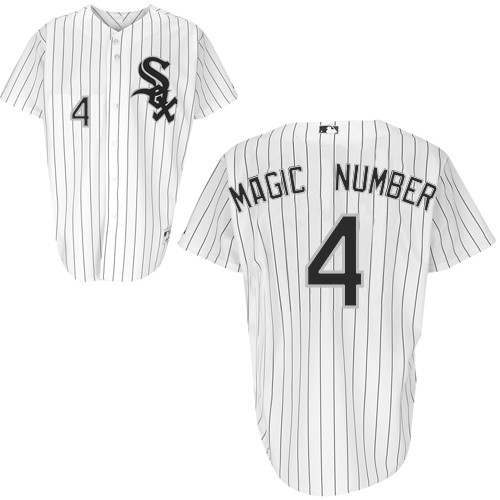
After a disappointing loss last night, the White Sox rebounded this afternoon, defeating the Rangers 7-2 to take the series and lower their magic number to 4.  Cleveland, on the other hand, brought it to the Yankees, chasing Gerrit Cole early en route to an 11-1 victory over the Yankees, which, to be honest, I’m ok with.
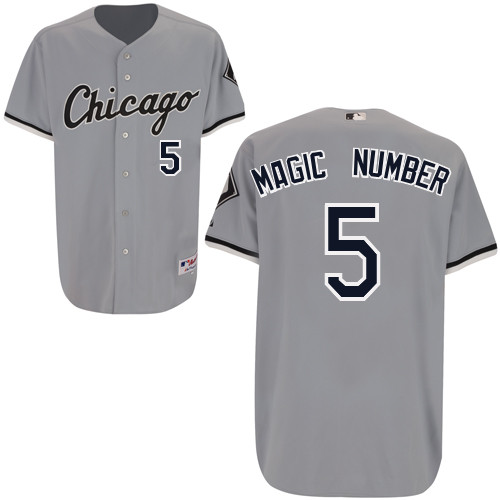
The White Sox head to Detroit to start a 3 game series against the Tigers tomorrow night, while Cleveland battles the Royals in a double header, meaning it is possible for the White Sox to clinch as early as Tuesday.

By The Numbers – 39

In 1929, uniform numbers appeared on the back of baseball jerseys for the first time, thanks to the Indians and the Yankees.  By 1937, numbers finally appeared across all uniforms, both home and away, across both major leagues.  Since that time, 81 distinct numbers have been worn by members of the White Sox, while the Cubs boast 76.

Today, we continue our look at those players, picking our favorite, if not the best, player to wear each uniform number for both Chicago teams with #39.  77 different players have donned #39 while playing in Chicago, 31 for the White Sox and 46 for the Cubs.

First acquired in 1989, Roberto Hernandez, donning #39, made his major league debut on September 2, 1991, getting the start and going 7 innings for the victory in the White Sox win over the Royals.  He appeared in 9 games in the final month of the season, making the only 3 starts of his career, and finished the year with a 7.80 ERA.  In 1992, Hernandez split the year between Triple A and Chicago, eventually supplanting Bobby Thigpen as the team’s primary closer.  He finished the year with 12 saves and a sparkling 1.65 ERA.  Hernandez had another great year in 1993, saving 38 games in 70 appearances with a 2.29 ERA as the White Sox won their final AL West title.  During the ALCS against the Blue Jays, Hernandez threw 4 scoreless innings in 4 appearances, earning 1 save.

In the strike-shortened 1994 season, Hernandez struggled.  His ERA jumped to 4.91 and he saved only 14 games before the season ended on August 12, despite leading the league in games finished.  When baseball returned in 1995, Hernandez bounced back somewhat, once again leading the league in games finished and lowering his ERA by nearly a full run to 3.92.  1996 was a true return to form for Hernandez.  He led the league in games finished for the third straight year and lowered his ERA by 2 full runs to 1.91.  He earned his first All Star selection and, with 38 saves, finished 6th in Cy Young Award voting.  Hernandez was well on his way to another strong season in 1997, with 27 saves and a 2.44 ERA, when he was included in the infamous White Flag trade on July 31, joining Wilson Alzarez and Danny Darwin in going to the Giants for the collection of Brian Manning, Lorenzo Barcelo, Mike Caruso, Keith Foulke, Bob Howry, and Ken Vining.

On the other side of town, Andrew Chafin wore #39 for the 11 months he was a member of the Cubs.  Acquired on August 31, the trade deadline of the shortened 2020 season, Chafin pitched in 4 games over the final month, posting a 3.00 ERA and retired the only batter he faced in the Wild Card series against the Marlins.  In February, Chafin re-upped with the Cubs and became sort of a cult hero.  On June 24, he was part of a combined no-hitter against the Dodgers.  In 43 appearances for the Cubs in 2021, Chafin recorded a 2.06 ERA with 37 strikeouts in 39.1 innings of work before being traded to the A’s on July 27th.

Hall Of Fame Batting Leaders


Thanks to the corona virus, the Hall of Fame Class of 2020, former Yankees shortstop Derek Jeter, Expos and Rockies legend Larry Walker, former Cardinal and Brewer backstop Ted Simmons, and union boss Marvin Miller, finally get their day in the sun in Cooperstown alongside, well, the empty class of 2021.  With two new hitters joining the list of Hall of Famers I’ve seen play live and an additional historical game identified, let’s check back in with the leaders on the offensive side of the ball amongst Hall of Famers for all of the games I’ve attended between 1984 and 2020.

Home Runs

Name Total
Jim Thome 35
Frank Thomas 15
Vladimir Guerrero 6
Ivan Rodriguez 4
Chipper Jones 3
Harold Baines 3
Carlton Fisk 3

Hits

Name Total
Jim Thome 110
Frank Thomas 54
Ken Griffey Jr 32
Continue reading →

By The Numbers – 40

In 1929, uniform numbers appeared on the back of baseball jerseys for the first time, thanks to the Indians and the Yankees.  By 1937, numbers finally appeared across all uniforms, both home and away, across both major leagues.  Since that time, 81 distinct numbers have been worn by members of the White Sox, while the Cubs boast 76.

Today, we continue our look at those players, picking our favorite, if not the best, player to wear each uniform number for both Chicago teams with #40.  55 different players have donned #40 while playing in Chicago, 25 for the White Sox and 30 for the Cubs.

Acquired in mid-June, along with George Frazier and Ron Hassey, from the Indians in exchange for Mel Hall, Joe Carter, Don Schulze, and Darryl Banks, Rick Sutcliffe, wearing #40, quickly became the ace of the Cubs staff, going 16-1 with a 2.69 ERA in leading the Cubs to their first division title and his first Cy Young Award.  He then homered in and won Game 1 of the NLCS, the first post-season game at Wrigley Field since the 1945 World Series, before dropping the deciding Game 5 in San Diego.  A free agent after the season, Sutcliffe signed a long term deal with the Cubs.

A hamstring injury limited him to 20 starts in 1985, while arm injuries in 1986 led him to a 5-14 record with a 4.64 ERA in 28 appearances.  He bounced back in 1987, leading the league with 18 wins in 34 starts for the last place Cubs, finishing second in the Cy Young Award voting.  He went 13-14 in 1988, but did somehow manage a steal of home plate on July 29th in a victory against the Phillies.  A resurgence in 1989 helped lead the Cubs to their second divisional title, and he made one start against the Giants in the NLCS.  Recurring arm injuries caused Sutcliffe to miss most of the 1990 and 1991 seasons, with only 24 appearances between the two years, and the Cubs let him leave as a free agent following the 1991 season.

On the other side of town, Wilson Alvarez was acquired by the White Sox, along with Scott Fletcher and Sammy Sosa, for Harold Baines and Fred Manrique on July 29, 1989, making his White Sox debut on August 11, 1991 by throwing an unlikely no hitter against the Orioles at Memorial Stadium.  He made 8 additional starts for the White Sox down the stretch, finishing the year with a 3-2 record and a respectable 3.51 ERA.  1992 saw Alvarez work mostly out of the bullpen, getting only 9 starts out of his 34 appearances.  He posted a career high 1.674 WHIP, giving up 65 walks in just over 100 innings.  This led to an unfortunate 5.20 ERA, despite a 5-3 record.  In 1993, Alvarez managed to break in to the rotation full time.  Despite leading the league with 122 walks, he finished second in the AL with an ERA of 2.95 and ended up with a 15-8 record as the White Sox won the AL West title for the first time in a decade.  He was the winning pitcher in Game 3 of the ALCS, holding the Blue Jays to a single run while throwing a complete game.

Alvarez improved in 1994, earning his first (and only) All Star nod and cutting his walk total nearly in half, helped by the player strike that ended the season in August, and he finished the year with a 12-8 record and a 3.45 ERA.  When baseball returned in 1995, Alvarez struggled to regain his groove, finishing with a losing record for the first time and an ERA of 4.32.  1996 saw a nice bounce back for Alvarez.  While his ERA was still an elevated 4.22, he tied his career high with 15 wins and set career highs for innings pitched and strikeouts.  He continued to impress in 1997, putting up a 9-8 record with a 3.03 ERA by the end of July, when, with the White Sox a mere 3 games back in the standings, he, along with Danny Darwin and Roberto Hernandez, was sent to the Giants for Brian Manning, Lorenzo Barceló, Mike Caruso, Keith Foulke, Bob Howry, and Ken Vining in what would become known as the White Flag Trade.

Fitbit VII – Week 31

A pretty decent week, all things considered, as I notched my first 10,000 step day since May.  Things got off to a decent enough start on Sunday, as I made a return trip to Tropicana Field to watch a horrible baseball game, finishing with 5100 steps.  Things improved a bit on Monday, as I relaxed for my last day in Florida and chalked up 5400 steps.  On Tuesday morning, I hopped in the car and headed to Atlanta, where an ill-advised uphill walk to Truist Park to watch the Braves and the Yankees put me 10 steps shy of 10,900.  I left Atlanta on Wednesday and headed for home, which left me with only 4700 steps.  Going back to work on Thursday left me with a depressing 3500 steps.  The return of crosstown baseball on Friday lifted me back up to 4600 steps.  The return trip to Guaranteed Rate Field on Saturday was another improvement, leaving me 4 steps away from 5500.

Total steps: 39,888

Daily average: 5698.3