Fitbit V: Week 19

My best week ever, and my second ever week with over 100,000 steps, with every single day coming in well over 10,00 steps.  Things got started on Sunday, when the whole family flew to Baltimore to celebrate Michael’s graduation.  The boys made a trip to Camden Yards to see the Orioles take on the Giants before taking a bus to Washington, where we met up with the girls.  All told, I ended up with nearly 12,200 steps.  Monday was the big day of the week, thanks to a trip to Smithsonian Zoo, which netted me over 24,600 steps.  Tuesday, we visited Museum of American History and went on a tour of the US Capitol, leading to 16,100 steps.  Wednesday, we headed to Nationals Park to see the White Sox battle the Nationals, coming in 11 steps shy of 13,000.  Thursday included a trip to the Newseum and the Jefferson Memorial, which left me 4 steps shy of 11,700.  Friday combined the Lincoln Memorial with a tour of the White House and left me 2 steps short of 16,400.  Saturday, the boys went on a walking monument tour before we all headed to the airport, finishing the week with over 11,800 steps.

Total steps: 105,924

Daily average: 15,132

Another Mix Tape Monday – Volume 13

20 years ago, during my sophomore year of high school, I put together the first of what would become a nearly 20 volume collection of mix tapes, containing my favorite songs that I had gathered either from the radio, a cassette tape, or (eventually) CD. We last looked back at all 20 volumes three years ago to see which of my “favorite” songs still resonated in today’s digital world. Today, we revisit those mix tapes and see how, or if, things have changed in the past 3 years.

Volume 13 takes us into late spring of 1994 and my the end of my sophomore year of college. The song selection is now mostly completely alternative, with just one or two hip-hop hits to go along with it., with a little pop and Aerosmith on the side.

Side A

Alice In Chains – No Excuses

The first Alice In Chains song to top the Mainstream Rock Tracks chart, originally acquired via 93.5 KHY in Lafayette, added 10 new plays over the last 3 years.

iTunes Stats
2012 2015 2019
3 plays 6 plays 16 plays, most recently on 12/23/2018 

Smashing Pumpkins – Disarm

The third single from the band’s breakthrough release Siamese Dream, which was banned by the BBC because of its lyrical content, more than doubled its output over the past 3 years.

iTunes Stats
2012 2015 2019
5 plays 7 plays 15 plays, most recently on 12/17/2018 

Counting Crows – Mr. Jones

The debut single from Counting Crows, which hit #2 on the Modern Rock Tracks chart, added an impressive 14 plays over the past 3 years.

iTunes Stats
2012 2015 2019
0 plays 3 plays 17 plays, most recently on 9/17/2018 

The Cranberries – Dreams

The first single from the band, which became a hit after Linger put them on the map, saw a 13 listen increase.

iTunes Stats
2012 2015 2019
7 plays 9 plays 22 plays, most recently on 7/12/2018 

Jodeci – Cry For You

The 60th biggest hit of 1994 picked up 10 listens over the past 3 years.

iTunes Stats
2012 2015 2019
0 play 2 plays 12 plays, most recently on 11/20/2018 

Julianna Hatfield Three – Spin The Bottle

The track, featured on the Reality Bites soundtrack, added 8 additional plays over the last 3 years.

iTunes Stats
2012 2015 2019
10 plays 13 plays 21 plays, most recently on 11/1/2018 

Aerosmith – Deuces Are Wild

Aerosmith’s contribution to The Beavis and Butt-Head Experience compilation album, originally recorded for Pump, more than doubled its listens over the past 3 years.

iTunes Stats
2012 2015 2019
4 plays 6 plays 14 plays, most recently on 5/30/2018 

Gin Blossoms – Mrs. Rita

The minor Gin Blossoms, which peaked at #36 on the Mainstream Rock Tracks chart, picked up a single new listen, 3 1/2 years ago.

iTunes Stats
2012 2015 2019
1 plays 5 plays 6 plays, most recently on 6/25/2015 

Continue reading →

Changes To The Old Ballparks

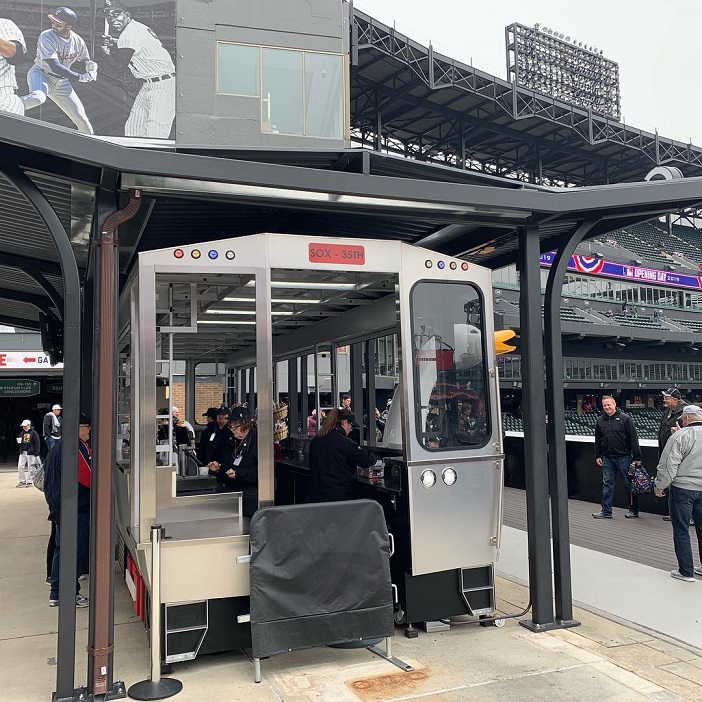
The 2019 baseball season is underway and there have been some changes the old ballparks.  Both Guaranteed Rate Field and Wrigley Field debuted some new amenities for their fans as the White Sox and the Cubs got underway over the last few weeks.First, on the south side, comes the new Goose Island section.  On the concourse behind the section is a faux CTA train, where many different variants of Goose Island beer can be purchased.  Right behind the bar is a gathering space, with a large goose head drawing people there.

Over on the north side, the biggest change, affecting the entire ballpark, are the renumbered sections and seats.

As we learned last November, the seating bowl at Wrigley Field has been completely renumbered.  In what the Cubs described as a “more intuitive seat numbering system”, the upper deck has new designations, as the previous 400-level seats are now the 300-level and the 500-level is now the 400-level.  In addition, an L or R will be added to the (now) section number to designate whether you are in left field or right field.  My seats, which previously were in row 1 of aisle 509, are now, as you can see, in 408L.

Finally, in the final phase of the big remodel, new food stations were opened behind the seats in the upper deck.  The previous food station, underneath the press box behind home plate, has been converted into a private club.  The food options, sadly, have not been improved.


#1 – Harold Baines

Name: Harold Baines

Rank: 1

Position: RF/DH

Years With White Sox: 1980-1989, 1996-1997, 2000-2001

Harold Baines was the first overall selection in the 1977 draft after White Sox owner Bill Veeck had seen him play little league years before.  He made his major league debut less than 3 years later, on Opening Day 1980, going 0-4 against the Orioles at old Comiskey Park.  He appeared in 141 games and finished the year hitting .255 with 13 home runs and 49 RBIs.

Baines started to break out in 1981, where the long player’s strike led him to only appearing in 82 games.  He boosted his average to .286 and hit 10 home runs with 41 RBIs in only 280 at bats.

With labor problems behind them, a full slate of games was played in 1982, with Baines appearing in all but one of them.  Hitting .271, Baines smacked 25 home runs with 105 RBIs, while setting a career high with 10 stolen bases.  His numbers were good enough to garner 9 votes for AL MVP.

1983 was a banner year on the south side, as the White Sox captured their first ever division title.  Baines was a key contributor, hitting .280 with 20 home runs and 99 RBIs.  During the ALCS against the Orioles, Baines struggled, like most of his teammates, getting only 2 hits in the 4 game series.  At season’s end, he picked up 49 votes to finish 10th in MVP voting.

Baines continued to excel in 1984, though the rest of the team did not.  On May 8, he ended the longest game in major league history (8 hours and 6 minutes over 25 innings on successive evenings) with a walk-off home run against Chuck Porter of the Brewers.  He finished the year with a .304 average, a career high 29 home runs, and 94 RBIs, while leading the league in slugging at .541.  He once again garnered MVP consideration, finishing the vote tied for 13th place.

1985 was another strong season for Baines.  He earned his first All Star selection, singling off former teammate LaMarr Hoyt in his only at bat at the Metrodome.  He finished the year hitting .309 with 22 home runs and a career high 113 RBIs.  He earned 49 votes in placing 9th in MVP voting.

Baines saw his body start to betray him for the first time in 1986.  He appeared in his second straight All Star game, going hitless in his one at bat.  A late August knee injury caused him to miss time, and a late September collision with Neal Heaton in a loss to the Twins reinjured the knee, leading to arthroscopic surgery following the season.  He finished the season hitting .296, just missing his 3rd consecutive .300 season, with 21 home runs and 88 RBIs.

Baines returned for opening day in 1987, getting two hits and knocking in the winning runs on the hard artificial turf of Royals Stadium, but was unable to walk the following day.  A second arthroscopic surgery caused him to miss 23 games before he returned, moving from right field to designated hitter.  He still was named to his 3rd straight All Star team, going hitless in the 2-0 loss by the AL.  Come year end, he had hit .293 with 20 home runs and 93 RBIs.

1988 was a down year for Baines, though he managed to appear in 158 games.  His average dropped to .277, his lowest total since 1982, while hitting only 13 home runs, his lowest total since 1981.  He made only 9 appearances in the outfield while becoming accustomed to being a full time designated hitter.

Baines bounced back in 1989.  He was named the starting DH in the All Star game, going 1-3 with an RBI in the AL’s victory at Angel Stadium.  On July 29, he was traded to the Rangers, along with Fred Manrique, for Wilson Alvarez, Scott Fletcher, and Sammy Sosa.  “It’s an unpopular decision as far as the fans are concerned, but sometimes unpopular means exactly that-unpopular,” GM Larry Himes said at the time.  “It doesn`t mean that it isn`t a good decision.  This is a decision we made as far as direction of the Chicago White Sox for today and for our future.”  Baines was hitting .321 with 13 home runs and 56 RBIs at the time of the trade.  Less than a month later, as the Rangers visited Chicago for the first time on August 20, the White Sox retired Baines’ #3, a somewhat awkward attempt to placate the enraged fanbase.

Baines returned to the White Sox as a free agent in 1996.  Appearing in 143 games, Baines hit .311 with 22 home runs and 95 RBIs.  He returned in 1997 and was putting together another fine season, putting up a .305 average with 12 home runs and 52 RBIs in 93 games when, on July 29 again, he was traded to the Orioles for a player to be named later.

Three years later, once again on July 29, the White Sox re-acquired Baines, along with Charles Johnson, from the Orioles for Miguel Felix, Juan Figueroa, Jason Lakman, and Brook Fordyce.  Appearing in 24 games down the stretch, Baines hit .213 with a single home run and 9 RBIs as the White Sox took the Central Division crown.  Baines went 1-4 in the ALDS as the White Sox were swept by the Mariners.

Baines returned to the White Sox in 2001 at the age of 42, getting extra playing time once Frank Thomas went down with an injury.  In 32 games, he hit .131, failing to homer and driving in only 6.

Baines returned to the White Sox dugout in 2004, when new manager Ozzie Guillen named him bench coach.  He would remain on staff until 2015, when he became an ambassador for the team.  On July 20, 2008, the White Sox unveiled a bronze statue of Baines at U.S. Cellular Field prior to their game against the Royals.  On December 9, 2018, Baines was elected to the National Baseball Hall of Fame Class of 2019 via the Today’s Game Era ballot.

Baines’ numbers in a White Sox uniform, both for games I attended and overall, were:

Continue reading →

All Time Team Records

The 2019 baseball season got underway yesterday, with the now early start brought about due to the last collective bargaining agreement.  To celebrate, it is time once again to look at the all-time team records for games that I have identified as having attended dating back to 1984. The Cubs look to avenge last year’s loss in the Wild Card and hope to make it back to the World Series, while the rebuilding White Sox hope to finally start seeing some of their young talent blossom.  The 2019 season should be an exciting one on both sides of town.

All-Time Team Records
Team Name Won Loss Winning Pctg
California Angels 1 0 1.000
Arizona Diamondbacks 13 2 0.867
Florida Marlins 15 8 0.652
Colorado Rockies 10 6 0.625
Philadelphia Phillies 10 7 0.588
New York Yankees 14 10 0.583
Boston Red Sox 17 13 0.567
Los Angeles Angels 17 13 0.567
Toronto Blue Jays 13 10 0.565
Cleveland Indians 26 23 0.531
Detroit Tigers 27 24 0.529
Chicago Cubs 213 192 0.526
Houston Astros 22 20 0.524
Chicago White Sox 293 271 0.520
Continue reading →

#2 – Mark Buehrle

Name: Mark Buehrle

Rank: 2

Position: P

Years With White Sox: 2000-2011

Mark Buehrle joined the White Sox organization in 1998, drafted in the 38th round.  Despite his lowly draft status, he rose quickly through the system, first coming up during the 2000 season, working out of the bullpen for the eventual division champions.  He moved into the rotation the following season, and stayed there for the next 11 seasons.  During that time, there were numerous memorable appearances, many of which I was privileged to see in person.

The 2007 no-hitter against the Rangers.

The 2009 perfect game against the Rays.

Winning Game 2 of the 2005 ALCS against the Angels, thanks to AJ’s heads-up baserunning, and starting the streak of 4 straight complete games.

The 1 hour 36 minute game against the Mariners in 2005.

The no look, through his legs flip to Paul Konerko on Opening Day 2010 against the Indians.

And, of course, his performance in the 2005 World Series, starting Game 2, getting a no decision, and coming in to pitch the 14th inning and earning the save in Game 3.

In White Sox annals, Buehrle is currently fifth all-time in strikeouts, sixth in games started, and eighth in wins and innings pitched.

Buehrle’s numbers in a White Sox uniform, both for games I attended and overall, were:

Continue reading →

#3 – Paul Konerko

PaulKonerkoRedName: Paul Konerko

Rank: 3

Position: 1B

Years With White Sox: 1999-2014

After brief appearances with the Dodgers and the Reds in 1997 and 1998, Paul Konerko was traded to the White Sox on November 11, 1998 for center fielder Mike Cameron.  He started at DH on opening day in 1999, an 8-2 victory over the Mariners, going 1-4 with a home run and 2 RBI.

2000 saw Konerko get off to a quick start with an inside the park home run on April 11 against the Devil Rays, the first by a White Sox player since 1990.  In his second full season, he helped lead the surprising White Sox to their first Central Division title.  He, along with the rest of the White Sox offense, struggled during the Division Series against the Mariners, going 0-9 in the three game sweep.

After steadily improving in 2001 and 2002, Konerko ran into trouble in 2003, with his average under .200 for the first half of the season.  He found himself coming off the bench as manager Jerry Manuel seemingly lost confidence in him.  He bounced back in the second half and re-established himself as the starting first baseman.

Konerko bounced back in a big way in 2004, hitting 41 home runs and knocking in over 100 RBIs en route to the Comeback Player of the Year award.  2005 saw him put up a second consecutive 40 HR, 100 RBI season as the White Sox found themselves back in the playoffs for the second time in his career.  This time, things would go much differently for both Konerko and the White Sox.

Konerko homered twice and drove in 4 runs during the three game sweep against the Red Sox, catching the final out that sent the White Sox to the ALCS for the first time since 1993.  Konerko hit another 2 home runs and drove in 7 against the Angels during the 5 game series.  Once again, Konerko caught the final putout that sent the White Sox to their first World Series since 1959.  Following the victory in game 5, Konerko was named ALCS MVP.

Konerko cooled down during the World Series, hitting only one home run against the Astros, but what a home run it was.  With the White Sox trailing in the 7th inning, Konerko came up to face new pitcher Chad Qualls with the bases loaded.  Konerko made contact on the first pitch, sending it into the left field seats for a grand slam and the lead.  Like the previous 2 series, Konerko caught the final putout at first base in Game 4, giving the White Sox their first World Series title since 1917.

With the afterglow of winning the World Series starting to subside, Konerko became a free agent.  Despite rumors of him getting more lucrative offers from both the Dodgers and the Orioles, Konerko finally resigned with the White Sox, inking a 5-year, $60 million contract that would keep him on the south side through 2010.

Konerko battled through injuries in 2008, leading to his worst season since 2003, but he did manage to help the White Sox reach the post-season for the third time during his career.  He hit 2 solo home runs in the 4 game series against the Rays, in what would be his final playoff appearance.

Konerko had two more chances at free agency, signing a 3 year deal with the White Sox prior to 2011 and, finally, re-upping for one last season in 2014.  He finishes his career as the White Sox all time leader in total bases and second all time in home runs, RBIs, and games played.  In addition, he was a 6-time All Star and had served as team captain since 2006.  He also is the only White Sox player to appear in the post season 3 different times.

Konerko’s numbers in a White Sox uniform, both for games I attended and overall, were:

Continue reading →
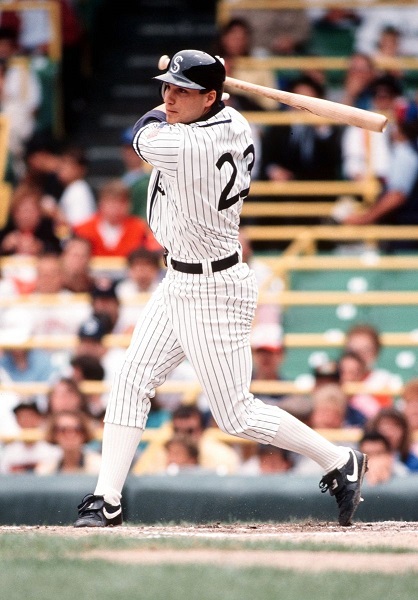
#4 – Robin Ventura

Name: Robin Ventura

Rank: 4

Position: 3B

Years With White Sox: 1989-1998

Robin Ventura joined the White Sox organization as the 10th overall pick in the 1988 draft.  He made his major league debut the following September, going 1-4 with an RBI in a 11-1 victory over the Orioles at Memorial Stadium.  He appeared in 16 games down the stretch, hitting only .178 while driving in 7 runs in 45 at bats.

A good spring in 1990 led to Ventura breaking camp with the White Sox.  He struggled, both on the field and at the plate, suffering through a horrendous 0-for-41 slump while committing 25 errors over the course of the season.  However, he did lead AL rookies with 150 games played and his 123 hits were the most by a White Sox rookie since Ozzie Guillen in 1985.  He finished the year with a .249 average, 5 home runs, and 54 RBIs.  He placed 7th in Rookie of the Year voting and was named to the Topps All Star Rookie team.

Ventura and the White Sox moved in to the new Comiskey Park in 1991, hoping to improve on the previous year’s growth.  He improved his fielding enough to earn his first Gold Glove award and led the league in putouts.  At the plate, he set a White Sox team record for RBIs by a third baseman, finishing with an even 100.  He upped his average to .284 and hit 23 home runs.  His work was enough to garner enough MVP votes to finish in 20th place.

1992 was another good year for Ventura.  He earned his first All Star nod, going 2-2 in the AL’s victory at Jack Murphy Stadium.  He finished the year with a .282 average, 16 home runs, and 93 RBIs.  He also snagged his second consecutive Gold Glove award.

Ventura continued his successful ways in 1993.  He collected his 500th hit in May and, on August 4, he entered the public consciousness with an event that would come to define his entire career.  While batting against the Rangers, Ventura was hit by a pitch thrown by Nolan Ryan and charged the mound.  Ryan, 20 years Ventura’s senior, placed him in a headlock and punched him several times, starting a bench-clearing brawl that was voted the best baseball brawl of all time by SportCenter.  Ventura saw his average drop to .262, but his OPS set a new career high.  His 94 RBIs made him the first AL third baseman with three consecutive 90-RBI seasons since Graig Nettles in the mid 70s.  During the ALCS against the Blue Jays, Ventura hit .200, with just 1 home run and 5 RBIs across the six game series.  After the season, he was awarded his third consecutive Gold Glove award.

The strike in 1994 saw Ventura’s streak of 90 RBI seasons and Gold Gloves come to an end.  When baseball stopped in August, Ventura was hitting .282 with 18 home runs and 78 RBIs, while posting a new career high with an .832 OPS.

When play resumed in late April 1995, Ventura struggled out of the gate, committing ten errors in the first ten games.  As the White Sox started to tear down the team that had finished the previous two seasons on top of their division, trade rumors started to follow Ventura, though nothing came to fruition.  On September 4, he became the eighth player in history to hit two grand slams in one game, and the first since Frank Robinson in 1970.  He finished the year setting career highs with a .295 average, an .882 OPS, and 26 home runs while driving in 93 runs.

Ventura had the best year of his career to date in 1996.  He set White Sox team records in career home runs by a third baseman, with 142, and grand slams, with 9.  He set new career highs with 34 home runs, 105 RBIs, 2 triples, an OPS of .888, and a .974 fielding percentage at the hot corner.  He hit .287, while earning his fourth Gold Glove award.

1997 turned into a dismal year for Ventura and the White Sox.  During a spring training game at Ed Smith Stadium, Ventura caught his foot in the mud while sliding into home plate and suffered a broken and dislocated right ankle.  Expected to miss the entire season, he returned on July 24, collecting the game-winning hit that night, and homered in his first at-bat the next night.  With the White Sox only 3.5 games behind the Indians in the standings, a healthy Ventura might have put them over the top.  A week later, the team threw in the towel in what eventually became to be known as the White Flag Trade, sending Wilson Alvarez, Roberto Hernandez, and Danny Darwin to the Giants for prospects.  “We didn’t realize Aug. 1 was the end of the season,” said an upset Ventura.  He finished the year appearing in 54 games, hitting .262 with 6 home runs and 26 RBIs.

As Ventura entered the last year of his contract in 1998, the White Sox made little attempt to sign him to an extension, with owner Jerry Reinsdorf claiming his skills were “deteriorating” after his injury the year before.  With more trade rumors following him throughout the season, he finished the year with a .263 average, 21 home runs, and 91 RBIs while earning his fifth Gold Glove award.  Following the season, he became a free agent, ending his White Sox playing career.

On October 6, 2011, Ventura returned to the White Sox as their 39th manager.  He resigned following the 2016 season, finishing with a career record of 375-435 for a winning percentage of .463.

For his career, Ventura ranks 6th in White Sox history with 39.4 WAR, 8th with 28.8 OWAR, 8th with 12.9 DWAR, 6th with 171 home runs, 8th with 741 RBIs, and 5th with 668 walks.

Ventura’s numbers in a White Sox uniform, both for games I attended and overall, were:

Continue reading →

Pitching Mound To Prison Pipeline

Former White Sox pitcher Esteban Loaiza was sentenced to 36 months in prison earlier today after pleading guilty to felony cocaine possession with intent to distribute.  Loaiza, who was facing a potential life sentence, was arrested last year after he was caught trying to move more than $500,000 in cocaine from a house located near a school.  He was initially stopped by police during a routine stop for a minor traffic violation, but a search of the car led to the discovery of a “sophisticated aftermarket compartment used to conceal contraband.”  A subsequent search of a home he had been renting, mere “steps away from an area preschool”, found roughly 20 kilograms of cocaine, with an estimated street value of $500,000.  Following his release from prison, he will be deported to his native Mexico.

Loaiza, the second winningest pitcher from Mexico, had two stints with the White Sox.  He scored All Star nods in both 2003 and 2004 and finished his career with the team in a brief stint in 2008.  He earned over $40 million during his career, making the need to participate in this type of scheme baffling.  He made an unannounced appearance at Sox Fest just prior to his arrest last year.

2019 Games Of Interest

April 6 – White Sox Hoodie
April 27 – Jose Abreu Silver Slugger Bobblehead
May 4 – R2D2 Bobblehead & Star Wars Night
May 5 – Los White Sox Soccer Jersey
May 5 – Cubs Hooded Pullover
May 17 – Fireworks
May 18 – Carlos Rodon Bobblehead
June 1 – Chicago-themed White Sox Jersey
June 13 – Free T-shirt Thursday
June 15 – White Sox Hawaiian Shirt and Fireworks
July 15 – Kris Bryant Bobblehead
July 27 – White Sox Spider-Man Bobblehead and Fireworks
August 11 – Harold Baines Day and HOF Plaque
September 15 – Pedro Strop Bobblehead
September 28 – Halfway to St Patrick’s Day
September 29 – Fan Appreciation Day