By The Numbers – 54

In 1929, uniform numbers appeared on the back of baseball jerseys for the first time, thanks to the Indians and the Yankees.  By 1937, numbers finally appeared across all uniforms, both home and away, across both major leagues.  Since that time, 81 distinct numbers have been worn by members of the White Sox, while the Cubs boast 76.

Today, we continue our look at those players, picking our favorite, if not the best, player to wear each uniform number for both Chicago teams with #54.  30 players have donned #554 while playing in Chicago, 18 for the White Sox and 16 for the Cubs.

I guess if a Hall of Famer wears the same number on both sides of town, he should be the pick, no?  Rich “Goose” Gossage was selected by the White Sox in the 9th round of the 1970 draft.  He made his debut in April of 1972 against the Royals and spent most of the next four seasons in the bullpen for the White Sox, culminating with an All Star appearance and 26 saves in 1975.  So, of course, in 1976, he was moved in to the starting rotation, going 9-17 with a 3.94 ERA in 29 starts, though he did earn his second straight All Star appearance.  Following the season, as Bill Veeck tried to find a way to use free agency to his advantage, Gossage was traded, along with Terry Forster, to the Pirates for Richie Zisk, who was entering his walk year.

After becoming one of the most dominant stoppers of the late 70s and early 80s, Gossage returned to Chicago in 1988, when he was acquired by the Cubs from the Padres in exchange for Mike Brumley and Keith Moreland.  In 46 appearances, he went 4-4 with a 4.33 ERA, earning only 13 saves.  He was released towards the end of spring training in 1989.


Gossage returned to Chicago as a visitor in 1991 and gave up a walk-off grand slam to Robin Ventura in what might just be my favorite regular season home run.  He was elected to the Hall of Fame in 2008.

An Empty Class

All eyes turned towards the small hamlet of Cooperstown, New York last Tuesday, as the votes were tallied and, for the first time since 2013, the 2021 Hall of Fame class was found to have no members.  Curt Schilling led all vote getters with 71.1% of the vote, 3.9% shy of the 75% required for induction.

Three others tallied greater than 50% of the vote, led by Barry Bonds, who saw a slight increase up to 61.8%.  Roger Clemens was right behind him at 61.6% and, with only one more go around each, it seems unlikely that either will make it via the BBWAA.  Scott Rolen saw a big jump, rising to 52.9% and looks like he’s on track to eventually make it.

Omar Vizquel, who was on the upswing and looked to be on a good trajectory, dropped back down under 50% after allegations of spousal abuse popped up last year.

Mark Buehrle scored the highest amongst the newcomers, with 11%.  Torii Hunter and Tim Hudson are the other two newcomers who live to fight another day, surpassing the 5% cutoff.  Of the local contingent, former White Sox outfielder Andruw Jones jumped up to 33.9% while Manny Ramirez finished with the same 28.2% as last year.  Cub outcast Sammy Sosa garnered 17.0%, while his former teammates Aramis Ramirez and LaTroy Hawkins pulled in 1% and 0.5% respectively.  Former White Sox outfielder Nick Swisher got no votes, which seems about right.

Schilling, in an effort to prove that he is the garbage human being that he shows to the world on social media, released a letter after the vote was announced asking to no longer be considered for the Hall.  “I’ll defer to the veterans committee and men whose opinions actually matter and who are in a position to actually judge a player,” he wrote, denigrating the BBWAA and the entire election process.  Personally, I hope they leave him on the ballot and that nobody votes for him.

While there is no class of 2021, there will still be an election ceremony this summer, as the class of 2020, Derek Jeter, Larry Walker, Ted Simmons, and Marvin Miller, get their day in the sun, corona virus willing, on Sunday, July 25.

By The Numbers – 72

In 1929, uniform numbers appeared on the back of baseball jerseys for the first time, thanks to the Indians and the Yankees.  By 1937, numbers finally appeared across all uniforms, both home and away, across both major leagues.  Since that time, 81 distinct numbers have been worn by members of the White Sox, while the Cubs boast 76.

Today, we continue our look at those players, picking our favorite, if not the best, player to wear each uniform number for both Chicago teams with #72.  A grand total of 3 players have donned the number while playing in Chicago, 1 of whom is enshrined in Cooperstown.

When Carlton Fisk joined the White Sox in 1981, #27, which he wore with the Red Sox, was taken, so he switched the numerals around and became the first player in White Sox history to don #72.  12 years later, Fisk left the White Sox as the all time major league leader in games caught, home runs as a catcher, home runs after the age of 40, and most seasons as a catcher.  He was also the career home run leader for the White Sox.  #72 was retired in his honor on September 14, 1997 and he was elected to the Hall of Fame as part of the class of 2000.

Robert Machado gave up his #29 when the Cubs acquired Fred McGriff at the trade deadline in 2001, becoming the first Cub to don #72.  He wore the number for the rest of his Cub career, which lasted until June 9, 2002, when he was traded to the Brewers.

2021 Hall Of Fame Ballot – The Newcomers


baseballhof

The BBWAA recently released their ballot for the Hall of Fame class of 2021, with the results of the vote due to be revealed on January 26th.  Assuming the corona virus is under control by then, induction would take place July 25th.  With Derek Jeter and Larry Walker getting elected in last year’s voting, the new ballot contains 14 holdovers along with 11 newcomers, which may potentially continue the logjam caused by the current BBWAA rules which limit the number of votes on one ballot to 10 and the ongoing refusal by some writers to vote for players tainted by PEDs, leaving too many qualified candidates fighting for limited spots.

Yesterday, we looked at the returning candidates.  Today, it’s time to look at the newcomers and who may be thankful come January.

Mark Buehrle

While he is one of only three pitchers, along with Cy Young and Sandy Koufax, to have a no-hitter, a perfect game, and win a World Series title with the same organization, I don’t see any way he will make it.  Hopefully he will get enough votes to remain on the ballot for another year.

A.J. Burnett

I don’t see him getting much in the way of support.

Michael Cuddyer

I wonder what it feels like to be placed on the ballot knowing that you won’t earn even a single vote.

Dan Haren

I can see him getting a vote or two, but not enough to stick around.

LaTroy Hawkins

I mean, he had a nice career and all, but no.

Tim Hudson

My initial reaction was no, but he was the first one to make me look up his numbers.  His predictive numbers are actually very similar to Buehrle’s, so I’m going to have to say no here as well.  It’ll be interesting to see how their vote totals match up considering how close their predictive scores are.

Torii Hunter

Probably the most interesting case out of the newcomers.  I can see him sticking around for the entire 10 year run, but I don’t see him getting in.

Aramis Ramirez

While a local favorite, I don’t see him getting a lot of support.

Nick Swisher

F this dude and anyone who votes for him.

Shane Victorino

No.

Barry Zito

The start of his career looked promising, but those later Giant years were brutal.

2021 Hall Of Fame Ballot – The Holdovers

Earlier this week, the BBWAA released their ballot for the Hall of Fame class of 2021. The results of the vote are due to be revealed on January 26th, with induction hopefully taking place July 25th.  After Derek Jeter and Larry Walker were elected in last year’s voting, the new ballot contains 14 holdovers along with 11 newcomers, which may potentially continue the logjam caused by the current BBWAA rules which limit the number of votes on one ballot to 10 and the ongoing refusal by some writers to vote for players tainted by PEDs, leaving too many qualified candidates fighting for limited spots.

Let’s take a look at the returning candidates today before moving on to the newcomers.

Bobby Abreu
Years on ballot: 1
2020 Percentage: 5.5

After just barely surviving for a second time through the process, I wouldn’t be making any travel plans to Cooperstown if I were Abreu.

Barry Bonds
Years on ballot: 8
2020 Percentage: 60.7

The all time home run champion saw his vote percentage rise for the sixth straight time last year, so the PED bias holding him back may be slightly subsiding.  But, with only 2 more shots with the writers, it would take a huge mindset change for him to get up to 75%.

Roger Clemens
Years on ballot: 8
2020 Percentage: 61.0

Roger Clemens, he of the 354 career victories and 7 Cy Young awards, also found himself with a another slight bump rise after his eighth run through the voting process.  For some odd reason, perhaps by having played for more teams, Clemens continues to get marginally more support than his fellow PED poster child Barry Bonds.

Todd Helton
Years on ballot: 2
2020 Percentage: 29.2

A nice increase in his second showing, but it looks like Helton’s going to suffer from the same Colorado bias as Larry Walker, who needed all 10 of his chances to get elected.

Andruw Jones
Years on ballot: 3
2020 Percentage: 19.4

If voters were to stick to his first 11 seasons, Jones looks like a shoe-in for the Hall.  His last 7 seasons, though, were so bad that it makes it hard to consider him.  Despite more than doubling his vote percentage, those final seasons seem to be holding sway.

Jeff Kent
Years on ballot: 7
2020 Percentage: 27.5

Continue reading →

RIP Tom Terrific

Former White Sox pitcher and Hall of Famer Tom Seaver passed away Monday at the age of 75.  Seaver won 311 games, had a 2.86 earned-run average and struck out 3,640 batters over a 20-year career that began in 1967.  The 12-time All-Star led the National League in wins three times, ERA three times and strikeouts five times.  He was elected to the Hall of Fame in 1992, earning 98.8 percent of the vote, the highest voting percentage ever received at the time.

Seaver joined the White Sox at the end of his career, acquired in the free agent compensation draft in 1984.  He quickly made his mark on the south side, earning two wins in the same day by pitching the final inning of a suspended, 25 inning contest from the day before and then starting the regularly scheduled game against the Brewers.  On August 4, 1985, Seaver threw a complete game to earn his 300th career victory against the Yankees in New York.

Seaver is survived by his wife Nancy and daughters Sarah and Anne.

Hall Of Fame Batting Leaders


In normal times, today would have been the day former Yankees shortstop Derek Jeter was joined by Expos and Rockies legend Larry Walker, Cardinal and Brewer backstop Ted Simmons, and union boss Marvin Miller in taking their place in Cooperstown.  However, thanks to the corona virus, the Hall of Fame Class of 2020 will need to wait until next year for induction.  But, with two new hitters who would have been joining the list of Hall of Famers I’ve seen play live, let’s check back in anyway with the new leaders on the offensive side of the ball amongst Hall of Famers for all of the games I’ve attended between 1984 and 2020.

Home Runs

Name Total
Jim Thome 35
Frank Thomas 15
Vladimir Guerrero 6
Ivan Rodriguez 4
Chipper Jones 3
Harold Baines 3
Carlton Fisk 3

Hits

Name Total
Jim Thome 110
Frank Thomas 54
Ken Griffey Jr 32
Continue reading →

Entering The Hall

All eyes turned towards the small hamlet of Cooperstown, New York yesterday, as the votes were tallied and two new members were announced as the Hall of Fame class of 2020: Derek Jeter and Larry Walker.  Jeter, in his first year of eligibility, came 1 vote short of joining his former teammate Mariano Rivera as the only players to be elected with 100% of the vote.  Walker, in his tenth and final year of eligibility, found himself on 76.6% of the ballots, 6 votes above the threshold for enshrinement.

Four others tallied greater than 50% of the vote, led by Curt Schilling, who jumped up to 70%.  Roger Clemens and Barry Bonds saw very modest increases, which makes their eventual induction by the BBWAA unlikely with only two more elections for each.  Omar Vizquel saw a nice increase in his third go-around, going from 42.8% to 52.6%.

Bobby Abreu is the only first timer who will return, earning 5.5% of the vote, just above the 5% cutoff.  Of the local contingent, former White Sox outfielder Manny Ramirez finished with 28.2%, Andruw Jones earned 19.4%, and Cub outcast Sammy Sosa garnered 13.9%.  Paul Konerko got a mere 10 votes, Alfonso Soriano got 6, and J.J. Putz and Adam Dunn snagged a vote apiece.

As for the newest Hall of Famers, I’ve seen Jeter play 18 times, followed by a mere 3 career games for Walker.  These two, along with Ted Simmons and Marvin Miller, who were elected by the Veteran’s Committee in December, will enter the Hall on Sunday, July 26.

Derek Jeter’s numbers in games I’ve attended were: Continue reading →

You Can Put Him In The Hall, Yes!

Former White Sox broadcaster Ken “Hawk” Harrelson, who retired following the 2018 season, was awarded the 2020 Ford C. Frick Award yesterday, presented annually for excellence in broadcasting by the National Baseball Hall of Fame and Museum.  Harrelson spent 33 of his 42 seasons as a broadcaster for the White Sox, starting in 1982, with a brief interruption caused by his inadvised turn as the teams General Manager in 1986.  He returned to the broadcast booth in 1989, where he stayed until retiring last fall.

Harrelson’s broadcasting career began in 1975, following the end of his playing career and a short foray into professional golf.  He, along with Don Drysdale, joined the White Sox booth in 1982, replacing Harry Caray, who had clashed with the team’s new ownership group.  He returned to the south side in 1989, alongside former Sox player Tom Paciorek. In 2000, he was joined in the booth by another former White Sox outfielder, Darrin Jackson.  2009 saw his final broadcast partner, Steve Stone, join the team.  A five-time Emmy Award winner, Harrelson’s trademark calls of “You can put it on the board…Yes!” and “Mercy!” became the nightly soundtrack for multiple generations of White Sox fans, including a young Jason Benetti, who would grow up to replace him with the White Sox.

Harrelson, 78, is the fifth announcer with ties to Chicago to earn the honor, following Milo Hamilton, Harry Caray, Jack Brickhouse, and Bob Elson.  Two other finalists for next year’s award also have strong ties to the city: current Cub radio announcer Pat Hughes and former Cub announcer Dewayne Staats.

2020 Hall Of Fame Ballot – The Newcomers


baseballhof

The BBWAA recently released their ballot for the Hall of Fame class of 2020. The results of the vote are due to be revealed on January 21st, with induction taking place July 26th.  After Mariano Rivera, Mike Mussina, Edgar Martinez, and Roy Halladay were elected in last year’s voting, the new ballot contains 14 holdovers along with 18 newcomers, which may potentially continue the logjam caused by the current BBWAA rules which limit the number of votes on one ballot to 10 and the ongoing refusal by some writers to vote for players tainted by PEDs, leaving too many qualified candidates fighting for limited spots.

Yesterday, we looked at the returning candidates.  Today, it’s time to look at the newcomers and who may be thankful come January.

Bobby Abreu

I’ll be honest, I can see him getting some modest support, but I never considered him a Hall of Fame player during his career.

Josh Beckett

I’m sure he’ll get some support, but I don’t see it translating into an eventual election.

Heath Bell

I wonder what it feels like to be placed on the ballot knowing that you won’t earn even a single vote.

Eric Chavez

Again, I’m sure he’ll see a little support, but he’s not going to make it.

Adam Dunn

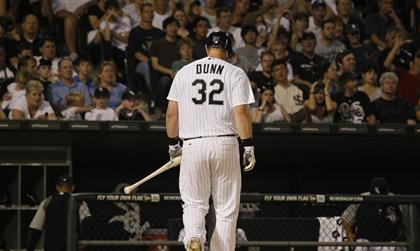
There aren’t enough home runs in the world to make up for the rest of his game.

Chone Figgins

Come on, now.  This is getting a little ridiculous.

Rafael Furcal

A career to be proud of, but not one that ends with election to the Hall.

Jason Giambi

The 2000 AL MVP should stick around on the ballot, but the PED stigma will likely keep him on the outside looking in.

Raul Ibanez

The former slugger may get a little support, but not enough to keep him on the ballot for a second go-around.

Derek Jeter

The only question here is whether he will join his former teammate, Mariano Rivera, in getting 100% of the vote.

Paul Konerko

Personal feelings aside, he will likely see enough support to hang on the ballot, but not enough to actually make it.

Cliff Lee

Continue reading →