Hall Of Fame Batting Leaders


The Hall of Fame Class of 2022, former Red Sox DH David Ortiz joins veterans committee choices Minnie Minoso, Tony Oliva, Jim Kaat, Gil Hodges, Buck O’Neil, and Bud Fowler in enshrinement in Cooperstown.  With a new hitter joining the list of Hall of Famers I’ve seen play, let’s check back in with the leaders on the offensive side of the ball amongst Hall of Famers for all of the games I’ve attended between 1984 and 2021.

Home Runs

Name Total
Jim Thome 35
Frank Thomas 15
Vladimir Guerrero 6
David Ortiz 6
Ivan Rodriguez 4

Hits

Name Total
Jim Thome 110
Frank Thomas 54
Ken Griffey Jr 32
David Ortiz 23
Vladimir Guerrero 21

Runs

Name Total
Jim Thome 82
Frank Thomas 42
David Ortiz 16
Ken Griffey Jr 12
Vladimir Guerrero 11
Craig Biggio 11

RBI

Name Total
Jim Thome 84
Frank Thomas 38
David Ortiz 19
Ken Griffey Jr 17
Continue reading →

Hey Now, You’re An All Star Starter

In the midst of disappointing seasons on both sides of town, both the White Sox and the Cubs managed to get one player each elected to the starting lineup for the upcoming Midsummer Classic set to be played in Los Angeles.  Tim Anderson will start at shortstop for the American League, beating out Toronto’s Bo Bichette in the final round of voting by nabbing 55% of the tally.  Willson Contreras beat out Atlanta’s Travis d’Arnaud to start at catcher for the National League, garnering 65% of the vote.

Anderson, making his second consecutive appearance, is the first starter from the White Sox since Jose Abreu manned first base to start the 2018 and 2019 games and the first shortstop from the White Sox to start since Luis Aparicio in 1970.  He’s only the sixth White Sox shortstop to make an All-Star team, following Alexei Ramirez, Ozzie Guillen, Aparicio, Chico Carrasquel, and Luke Appling.

Contreras, who started for the NL squad in 2018 and 2019, becomes the second catcher in Cubs history to make three or more All-Star Games, following Hall of Famer Gabby Hartnett.  Contreras may get to share the honor with his younger brother William, who lost out to Bryce Harper in the final round of voting for NL DH, but Harper’s broken thumb may open the door for the younger Contreras to step in as a replacement.

By The Numbers – 3

In 1929, uniform numbers appeared on the back of baseball jerseys for the first time, thanks to the Indians and the Yankees.  By 1937, numbers finally appeared across all uniforms, both home and away, across both major leagues.  Since that time, 81 distinct numbers have been worn by members of the White Sox, while the Cubs boast 76.

Today, we continue our look at those players, picking our favorite, if not the best, player to wear each uniform number for both Chicago teams with #3.  52 different players have donned #3 while playing in Chicago, 33 for the White Sox and 19 for the Cubs, including one who had it retired for him while he was still an active player.

Harold Baines was the first overall selection in the 1977 draft after White Sox owner Bill Veeck had seen him play little league years before.  He made his major league debut less than 3 years later, on Opening Day 1980 against the Orioles at old Comiskey Park.  Baines started to break out in 1981, but the long player’s strike limited him to only 82 games.  With a full slate of games played in 1982, Baines appeared in all but one of them, with numbers good enough to garner votes for AL MVP.

1983 was a banner year on the south side, as the White Sox captured their first ever division title.  Baines was a key contributor, hitting .280 with 20 home runs and 99 RBIs.  During the ALCS against the Orioles, Baines struggled, like most of his teammates, getting only 2 hits in the 4-game series.  At season’s end, he picked up 49 votes to finish 10th in MVP voting.

Baines continued to excel in 1984, though the rest of the team did not.  On May 8, he ended the longest game in major league history (8 hours and 6 minutes over 25 innings on successive evenings) with a walk-off home run against Chuck Porter of the Brewers.  He finished the year with a .304 average, a career high 29 home runs, and 94 RBIs, while leading the league in slugging at .541.  He once again garnered MVP consideration, finishing the vote tied for 13th place.  1985 was another strong season for Baines.  He earned his first All Star selection, singling off former teammate LaMarr Hoyt in his only at bat at the Metrodome.  He finished the year hitting .309 with 22 home runs and a career high 113 RBIs.  He earned 49 votes in placing 9th in MVP voting.

Baines saw his body start to betray him for the first time in 1986.  He appeared in his second straight All Star game, going hitless in his one at bat.  A late August knee injury caused him to miss time, and a late September collision with Neal Heaton in a loss to the Twins reinjured the knee, leading to arthroscopic surgery following the season.  He finished the season hitting .296, just missing his 3rd consecutive .300 season, with 21 home runs and 88 RBIs.  He returned for opening day in 1987, getting two hits and knocking in the winning runs on the hard artificial turf of Royals Stadium, but was unable to walk the following day.  A second arthroscopic surgery caused him to miss 23 games before he returned, moving from right field to designated hitter.  He still was named to his 3rd straight All Star team, going hitless in the 2-0 loss by the AL.  Come year end, he had hit .293 with 20 home runs and 93 RBIs.

1988 was a down year for Baines, though he managed to appear in 158 games.  His average dropped to .277, his lowest total since 1982, while hitting only 13 home runs, his lowest total since 1981.  He made only 9 appearances in the outfield while becoming accustomed to being a full-time designated hitter.  He bounced back in 1989.  He was named the starting DH in the All Star game, going 1-3 with an RBI in the AL’s victory at Angel Stadium.  On July 29, he was traded to the Rangers, along with Fred Manrique, for Wilson Alvarez, Scott Fletcher, and Sammy Sosa.  “It’s an unpopular decision as far as the fans are concerned, but sometimes unpopular means exactly that-unpopular,” GM Larry Himes said at the time.  “It doesn`t mean that it isn`t a good decision.  This is a decision we made as far as direction of the Chicago White Sox for today and for our future.”  Baines was hitting .321 with 13 home runs and 56 RBIs at the time of the trade.  Less than a month later, as the Rangers visited Chicago for the first time on August 20, the White Sox retired Baines’ #3, a somewhat awkward attempt to placate the enraged fanbase.

Baines returned to the White Sox as a free agent in 1996.  Appearing in 143 games, Baines hit .311 with 22 home runs and 95 RBIs.  He returned in 1997 and was putting together another fine season, putting up a .305 average with 12 home runs and 52 RBIs in 93 games when, on July 29 again, he was traded to the Orioles for a player to be named later.

Three years later, once again on July 29, the White Sox re-acquired Baines, along with Charles Johnson, from the Orioles for Miguel Felix, Juan Figueroa, Jason Lakman, and Brook Fordyce.  Appearing in 24 games down the stretch, Baines hit .213 with a single home run and 9 RBIs as the White Sox took the Central Division crown.  Baines went 1-4 in the ALDS as the White Sox were swept by the Mariners.  He returned to the White Sox in 2001 at the age of 42, getting extra playing time once Frank Thomas went down with an injury.  In 32 games, he hit .131, failing to homer and driving in only 6.

On July 20, 2008, the White Sox unveiled a bronze statue of Baines at U.S. Cellular Field prior to their game against the Royals.  On December 9, 2018, Baines was elected to the National Baseball Hall of Fame Class of 2019 via the Today’s Game Era ballot.

David Ross donned #3 when he joined the Cubs in 2015 on a two-year deal.  Ross announced his plans to retire following the 2016 season, after playing 15 seasons in the major leagues.  During Game 7 of the World Series, Ross hit a home run in his final at-bat, making him the oldest player to homer in World Series history.

By The Numbers – 4

In 1929, uniform numbers appeared on the back of baseball jerseys for the first time, thanks to the Indians and the Yankees.  By 1937, numbers finally appeared across all uniforms, both home and away, across both major leagues.  Since that time, 81 distinct numbers have been worn by members of the White Sox, while the Cubs boast 76.

Today, we continue our look at those players, picking our favorite, if not the best, player to wear each uniform number for both Chicago teams with #4.  43 different players have donned #4 while playing in Chicago, 10 for the White Sox, who retired the number in 1975, and 33 for the Cubs.

In his first go-around with the Cubs, Glenallen Hill switched to #4 for the 1994 season.  He played in 89 games and clubbed 10 home runs while collecting 38 RBIs before the strike cancelled the remainder of the season.

On the south side, Luke Appling started wearing his familiar #4 starting in 1933, where he started a string of nine straight seasons with an average above .300.  His best season was 1936, when he batted .388, knocked in 124 runs, scored 111 times, recorded 204 hits, and had a team-record 27-game hitting streak.  He became the first American League shortstop to win a batting title and his .388 average was the highest recorded by a shortstop in the entirety of the 20th century.

In 1940, Appling hit .348 with a career-high 13 triples as the White Sox finished fourth, their best finish in his career.  Appling missed the entire 1944 season and most of the 1945 season due to military service.  He hit .309 in 149 games in 1946 in his full-time return and earned his seventh and final All-Star selection in 1947 when he hit .306, Appling hit .314 and .301 in 1948 and 1949 respectively, during his age 41 and 42 seasons.  He retired following the 1950 season and was elected to the Hall of Fame in 1964.

By The Numbers – 5

In 1929, uniform numbers appeared on the back of baseball jerseys for the first time, thanks to the Indians and the Yankees.  By 1937, numbers finally appeared across all uniforms, both home and away, across both major leagues.  Since that time, 81 distinct numbers have been worn by members of the White Sox, while the Cubs boast 76.

Today, we continue our look at those players, picking our favorite, if not the best, player to wear each uniform number for both Chicago teams with #5.  75 different players have donned #5 while playing in Chicago, 42 for the White Sox and 33 for the Cubs.

Selected in the fifth round of the 1990 draft, Ray Durham broke camp with the White Sox in 1995 and, wearing #5, made his major league debut on Opening Day, leading off and going 1-4 in the 12-3 loss to the Brewers at County Stadium.  Durham stuck in the leadoff spot and finished the year with a .257 average, 7 home runs, and 51 RBI, good enough for a 6th place finish in Rookie of the Year voting.  He saw improvement in 1996, raising his average to .275 and his OBP to .350.  His home run and RBI totals also jumped, going to 10 and 65 respectively.  1997 was another good year for Durham, as he hit .271 with 11 home runs.

In 1998, Durham earned his first All Star nod and finished the year setting career highs with a .285 average, 19 home runs, 67 RBIs, and 36 stolen bases.  Durham improved his average again in 1999, raising it to .296, his career best.  It was also his second of seven straight years with an OPS over .800.  Durham nabbed his second All Star selection in 2000.  When the season came to an end, Durham had a .280 average with 17 home runs and 75 RBIs and the White Sox were atop the AL Central for the first time.  Like the rest of his teammates, Durham struggled during the ALDS, hitting .200 in the three game sweep against the Mariners.

2001 saw Durham’s average drop to .267, his lowest total since his rookie year.  He did manage to set a new career high with 20 home runs as the White Sox failed to repeat.  Durham was hitting .299 with 9 home runs at the trade deadline in 2002 when, facing free agency, he was shipped to the A’s for Jon Adkins.  At the time of the trade, Durham was the club’s all-time leader in leadoff home runs, while placing in the top 10 in franchise history in steals (5th), doubles (7th), extra base hits (7th), and runs (8th).

Michael Barrett wore #5 for the Cubs when he was acquired for the 2004 season.  Barrett gave up his cherished # 5 in early August, handing it over to the newly acquired shortstop Nomar Garciaparra, while switching to #8, in tribute to former Hall of Fame catcher Yogi Berra.

By The Numbers – 10

In 1929, uniform numbers appeared on the back of baseball jerseys for the first time, thanks to the Indians and the Yankees.  By 1937, numbers finally appeared across all uniforms, both home and away, across both major leagues.  Since that time, 81 distinct numbers have been worn by members of the White Sox, while the Cubs boast 76.

Today, we continue our look at those players, picking our favorite, if not the best, player to wear each uniform number for both Chicago teams with #10.  65 different players have donned #16 while playing in Chicago, 26 for the White Sox and 22 for the Cubs, who retired the number in 2003.

Alexei Ramirez signed with the White Sox on December 21, 2007 after defecting from Cuba.  He made his major league debut the following March 31, wearing #10 while going 0-4 against the Indians while playing center field.  When Juan Uribe went down with an injury in May, Ramirez settled in at second base.  On September 19, Ramirez hit his 3rd grand slam of the year, tying the major league rookie record.  10 days later, he grabbed the record for himself, hitting his 4th slam against Gary Glover to push the White Sox to an 8-2 victory and the tiebreaking game 163.  He finished the regular season with .290 average and a career high 21 home runs.  During the ALDS, he hit .250 in the 4 game series against the Rays, with 2 RBI.  Once the season came to an end, Ramirez placed second in Rookie of the Year voting, behind Evan Longoria.

With Orlando Cabrera gone, Ramirez shifted over to shortstop for the 2009 season.  On July 23, he fielded the final out in Mark Buehrle’s perfect game.  He ended the year with a .277 average, 15 home runs, and 68 RBI.  2010 saw Ramirez earn his first Silver Slugger award, thanks to 18 home runs, 70 RBI, and a .282 average.  In 2011, his average dropped somewhat, but he remained consistent, hitting .269 with 15 home runs and 70 RBI.  Ramirez saw his power numbers slip in 2012, dropping to 9 home runs, but the rest of his game remained consistent with a .265 average and 73 RBIs, though he did set a new career high with 20 stolen bases.  His power fell off even further in 2013, finishing with only 6 home runs and 48 RBI, but he logged his highest average, .284, since his rookie year.  He also set a new career high with 30 stolen bases.

2014 may have been the finest season of his career.  On May 5, he notched his 1000th career hit, off Justin Grimm and the Cubs.  In July, he earned his first All Star selection and, after the season, his second Silver Slugger award.  He finished with a .273 average, 15 home runs, and 74 RBIs.  Ramirez struggled for much of the first half in 2015.  He rebounded in the second half, but still finished the year with the lowest batting average, .249, and OPS, .642, of his career.  Following the season, the White Sox declined his option for 2016, making him a free agent.

Ron Santo spent 14 of his 15 big league seasons with the Cubs, switching to #10 during his rookie season of 1960.  He earned 9 All Star game appearances and 5 Gold Gloves and followed his playing career with a long broadcasting stint with the team.   The Cubs retired number 10 in his honor in 2003 and he was posthumously elected to the Hall of Fame in 2012.

By The Numbers – 14

In 1929, uniform numbers appeared on the back of baseball jerseys for the first time, thanks to the Indians and the Yankees.  By 1937, numbers finally appeared across all uniforms, both home and away, across both major leagues.  Since that time, 81 distinct numbers have been worn by members of the White Sox, while the Cubs boast 76.

Today, we continue our look at those players, picking our favorite, if not the best, player to wear each uniform number for both Chicago teams with #14, the only number to be retired by both teams.  47 different players have donned the number while playing in Chicago, and no more will for the rest of time.

With apologies to Ted Lyons, Bill Skowron, and Bill Melton, the winner here, and the man that #14 was retired for, is Paul Konerko.  Konerko was traded to the White Sox on November 11, 1998 for center fielder Mike Cameron.  In his second full season, he helped lead the surprising White Sox to their first Central Division title, their first post-season appearance since 1993.  After tremendous struggles in 2003, Konerko won the Comeback Player of the Year award in 2004.  He did himself better in 2005, winning the ALCS MVP, hitting a grand slam in Game 2 of the World Series, and catching the final putout at first base in Game 4, giving the White Sox their first World Series title since 1917.  After the series, Konerko inked a 5-year deal that would keep him on the south side through at least 2010.

2008 saw Konerko make his 3rd post-season appearance for the Sox, the only player in history to do so.  Konerko retired following the 2014 season, finishing his career as the White Sox all time leader in total bases and second all time in home runs, RBIs, and games played.  In addition, he was a 6-time All Star and had served as team captain since 2006.  His #14 was retired in 2015.

Nicknamed Mr. Cub, Ernie Banks, played his entire 19 year career with the Cubs, earning back-to-back MVP honors in 1958 and 1959.  When he retired following the 1971 season, he ranked 9th all-time in home runs, with 512.  He was elected to the Hall of Fame in 1977 and became a team ambassador, never seen without a smile on his face.  Number 14 was retired in his honor in 1982, the first number ever retired by the Cubs.

By The Numbers – 18

In 1929, uniform numbers appeared on the back of baseball jerseys for the first time, thanks to the Indians and the Yankees.  By 1937, numbers finally appeared across all uniforms, both home and away, across both major leagues.  Since that time, 81 distinct numbers have been worn by members of the White Sox, while the Cubs boast 76.

Today, we continue our look at those players, picking our favorite, if not the best, player to wear each uniform number for both Chicago teams with #18.  78 different players have donned #18 while playing in Chicago, 41 for the White Sox and 37 for the Cubs.

Bill Madlock essentially replaced two of the Cubs biggest stars of the 1960s when he joined the team for his rookie season in 1974.  Acquired for future Hall of Famer Ferguson Jenkins, Madlock took the spot of Hall of Famer Ron Santo at the hot corner.  If he felt any pressure, he didn’t show it, hitting .313 with 9 home runs, good enough for a third place finish in Rookie of the Year voting.  In 1975, he broke out in a big way, earning his first All Star nod on his way to a batting title.  In 1976, Madlock repeated as batting champion, hitting .339 and beating out Ken Griffey Sr. on the final day of the season.  With the dawn of free agency on the horizon, Madlock asked the Cubs for a multi-year contract with a salary of $200,000, more than double what he had earned in 1976.  Team owner Phillip K. Wrigley had other ideas, announcing that Madlock would be traded “to anyone foolish enough to want him.”  In February of 1977, that so-called foolish team turned out to be the Giants, who sent Bobby Murcer and Steve Ontiveros, among others, to the Cubs.  In July of 2016, this would be ranked as one of the five worst trades in Cub history.
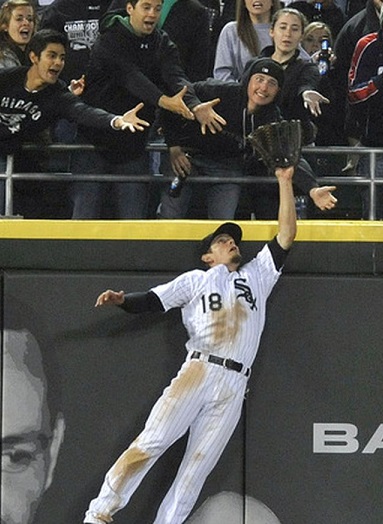
Acquired by the White Sox, along with Tyler Flowers and 2 minor leaguers, from the Braves in exchange for Javier Vazquez and Boone Logan, Brent Lillibridge donned #18 while hitting an anemic .158 in 95 at bats spread across 46 games for the 2009 White Sox.  Lillibridge stuck with the big league team in 2010, improving his average to .224 in only 64 games.  2011 was his best season, setting career highs in home runs, RBIs, batting average, and OPS.  On April 11, he hit the 10,000th home run in White Sox history off Dallas Braden and the A’s.  Lillibridge struggled again in 2012, with his average dropping down to .175 before the June 24th trade that sent him, along with Zach Stewart, to the Red Sox for Kevin Youkilis.

A Class Of One

With the unneeded lockout still in full effect, the baseball world had nothing to distract it yesterday from the small hamlet of Cooperstown in upstate New York, where the votes were tallied, and the 2021 Hall of Fame class completed with one additional member.  Former Red Sox DH David Ortiz scored 77.9% of the vote to earn enshrinement in his first election.

Six others tallied greater than 50% of the vote, led by Barry Bonds, who jumped up to 66% in his final go around on the ballot.  Roger Clemens was right behind him at 65.2% and will also leave his fate to the veteran’s committee.  Scott Rolen saw another big jump, rising to 63.2% and looks like he’s on track to eventually make it.  Curt Schilling, who threw a temper tantrum after not getting elected last year, saw a bit drop and ended his 10-year run with 58.6% of the vote.  Todd Helton and Billy Wagner continued to make strides, coming in at 52% and 51%, respectively, though Helton has more time on his side to make a good run towards induction.

On the local front, former White Sox outfielder Andruw Jones saw a large increase, going up to 41.1%.  Manny Ramirez, who spent a little more than a month with the White Sox, stayed about even, finishing with 28.9% of the vote thanks to his multiple PED suspensions.  The disgraced Omar Vizquel, who added sexual abuse of an autistic teen to the spousal abuse charges that had popped up the previous year, dropped even further, to 23.9%.  In his last go-around, former Cub superstar Sammy Sosa saw a small increase to 18.5%.  Jimmy Rollins, who spent the final 41 games of his career on the south side, picked up 9.4% in his first go-around.  Mark Buehrle saw his percentage cut in half, to 5.8%. but lives to fight another day.  Justin Morneau, who spent the final 58 games of his career with the White Sox, picked up 5 votes.  A.J. Pierzynski scored 2, while his former battery mate Jake Peavy was tossed a shutout.

Fifteen players will fall off the ballot, either due to reaching 10 years or failing to score 5% of the vote.

As for the newest Hall of Famer, I’ve seen Ortiz play 24 times, including the 2005 ALDS.  He joins Bud Fowler, Gil Hodges, Jim Kaat, Minnie Minoso, Tony Oliva and Buck O’Neil, who were elected by the veteran’s committees in December, in the class of 2022.  They will all get their day in the sun on Sunday, July 24.

David Ortiz’s numbers in games I’ve attended were: Continue reading →

By The Numbers – 23

In 1929, uniform numbers appeared on the back of baseball jerseys for the first time, thanks to the Indians and the Yankees.  By 1937, numbers finally appeared across all uniforms, both home and away, across both major leagues.  Since that time, 81 distinct numbers have been worn by members of the White Sox, while the Cubs boast 76.

Today, we continue our look at those players, picking our favorite, if not the best, player to wear each uniform number for both Chicago teams with #23, one of the most famous and successful numbers in city history across all sports.  67 different players have donned #23 while playing in Chicago, 35 for the White Sox and 31 for the Cubs, including a familiar face for both sides of town.

Robin Ventura made his major league debut donning #23 in September of 1989, appearing in 16 games down the stretch, hitting only .178 while driving in 7 runs in 45 at bats.  A good spring in 1990 led to Ventura breaking camp with the White Sox, but he struggled both on the field and at the plate, suffering through a horrendous 0-for-41 slump while committing 25 errors over the course of the season.  He finished the year with a .249 average, 5 home runs, and 54 RBIs and placed 7th in Rookie of the Year voting and was named to the Topps All Star Rookie team.

Ventura and the White Sox moved in to the new Comiskey Park in 1991, hoping to improve on the previous year’s growth.  He improved his fielding enough to earn his first Gold Glove award and, at the plate, he set a White Sox team record for RBIs by a third baseman, finishing with an even 100.  He upped his average to .284 and hit 23 home runs.  His work was enough to garner enough MVP votes to finish in 20th place.  1992 was another good year for Ventura.  He earned his first All Star nod, going 2-2 in the AL’s victory at Jack Murphy Stadium.  He finished the year with a .282 average, 16 home runs, and 93 RBIs.  He also snagged his second consecutive Gold Glove award.  Ventura continued his successful ways in 1993, collecting his 500th hit in May and, on August 4, entering the public consciousness with an event that would come to define his entire career.  While batting against the Rangers, Ventura was hit by a pitch thrown by Nolan Ryan and charged the mound.  Ryan, 20 years Ventura’s senior, placed him in a headlock and punched him several times, starting a bench-clearing brawl that was voted the best baseball brawl of all time by SportsCenter.  After the season, he was awarded his third consecutive Gold Glove award.

The strike in 1994 saw Ventura’s streak of 90 RBI seasons and Gold Gloves come to an end.  When baseball stopped in August, Ventura was hitting .282 with 18 home runs and 78 RBIs, while posting a new career high with an .832 OPS.  When play resumed in late April 1995, Ventura struggled out of the gate, committing ten errors in the first ten games.  As the White Sox started to tear down the team that had finished the previous two seasons on top of their division, trade rumors started to follow Ventura, though nothing came to fruition.  On September 4, he became the eighth player in history to hit two grand slams in one game, and the first since Frank Robinson in 1970.  He finished the year setting career highs with a .295 average, an .882 OPS, and 26 home runs while driving in 93 runs.  Ventura had the best year of his career to date in 1996, setting White Sox team records in career home runs by a third baseman, with 142, and grand slams, with 9.  He set new career highs with 34 home runs, 105 RBIs, 2 triples, an OPS of .888, and a .974 fielding percentage at the hot corner.  He hit .287, while earning his fourth Gold Glove award.

1997 turned into a dismal year for both Ventura and the White Sox.  During a spring training game, Ventura caught his foot in the mud while sliding into home plate and suffered a broken and dislocated right ankle.  Expected to miss the entire season, he returned on July 24, collecting the game-winning hit that night, and homered in his first at-bat the next night.  With the White Sox only 3.5 games behind the Indians in the standings, a healthy Ventura might have put them over the top.  A week later, the team threw in the towel in what eventually became to be known as the White Flag Trade, sending 3 pitchers to the Giants for prospects.  “We didn’t realize Aug. 1 was the end of the season,” said an upset Ventura.  He finished the year appearing in 54 games, hitting .262 with 6 home runs and 26 RBIs.  Entering the last year of his contract in 1998, the White Sox made little attempt to sign Ventura to an extension, with owner Jerry Reinsdorf claiming his skills were “deteriorating” after his injury the year before.  With more trade rumors following him throughout the season, he finished the year with a .263 average, 21 home runs, and 91 RBIs while earning his fifth Gold Glove award.  Following the season, he became a free agent, ending his White Sox playing career.

Continue reading →