#62 – Jason Bere

jasonbere

Name: Jason Bere

Rank: 62

Position: P

Years With White Sox: 1993-1998

Jason Bere was selected by the White Sox in the 36th round of the 1990 draft.  By 1993, he was ranked as the 8th best prospect in all of baseball.  On May 27, 1993, he made his major league debut, giving up 3 first inning runs and picking up the loss against the Royals at Comiskey Park.  The rest of the season went much better for Bere, as he won his final 7 starts to finish 12-5 and helped the White Sox to capture the AL West title.  Bere started Game 4 of the ALCS against the Blue Jays, lasting only 2 1/3 innings in a game the White Sox eventually came back to win.  After the season, he finished second in AL Rookie of the Year voting behind Tim Salmon of the Angels.

Bere continued his regular season success in 1994, earning his first All Star nod and possessing a 12-2 record when the season ended prematurely due to the strike.  After a little more than a season and a half in the big leagues, Bere had a career mark of 24-7 and looked to be heading towards a promising career.  Unfortunately, it didn’t turn out that way.

When baseball resumed in 1995, Bere started to feel tendonitis in his throwing elbow.  His fortunes reversed completely, as he finished the year with a 7.19 ERA and led the American League with 15 losses.  Bere made only 5 starts in 1996, giving up 19 earned runs in only 16 2/3 innings pitched, before being shut down.  In September, he underwent Tommy John surgery.

Bere returned to the White Sox rotation in August of 1997, following the White Flag trade.  He made 6 starts down the stretch, going 4-2 with a 4.71 ERA, his best results since 1994.

1998 saw more struggles for Bere.  He appeared in 18 games, making 15 starts, and went 3-7 with a 6.45 ERA.  On July 16, he was released, ending his White Sox career.

Bere’s numbers in a White Sox uniform, both for games I attended and overall, were:

Continue reading →

#63 – Mike Sirotka

sirotka

Name: Mike Sirotka

Rank: 63

Position: P

Years With White Sox: 1995-2000

Mike Sirotka joined the White Sox organization after being selected in the 15th round of the 1993 draft.  He made his major league debut 2 years later on July 19, 1995, going 6 2/3 innings and giving up 11 hits while picking up the loss against the Red Sox at Comiskey Park.  He made 5 additional starts in the big leagues, finishing the year 1-2 with a respectable 4.19 ERA.

1996 saw Sirotka splitting time between Chicago and Triple A Nashville.  His time in the big leagues did not go well, as he worked mostly out of the bullpen and finished the year with 7.18 ERA in 15 appearances.

Sirotka again split time between Triple A and Chicago in 1997, but saw markedly better results.  In 7 games with the White Sox, he went 3-0 with a sparkling 2.25 ERA.

Sirotka earned a spot in the White Sox rotation coming out of spring training in 1998.  He started 33 games, going 14-15 with an elevated 5.06 ERA.

1999 saw improvement in Sirotka’s numbers, as he lowered his ERA by over a run to 4.00 while finishing the year with an 11-13 record.

Sirotka got off to an inauspicious start in 2000, giving up a hit to country singer Garth Brooks, who was playing with the Padres, in spring training.  Once the games counted for real, though, Sirotka put up the best season of his young career, going 15-10 with a 3.79 ERA as the White Sox won their first AL Central crown.  Sirotka started, and lost, game 2 of the ALDS against the Mariners at Comiskey Park.

The following January, Sirotka, along with Mike Williams, Kevin Beirne, and Brian Simmons, was traded to the Blue Jays for David Wells and Matt DeWitt.  When Sirotka was found to have a shoulder injury, Blue Jays GM Gord Ash accused Kenny Williams of withholding information and labeling Sirotka as “damaged goods”.  Ash appealed to Commissioner Bud Selig, who refused to overturn the trade.  Sirotka never pitched in the major leagues again.

Sirotka’s numbers in a White Sox uniform, both for games I attended and overall, were:

Continue reading →

#65 – Gordon Beckham

IMG_2096Name: Gordon Beckham

Rank: 65

Position: 2B

Years With White Sox: 2009-2014, 2015

Gordon Beckham was selected by the White Sox as the 8th pick of the 2008 draft and was rushed through the system, making his major league debut less than a year later on June 3, 2009.  He struggled from the get go, going 2 for 28 in his first eight games, but rebounded to put up a .270 average with 14 home runs and 28 doubles while playing third base.

The future looked bright for Beckham entering the 2010 season as he moved over to second base.  Unfortunately, he was unable to duplicate the success he had enjoyed the year before.  Early struggles relegated him to the bottom of the lineup, but he was able to rebound somewhat, getting his average back up to .252.  However, his OPS was down over 100 points from the year before.

2011 and 2012 saw Beckham’s offensive struggles continue.  His average dropped to the .230s during both seasons and his OPS continued to fall.  It seemed that he was finally putting things together in 2013, until he broke the hamate bone in his left wrist, which led to a career low in home runs and RBIs.

2014 was more of the same.  His average was a then career low .221 when he was traded to the Angels in late August, for a player to be names later.  But, his White Sox career was not done yet.  After being non-tendered by the Angels, Beckham resigned with the White Sox for 2015.  Sadly, this second go-around did not go any better for Beckham.  Appearing in a career low 100 games, he set new career lows with a .209 batting average and a .607 OPS.  After the season, he left as a free agent.

Beckham’s numbers in a White Sox uniform, both for games I attended and overall, were:

Continue reading →

#72 – Ron Karkovice

karkoName: Ron Karkovice

Rank: 72

Position: C

Years With White Sox: 1986-1997

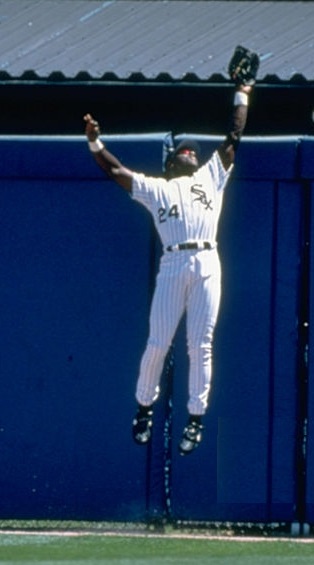
Ron Karkovice joined the White Sox organization as their first round selection in the 1982 draft.  He made his major league debut on August 17, 1986, going 1-4 in the White Sox 7-4 victory over the Brewers at Comiskey Park while catching future Hall of Famer Steve Carlton.  He appeared in 36 additional games, hitting .247, as the White Sox rolled to their worst record since 1980.

Karkovice broke camp with the White Sox in 1987, but was completely overmatched on offense.  He appeared in 39 games, getting only 85 at bats and hitting an anemic .071.  He didn’t do much better in Triple A, putting up a .183 average for Hawaii.

He returned to Triple A for 1988, but got some extended playing time in the big leagues when Carlton Fisk went down with a broken hand.  In 46 games, Karkovice hit .174 and drove in 9 runs.

Karkovice stuck in the big leagues for good starting in 1989.  Getting more regular playing time, he improved his average to a career high .264 while splitting time behind the plate with Fisk.  1990 was more of the same for Karkovice, as he appeared in 68 games and hit .246.

As the White Sox moved across the street to the new Comiskey Park in 1991, Karkovice had a near repeat of his 1990 season, finishing with the same average and nearly the same power numbers.  In 1992, Karkovice finally supplanted Fisk and became the primary backstop.  Appearing in 123 games, he hit .237 but saw his home runs increase to 13.

Karkovice appeared in a career high 128 games for the 1993 White Sox, as the team captured their first division title in a decade.  He went hitless during the ALCS as the White Sox fell to the Blue Jays in 6 games.  1994 saw his offensive numbers continue to fall, as his average dropped to .213, partially due to a sore knee, before the season came to an untimely end due to the strike.

When baseball returned in 1995, Karkovice was back behind the plate for the White Sox.  He appeared in 113 games and saw his average bounce back slightly to .217.  1996 was more of the same for Karkovice, as he appeared in 111 games and hit .220 with 10 home runs, before undergoing knee surgery in September.

Things went south for Karkovice and the White Sox in 1997.  By the middle of May, he had been replaced as the starting catcher by Chad Kreuter.  By the middle of July, he had fallen to third on the depth chart, behind the newly acquired Jorge Fabergas and veteran Tony Pena.  He had requested to be released at the end of May, but was refused by general manager Ron Schueler.  He finished the year with only 51 appearances and an average that had dropped to .181.  He became a free agent at the end of the year, but never played in the major leagues again.

Karkovice’s numbers in a White Sox uniform, both for games I attended and overall, were:
Continue reading →

#73 – Mike Cameron

cameron2

Name: Mike Cameron

Rank: 73

Position: CF

Years With White Sox: 1995-1998

Mike Cameron joined the White Sox organization as their 18th round draft choice in the 1991 draft.  He made his major league debut on August 27, 1995, going 0-3 in the White Sox 2-1 loss to the Blue Jays at Skydome.  He mostly appeared as a defensive replacement during the last month of the season, appearing in 28 games but getting only 38 at bats, hitting an anemic .184.

1996 saw Cameron spend most of the season in Double A Birmingham, getting a small cup of coffee with the White Sox, appearing in 11 games and getting 11 at bats with a grand total of 1 hit.

Cameron got his first extended major league experience in 1997, appearing in 116 games.  He hit .259 with 14 home runs, with 23 stolen bases thrown in for good measure.  He finished 6th in the AL Rookie of the Year voting.

In 1998, Cameron regressed, as his average dropped nearly 50 points to .210, his home runs were cut nearly in half to 8, and his OPS dropped by nearly 170 points.  Following the season, he made his largest contribution to the future success of the White Sox by being traded to the Reds for Paul Konerko.

Cameron’s numbers in a White Sox uniform, both for games I attended and overall, were:

Continue reading →

#75 – Donn Pall

thepopeName: Donn Pall

Rank: 75

Position: P

Years With White Sox: 1988-1993

Chicago native Donn Pall joined the White Sox organization via the 23rd round of the draft in 1985.  He made his major league debut 3 years later, throwing a mop-up inning of relief at the end of the Sox 10-2 loss to the A’s on August 1 at Comiskey Park.  Pall appeared in 16 additional games down the stretch for a miserable White Sox squad, finishing the year with a respectable 3.45 ERA.

Pall returned to the White Sox bullpen in 1989, earning his first career win on April 27 in a 16 inning victory over the Red Sox.  He finished the year 4-5 with a 3.31 ERA and 6 saves in 53 appearances for the last place White Sox.

The surprising White Sox found themselves in a pennant race in 1990 as they said goodbye to Comiskey Park.  Pall continued to be a mainstay in the bullpen, going 3-5 with a 3.32 ERA in 56 appearances, including one appearance during the final weekend at the park he grew up attending.

Pall and the White Sox moved across the street for the 1991 season, where Pall put up the best numbers of his career.  He finished the year 7-2 with a sparkling 2.41 ERA in 51 appearances, including a scoreless inning of relief in the first game at new Comiskey Park.  Pall struggled in 1992, seeing his ERA jump to 4.93 and his appearances drop to 39 despite a 5-2 record.

In 1993, as the White Sox headed towards their first division title since 1983, Pall bounced back to put up 3.22 ERA in 39 appearances heading into September.  However, he found himself in a roster crunch and, to make room for the re-acquired Ivan Calderon, he was traded to the Phillies on August 31 for a player to be named later.  Pall, along with Carlton Fisk, who had been released earlier in the year, came to Comiskey Park before game 1 of the ALCS to wish their former teammates well.  Sadly, they were both turned away, souring Fisk’s relationship with the organization for years.

Pall returned to the White Sox organization in 1995, spending the entire year in Triple A before leaving at the end of the year as a free agent.

Pall’s numbers in a White Sox uniform, both for games I attended and overall, were:

Continue reading →

#77 – Mike Squires

squiresName: Mike Squires

Rank: 77

Position: 1B

Years With White Sox: 1975, 1977-1985

Mike Squires joined the White Sox organization as their 18th round draft pick in 1973.  He made his major league debut on September 1, 1975, going 2-3 in the White Sox loss to the Royals at Comiskey Park.  He appeared in 19 additional games down the stretch, hitting .231 in 74 plate appearances.

After spending all of 1976 back in Triple A, Squires returned to the South Side for 3 games in 1977, going hitless in 3 at bats.  He was up in the big leagues to stay in 1978, appearing in 46 games and hitting .280 in 150 at bats.

1979 saw Squires getting his most extensive playing time to date, appearing in 122 games and hitting a modest .264, including his first major league home run.  1980 was more of the same for Squires, hitting a career-high .283 in 131 games.  He also became the first left-handed catcher in the major leagues since 1961 when he replaced Bruce Kimm in the 9th inning of an 11-1 loss to the Brewers on May 4.

During the strike-shortened season of 1981, Squires hit .265 in 92 games, failing to homer for the first time since 1978 and earning the Gold Glove award for first basemen.  1982 was more of the same for Squires, as he put up a .267 average in only 195 at bats, his lowest total since 1978.  As the White Sox ran away with the division title in 1983, Squires set a career high in games played with 143, but garnered only 153 at bats, hitting a meek .222.  He became the first left handed third baseman in at least 50 years when he replaced Vance Law in the 8th inning of a 10-2 loss to the Royals.  He went 0-4 in the ALCS against the Orioles, appearing in all 4 games.

1984 was the beginning of the end for Squires, as his average slipped to a career low .183 in only 82 at bats.  He was released during spring training in 1985, before being re-signed in September, appearing in 2 games without a plate appearance.  Following the season, his career came to an end.

Squires’ numbers in a White Sox uniform were:

Continue reading →

#82 – John Cangelosi

cangelosiName: John Cangelosi

Rank: 82

Position: OF

Year With White Sox: 1985-1986

John Cangelosi was selected by the White Sox in the 4th round of the 1982 January draft.  He made his major league debut on June 30, 1985, going 0-2 in the White Sox 4-3 loss to the Twins at Comiskey Park.  He appeared in 4 more games during the 1985 seasons, earning 1 additional plate appearance.

In 1986, Cangelosi surprised everyone by earning the center fielder job in spring training, beating out Rudy Law and Daryl Boston.  He finished the year with a .235 batting average, but set an American League rookie record with 50 stolen bases.

The following spring, Cangelosi did not repeat his impressive performance and, on March 27, he was traded to the Pirates for Jim Winn.  He returned to the organization on a minor league deal in 1991, but was traded to the Brewers for Esteban Beltre less than 2 months later.

Cangelosi’s numbers in a White Sox uniform were:

Continue reading →

#99 – Brian Anderson

Name: Brian Anderson

Rank: 99

Position: CF

Years With White Sox: 2005-2009

Brian Anderson joined the White Sox organization as the 15th overall pick in the 2003 draft.  He made his major league debut on August 16, 2005, going 2-7 in a 9-4 loss to the Twins at US Cellular Field.  He appeared in only 13 games for the big league club in 2005, as the White Sox battle for the division crown went down to the final weekend.  Anderson was left off the playoff roster, but still spent the time with the team, joining Aaron Rowand in doubting the walk-off home run Scott Podsednik hit in Game 2 of the World Series.

When Rowand was traded to the Phillies prior to the 2006 season, Anderson became the new starting center fielder.  Unfortunately, he was unable to reproduce his minor league success at the major league level, eventually losing playing time to Rob Mackowiak.  He finished the year with a .225 average, striking out 90 times in only 365 at bats.

2007 turned in to a lost season for Anderson, as he lost his starting job to Darin Erstad and appeared in only 13 games, with an anemic .118 average, before being sent back to Triple A Charlotte.  He managed to boost his average back up in the minors, but an injury ended his season early.

Anderson returned to the big leagues in 2008 with a renewed focus, but it did not translate to better results in the field.  He spent most of the year as a backup and as a late inning defensive replacement for Ken Griffey Jr.  The highlight of his season was the diving catch he made to end the tiebreaker game 163 that sent the White Sox to the playoffs.  This time, Anderson made the playoff roster, but he went hitless in 5 at bats across 3 games in the White Sox loss to the Rays in the ALDS.

Anderson found himself in the same position in 2009, until the trade deadline approached, when he was traded to the Red Sox for Mark Kotsay.

Anderson returned to the White Sox organization on January 15, 2015, signing a minor league deal, but he was released on April 2nd, ending his professional career.

Anderson’s numbers in a White Sox uniform, both for games I attended and overall, were:

Continue reading →

#111 – Josh Paul

jpaul

Name: Josh Paul

Rank: 111

Position: C

Years With White Sox: 1999-2003

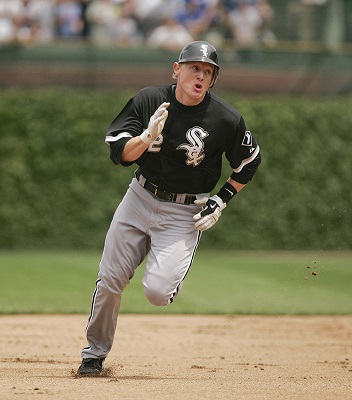
Evanston native Josh Paul was the second round draft pick of the White Sox in 1996.  He earned a September call-up in 1999, making his major league debut on September 7 in the White Sox 14-1 loss to the Angels.

Paul broke camp in 2000 with the White Sox, starting the season as their back-up catcher.  When Paul struggled to hit in May, he was sent back down to the minor leagues.  He returned to the White Sox in September and did well enough to earn a spot on the post-season roster.  He appeared in one game in the White Sox loss to the Mariners in the ALDS.

In 2001, Paul again started the year as the backup catcher.  He again ended up splitting the year between Chicago and Charlotte, finishing the year with a .266 average and a career high 3 home runs and 18 RBIs.  Paul began 2002 back in Charlotte, but eventually found his way back to Chicago, hitting .240 in 33 games.

Paul saw some success in 2003, though in very limited playing time, but got caught up in a numbers game behind veteran Sandy Alomar Jr. and rookie Miguel Olivo.  On June 25, he was released, ending his White Sox career.

Paul’s greatest contribution to the White Sox came in 2005, when he was a member of the Angels.  He was behind the plate in the 9th inning of game 2 of the ALCS when A.J. Pierzynski struck out and “stole” first base after Paul rolled the ball back to the mound.  Home plate umpire Doug Eddings ruled that the pitch hit the ground and, since he wasn’t tagged out, Pierzynski was entitled to first base.  A pinch runner, a stolen base, and a double later, the White Sox tied up the series at one game a piece and went on to win their next 7, leading to their first World Series title since 1917.

Paul’s numbers in a White Sox uniform, both for games I attended and overall, were:
Continue reading →