By The Numbers – 11

In 1929, uniform numbers appeared on the back of baseball jerseys for the first time, thanks to the Indians and the Yankees.  By 1937, numbers finally appeared across all uniforms, both home and away, across both major leagues.  Since that time, 81 distinct numbers have been worn by members of the White Sox, while the Cubs boast 76.

Today, we continue our look at those players, picking our favorite, if not the best, player to wear each uniform number for both Chicago teams with #11.  59 different players have donned #11 while playing in Chicago, 18 for the White Sox, who retired the number in 1984, and 41 for the Cubs.

Rudy Law was acquired by the White Sox from the Dodgers at the end of spring training in 1982 for Cecil Espy and Bert Geiger.  Wearing #11, Law split center field duties with veteran Ron Leflore, appearing in 91 games in the middle of the outfield.  He hit .318 with a .361 OBP, stealing 36 bases along the way.  Law took over as the everyday center fielder in 1983, helping the White Sox claim their first division title.  His 77 stolen bases remain a team record, and he finished the year with a .283 average.  During the ALCS against the Orioles, he led the White Sox with a .389 average.  His season was good enough to earn him 2 votes for MVP, tied for 21st place.  Law was forced to change his number during the 1984 season when Luis Aparicio was elected to the Hall of Fame and the White Sox retired the number in his honor.

Another #11 made their way to Chicago via the Dodgers when the Cubs acquired third baseman Ron Cey following the 1982 season.  Cey provided veteran leadership for the Cubs over four seasons and, in 1984, helped lead the Cubs to a division title, hitting 25 homers and driving in 97 runs, both team highs.

Throwback Thursday – Team Records Of The 1990s

Last week, we took a trip in the wayback machine to see all of the games that I attended during the 1980s.  This week, we turn our attention to the 1990s to see what my view of the baseball world looked like.

I’ve been able to identify 32 games I attended during the 90s, starting with a late April outing during the final season at Comiskey Park in 1990 through a September 2000 game at Wrigley Field, including my first visits to stadiums outside of Chicago starting with a July 1993 visit to County Stadium in Milwaukee.  All told, I saw games at eight different ballparks throughout the decade.

1990s Team Records
Team Name Won Loss Winning Pctg
Houston Astros 1 0 1.000
California Angels 1 0 1.000
Cincinnati Reds 1 0 1.000
Arizona Diamondbacks 1 0 1.000
Florida Marlins 1 0 1.000
New York Yankees 1 0 1.000
San Francisco Giants 1 0 1.000
Detroit Tigers 3 1 0.750
Oakland Athletics 2 1 0.667
Chicago White Sox 12 10 0.545
Chicago Cubs 6 5 0.545
Kansas City Royals Continue reading →

FB8 – Week 14

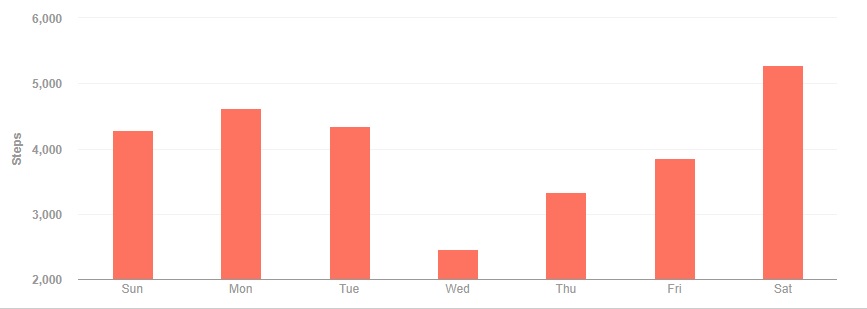
A pretty bad week, thanks to cold, rainy weather and work “emergencies”.  Things got off to a decent enough start on Sunday, as I came 13 steps short of 4300.  Monday saw a slight increase, jumping up to 4600 steps.  Tuesday fell down a bit, dropping to 4300 steps.  Wednesday was the low point of the week, ending with a mere 2400 steps.  Thursday started the long climb back up towards respectability, going up to 3300 steps.  Friday saw another meager increase, jumping back up to 3800 steps.  A trip down to Guaranteed Rate Field for exciting White Sox baseball raised Saturday’s total to nearly 5300 steps.

Total steps: 28,201

Daily average: 4028.7

Top 200 Albums: #51 – 60

We last counted down the Top 200 albums in my iTunes library four years ago. Since that time, the world has literally changed, and my commute has decreased from 1+ hours each way to 25 steps. So, despite the decrease in potential listening time, I figured it was time to take another look, based on number of plays from late 2007 through the morning of January 1, 2022.

As of today, we are three quarters of the way through of our countdown with the next batch of ten albums that I have listened to the most over the last 15 years, breaking the triple digit total play plateau with three compilations, and music from the 60s, 80s, 90s, and beyond.

#60: Various Artists – Forrest Gump
iTunes stats: 166 plays
Previous Ranking: 73

A 93% increase for the soundtrack, featuring artists like The Byrds, Buffalo Springfield, and CCR, from the Oscar-winning film.

#59: Bon Jovi – Cross Road
iTunes stats: 167 plays
Previous Ranking: 62

Ten of the band’s biggest hits earned an additional 66 plays over the last four years.

#56: The Beatles – Please Please Me
iTunes stats: 168 plays
Previous Ranking: 53

Seven tracks from this remastered version of the band’s 1963 debut album earned a 51% increase in plays.

#56: David Cross – It’s Not Funny
iTunes stats: 168 plays
Previous Ranking: 62

This 2004 comedy album from David Cross added 67 new plays, and that total would be significantly higher if I were to sync my old phone again, as I have listened to it while falling asleep plenty of times.

#56: Various Artists – Buffy The Vampire Slayer: The Album
iTunes stats: 168 plays
Previous Ranking: 46

A drop of ten spots on the chart for this initial soundtrack album to the hit television series, featuring eight tunes by bands like Nerf Herder, Guided By Voices, and The Sundays.

Continue reading →

Throwback Thursday – Team Records Of The 1980s

With the 2022 season well underway, I thought it would be interesting to take a trip in the wayback machine and see what my view of the baseball world looked like in the long-ago period known as the 1980’s.

I’ve been able to identify 14 games I attended during the 80’s, starting with Luis Aparicio’s number retirement in 1984 through a September 1988 game at Wrigley Field, which turned out to be the second official night game.  There are more games that I remember something about attending, voting for the new White Sox uniform designs in 1981, Carlton Fisk bat day some point in the early 80s, getting a Cubs calendar in 1986,  and winning tickets from WGN radio for a game, but I haven’t been able to track down specifics about them as of yet.

1980s Team Records
Team Name Won Loss Winning Pctg
Toronto Blue Jays 1 0 1.000
San Diego Padres 1 0 1.000
Cleveland Indians 1 0 1.000
California Angels 1 0 1.000
Texas Rangers 1 1 0.500
Seattle Mariners 1 1 0.500
New York Mets 1 1 0.500
Baltimore Orioles 1 1 0.500
Chicago White Sox 5 6 0.455
Chicago Cubs 1 2 0.333
Kansas City Royals 0 1 0.000
Boston Red Sox 0 1 0.000

#SoxMath

For the uninitiated, Sox Math is a segment during every White Sox game broadcast on NBC Sports Chicago, where two or more trivia questions are linked together via a simple math equation to form a final numerical answer. Fans watching at home tweet in their answers and the first one in with the right answer is dubbed the winner.  Sunday, that winner was me.
Back in the before times, there was a prize shelf filled with random objects that announces Jason Benetti and Steve Stone had come across along with extra stadium giveaways.  Starting in 2020, thanks to the pandemic, they switched it up to letting the winner create a video that would introduce the segment on the next game.  Yes, that means I got to create the intro video for last night’s game.

My initial thought was to utilize my bobblehead, surrounded by White Sox bobbleheads, with me talking offscreen, but I thought that might end up being too static.  So instead, I started moving all (well, most) of the mess off of my desk and replacing it with different White Sox paraphernalia, including bobbleheads, pennants, a towel, a Chris Sale K placard, and some Robin Ventura print sent to season ticket holders.  After a few practice shots to get the camera set up correctly, I hit record and, after three takes, felt I had gotten what I needed to get.  Some quick trimming to get just the last take down to the correct length, and off it went.

As we approached the top of the 4th inning, when the segment usually airs, I started to get nervous.  I mean, there was a non-zero chance that I was about to make a fool out of myself on regional cable television.  But, it aired without incident, aside from my mother sleeping through it.  I managed a gain a few new Twitter followers, the video seemed to be a big hit on Facebook, and a co-worker happened to see it and passed a video around to some folks in the virtual office.

As for the original question itself, an educated guess led me to victory.  I assumed there was nothing noteworthy about Julio Franco and Robin Ventura going back-to-back once and, had they done it three times, that would be rare enough that I would know about it, so two seemed like the safe choice.  The second question was much easier, as Ventura wore #23 and Franco #14.

Now, I just need to win again.  I’ve got some more video ideas.


FB8 – Week 13

A pretty bad week, thanks to numerous work “emergencies”, but saved somewhat by another day over goal to end the week.  Things got off to a decent enough start on Sunday, as I managed to score 4600 steps thanks to some mid-inning pacing while watching the White Sox.  Monday saw a slight decline, as I finished 27 steps shy of 4000.  Tuesday was even worse, as I fell down to 3400 steps.  Wednesday saw a slight increase, as I finished with 3500 steps.  Thursday was the low point of the week, ending with a mere 2800 steps.  Friday saw a meager increase, jumping back up to 3600 steps.  A trip down to Purdue to see Danny’s band concert combined with 80-degree weather put me over 8200 steps, the second week in a row I’ve managed to have a single day above goal.

Total steps: 30,331

Daily average: 4333

By The Numbers – 12

In 1929, uniform numbers appeared on the back of baseball jerseys for the first time, thanks to the Indians and the Yankees.  By 1937, numbers finally appeared across all uniforms, both home and away, across both major leagues.  Since that time, 81 distinct numbers have been worn by members of the White Sox, while the Cubs boast 76.

Today, we continue our look at those players, picking our favorite, if not the best, player to wear each uniform number for both Chicago teams with #12.  91 different players have donned #12 while playing in Chicago, 44 for the White Sox and 47 for the Cubs.

A.J. Pierzynski signed with the White Sox on January 6, 2005 and rewarded the organization with eight seasons of stability behind the plate that included one All-Star selection, two playoff appearances, and, of course, the 2005 World Series championship.  Over those 8 seasons, Pierzynski was involved in many key moments while wearing #12 that endeared him to the White Sox faithful, including:

  • The walk-off home run, and resulting bat flip (pictured above), against the Dodgers in 2005 while wearing 1959 throwbacks
  • The two home runs in a thrashing of the Red Sox in game one of the 2005 ALDS, the first White Sox home postseason victory since 1959
  • The controversial dropped third strike that led to a White Sox victory in game two of the 2005 ALCS against the Angels
  • The 2006 brawl against the Cubs where Michael Barrett sucker-punched him after Pierzynski enthusiastically scored a run against the crosstown rivals
  • Hanging on to the throw from Ken Griffey Jr. to preserve the shutout in the 2008 tie-breaker game that pushed the White Sox into the playoffs over the Twins
  • Being behind the plate for Mark Buehrle’s no-hitter in 2007 and Philip Humber’s perfect game in 2012

On the north side of town, a dynamic shortstop, the first player chosen in the 1982 draft, wore #12 when he made his major league debut in 1985.  Shawon Dunston quickly became a fan favorite.  In 1989, he entered the national consciousness thanks to the Shawon-O-Meter, a fan made sign that tracked Dunston’s batting average during each game.  The sign was seen in the Wrigley Field bleachers for a number of years and even made its way to San Francisco’s Candlestick Park for the 1989 NLCS.  Following the 1995 season, he left as a free agent before resigning with the team for the 1997 campaign.  He was traded to the Pirates at the end of August, ending his Cubs career for good.

FB8 – Week 12

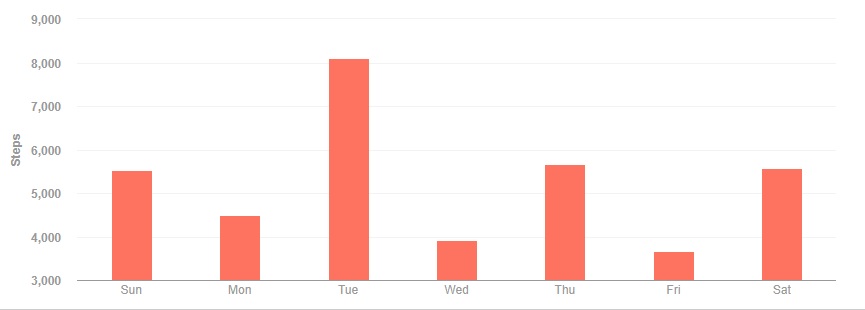
A pretty successful week, as the return of baseball gave me my highest weekly total completed in the state of Illinois since last July.  Things got off to a decent enough start on Sunday, as I managed to score 5500 steps thanks to mid-inning pacing while watching the White Sox.  Monday saw a slight decline, as I finished a single step shy of 4500.  My long-awaited return to Guaranteed Rate Field on Tuesday, minus parking, left me four steps away from 8100, the first time I’ve surpassed my daily goal at home since September.  A 3-hour meeting on Wednesday dropped me down to 3900 steps.  Another day game on Thursday caused a jump back up to 5600 steps.  Friday was the worst day of the week, finishing with only 3600 steps.  Another game on Saturday, with a hunt to get multiple bobbleheads, put me up over 5500 steps.

Total steps: 36,973

Daily average: 5281.9

By The Numbers – 13

In 1929, uniform numbers appeared on the back of baseball jerseys for the first time, thanks to the Indians and the Yankees.  By 1937, numbers finally appeared across all uniforms, both home and away, across both major leagues.  Since that time, 81 distinct numbers have been worn by members of the White Sox, while the Cubs boast 76.

Today, we continue our look at those players, picking our favorite, if not the best, player to wear each uniform number for both Chicago teams with #13.  25 different players have donned #13 while playing in Chicago, 13 for the White Sox and 12 for the Cubs.

Acquired by the White Sox on December 6, 1984, from the Padres, Ozzie Guillen made his major league debut wearing #13 on Opening Day 1985, leading off against the Brewers and going 1-5 in the 4-2 victory at County Stadium.  Settling in as the everyday shortstop, Guillen finished the year with a .273 average, 21 doubles, and 9 triples.  Those totals were good enough to score Guillen the 1985 AL Rookie of the Year trophy.  Guillen saw a slight drop off in his sophomore season, as his average dropped to .250 and he managed 19 doubles and 4 triples.  1987 was a nice bounce back for Guillen, as he raised his average back up to .279 with a .656 OPS.  For the second straight year, he led the AL, and all of baseball, in Defensive WAR.  Guillen earned his first All Star nod in 1988 and, by season’s end, he once again led all of baseball in Defensive WAR, while seeing his average drop to .261 with 7 triples, the fifth highest total in the AL.

1989 was a tough year for Guillen.  He posted his worst offensive numbers since 1986 and, on the base paths, he fell victim to the hidden ball trick.  Twice. On June 23, against the Brewers, first baseman Greg Brock held the ball after a pickoff attempt and when Guillen took his hand off the base to stand up, Brock tagged him out.  Less than 2 months later, on August 5 against the Tigers, Dave Bergman made the same play.  He finished the year with .253 average and, despite his adventures on pick off attempts, a career high 36 stolen bases.  As the surprising White Sox challenged for the AL West title while saying goodbye to Comiskey Park, Guillen put in one of the finest seasons of his career.  He was named to his second All Star team, going 0-2, finished in 17th place in MVP voting, and earned his first, and only, Gold Glove.  He raised his average back up to .279 and knocked in a career high 58 RBIs.

Expectations were high for the White Sox as they moved across the street to the new Comiskey Park in 1991.  Guillen earned his third, and final, All Star nod, getting a sacrifice in his only plate appearance.  He ended the year with a .273 average and set a career high with 3 home runs.  Guillen’s 1992 season came to an early end when, on April 21 during a loss against the Yankees, a collision with outfielder Tim Raines ended in a severe knee injury.  Guillen recovered in 1993, though he appeared in only 134 games, his lowest total to date.  However, it was his most productive season offensively, posting a .280 batting average, and career highs with 4 home runs and a .666 OPS, as the White Sox won their first division title in a decade.  He hit .273 and scored 4 runs in a losing effort, as the White Sox were defeated in 6 games by the Blue Jays in the ALCS.  1994 looked to be the year that the White Sox finally broke through.  Guillen was up to the challenge, hitting a career high .288 with a .659 OPS.  Unfortunately, the year ended early when players went on strike on August 12 with the White Sox in first place in the newly created AL Central.

The 1995 season got off to a late start and had an abbreviated schedule due to the long work stoppage.  The success of the White Sox, and for Guillen himself, didn’t survive the long layoff.  Guillen saw his average drop to .248, his lowest over a “full” season in his career to this point.  His OPS dropped to its lowest total in a full season since 1989.  1996 saw a slight improvement for Guillen.  He appeared in 150 games, his highest total since his knee injury in 1992.  He raised his average back to .263 and tied his career high with 4 home runs.  However, 1997 was easily the worst season of Guillen’s White Sox career.  He had the lowest average of his career, coming in at .245, though he did once again tie his career high with 4 home runs.  Following the season, Guillen became a free agent and his playing career with the White Sox came to an end.

Guillen returned to the White Sox organization for the 2004 season as manager.  In 2005, he led the team to their first American League pennant since 1959 and their first World Series title in 88 years.  Ongoing personal difficulties with General Manager Kenny Williams led to his leaving with 2 games left in the 2011 season as the third winningest manager in franchise history.

On the north side of town, Neifi Pérez donned #13 over parts of three seasons with the Cubs.  He signed a minor league deal after being released by the Giants in 2004.  After only ten games in Triple A, Pérez joined the big-league club and became a spark plug in the lineup, going 6 for 6 in his first 6 at-bats and providing a needed backup to the ailing Nomar Garciaparra.  Dusty Baker named Pérez the starting shortstop in 2005 to replace Garciaparra, mainly on the strength of his defensive skills.  For the 2006 season Pérez lost the starting job at shortstop to Ronny Cedeño.  As his batting average sagged to .254 and his on-base percentage, never high, had fallen to .266, the Cubs traded him to the Tigers.