#273 – Jon Adkins

jon_adkins_autograph

Name: Jon Adkins

Rank: 273

Position: P

Years With White Sox: 2003-2005

Jon Adkins was acquired by the White Sox on July 25, 2002 from the A’s in exchange for Ray Durham.  He made his major league debut on August 14, 2003 against the Angels, facing 3 hitters without getting an out in the White Sox 5-1 loss.  He made only 4 appearances that year for the big league club, but surprised everyone, including himself, when he made the 2004 squad out of spring training.  He spent the entire season n the big leagues, appearing in 50 games and putting up a 4.65 ERA.

Things did not go his way in 2005, when newcomers Dustin Hermanson and Luis Vizcaino took his place in the bullpen.  He did spend enough time in the major leagues to make 5 appearances, but his ERA skyrocketed to 8.64.  Unsurprisingly, he did not make the post-season roster, and, that December, he was granted free agency.

Adkins’ numbers in a White Sox uniform, both for games I attended and overall, were:

Continue reading →

#274 – Gary Glover

OLYMPUS DIGITAL CAMERA

Name: Gary Glover

Rank: 274

Position: P

Years With White Sox: 2001-2003

Gary Glover joined the White Sox on November 7, 2000 after being acquired from the Blue Jays in exchange for Scott Eyre.  Glover split the year between Chicago and Charlotte, and between the bullpen and the rotation.  He finished the year with a 5–5 record and a 4.93 ERA in 46 appearances, including 11 starts.

Glover spent the entire 2002 season with the White Sox, but again split his time between the rotation, where he was not very successful, and the bullpen, where he was.  In mid-September, manager Jerry Manuel announced that Glover would stay in the bullpen for the rest of 2002 and in 2003.

In 2003, Glover became the forgotten man in the White Sox bullpen.  Going as many as 19 days between appearances, Glover made his way in to only 24 games by the end of July, when he was moved along with two minor leaguers to the Angels for for veteran pitcher Scott Schoeneweis.

Glover’s numbers in a White Sox uniform, both for games I attended and overall, were:

Continue reading →

iTunes Top 100 Artists: #42-50

itunes_image

My latest desktop computer arrived in late 2007, at which point I transitioned all of my music off of my laptop. 2 iPods, 2 iPhones, and an iPad later, that computer is still my main repository of music, with iTunes updating its stats every time I listen to something.

Having already gone through cassette tapes and CDs, and digital music, it’s time to roll everything up with the Top 100 artists that I’ve listened to as of 8/21/2013, according to iTunes.  After a week off, we return today to look at the next batch of artists, numbers 42-50, which includes a nice mix of musical genres and a legendary broadcaster.

#42: No Doubt

iTunes stats: 71 plays

12 songs make up the total for the band I saw live back in 1996 at the Elliot Hall of Music before they hit it big.

#43: Hole

iTunes stats: 69 plays

6 songs, written mostly by either Kurt Cobain or Billy Corgan, make up the total for Courtney Love’s band.

#44: Harry Caray

iTunes stats: 68 plays

2 versions of Take Me Out To The Ballgame, one representing each side of town, put the Hall of Fame broadcaster on the list.

#45: Frankie Valli & The Four Seasons

iTunes stats: 66 plays

The New Jersey based group used 7 songs to make up their total.

#46: Snoop Dogg

iTunes stats: 65 plays

8 songs make up the total for the ganja-smoking gangsta rapper.

Continue reading →

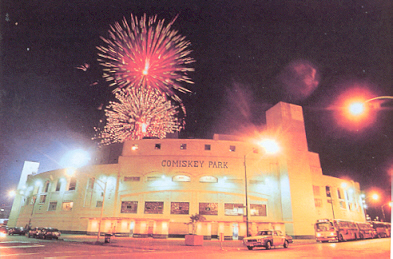
Ballpark Tour: Comiskey Park

comiskeyout2

Stadium Name: Comiskey Park

Location: Chicago

Home Team: White Sox

Years in Service: 1910 – 1990

Visits: 12 (that I’m aware of)

Comiskey Park, the so-called Baseball Palace of the World, was the home of the White Sox from 1910 through the 1990 season.  Built on a former city dump at the corner of 35th Street and Shields Avenue, the stadium opened as White Sox Park on July 1, 1910, as the White Sox lost to the St. Louis Browns 2-0.  In 1913, owner Charles Comiskey renamed the stadium after himself, and Comiskey Park was born.  From 1962 until 1975, the White Sox Park name was officially re-establshed, as new ownership groups tried to separate themselves from the Comiskey name.  However, Bill Veeck, in his second tour of duty as owner of the White Sox, put the Comiskey Park name back on the stadium in 1976, where it remained until 1990.  The final game for the old ballyard occurred on September 30, 1990, a 2-1 victory over the Mariners.

Comiskey Park was the host for 4 World Series contests, including 3 in a row from 1917-1919.  The White Sox won the World Series in 1917 against the New York Giants.  The Cubs, looking for a larger seating capacity, moved their home games in the 1918 series against the Red Sox to Comiskey Park.  The 1919 World Series, of course, was the Black Sox scandal, where the White Sox threw the series against the Reds.  The White Sox returned to the World Series 40 years later in 1959, but fell to the Dodgers.  The final post-season games to be played in Comiskey Park were games 3 and 4 of the 1983 ALCS, which the White Sox lost to the Baltimore Orioles.

Comiskey Park was also the host to 3 All-Star games.  The first All-Star game ever, in 1933, was held in conjunction with Century of Progress Exposition being held on Chicago’s lakefront.  The event returned to Chicago’s south side in 1950.  The final All-Star game at Comiskey Park was in 1983, the 50th anniversary of the first game.  Comiskey Park was also the frequent home of the Negro League East-West All-Star Game from 1933 to 1960.

In addition to White Sox baseball, Comiskey Park was also the home to the Chicago American Giants of the Negro Leagues, the Chicago Cardinals of the NFL, and the Chicago Sting of the NASL.  Comiskey Park also hosted numerous boxing matches, including the 1937 heavyweight title match where Joe Louis defeated then champion James J. Braddock.  The Beatles played two concerts at Comiskey Park in August of 1965.  Other musical acts to perform there include Aerosmith, AC/DC, The Eagles, The Police, Simon & Garfunkel, and The Jacksons, who performed 3 shows during their Victory tour in October of 1984.

Looking back, I’ve been able to piece together evidence of 12 games that I attended at Comiskey Park.  I know there are more, but I have not been able to pinpoint exact games yet.  The most memorable game I can remember would be the final night game, on September 29, 1990, where, after the game, the lights were symbolically turned off for the final time.

#276 – Jon Rauch

jon_rauch_autograph

Name: Jon Rauch

Rank: 276

Position: P

Years With White Sox: 2002. 2004

Jon Rauch was selected in the 3rd round of the 1999 draft by the White Sox.  Rauch worked his way through the minor league system and made his major league debut on April 2, 2002, closing out the White Sox loss against the Mariners.  Rauch, who remains the tallest player in major leage history, struggled against major league hitters and was quickly demoted back to Triple A.

Rauch returned to the major leagues in 2004, but again had difficulty getting batters out.  On July 18, he was sent to the Expos along with Gary Majewski in exchange for Carl Everett.

Rauch’s numbers in a White Sox uniform, both for games I attended and overall, were:

Continue reading →

#277 – Carl Willis

carl_willis_autograph

Name: Carl Willis

Rank: 277

Position: P

Year With White Sox: 1988

Carl Willis was acquired by the White Sox from the Reds for minor leaguer Darrell Pruitt on January 19, 1988.  Willis spent the majority of the 1988 season at Triple A Vancouver.  He did make 6 appearances for the White Sox, but his 8.26 ERA was not very impressive.  Unless you were the California Angels, who selected him in the minor league draft on December 6, ending Willis’ association with the White Sox.

Willis’ numbers in a White Sox uniform were:

Continue reading →

Ballpark Tour: Great American Ball Park

GABP

Stadium Name: Great American Ball Park

Location: Cincinnati

Home Team: Reds

Years in Service: 2003 – Present

Visits: 7

After 32 1/2 seasons at Riverfront Stadium, the Reds moved next door to the newly built Great American Ball Park for the 2003 season, opening against the Pittsburgh Pirates.  Bronze statues of former stars Joe Nuxhall, Ernie Lombardi, Ted Kluszewski, and Frank Robinson are located in front of the main entrance.

Less than a month into the stadium’s existence, I made my first trip to the GABP with my friend Scott, who had moved to the Cincinnati area, to see the Reds take on the Padres.  The next season, the Cubs opened their season in Cincinnati against the Reds, so another trip was in order, where Vice President Dick Cheney threw out the first pitch..  In August of 2005, I attended the Reds game against the Diamondbacks, kicking off a string of 3 stadiums in 3 states in 9 days.  In 2006, the Cubs once again opened their season on the road against the Reds and again it constituted a road trip down to see, where this time President George W Bush threw out the first pitch.  I made a return trip that summer for interleague play to see the White Sox battle the Reds.  In 2007, when the Cubs were looking the clinch the division, I made the trip down, but missed it by one day.  The next year, I made my final, to date, trip down to Cincinnati and saw the Rockies defeat the Reds.

Of all the newer stadiums that have opened over the past 20 years, Great American Ball Park does not often illicit the praise that the others get.  However, I like it.  It’s a fine place to see a game and has plenty of the modern amenities that are required here in the 21st century.  I wouldn’t hesitate to return, despite the fact that it has been 5 years since I’ve been there.

#278 – Jerry Royster

Jerry Royster (1987 White Sox) 2

Name: Jerry Royster

Rank: 278

Position: 3B/LF

Year With White Sox: 1987

Veteran infielder Jerry Royster joined the White Sox as a free agent in January of 1987.  “My biggest concern when I took over the team wasn’t our starters as much as our depth,” said then-Sox general manager Larry Himes. “With the previous acquisitions of Hill and Manrique, Jerry solidifies our infield. We can cover ourselves at all positions for 162 games.”

Royster moved into the starting lineup, platooning with Steve Lyons, in late June when manager Jim Fregosi sent Tim Hulett back to Triple A.  He put up a .240 average in 55 games through late August.

On August 26, his time with the White Sox came to an end when he was traded to the Yankees, along with minor leaguer Mike Soper, in exchange for lefty reliever Ken Patterson and a minor league player to be named later.

Interesting note on career minor leaguer Soper, an infielder who, at the time of this trade, had been part of a White Sox-Yankees trade three times over the previous two years.

Royster’s numbers in a White Sox uniform, both for games I attended and overall, were:

Continue reading →

iTunes Top 100 Artists: #51-60

itunes_image

My latest desktop computer arrived in late 2007, at which point I transitioned all of my music off of my laptop. 2 iPods, 2 iPhones, and an iPad later, that computer is still my main repository of music, with iTunes updating its stats every time I listen to something.

Having already gone through cassette tapes and CDs, and digital music, it’s time to roll everything up with the Top 100 artists that I’ve listened to as of 8/21/2013, according to iTunes. Today we look at the the the next batch, numbers 51-60, which includes a nice mix of musical genres.

#51: Van Halen

iTunes stats: 56 plays

The multiple incarnations of the southern California band used 10 songs to make up their total.

#52: Patton Oswalt

iTunes stats: 50 plays

One album from the funny man comprises this total.

#53: 10,000 Maniacs

iTunes stats: 49 plays

A pretty impressive total considering it took only 3 songs to get it.

#53: Boyz II Men

iTunes stats: 49 plays

The stars of my first concert have 8 songs which made up this mark.

#55: Tom Petty & The Heartbreakers

iTunes stats: 48 plays

Ten different tunes make up the total for the rockers from Florida.

#56: Cheap Trick

iTunes stats: 46 plays

The group, who I saw in 1997 opening for the Stone Temple Pilots at the Elliot Hall of Music, placed 6 songs on the list to get this number.

#57: Nancy Faust

iTunes stats: 43 plays

The longtime White Sox organist makes the list thanks to a recording of her final rendition of Take Me Out To The Ballgame.

Continue reading →

Ballpark Tour: The Ballpark In Arlington/Ameriquest Field

Stadium Name: The Ballpark In Arlington/Ameriquest Field

Location: Arlington

Home Team: Rangers

Years in Service: 1994 – Present

Visits: 7

After spending their entire history at nearby Arlington Stadium, the Texas Rangers broke ground on their new stadium on April 2, 1992 and held their first game there nearly two years later, on April 11, 1994 against the Brewers.  The stadium was known by the somewhat clunky moniker of The Ballpark in Arlington until May of 2004, when Ameriquest bought the naming rights.  That deal ended in March of 2007, and the stadium was renamed again, this time to Rangers Ballpark in Arlington.  The stadium also includes a Rangers Hall of Fame, which includes historical artifacts from the team along with visiting collections from Cooperstown.

I made my first trip to the Ballpark on May 22, 1998, to see the Rangers defeat the Royals during a visit to the Dallas area to see my dad.  I returned in 2001 for two games, against the Tigers and 2 days later against the White Sox.  In 2005, on my last trip to the area to date, I took in the entire 4 game series between the Rangers and the eventual World Series champion White Sox.

Having never been to Arlington Stadium, I can’t compare the two, but I would assume that the Ballpark is a vast improvement over its predecessor.  The only downside I noticed in the games I attended was a day game under the hot Texas sun.  There’s not much to be done about that, however, without adding a retractable roof that would likely downgrade the overall stadium experience.