Ballpark Tour: Dodger Stadium

dodgerstadium

Stadium Name: Dodger Stadium

Location: Los Angeles

Home Team: Dodgers

Years in Service: 1962 – Present

Visits: 1

Following the 1957 season, the Dodgers fled Brooklyn and headed west to California, landing in Los Angeles.  The team played in the LA Coliseum while they built a new stadium at Chavez Ravine.  In 1962, 3 years after breaking ground, Dodger Stadium opened as the Reds topped the Dodgers in the season opener.

The following year, the Dodgers won their first World Series in their new home.  Between 1962 and 1965, Sandy Koufax threw three no hitters at the stadium, including a perfect game against the Cubs.  Four home runs have been hit out of Dodger Stadium, two of which were hit by Pirate great Willie Stargell.

Dodger Stadium is currently the third oldest park still in use, behind Fenway Park and Wrigley Field.  Two weeks ago, I made my first visit to the stadium to see the second home game of the 2014 slate, with the Dodgers taking on their long time rival Giants.  Thanks to traffic, I didn’t get to my seat until the 4th inning, by which point the Giants had secured a substantial lead.  I sprung for decent seats, which put me down on the lower level.  One odd thing about those lower sections were the aisles, which are so narrow that people could only go in one direction at a time.  I did also manage to score a fabled Dodger Dog, or at least the all beef version of it.  I hope to make it back some day for a repeat performance.

All Time Team Records

MLB: Cincinnati Reds at Los Angeles DodgersAnother exciting baseball season is upon us, and it is time once again to look at the all-time team records for games that I have attended.  Some changes from last year:

– A horrible 2013 dropped the winning percentage for the White Sox 9 points.

– The Miami Marlins join the roster of teams I have seen in person

All-Time Team Records

TeamName Won Loss Winning Pctg
California Angels 1 0 1.000
Arizona Diamondbacks 12 2 0.857
Florida Marlins 15 8 0.652
Philadelphia Phillies 10 6 0.625
Toronto Blue Jays 9 6 0.600
Chicago White Sox 220 187 0.541
Tampa Bay Rays 7 6 0.538
Colorado Rockies 7 6 0.538
Los Angeles Angels of Anaheim 15 13 0.536
New York Yankees 9 8 0.529
Chicgao Cubs 191 170 0.529
Continue reading →

#250 – Scott Sullivan

ssullivanName: Scott Sullivan

Rank: 250

Position: P

Year With White Sox: 2003

With the White Sox flirting with contention towards the end of August in 2003, they made a trade to bolster their bullpen, acquiring Scott Sullivan from the Reds in exchange for Tim Hummel and cash.  Sullivan pitched decently down the stretch, but the White Sox fell out of contention and finished 4 games behind the Twins.  Following the season, Sullivan became a free agent and moved on to greener pastures.

Sullivan’s numbers in a White Sox uniform were:

Continue reading →

Ending With A Whimper

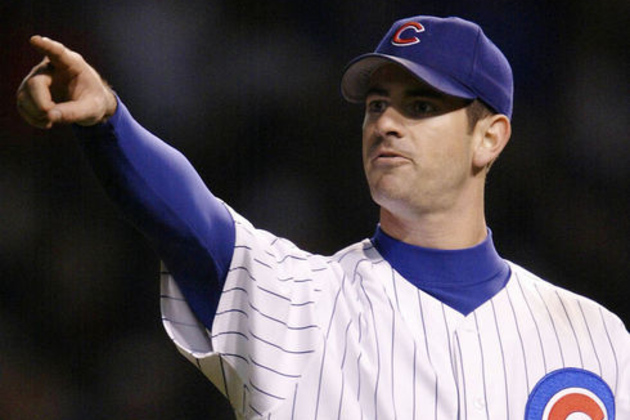
2591590_large7 seasons after his last major league appearance, former Cub phenom Mark Prior called it a career on Monday.  The second overall pick in the 2001 draft, Prior quickly rose to the major leagues, making his debut on May 22, 2002, earning the victory against the Pirates.  He excelled the following year, as a surprising Cubs team won their division and came within 5 outs of making their first World Series since 1945.  Prior finished the year 18-6, was named to the All Star team, finished third in Cy Young award voting and was ninth in voting for the MVP award.

2003 was also the start of Prior’s injury issues.  He hit the disabled list after colliding with Marcus Giles in a game in early July.  Thanks to the All Star break, he only missed 3 starts, but he never pitched a full season after that point.  He missed the first 2 months of the 2004 season due to an achilles injury.  In 2005, he again started the season on the disabled list and went back on after suffering a broken elbow after getting hit by a line drive off the bat of Brad Hawpe.  2006 marked the third straight season that Prior would start the season on the DL, where he would stay until June 18.  Less than a month later, he would return to the DL with a strained oblique suffered during batting practice.  On August 10, Prior made his final start of the season, going 3 innings and picking up the loss to the Brewers.  Four days later, he was placed on the DL for the third and final time that season, due to tendinitis.  He would never pitch in the major leagues again.

Prior left the Cubs following the 2007 season, and, since then, he has attempted comebacks with the Padres, Rangers, Yankees, Red Sox, and, most recently, the Reds, where he had to be shut down as a result of continuing shoulder problems after just 7 relief appearances in Triple A.  You couldn’t help but feel for him, a once in a lifetime stud pitcher who should have led the Cubs rotation for years and, instead, flamed out after 5 seasons.  Entire books could be written on what might have been, and now Mark Prior will have his summers free to read them.

Prior’s numbers in a Cub uniform, both for games I attended and overall, were: Continue reading →

2014 Hall Of Fame Ballot – The Newcomers

mlb_hofThe BBWAA released their ballot for the Hall of Fame class of 2014.  The results of the vote are due to be revealed on January 8th, with induction taking place next July.  After nobody was elected in last year’s voting, the new ballot contains 17 holdovers along with 19 newcomers, which may start to cause a bit of a problem.  The current BBWAA rules limit the number of votes on one ballot to 10, and there may be more than 10 deserving candidates.  As they start to pile up, and even more deserving candidates become eligible, the BBWAA and the Hall may find themselves with a mess on their hands.

Yesterday, we looked at the returning candidates.  Now it’s time to move on to the newcomers.

Moises Alou

The 6-time All Star had a very good career, but not one worthy of the Hall of Fame.  He might get enough support to stick on the ballot for a few years, but not much beyond that.

Armando Benitez

I can’t imagine Benitez getting any votes, let alone enough to make a second go around on the ballot.

Sean Casey

The long-time Red had a fine career a will likely pick up one or two votes, but I expect this to be his only appearance on the ballot.

Ray Durham

Another one and done situation for the 2-time All Star.

Eric Gagne

Gagne seemed destined for the Hall after he won the 2003 Cy Young award in the midst of his record setting 84 consecutive saves.  Arm troubles and inclusion in the Mitchell Report derailed his career, and will likely doom any HOF chances he had.

Tom Glavine

There is no question that Glavine, on the strength of his 305 career wins, will make the Hall.  It is just a matter of when, as some voters may want for him to have to wait a year before gaining entry.  If he were to make it this year, it would likely be a pretty special summer for Braves fans.  On a personal level, Glavine is the only pitcher I’ve seen get his 300th win in person, after Roger Clemens and Greg Maddux faltered when I saw them at 299.

Luis Gonzalez

Over 2500 hits and 350 home runs would seem to make Gonzalez a pretty decent candidate for enshrinement.  The hint of PED use, though never proven, will likely hold him back.

Jacque Jones

No.

Todd Jones

NO.

Jeff Kent Continue reading →

#270 – Jim Kern

jim-kernName: Jim Kern

Rank: 270

Position: P

Years With White Sox: 1982-1983

Jim Kern joined the White Sox in a August 1982 trade with the Reds in exchange for Wade Rowdon and Leo Garcia.  He did not pitch particularly well for the South Siders down the stretch, putting up a 5.14 ERA in 13 games.

He was expected back in the bullpen in 1983, but he blew out his elbow after appearing in the second game of the season, leaving him out for the year.  The following spring, he was released towards the end of spring training, ending his brief time with the White Sox.  Kern, however, was not willing to leave quietly.

After begging then General Manager Roland Hemond to send him to Triple A prior to his release, Kern accussed the team of “destroying my arm and then shucking me off like last year’s shotgun shells.”  Hemond claimed it was a business decision, as the team saved nearly $300,000 by releasing Kern.

Kern’s numbers in a White Sox uniform were:

Continue reading →

Ballpark Tour: Wrigley Field

WrigleyField

Stadium Name: Wrigley Field

Location: Chicago

Home Team: Cubs

Years in Service: 1914 – Present

Visits: 313

Weeghman Park, home of the Chicago Chifeds (soon to be the Whales) of the Federal League, opened on April 23, 1914.  In December of 1915, when the Federal League folded, team owner Charles Weeghman was allowed to buy the rival Chicago Cubs and immediately moved them from the dilapidated West Side Park and into his Weeghman Park for the 1916 season.  The Cubs played their first game at Weeghman Park on April 20, 1916, besting the Cincinnati Reds 7–6 in eleven innings.

Also in 1916, Weeghman sold a minority interest in the Cubs to chewing gum magnate William Wrigley.  As Weeghman’s financial fortunes started to decline, Wrigley acquired an increasing number of shares in the club and took on a growing role in the team’s affairs until November 1918, when Weeghman gave up his remaining interest to Wrigley, resigned as president, and left baseball for good. Wrigley would acquire complete control of the Cubs by 1921, and, prior to the start of the 1927 season, the park was officially renamed Wrigley Field.

William’s son, Philip K. Wrigley, had intended to install lights at Wrigley Field prior to the 1942 season.  However, when the Japanese attacked Pearl Harbor in December of 1941 and the US entered World War II, Wrigley donated the materials for the lights to the war effort.  The Cubs eventually became the only team without lights, continuing to play day games at home exclusively until 1988, when lights were finally installed.  To this day, the Cubs are still limited in the number of night games they may schedule per season, though that number has increased significantly since the late 80s.

As Wrigley Field prepares to enter its second century, there are plans in motion to renovate the stadium and make it economically viable for the 21st century.  Those renovations were expected to start this offseason, but threats of lawsuits from the rooftop owners, who fear that new signage would block their views, have stalled those plans.

I’ve managed to identify 313 games I’ve attended at Wrigley Field, most of them since 2002, when I became a season ticket holder.  While it is hard to argue with the historical value of Wrigley Field, it is as hard to argue that the stadium needs work to satisfy the needs of fandom in the year 2013.  I hope that the bickering sides come to an agreement soon so that Wrigley Field can continue to be a viable home to the Cubs for the next 100 years.  Besides, they will need that time in order to bring their first World Series championship to the ballpark.

Ballpark Tour: Comiskey Park

comiskeyout2

Stadium Name: Comiskey Park

Location: Chicago

Home Team: White Sox

Years in Service: 1910 – 1990

Visits: 12 (that I’m aware of)

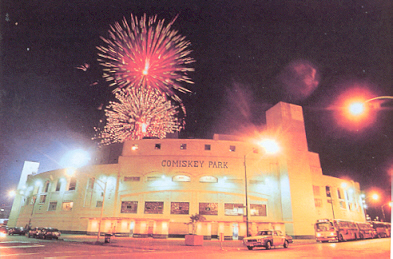
Comiskey Park, the so-called Baseball Palace of the World, was the home of the White Sox from 1910 through the 1990 season.  Built on a former city dump at the corner of 35th Street and Shields Avenue, the stadium opened as White Sox Park on July 1, 1910, as the White Sox lost to the St. Louis Browns 2-0.  In 1913, owner Charles Comiskey renamed the stadium after himself, and Comiskey Park was born.  From 1962 until 1975, the White Sox Park name was officially re-establshed, as new ownership groups tried to separate themselves from the Comiskey name.  However, Bill Veeck, in his second tour of duty as owner of the White Sox, put the Comiskey Park name back on the stadium in 1976, where it remained until 1990.  The final game for the old ballyard occurred on September 30, 1990, a 2-1 victory over the Mariners.

Comiskey Park was the host for 4 World Series contests, including 3 in a row from 1917-1919.  The White Sox won the World Series in 1917 against the New York Giants.  The Cubs, looking for a larger seating capacity, moved their home games in the 1918 series against the Red Sox to Comiskey Park.  The 1919 World Series, of course, was the Black Sox scandal, where the White Sox threw the series against the Reds.  The White Sox returned to the World Series 40 years later in 1959, but fell to the Dodgers.  The final post-season games to be played in Comiskey Park were games 3 and 4 of the 1983 ALCS, which the White Sox lost to the Baltimore Orioles.

Comiskey Park was also the host to 3 All-Star games.  The first All-Star game ever, in 1933, was held in conjunction with Century of Progress Exposition being held on Chicago’s lakefront.  The event returned to Chicago’s south side in 1950.  The final All-Star game at Comiskey Park was in 1983, the 50th anniversary of the first game.  Comiskey Park was also the frequent home of the Negro League East-West All-Star Game from 1933 to 1960.

In addition to White Sox baseball, Comiskey Park was also the home to the Chicago American Giants of the Negro Leagues, the Chicago Cardinals of the NFL, and the Chicago Sting of the NASL.  Comiskey Park also hosted numerous boxing matches, including the 1937 heavyweight title match where Joe Louis defeated then champion James J. Braddock.  The Beatles played two concerts at Comiskey Park in August of 1965.  Other musical acts to perform there include Aerosmith, AC/DC, The Eagles, The Police, Simon & Garfunkel, and The Jacksons, who performed 3 shows during their Victory tour in October of 1984.

Looking back, I’ve been able to piece together evidence of 12 games that I attended at Comiskey Park.  I know there are more, but I have not been able to pinpoint exact games yet.  The most memorable game I can remember would be the final night game, on September 29, 1990, where, after the game, the lights were symbolically turned off for the final time.

#275 – Danny Richar

Richar

Name: Danny Richar

Rank: 275

Position: 2B

Year With White Sox: 2007

Danny Richar joined the White Sox organization via trade from the Diamondbacks for Aaron Cunningham.  After a brief stint in Triple A, he joined the White Sox after Tadahito Iguchi was traded to the Phillies and made his major league debut on July 28, going 2-3 in a White Sox victory against the Blue Jays.  Richar finished out the year for the disappointing White Sox squad, putting up a .230 batting average.

Richar returned to Triple A in 2008, and, with the White Sox in contention for the division title, Richar was packaged to the Reds, along with Nick Masset, for future Hall of Famer Ken Griffey Jr.

Richar’s numbers in a White Sox uniform, both for games I attended and overall, were:

Continue reading →

#277 – Carl Willis

carl_willis_autograph

Name: Carl Willis

Rank: 277

Position: P

Year With White Sox: 1988

Carl Willis was acquired by the White Sox from the Reds for minor leaguer Darrell Pruitt on January 19, 1988.  Willis spent the majority of the 1988 season at Triple A Vancouver.  He did make 6 appearances for the White Sox, but his 8.26 ERA was not very impressive.  Unless you were the California Angels, who selected him in the minor league draft on December 6, ending Willis’ association with the White Sox.

Willis’ numbers in a White Sox uniform were:

Continue reading →