Throwback Thursday – Team Records Of The 2000s

It’s time for another trip in the wayback machine, as this week we move our focus to the start of the 21st century and see what my view of the baseball world looked like in the 2000s.  This was my first decade as a season ticket holder, starting in 2002 for the Cubs and 2005 for the White Sox.

I attended 518 contests during the 2000s, starting with my first trip to Cincinnati in April of 2000 and finishing with Daniel Hudson’s first major league victory in September of 2009.  I attended games at 13 stadiums from coast to coast and saw my first post-season action, with an ALDS in 2000, an NLCS in 2003, and a World Series game in 2005.

2021 Team Records
Team Name Won Loss Winning Pctg
Arizona Diamondbacks 11 1 0.917
Philadelphia Phillies 10 4 0.714
Toronto Blue Jays 6 3 0.667
Florida Marlins 12 7 0.632
Tampa Bay Rays 3 2 0.600
Texas Rangers 8 6 0.571
Los Angeles Dodgers 8 6 0.571
Chicago White Sox 130 107 0.549
Chicago Cubs 172 147 0.539
Baltimore Orioles 9 8 0.529
Cleveland Indians 10 9 0.526
Los Angeles Angels 10 9 0.526
Boston Red Sox 9 9 0.500
Colorado Rockies 6 6 0.500
Seattle Mariners 5 5 0.500
Anaheim Angels 1 1 0.500
Houston Astros Continue reading →

Throwback Thursday – Team Records Of The 1980s

With the 2022 season well underway, I thought it would be interesting to take a trip in the wayback machine and see what my view of the baseball world looked like in the long-ago period known as the 1980’s.

I’ve been able to identify 14 games I attended during the 80’s, starting with Luis Aparicio’s number retirement in 1984 through a September 1988 game at Wrigley Field, which turned out to be the second official night game.  There are more games that I remember something about attending, voting for the new White Sox uniform designs in 1981, Carlton Fisk bat day some point in the early 80s, getting a Cubs calendar in 1986,  and winning tickets from WGN radio for a game, but I haven’t been able to track down specifics about them as of yet.

1980s Team Records
Team Name Won Loss Winning Pctg
Toronto Blue Jays 1 0 1.000
San Diego Padres 1 0 1.000
Cleveland Indians 1 0 1.000
California Angels 1 0 1.000
Texas Rangers 1 1 0.500
Seattle Mariners 1 1 0.500
New York Mets 1 1 0.500
Baltimore Orioles 1 1 0.500
Chicago White Sox 5 6 0.455
Chicago Cubs 1 2 0.333
Kansas City Royals 0 1 0.000
Boston Red Sox 0 1 0.000

By The Numbers – 12

In 1929, uniform numbers appeared on the back of baseball jerseys for the first time, thanks to the Indians and the Yankees.  By 1937, numbers finally appeared across all uniforms, both home and away, across both major leagues.  Since that time, 81 distinct numbers have been worn by members of the White Sox, while the Cubs boast 76.

Today, we continue our look at those players, picking our favorite, if not the best, player to wear each uniform number for both Chicago teams with #12.  91 different players have donned #12 while playing in Chicago, 44 for the White Sox and 47 for the Cubs.

A.J. Pierzynski signed with the White Sox on January 6, 2005 and rewarded the organization with eight seasons of stability behind the plate that included one All-Star selection, two playoff appearances, and, of course, the 2005 World Series championship.  Over those 8 seasons, Pierzynski was involved in many key moments while wearing #12 that endeared him to the White Sox faithful, including:

  • The walk-off home run, and resulting bat flip (pictured above), against the Dodgers in 2005 while wearing 1959 throwbacks
  • The two home runs in a thrashing of the Red Sox in game one of the 2005 ALDS, the first White Sox home postseason victory since 1959
  • The controversial dropped third strike that led to a White Sox victory in game two of the 2005 ALCS against the Angels
  • The 2006 brawl against the Cubs where Michael Barrett sucker-punched him after Pierzynski enthusiastically scored a run against the crosstown rivals
  • Hanging on to the throw from Ken Griffey Jr. to preserve the shutout in the 2008 tie-breaker game that pushed the White Sox into the playoffs over the Twins
  • Being behind the plate for Mark Buehrle’s no-hitter in 2007 and Philip Humber’s perfect game in 2012

On the north side of town, a dynamic shortstop, the first player chosen in the 1982 draft, wore #12 when he made his major league debut in 1985.  Shawon Dunston quickly became a fan favorite.  In 1989, he entered the national consciousness thanks to the Shawon-O-Meter, a fan made sign that tracked Dunston’s batting average during each game.  The sign was seen in the Wrigley Field bleachers for a number of years and even made its way to San Francisco’s Candlestick Park for the 1989 NLCS.  Following the 1995 season, he left as a free agent before resigning with the team for the 1997 campaign.  He was traded to the Pirates at the end of August, ending his Cubs career for good.

Mornings With The Peacock

On the heels of last month’s announcement of an exclusive streaming deal with Apple TV+, MLB announced another streaming deal, this time with Peacock, owned by NBC.  Worth an estimated $30 million to the poor MLB owners, the deal gives Peacock an exclusive window on Sunday mornings through 12:30 PM CT.  Games will begin at 10:30 CT through June 12, then move to an 11 AM start time for the remainder of the season.  In addition, Peacock will be the exclusive home of the Futures Game during All Star festivities and will also feature classic MLB games, award-winning documentaries from the MLB Film & Video Archive, and highlight packages available on-demand in a new MLB hub.

The Peacock slate kicks off on May 8 with the White Sox visiting the Red Sox and will be simulcast on NBC.  The south siders make an additional appearance in August while visiting the Guardians.  The Cubs, meanwhile, make their sole appearance while visiting the Phillies in July.  It is a shame that all three of these games are on the road.  It would be interesting to attend a game with an 11:00 (or earlier) start.

As I said last month, I see MLB expanding its reach into the streaming world to be a good thing.  Some will say that with these new exclusive deals, MLB is spreading their product around a little too much and they do have a point.  In order to watch every White Sox game this season as it happens, one would have to have access to NBC Sports Chicago, FOX, FS1, ESPN, Apple TV+. and Peacock.  That’s a lot of different services.  But how many fans actually try to watch every single game?  For the casual fan, MLB having a wide footprint can only be a good thing as they try to build the next generation of hard-core fans.

All Time Team Records

After a long lockout and an abbreviated spring training, the 2022 baseball season finally gets underway today, so, to celebrate, it is time once again to look at the all-time team records for games that I have identified as having attended dating back to 1984.  Last year, I tied 2004 for my 5th highest game total of all time and managed to see 25 out of the 30 teams, so there should be some nice changes.  Thanks to a name change, the all-time record of the Cleveland Indians become static moving forward, forever stuck at 4 games over .500.

The White Sox look to once again lead an improving AL Central and move past the ALDS in the post-season, while the Cubs are neither contending nor rebuilding.  The 2022 season should be an interesting one on both sides of town, even more interesting if we are able to see it in person.

All-Time Team Records
Team Name Won Loss Winning Pctg
California Angels 2 0 1.000
Arizona Diamondbacks 14 2 0.875
Florida Marlins 15 8 0.652
Colorado Rockies 10 6 0.625
New York Yankees 17 11 0.607
Boston Red Sox 19 13 0.594
Los Angeles Angels 20 14 0.588
Toronto Blue Jays 15 11 0.577
Philadelphia Phillies 11 9 0.550
Washington Nationals 7 6 0.538
Cleveland Indians 31 27 0.534
Chicago White Sox 335 307 0.522
Chicago Cubs 224 206 0.521
Houston Astros Continue reading →

2022 Predictions

After 99-day lockout and a truncated spring training schedule, the 2022 baseball season is finally scheduled to kick off tomorrow with a slate of games.  For the twelfth consecutive year, I’ve looked into the crystal ball to make my picks for the upcoming season, including an additional Wild Card pick for each league.

American League

East: Blue Jays

Central: White Sox

West: Astros

Wild Cards: Yankees, Angels, Red Sox

AL Champion: Yankees

Cy Young: Lucas Giolito

MVP: Vladimir Guerrero Jr.

National League

Continue reading →

Spring Fever

As we kick off Michael’s birthday month, we look back at a collage of him sleeping in cars during the previous year.  After contracting COVID late in 2020, his energy levels have been a bit off, and he has had a tendency to sleep way too many hours in the day.  Including on our way to the Museum of Science and Industry, a tilt between the White Sox and the Red Sox at Guaranteed Rate Field, and Purdue/Northwestern football game at Wrigley Field.

By The Numbers – 18

In 1929, uniform numbers appeared on the back of baseball jerseys for the first time, thanks to the Indians and the Yankees.  By 1937, numbers finally appeared across all uniforms, both home and away, across both major leagues.  Since that time, 81 distinct numbers have been worn by members of the White Sox, while the Cubs boast 76.

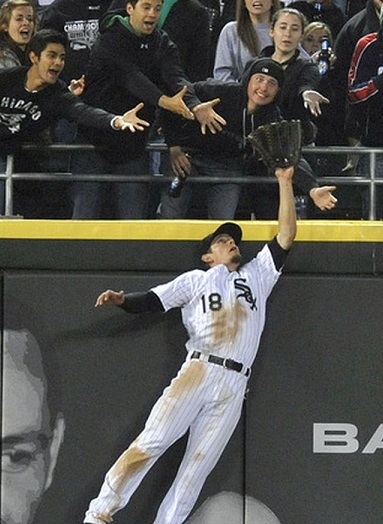
Today, we continue our look at those players, picking our favorite, if not the best, player to wear each uniform number for both Chicago teams with #18.  78 different players have donned #18 while playing in Chicago, 41 for the White Sox and 37 for the Cubs.

Bill Madlock essentially replaced two of the Cubs biggest stars of the 1960s when he joined the team for his rookie season in 1974.  Acquired for future Hall of Famer Ferguson Jenkins, Madlock took the spot of Hall of Famer Ron Santo at the hot corner.  If he felt any pressure, he didn’t show it, hitting .313 with 9 home runs, good enough for a third place finish in Rookie of the Year voting.  In 1975, he broke out in a big way, earning his first All Star nod on his way to a batting title.  In 1976, Madlock repeated as batting champion, hitting .339 and beating out Ken Griffey Sr. on the final day of the season.  With the dawn of free agency on the horizon, Madlock asked the Cubs for a multi-year contract with a salary of $200,000, more than double what he had earned in 1976.  Team owner Phillip K. Wrigley had other ideas, announcing that Madlock would be traded “to anyone foolish enough to want him.”  In February of 1977, that so-called foolish team turned out to be the Giants, who sent Bobby Murcer and Steve Ontiveros, among others, to the Cubs.  In July of 2016, this would be ranked as one of the five worst trades in Cub history.

Acquired by the White Sox, along with Tyler Flowers and 2 minor leaguers, from the Braves in exchange for Javier Vazquez and Boone Logan, Brent Lillibridge donned #18 while hitting an anemic .158 in 95 at bats spread across 46 games for the 2009 White Sox.  Lillibridge stuck with the big league team in 2010, improving his average to .224 in only 64 games.  2011 was his best season, setting career highs in home runs, RBIs, batting average, and OPS.  On April 11, he hit the 10,000th home run in White Sox history off Dallas Braden and the A’s.  Lillibridge struggled again in 2012, with his average dropping down to .175 before the June 24th trade that sent him, along with Zach Stewart, to the Red Sox for Kevin Youkilis.

Against The Red Sox All Time Leaders – Through 2021

redsoxIn the past, we’ve looked at the all time leaders in both offensive and defensive categories for all 30 teams. This offseason, we will take our first ever look at those leaders against all 30 clubs. We continue things today with the Boston Red Sox.

I’ve seen the Red Sox play 32 times at 4 different stadiums, first in the White Sox home opener in 1985, through the 2005 ALDS, and, most recently, this past September.  The game total would have been 2 higher, if the corona virus hadn’t put the kibosh on my April 2000 weekend trip to Fenway Park.

Home Runs

Name Total
Paul Konerko 5
Jermaine Dye 5
Tadahito Iguchi 3
Jim Thome 3
Carlos Quentin 3
A.J. Pierzynski 3

Hits

Name Total
Paul Konerko 18
Scott Podsednik 18
A.J. Pierzynski 13

Runs

Name Total
Paul Konerko 10
Scott Podsednik 7
A.J. Pierzynski 7
Jermaine Dye 7

RBI

Name Total
Paul Konerko 15
A.J. Pierzynski 9
Jermaine Dye 9

Doubles

Name Total
Paul Konerko 4
Jermaine Dye 4
Luis Robert 3

Triples Continue reading →

By The Numbers – 22

In 1929, uniform numbers appeared on the back of baseball jerseys for the first time, thanks to the Indians and the Yankees.  By 1937, numbers finally appeared across all uniforms, both home and away, across both major leagues.  Since that time, 81 distinct numbers have been worn by members of the White Sox, while the Cubs boast 76.

Today, we continue our look at those players, picking our favorite, if not the best, player to wear each uniform number for both Chicago teams with #22.  76 different players have donned #22 while playing in Chicago, 26 for the White Sox and 50 for the Cubs.

Acquired from the Dodgers, along with Ivan DeJesus, in exchange for Rick Monday and Mike Garman, Bill Buckner joined the Cubs, wearing #22, in 1977.  A staph infection in his ankle the previous year caused the Cubs to move the former outfielder to first base, a position he would man for the rest of his career.  Appearing in 122 games, he hit .284 with 11 home runs and 27 doubles.  He improved in 1978, raising his average to .323 and placed 17th in MVP voting.  1979 was another steady year for Buckner.  On May 17th, in the infamous slugfest where the Cubs lost 23-22 to the Phillies, he went 4–for–7 with a grand slam and a career-high seven RBIs.  He finished the year hitting .284 with 14 home runs and 34 doubles, but was also described as “nuts” when manager Herman Franks resigned late in the season.

In 1980, Buckner won a batting title, hitting .324 while striking out only 18 times, earning him a 14th place finish in MVP voting.  In the strike-shortened 1981 season, he was the lone Cub representative for the All Star game and batted .311 while tying Cecil Cooper for the major league lead with 35 doubles.  1982 saw Buckner hit over .300 for the fourth time as a Cub while racking up career highs in hits, with 201, RBIs, with 105, and assists at first base, setting a major league record with 159.

In 1983, Buckner again led the NL with 38 doubles, but saw his batting average drop to .280, his lowest finish as a Cub.  With the acquisition of Gary Matthews in 1984 pushing Leon Durham to first base, Buckner found himself the odd man out.  Appearing mostly as a pinch hitter, Buckner hit a paltry .209 through the end of May, when he was traded to the Red Sox, ending his Cub tenure.

Scott Podsednik was acquired by the White Sox from the Brewers for Carlos Lee on December 13, 2004.  Wearing #22, he moved in to the leadoff spot and, after putting up a .294 average with 44 steals in the first half, he earned his first All Star game nod.  While injuries slowed him in the second half, he was back to full strength when the regular season came to an end and the White Sox embarked on their first post-season appearance in 5 years.  After going the entire regular season without a home run, Podsednik went deep against the Red Sox in Game 1 of the ALDS, helping the White Sox to a 14-2 victory on their way to a 3 game sweep of the defending champions.  Podsednik continued his steady play during the ALCS, hitting .294 with a triple and 3 stolen bases in the 5 game series.  The shining moment of his career came in Game 2 of the World Series, thanks to a walkoff home run against Brad Lidge in the 9th inning, giving the White Sox a 2-0 lead on their way to a sweep and their first world championship in 88 years.  For his efforts, Podsednik finished in 12th place for MVP voting.

As the White Sox looked to repeat in 2006, Podsednik found it difficult to duplicate his efforts from the year before.  His average was down 29 points, to .261, and his stolen base total was off by 19.  Injuries limited Podsednik to 62 games in 2007.  His offensive production continued to be lacking and, after the White Sox fell completely out of contention for the first time in years, the team decided to change their approach and gave Podsednik his release.  He returned to the White Sox organization in 2009, signing a minor league deal.  Injuries to Brian Anderson, Dewayne Wise, and Carlos Quentin gave him plenty of opportunity with the big league club, and he responded by hitting .304, his highest total since 2003.  Following the season, he became a free agent.