Tribe No More

On Friday, the franchise in Cleveland officially changed their name from Indians, which dates back to 1915, to Guardians, inspired by a pair of stone monuments a quarter of a mile away from Progressive Field, ending years of controversy and resistance.  I’ve seen the Indians 58 times over the years, first in 1987 at old Comiskey Park and last at Guaranteed Rate Field this past July.  In between, I saw them at two other ballparks, Games 4 & 5 of the 2016 World Series at Wrigley Field and the final two games of a September series against the White Sox at their home stadium of Progressive Field in 2019.

All-Time Team Records
Team Name Won Loss Winning Pctg
Cleveland Indians 31 27 0.534
Chicago Cubs 1 1 0.500
Chicago White Sox 26 30 0.464

The Guardians are scheduled to make their first trip to Chicago in early May for a 3 game series against the White Sox, starting a new chapter of Cleveland baseball history.

By The Numbers – 31

In 1929, uniform numbers appeared on the back of baseball jerseys for the first time, thanks to the Indians and the Yankees.  By 1937, numbers finally appeared across all uniforms, both home and away, across both major leagues.  Since that time, 81 distinct numbers have been worn by members of the White Sox, while the Cubs boast 76.

Today, we continue our look at those players, picking our favorite, if not the best, player to wear each uniform number for both Chicago teams with #31.  59 different players have donned #31 while playing in Chicago, 26 for the White Sox and 33 for the Cubs, who have retired it for two different players.

Greg Maddux wore #31 when he got his start with the Cubs in 1986.  Over the first seven years of his career, he became one of the shining stars of the National League, helping lead the team to the 1989 NL East title and winning the first of his 4 consecutive NL Cy Young awards in 1992.  Eleven seasons after before being allowed to leave as a free agent by GM Larry Himes, Maddux returned to the Cubs in 2004.  He defeated the Giants in August of that year to win his 300th game and, in July of 2005, he struck out his 3000th batter.  In 2006, with the Cubs far out of contention, he was traded to the Dodgers for their stretch run.

On the south side of town, Liam Hendriks burst on to the scene in 2021, wearing #31 as he took over the closer role for the eventual AL Central champs, leading the league with 38 saves and closing out the All Star Game for the American League.  He is signed for two more years, so this will either get cemented or I’ll look back at a horrible choice.  Time will tell.

By The Numbers – 32

In 1929, uniform numbers appeared on the back of baseball jerseys for the first time, thanks to the Indians and the Yankees.  By 1937, numbers finally appeared across all uniforms, both home and away, across both major leagues.  Since that time, 81 distinct numbers have been worn by members of the White Sox, while the Cubs boast 76.

Today, we continue our look at those players, picking our favorite, if not the best, player to wear each uniform number for both Chicago teams with #32.  96 different players have donned #32 while playing in Chicago, 40 for the White Sox and 56 for the Cubs, including a familiar face for both sides of town.

Steve Stone was acquired by the White Sox in a November 1972 trade with the Giants.  He wore #32 for the 1973 season, before being traded to the Cubs.  He returned to the White Sox in 1977 as a free agent, going 27-24 over the next two seasons, before once again becoming a free agent.  Upon his retirement, he moved in to the broadcast booth, joining the Cubs booth in 1983 alongside Harry Caray.  He left the Cubs booth in 2004 and joined the White Sox radio booth in 2008, moving over to television in 2009, where he remains a fan favorite to this day.

On the north side, pitcher Jon Lieber donned #32 over two stints with the Cubs.  Acquired via a trade with the Pirates in December of 1998, Lieber quickly became a mainstay of the Cubs rotation, culminating in a 20 win season in 2001.  He left as a free agent following the 2002 campaign, returning in 2008, working mostly out of the pen for the eventual division champs in his final major league season.

By The Numbers – 33

In 1929, uniform numbers appeared on the back of baseball jerseys for the first time, thanks to the Indians and the Yankees.  By 1937, numbers finally appeared across all uniforms, both home and away, across both major leagues.  Since that time, 81 distinct numbers have been worn by members of the White Sox, while the Cubs boast 76.

Today, we continue our look at those players, picking our favorite, if not the best, player to wear each uniform number for both Chicago teams with #33.  60 different players have donned #33 while playing in Chicago, 22 for the White Sox and 48 for the Cubs, including a World Series champion.

Aaron Rowand joined the White Sox organization in 1998, selected in the first round of the draft.  He earned his first call up to the show on June 15, 2001 and made his major league debut the following day.  He took over as the starting center fielder in 2002 following the mid-season trade of Kenny Lofton.  Rowand switched to #33 in 2003, but earned a return trip to Triple A in 2003 after hitting .133 in his first 60 games.  After a little more than a month, he returned to the big leagues, hitting .387 the rest of the way and ending the season with a .287 average.

2004 was a breakout year for Rowand, becoming a  full time starter for the first time and setting career highs with a .310 average and .905 OPS.  The good times continued in 2005, as he hit .270 with 13 home runs and, defensively, committed only 3 errors in 394 chances.  Rowand went 4 for 10 against the Red Sox in the ALDS, driving in 2 runs and scoring 3 more in the 3 game sweep.  In the ALCS against the Angels, Rowand managed only 3 hits in the 5 game series, all doubles.  He bounced back in the World Series, going 5-17 against the Astros as the White Sox won their first title in 88 years.  Less than a month after the final out of the World Series, Rowand, among others, was traded to the Phillies for Jim Thome.

On the north side of town, a rookie donned #33 when he made his major league debut on July 30th, 1983.  Joe Carter would appear in 23 games for the Cubs that season, hitting .176 without a home run.  He made his biggest mark for the Cubs the following June, when he was packaged, along with Mel Hall, Don Schulze, and Darryl Banks, in a trade with the Indians which netted Ron Hassey, George Frazier and, of course, Rick Sutcliffe.

By The Numbers – 34

In 1929, uniform numbers appeared on the back of baseball jerseys for the first time, thanks to the Indians and the Yankees.  By 1937, numbers finally appeared across all uniforms, both home and away, across both major leagues.  Since that time, 81 distinct numbers have been worn by members of the White Sox, while the Cubs boast 76.

Today, we continue our look at those players, picking our favorite, if not the best, player to wear each uniform number for both Chicago teams with #35.  82 players have donned #34 on each side of town, including 50 for the White Sox and 32 for the Cubs.

Kerry Wood was the fourth overall selection in the first round of the 1995 draft, making his major league debut for the Cubs less than 3 years later.  Making his fifth major league start in May of 1998, Wood would cement his place in Cubs lore and baseball history, striking out 20 and giving up a single hit against the Astros.  Wood helped the Cubs to the Wild Card, their first post-season appearance since 1989.  An injured elbow, however, cost him the 1999 season and, just maybe, altered the course of his career.  He led the Cubs rotation as they made a surprising run towards the World Series in 2003, coming up a mere 5 outs short.  By 2007, he was moved to the bullpen full time,  After quick detours with the Indians and the Yankees, he returned to the Cubs in 2011 and retired in May of 2012, striking out Dayan Viciedo in his final appearance in a crosstown tilt.

On the south side of town, young phenom Michael Kopech may end up owning the number across both teams.  But for now, we will split the difference between three pitchers, each of whom helped lead the White Sox to a playoff appearance.  Richard Dotson switched to #34 in 1983, just in time to go 22-7 as the White Sox won their first division title.  Acquired in 2004, Freddy Garcia donned the number while winning the clinching game 4 of the 2005 World Series.  His replacement in the rotation, beginning in 2007, was Gavin Floyd, who also wore the number as the White Sox won their latest division title in 2008.

Fitbit VII – Week 38

And yet another disappointing week.  Things got off to a decent enough start on Sunday, as Game 3 of the ALDS led me to 5300 steps.  Monday was slightly lower due to rain surpassing 4800 steps.  Game 4, and the end of the White Sox season, came on Tuesday, as I finished with 4700 steps.  Wednesday fell even lower, falling down to 3300 steps.  Thursday saw a slight increase, jumping back up to 4200 steps.  Friday was even better, as I finished only 17 steps shy of 4700.  Saturday was a bust of a day, with only 2500 steps.

Total steps: 29,578

Daily average: 4225.4

By The Numbers – 35

In 1929, uniform numbers appeared on the back of baseball jerseys for the first time, thanks to the Indians and the Yankees.  By 1937, numbers finally appeared across all uniforms, both home and away, across both major leagues.  Since that time, 81 distinct numbers have been worn by members of the White Sox, while the Cubs boast 76.

Today, we continue our look at those players, picking our favorite, if not the best, player to wear each uniform number for both Chicago teams with #35.  26 players have donned #35 on each side of town, including one Hall of Famer.

Frank Thomas

Frank Thomas was selected by the White Sox with the seventh pick in the first round of the 1989 draft and, a little more than a year later, he made his major league debut.  In 1991, as the White Sox moved into the new Comiskey Park, Thomas became one of the most feared hitters in the American League.  He won the MVP award in both 1993 and 1994, while leading the White Sox to their first division title since 1983.  In 1997, he earned his first batting title and notched his 7th top 10 finish in MVP voting in his first 7 full seasons.

Thomas became a full time DH in 1998 and struggled for the first time.  Injuries slowed him down in 1999, but he bounced back in a big way in 2000.  He hit .328 and set career highs with 43 home runs and 143 RBIs as the White Sox returned to the post-season for the first time since 1993.  A torn triceps cut his 2001 campaign short, and, when he returned in 2002, he was clearly no longer the offensive force he had been.  Foot injuries robbed him of most of the 2004 and 2005 seasons, and, after watching the only team he had even played for win the World Series without him, he became a free agent after the 2005 season.  His number 35 was retired by the White Sox on August 29, 2010 and he was part of the 2014 Hall of Fame class, elected on the first ballot with 83.7% of the vote.

The history of #35 on the north side of town is nowhere near as impressive.  Of the 26 players to wear the number, 4 came in 2000 alone.  While there are players I like a little more, we will go with shortstop Lennie Merullo, who was the first player to wear #35 for the Cubs, during the 1941 and 1942 seasons.  Merullo’s 7 year career was spent entirely with the Cubs.  He went 0-2 in the 1945 World Series.  His biggest claim to fame, at least to me, came off the field, as he is the grandfather of former White Sox catcher Matt Merullo.

2021 Final Batting Leaders

Another baseball season has come to an end, with the White Sox winning their first division title since 2008 and making the post-season in consecutive seasons for the first time in team history, before losing to the Astros in the ALDS and the Cubs shocking their fanbase with the dismantling of the core that led them to 3 straight NLCSs and a world championship in 2016.  Let’s take a look back at the offensive leaders for the 58 games that I attended this season, with lower capacity crowds in the spring to full capacity at the end:

Home Runs

Name Total
Jose Abreu 9
Yasmani Grandal 8
Patrick Wisdom 7
Luis Robert 6
Yoan Moncada 5
Tim Anderson 5

Hits

Name Total
Tim Anderson 55
Jose Abreu 49
Yoan Moncada 49
Luis Robert 29
Andrew Vaughn 26

Runs

Name Total
Tim Anderson 32
Yoan Moncada 27
Continue reading →

2021 Final Standings

The 2021 season, at least the portion which would see me attending games, has come to an end after the White Sox lost to the Astros in the ALDS 3-1.  After a year without in-person baseball thanks to the corona virus, I ended up attending the most games I’ve seen since 2009 and my 5th highest total of all time.  I also managed to travel to four different stadiums, bringing my total up to 27.  All told, I managed to see 25 of the 30 teams a year after seeing none.

2021 Team Records
Team Name Won Loss Winning Pctg
Tampa Bay Rays 3 0 1.000
New York Yankees 2 0 1.000
Arizona Diamondbacks 1 0 1.000
Washington Nationals 1 0 1.000
Philadelphia Phillies 1 0 1.000
Los Angeles Angels 1 0 1.000
San Francisco Giants 1 0 1.000
Boston Red Sox 1 0 1.000
Seattle Mariners 2 1 0.667
Chicago White Sox 29 20 0.592
Cleveland Indians 3 3 0.500
Kansas City Royals Continue reading →

By The Numbers – 36

In 1929, uniform numbers appeared on the back of baseball jerseys for the first time, thanks to the Indians and the Yankees.  By 1937, numbers finally appeared across all uniforms, both home and away, across both major leagues.  Since that time, 81 distinct numbers have been worn by members of the White Sox, while the Cubs boast 76.

Today, we continue our look at those players, picking our favorite, if not the best, player to wear each uniform number for both Chicago teams with #36.  83 different players have donned #36 while playing in Chicago, 54 for the White Sox and 29 for the Cubs.

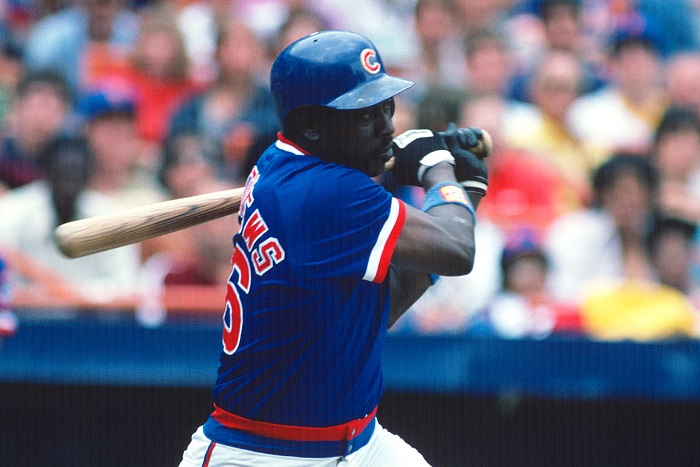
Acquired by the Cubs, along with Bob Dernier and Porfi Altamirano, from the Phillies for Bill Campbell and Mike Diaz near the end of spring training in 1984, Gary “Sarge” Matthews, wearing #36, became a spark plug that helped lead the Cubs to their first ever division title.  Leading the league in walks and OBP, Matthews set a career high with 101 runs scored and finished 5th in MVP voting, behind teammates Ryne Sandberg and Rick Sutcliffe.  He saw a big drop-off in 1985, appearing in only 97 games and hitting a career low .235.  He bounced back a bit in 1986, appearing in 123 games and hitting 21 home runs, his highest total since 1979.  Reduced to a bench player in 1987, Matthews had 42 ABs in 44 games when he was traded to the Mariners on July 11 for a minor league player to be named later.

On the south side of town, Jerry Koosman donned #36 when he joined the White Sox on August 30, 1981 after coming to the White Sox via trade from the Twins.  Koosman appeared in 8 games down the stretch, starting 3, as the White Sox finished 6th in the second half of the crazy strike season.  He returned in 1982, working mostly out of the bullpen but still starting 19 games as the White Sox squandered a quick start to finish in 3rd place.  The veteran lefty spent most of the 1983 season in the starting rotation, but saw his ERA inflate to a career high 4.77.  However, after a shaky start, the White Sox caught fire and Koosman was the starting pitcher on September 17, when the White Sox clinched their first division title.  Koosman made one relief appearance during the ALCS against the Orioles, throwing 1/3 of a disastrous inning in the Game 3 blowout, giving up 1 hit, 2 walks, and 3 runs (2 earned).  He re-upped with the White Sox following the season, but was sent to the Phillies the following spring to complete the trade for Ron Reed.