By The Numbers – 45

In 1929, uniform numbers appeared on the back of baseball jerseys for the first time, thanks to the Indians and the Yankees. By 1937, numbers finally appeared across all uniforms, both home and away, across both major leagues. Since that time, 81 distinct numbers have been worn by members of the White Sox, while the Cubs boast 76.

Today, we continue our look at those players, picking our favorite, if not the best, player to wear each uniform number for both Chicago teams with #45. 92 different players have donned #45 while playing in Chicago, but only one of whom notched the final out in a World Series clincher.

Bobby Jenks joined the White Sox organization on December 17, 2004, when he was selected off waivers from the Angels.  After starting the 2005 season in Double A, he was called up to the big league club on July 5 and made his major league debut the following day, ending the season as the closer after Shingo Takatsu proved ineffective and Dustin Hermanson went down with a back injury.  In the ALDS against the Red Sox, he threw 3 scoreless innings and picked up 2 saves in the 3 game sweep.  Thanks to the 4 complete games in the ALCS against the Angels, Jenks was well rested for the World Series.  He appeared in all 4 games against the Astros, throwing 5 innings and earning the save in Games 1 and 4.

With a World Championship under his belt, Jenks became the full time closer in 2006, earning his first All Star nod and becoming the first White Sox pitcher to notch a save in the Mid-Summer Classic.  2007 was a good year for Jenks, as he made his second straight All Star team and tied a major league record by retiring his 41st consecutive batter, becoming the first reliever to achieve the feat.  He continued his dominant ways in 2008, as the White Sox bounced back in to contention, and he threw a scoreless inning and picked up the save in the only White Sox victory in the ALDS against the Rays.

Jenks started to struggle in 2009, as he saw his save total drop to 29, his lowest full-season total to date.  2010 was even worse, as his ERA rose again, to 4.44, and his WHIP was up again as well.  Despite his highest strike out total since 2006, he ended the year with a 1-3 record and only 27 saves.  Following the season, the White Sox declined to tender him a contract for the 2011 season, making him a free agent.

On the north side of town, reliever Tom Gordon donned #45 in 2001 and the first part of 2002, earning 27 saves before being shipped to the Astros for, basically, nothing.

Indians No More

After years of controversy and resistance, the Cleveland Indians announced today that they will officially be changing their name to the Cleveland Guardians starting with the 2022 season.  The Indians name dates back to 1915, when the team, then known as the Naps, was looking to rebrand following the departure of Nap Lajoie.  The Guardians name was inspired by a pair of stone monuments, the Guardians of Traffic, along the Hope Memorial Bridge a quarter of a mile away from Progressive Field.

The Indians name and its Chief Wahoo logo have long been criticized for perpetuating Native American stereotypes. In 2015, team owner Paul Dolan acknowledged that there were critics, the team had no plans to change either its name or its logo.  On January 29, 2018, however, Major League Baseball announced that Chief Wahoo would be removed from the Indians’ uniforms as of the 2019 season, stating that the logo was no longer appropriate for on-field use.  In completely unrelated news, Cleveland hosted the All Star game in 2019.  Last July, following a similar move by the Washington Football team, the Indians announced that they would “determine the best path forward” regarding the team’s name and, in December, the team announced they would drop the Indians name following the 2021 season.


2021 All Star Break Batting Leaders

The All Star Game is in the books, as the American League extended its winning streak to 8 straight and White Sox closer Liam Hendriks earned the save, only the second White Sox player to do so.  As baseball takes the day off to prepare for the second half, let’s take a look at the first half offensive leaders for the 32 games I attended, starting with:

Home Runs

Name Total
Jose Abreu 5
Javier Baez 4
Adam Eaton 3
Patrick Wisdom 3
Yasmani Grandal 3
Carlos Santana 3
Brad Miller 3

Hits

Name Total
Tim Anderson 28
Yoan Moncada 26
Jose Abreu 24
Nick Madrigal 21
Yermin Mercedes 14

Runs

Name Total
Tim Anderson 17
Jose Abreu 14
Continue reading →

2021 All Star Break Standings

For the first time in two years, the American League takes on the National League in the Midsummer Classic.  As the baseball world turns its sights to AtlantaColorado for tonight’s All Star Game, it’s time to take a look at the team records for the 32 games I attended in the first half of the baseball season, a pretty healthy amount after the pandemic-related strangeness that was 2020.

2021 Team Records
Team Name Won Loss Winning Pctg
Tampa Bay Rays 1 0 1.000
Philadelphia Phillies 1 0 1.000
Washington Nationals 1 0 1.000
Chicago Cubs 4 2 0.667
Seattle Mariners 2 1 0.667
Chicago White Sox 16 10 0.615
Kansas City Royals 3 3 0.500
Cleveland Indians 2 2 0.500
St. Louis Cardinals 1 1 0.500
Detroit Tigers 1 1 0.500
Continue reading →

And Then There Were Four

With players dropping out of the All Star Game due to injury, arrival of a baby, or, in some cases, pure uninterest, Tim Anderson has been added to the American League roster, giving the White Sox their fourth All Star.  Anderson has hit .432 over the past 10 days leading in to the break and leads MLB with a .325 average since the start of the 2019 season.

It also gives the White Sox four All Stars for the first time since 2012, when Paul Konerko, Adam Dunn, Jake Peavy, and Chris Sale all made it for the game in Kansas City.

Hey Now, You’re An All Star

First, the good news.  Five Chicago players will be making the tip to AtlantaDenver next week for the All Star Game.  Starters Lance Lynn and Carlos Rodon and closer Liam Hendriks will represent the White Sox, while third baseman Kris Bryant and closer Craig Kimbrel will represent the Cubs.  It is the first mid-summer classic for Rodon, second for Lynn and Hendricks, fourth for Bryant, and eighth for Kimbrel.

Now, the bad news.  Unlike in years past, the teams will be wearing their All Star jerseys in the game itself, rather than just in the surrounding ceremonies.  The National League will be wearing white, with the team logo on the left breast superimposed over a three letter acronym for the team (CHC for the Cubs, for example).  The sleeves have a flower pattern at the cuff that makes little sense, with either an American flag or All Star Game patch, depending on the arm.  The back has a star below the player’s number signifying their number of All Star selections.  The American League will wear the same, but in navy blue.  Both leagues will wear navy caps with a giant star underneath the team’s logo.

RIP Tom Terrific

Former White Sox pitcher and Hall of Famer Tom Seaver passed away Monday at the age of 75.  Seaver won 311 games, had a 2.86 earned-run average and struck out 3,640 batters over a 20-year career that began in 1967.  The 12-time All-Star led the National League in wins three times, ERA three times and strikeouts five times.  He was elected to the Hall of Fame in 1992, earning 98.8 percent of the vote, the highest voting percentage ever received at the time.

Seaver joined the White Sox at the end of his career, acquired in the free agent compensation draft in 1984.  He quickly made his mark on the south side, earning two wins in the same day by pitching the final inning of a suspended, 25 inning contest from the day before and then starting the regularly scheduled game against the Brewers.  On August 4, 1985, Seaver threw a complete game to earn his 300th career victory against the Yankees in New York.

Seaver is survived by his wife Nancy and daughters Sarah and Anne.

Ballpark Tour: White Sox

Opening day was supposed to be less than a week away, so it is time to wrap up our tour of all of the baseball stadiums I’ve been to over the years with the one I’ve been to the most: the homes of the Chicago White Sox.  Between the two stadiums that have been located at the corners of 35th and Shields, I’ve seen at least 542 games, all but one of which have involved the White Sox.  So, without further ado, let’s take a deeper look at my history with Comiskey Park and Guaranteed Rate Field.
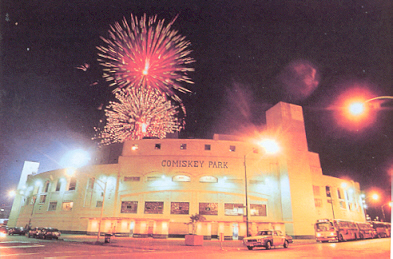
Stadium Name: Comiskey Park

Years in Service: 1910 – 1990

Visits: 12 (that I’m aware of)

Comiskey Park, the so-called Baseball Palace of the World, was the home of the White Sox from 1910 through the 1990 season.  Built on a former city dump at the corner of 35th Street and Shields Avenue, the stadium opened on July 1, 1910, as the White Sox lost to the St. Louis Browns 2-0.  The final game for the old ballyard occurred on September 30, 1990, a 2-1 victory over the Mariners.

Comiskey Park was the host for 4 World Series, including 3 in a row from 1917-1919.  The White Sox won the World Series in 1917 against the New York Giants.  The Cubs, looking for a larger seating capacity, moved their home games in the 1918 series against the Red Sox to Comiskey Park.  The 1919 World Series, of course, was the Black Sox scandal, where the White Sox threw the series against the Reds.  The White Sox returned to the World Series 40 years later in 1959, but fell to the Dodgers.  The final post-season games to be played in Comiskey Park were games 3 and 4 of the 1983 ALCS, which the White Sox lost to the Baltimore Orioles.

Comiskey Park was also the host to 3 All-Star games.  The first All-Star game, in 1933, was held in conjunction with Century of Progress Exposition being held on Chicago’s lakefront.  The event returned to Chicago’s south side in 1950 and the final All-Star game at Comiskey Park was in 1983, the 50th anniversary of the first game.  Comiskey Park was also the frequent home of the Negro League East-West All-Star Game from 1933 to 1960.

Looking back, I’ve been able to piece together evidence of 12 games that I attended at Comiskey Park, either from pictures, stadium giveaways, or specific memories.  I know there are more, but I have not been able to pinpoint exact games as of yet.  The most memorable game I can remember would be the final night game, on September 29, 1990, where, after the game, the lights were symbolically turned off for the final time.

Stadium Name: Comiskey Park II/US Cellular Field/Guaranteed Rate Field

Years in Service: 1991 – Present

Visits: 530

On the evening of June 30, 1988, with the clock literally stopped, the Illinois legislature passed a bill that provided the financing for a new stadium for the White Sox, stopping them from moving to St. Petersburg, Florida.  2 and a half years later, on April 18, 1991, Comiskey Park II opened, the first new major facility built in Chicago since the erection of the Chicago Stadium in 1929.  Sadly, the White Sox were embarrassed by the Tigers, losing 16-0 in the opening of their new park.

Unfortunately for the White Sox, the new Comiskey Park was the last stadium to be built prior to the wave of retro ballparks that started with the opening of Camden Yards the following year.  Because of this, there have been numerous renovations to the park, starting in 2001 with the addition of nearly 2000 seats and the relocation of the bullpens.  More extensive renovations began in 2003 in preparation for that season’s All Star Game and using the money generated from selling the naming rights to US Cellular, and continued through 2007, when the replacement of the blue seats with green seats was completed.  Less extensive renovations have occurred since, replacing the different video boards and creating premium seating areas.

The post-season came to the new Comiskey Park for the first time in 1993, as the White Sox battled the Blue Jays in the ALCS.  The stadium hosted its first World Series games in 2005, the first to be played in the city of Chicago since 1959, as the White Sox went on to sweep the Houston Astros and win their first World Series since 1917.

I attended my first game at the new Comiskey Park on April 20, 1991, the second game in the stadium’s history.  Since then, I’ve been to 529 other games at the stadium, the majority coming from 2005 on, when I became a season ticket holder.  I went to both games of the 2000 ALDS, which the White Sox lost to the Mariners, both games of the 2005 ALDS, which the White Sox won against the Red Sox, both games of the 2005 ALCS, which the White Sox split against the Angels, and game 2 of the 2005 World Series.  I attended game 163 of the 2008 season to break the tie between the White Sox and the Twins. and then the two ALDS games against the Rays, the first time I saw the White Sox actually end a post-season series, either in victory or defeat.

Notable regular season games I’ve seen at what is now known as Guaranteed Rate Field include the September 18, 2001 game against the Yankees as baseball returned following the attacks of 9/11, the April 16, 2005 game where Mark Buehrle defeated the Mariners in 1 hour and 39 minutes, the April 2, 2006 season opener against the Indians when the World Series championship banner was raised, the April 4, 2006 game where the players received their World Series rings, and the September 16, 2007 game where Jim Thome hit his 500th career home run against the Angels.  Not to mention a streak of 19 consecutive home openers.
Ballpark Tour: Indians

As we prepare to close out 2019, we continue our tour of all of the different baseball stadiums I’ve been to over the years. This week, we head east to the so-called Mistake By The Lake for a look at the Cleveland Indians. So, without further ado, let’s take a deeper look at my history with Progressive Field.


Stadium Name: Progressive Field

Years in Service: 1994 – Present

Visits: 2

The Indians moved into Jacobs Field for the 1994 season after calling Cleveland Stadium home since 1932.  In 1997, the park became one of the few in MLB history to host both the All Star Game and the World Series in the same season.  2008 saw the naming rights sold to a local insurance company and the stadium was renamed Progressive Field.  Since opening, the park has seen 10 Central Division titles, 5 ALCS appearances, and 3 trips to the World Series.  It hosted its second All Star Game this past summer.

I almost took my first trip to the park in 2016, for Game 7 of the World Series against the Cubs, but I just couldn’t quite pull the trigger.  A Southwest credit this summer led to me booking a 2-day September trip to Cleveland for $3, so there was no second guessing this time.  I arrived on a Wednesday afternoon, in plenty of time for that evening’s tilt between the White Sox and the Indians.  A tremendous catch on a smash by Eloy Jimenez saved the game for the Tribe.  The matinee performance on Thursday afternoon entailed a nice one-hitter by Reynaldo Lopez, giving the White Sox a quick victory before I had to head back to the airport.

Ballpark Tour: Twins

With the offseason underway, we continue our tour of all of the different baseball stadiums I’ve been to over the years. This week, we head north to the Twin Cities for a look at the Minnesota Twins. So, without further ado, let’s take a deeper look at my history with Target Field.

Stadium Name: Target Field

Years in Service: 2010 – Present

Visits: 2

After 28 seasons of indoor baseball at the Hubert H. Humphrey Metrodome, the Twins moved back outside starting with the 2010 season when they opened Target Field in downtown Minneapolis. The first regular season game took place on April 12, 2010, with the Twins defeating the Red Sox. In 2014, Target Field hosted the All Star Game, the first in Minnesota since 1985.

I took the long trip up to Minneapolis in the weeks after the All Star Game, along with Danny and Michael, to see the White Sox take on the Twins. We picked two good games to see, as the White Sox offense came to life and they won both games against the Twinkies. We sat down on the first level, between home plate and third base behind the White Sox dugout for both games, so I didn’t get to sample the different areas of the ballpark, but I certainly liked what I saw. The one thing I didn’t like about the park was the configuration of most of the outfield. Between the large hitting background in center field and the high walls in left and right, there is a lot of dead space in the outfield that seems to put the fans far away from the action. Besides that, though, a good time was had by all and I certainly wouldn’t mind returning one day.